Hyaluronic Acid After Microneedling
A plain hyaluronic acid serum is the right thing to reach for while your barrier knits back together — but not for the reason most people are told, and not necessarily on day one. What the two published studies actually tested, what to leave in the cupboard for a week, and the three fragrance-free bottles we would use.
How this is funded: we earn a commission if you buy through our links, at no extra cost to you. It never changes which product we recommend, and we’ll tell you when we’d skip one. Full disclosure.
Everyone leaves a microneedling appointment with the same instruction and almost no explanation: use a hyaluronic acid serum. It is good advice. The reasoning attached to it usually is not, and the difference matters, because the popular version of the reasoning leads people to apply exactly the wrong things.
The short answer
Yes, use a plain hyaluronic acid serum — fragrance-free, no actives, as short an ingredient list as you can find — and follow the timing your provider gave you rather than anything on the internet, including this page. What the serum is doing is not boosting collagen. It is being the least demanding thing you can put on a barrier that has just been deliberately punctured, while holding water at the surface so the skin does not feel like parchment for three days.
That is a smaller claim than the one on most product pages, and it is the one the evidence actually supports.
What microneedling does, in one paragraph
The AAD describes microneedling as a medical treatment that uses tiny needles to puncture the skin, working by stimulating your body to make collagen — which is why it is also called collagen induction therapy. The result is deliberate, controlled micro-injury: your body responds to the damage by rebuilding. That is also why results are slow. The AAD’s own framing is that improvement may appear within a few weeks but it usually takes several months to see full results.
The relevant consequence for your bathroom shelf is that for a few days afterwards your stratum corneum — the layer that normally decides what gets into your skin and how much water gets out — is not doing its job properly. The AAD says you may see redness in lighter skin tones or darker shades in deeper skin tones immediately after treatment, and that these reactions usually disappear in a few days to a week. During that window your skin is both leakier and more reactive than usual.
The “it penetrates deeper” argument, read properly
The claim you will see everywhere is that microneedling opens channels so your serum penetrates deeper and works better. The first half of that is true — enhanced delivery is one of the documented uses of the technique. The conclusion people draw from it is backwards.
If the channels let more of your serum in, they let in everything in that serum: the preservative, the solubilizer, the fragrance, the essential oil, the 10% niacinamide, the vitamin C at pH 3.2. Enhanced penetration is a reason to be far choosier about what is in the bottle, not a reason to layer on more of it. This is the single most useful idea on this page, and it is why our picks below are chosen on what they leave out rather than what they add.
What the published studies actually tested
There is real evidence here, and it is thinner and more specific than the marketing implies. Two studies are worth knowing about, and both have caveats we would rather state than bury.
The closest thing to a direct test is a prospective, randomized, investigator-blinded split-face study published in the Journal of Drugs and Dermatology in 2018. Twenty-four women aged 35 to 55 were enrolled; eight had intradermal hyaluronic acid filler, eight had microneedling and eight had a superficial mandelic acid peel. They then applied a topical crosslinked hyaluronic acid serum twice daily to one side of the face, starting two days after the procedure, with assessments at days 0, 14 and 28. The treated side showed statistically significant improvements in skin surface topography and hydration against the untreated side, blinded investigators scored it better on moisture, tone, radiance, texture, uniformity and global appearance, and there were no adverse events.
Three things to hold on to from that. The microneedling subgroup was eight people. The product tested was a crosslinked hyaluronic acid serum, not an ordinary low- or high-molecular-weight drugstore serum — the authors’ own earlier explant work was about showing crosslinked HA outperformed exactly those. And application started two days after the procedure, not in the car park afterwards.
The second study is a 2023 randomized trial in the Journal of Cutaneous and Aesthetic Surgery: 60 patients aged 18 to 40 with acne scars, split into microneedling alone and microneedling with hyaluronic acid, three sessions three weeks apart. Goodman scarring scores fell significantly in both arms. More patients in the hyaluronic acid arm reached “good” and “very good” — but patient satisfaction was 6.20 against 5.73, which the authors themselves describe as only slightly higher, and over 80% of patients in both arms had no side effects. Importantly, that is hyaluronic acid applied as part of the in-clinic procedure, not a serum you use at home afterwards.
Put together: hyaluronic acid after a procedure is well tolerated and probably helps with comfort, hydration and surface texture. It is not established that your particular bottle changes your collagen outcome. Buy it for the first thing, not the second.
The aftercare window, day by day
Your provider’s instructions override everything here, and they should, because needle depth varies enormously and they know what they used. With that said, this is the shape of a cautious week.
First 24 hours. Leave your skin alone. Lukewarm water, clean hands, nothing with an active in it, and no makeup — the AAD’s guidance is to wait 24 hours before applying makeup. If skin feels tight, a bland moisturizer is a safer first move than a new serum.
Day two to day seven. This is where the plain hyaluronic acid serum earns its place, applied to slightly damp skin and sealed with a fragrance-free moisturizer. The order and the damp-skin detail matter more than the brand — how to use hyaluronic acid explains why a humectant left bare in dry air can make skin feel worse rather than better. Expect some flaking as things settle; do not help it along with a scrub.
Sun protection, from the moment you can tolerate it. The AAD lists protecting your skin from the sun among the things that maintain microneedling results, and freshly treated skin pigments readily — which is the last thing you want if you booked the procedure for tone or scarring in the first place. A mineral sunscreen is the gentler choice on reactive skin; our picks are on best sunscreen for acne-prone skin and best sunscreen for retinol users.
After the first week. Actives go back one at a time, not all at once on the night the redness clears. The sequence in how to layer actives is the one to follow, and the patient version of the same job is in how to repair your skin barrier.
What to keep off your face in the meantime
For roughly that first week, or as long as your provider specifies: L-ascorbic acid vitamin C, which is formulated at a low pH and will sting on compromised skin; retinol and every other retinoid; AHAs and leave-on BHAs; benzoyl peroxide; fragranced products and essential oils; alcohol-based toners; and physical scrubs or cleansing brushes. None of these are being banned on principle — they are being paused because the barrier that normally buffers them is temporarily not there.
The one that trips people up most is vitamin C, because it is so often recommended alongside microneedling by people talking about collagen. The form matters: a low-pH L-ascorbic acid serum is a poor idea on day two, whereas the gentler derivatives are a different proposition, and the difference is set out in L-ascorbic acid vs vitamin C derivatives. Either way, wait for your provider’s green light.
Choosing the serum: what we looked for
One criterion, applied hard: what the formula leaves out. On intact skin a pinch of fragrance in a good serum is a minor consideration. On skin whose barrier has just been punctured in a thousand places, it is the main consideration. So our three picks below are the fragrance-free, active-free, short-ingredient options from the serums we already rank on best hyaluronic acid serums.
That filter also excludes a product we rate highly in general. La Roche-Posay Hyalu B5 is a genuinely good hyaluronic acid serum and it is fragranced, so it is not on this page. Being explicit about that is the point: on this one occasion the exclusion criterion outranks the overall quality ranking.
We have not tested any of these on needled skin, and nobody should claim to have. What we have done is read the published ingredient lists and the guidance above, and picked on the thing that is knowable. The method is in how we pick.
Bottom line
A plain hyaluronic acid serum is the right product for the week after microneedling, for the unglamorous reason that it asks nothing of your skin while holding water at the surface. Start when your provider tells you to — the one study of a post-procedure serum began on day two, not day zero. Choose on what the bottle omits rather than on what it promises. Keep the acids, retinoids and vitamin C out of the routine until the redness has gone, then put them back one at a time. And if the thing you are tempted by is an at-home roller rather than a professional session, read the AAD’s warnings on infection, scarring and spreading viruses before you buy a device, because no serum compensates for that.
General guidance, not medical advice. Actives & Acids is written by a skincare enthusiast, not a dermatologist. For a diagnosis, a reaction, or a prescription active like tretinoin, see a qualified professional. Introduce any new active slowly and patch-test first.
What we'd actually buy
Chosen from the same registry as our roundups, on published formulation facts rather than hands-on testing — here is exactly what we do instead.
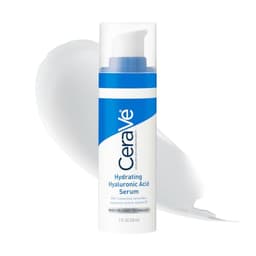
CeraVe
Hyaluronic Acid Serum (B5 + Ceramides)
The one we would reach for first in the days after a session. Fragrance-free, no actives, and it leaves ceramides and vitamin B5 behind as well as the hyaluronic acid — which is the part that matters when the thing you are repairing is a barrier rather than a wrinkle.
See it ranked in full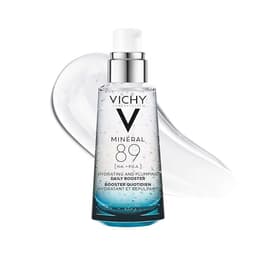
Vichy
Mineral 89 Hyaluronic Acid Booster
A short, fragrance-free formula built on mineralizing water with very little else in it — exactly the profile you want on skin whose barrier is temporarily open. The 50 mL bottle is also the largest here, which helps if you are treating neck and chest as well as face.
See it ranked in fullPrice as of October 10, 2026. #ad How we’re funded
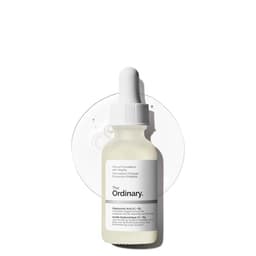
The Ordinary
Hyaluronic Acid 2% + B5
The budget answer, and a perfectly good one: a labeled 2% hyaluronic acid with B5, fragrance-free, for a few dollars. Worth knowing it is the tackiest of the three on the skin, which some people dislike on a face that already feels tight.
See it ranked in fullPrice as of October 10, 2026. #ad How we’re funded
Frequently asked questions
Should I use hyaluronic acid after microneedling?
It is a reasonable choice and a safe one, provided the serum is a plain, fragrance-free formula with no actives in it. The honest reason is not that it boosts collagen through the channels — it is that a freshly needled barrier needs a bland humectant and nothing else, and hyaluronic acid serums are the blandest effective thing on the shelf. Follow your provider's aftercare instructions first; they know what was done to your skin and at what depth.
How soon after microneedling can I apply hyaluronic acid?
Ask whoever performed the procedure, because it depends on needle depth and what they already applied. Note that the main published study of a topical hyaluronic acid serum used after a procedure did not start on day one — subjects began twice-daily application two days afterwards. If you have no instructions to follow, water or a bland moisturizer for the first 24 hours and a plain serum after that is the cautious reading of the evidence that exists.
Does hyaluronic acid absorb better after microneedling?
More of anything you apply gets past the stratum corneum while the channels are open — that is the mechanism microneedling is used for. The important thing is that this cuts both ways. It is not an argument for applying more product; it is an argument for being far choosier about what is in the bottle, because fragrance, essential oils, alcohol and actives all go deeper too. Blandness is the whole brief.
What should you not put on your skin after microneedling?
For roughly the first week, or for as long as your provider says: vitamin C in its acid form, retinol and other retinoids, AHAs and BHAs, benzoyl peroxide, fragranced products, essential oils, physical scrubs and alcohol-based toners. The AAD also says to wait 24 hours before applying makeup. None of these are permanently off-limits — they go back in one at a time once the redness has settled.
How long does the redness last after microneedling?
The AAD's own guidance is that you may see redness in lighter skin tones or darker shades in deeper skin tones immediately afterwards, and that these reactions usually disappear in a few days to a week. Anything beyond that — spreading warmth, pus, fever, blistering — is not normal healing and needs a call to your provider, not a serum.
Is there real evidence that hyaluronic acid helps after microneedling?
There is some, and it is thinner than the marketing suggests. A split-face study of a crosslinked hyaluronic acid serum started two days after a procedure found statistically significant gains in skin surface topography and hydration against the untreated side — but of its 24 subjects, only eight had microneedling, and the tested product was a crosslinked serum rather than an ordinary drugstore one. A separate randomized trial of 60 acne-scar patients found microneedling with hyaluronic acid produced more good and very-good results than microneedling alone, though patient satisfaction was only slightly higher, 6.20 against 5.73. Both are worth knowing about; neither is proof that a $10 serum changes your outcome.
Can I use a hyaluronic acid serum after an at-home derma roller?
You can, but read the AAD's position on at-home rollers first: their needles are shorter and duller and are not meant to pierce the skin, so results are far more modest than a professional treatment — and when a device does pierce the skin it can cause infection or scarring and can spread warts, herpes and other viruses across the face. The serum is not the risky part of that sentence. The device is.
Which hyaluronic acid serum is best after microneedling?
The one with the shortest, blandest ingredient list you can find. We would use CeraVe Hyaluronic Acid Serum, because it is fragrance-free and leaves ceramides and B5 behind as well as the hyaluronic acid, or Vichy Mineral 89, which is about as pared-back as a serum gets. We would specifically avoid a fragranced serum here, which is why La Roche-Posay Hyalu B5 — a good product we rank well elsewhere — is not one of our picks on this page.
Sources
- American Academy of Dermatology — Microneedling can fade scars, uneven skin tone, and more — The AAD's patient guidance on microneedling: it is "a medical treatment that uses tiny needles to puncture the skin" and works by "stimulating your body to make collagen" — also called collagen induction therapy. "Results appear gradually as your body produces collagen. You may see improvement within a few weeks. It usually takes several months before you see full results." On what to expect afterwards: "Immediately after microneedling, you may see some redness (lighter skin tones) or darker shades (darker skin tones) on your treated skin," and those reactions "usually disappear in a few days to a week"; patients are told to "wait 24 hours before you apply makeup" and, to keep results, to "Protect your skin from the sun." On at-home devices: "Sometimes an at-home microneedling product pierces the skin. This could lead to an infection or scarring," and at-home use "can accidentally spread warts, herpes, and other viruses across the skin." It lists people who should not have microneedling: those who "Heal slowly or poorly," have or had a keloid, or have a weakened immune system (accessed October 10, 2026)
- Prospective, Randomized, Investigator-Blinded, Split-Face Evaluation of a Topical Crosslinked Hyaluronic Acid Serum for Post-Procedural Improvement of Skin Quality and Biomechanical Attributes (PubMed) — Sundaram, Cegielska, Wojciechowska and Delobel, Journal of Drugs and Dermatology 2018 Apr 1;17(4):442-450, PMID 29601621 — the nearest thing to direct evidence for a topical hyaluronic acid serum used AFTER a procedure. 24 women aged 35 to 55 were enrolled: 8 had intradermal hyaluronic acid filler, 8 had microneedling and 8 had a superficial mandelic acid peel. Subjects "initiated twice-daily, standardized application of RHA serum to one side of the face 2 days after the procedure," with evaluation at days 0, 14 and 28. Serum-treated areas "showed statistically significant improvements in skin surface topography and hydration compared to untreated areas," and blinded investigator scoring favored them on moisture, tone, radiance, texture, uniformity and global appearance, with no adverse events. Two caveats the page states plainly: the tested product is a CROSSLINKED hyaluronic acid serum rather than the ordinary low/high-molecular-weight serums on a drugstore shelf, and application started two days after the procedure, not immediately (accessed October 10, 2026)
- Comparative Evaluation of Therapeutic Efficacy and Safety of Microneedling Alone Versus Microneedling with Hyaluronic Acid in Post-Acne Scarring (PubMed) — Bano, Brar and Kumar, Journal of Cutaneous and Aesthetic Surgery 2023 Oct-Dec;16(4):279-285, PMID 38314374, PMCID PMC10833484 — 60 patients aged 18 to 40 with acne scars randomized to two groups of 30: microneedling alone (Group A) or microneedling with hyaluronic acid (Group B), three sittings three weeks apart with two follow-ups four weeks apart. Goodman Quantitative Global Scarring scores fell from 24.13 ± 7.96 to 16.3 ± 7.2 in Group A and from 27.73 ± 7.86 to 18.20 ± 7.12 in Group B by week 17, both statistically significant. Patient satisfaction was 6.20 ± 1.45 with hyaluronic acid against 5.73 ± 1.31 without — described in the paper as "only slightly higher". Over 80% of patients in both arms had no side effects. The authors conclude that most patients showed "moderate" improvement in BOTH groups, with more Group B patients reaching "good" and "very good". Note this is hyaluronic acid applied as part of an in-clinic procedure, not a consumer serum used at home afterwards (accessed October 10, 2026)
- Benefits of topical hyaluronic acid for skin quality and signs of skin aging (PMC) — Literature review plus clinical evidence on what topically applied hyaluronic acid does for hydration and the appearance of fine lines (accessed September 12, 2026)
- Hyaluronic acid: A key molecule in skin aging (PubMed) — Papakonstantinou et al., Dermato-Endocrinology 2012 — review of hyaluronan's role in skin hydration and how its content changes with age (accessed September 12, 2026)
- American Academy of Dermatology — Dermatologists' top tips for relieving dry skin — AAD on moisturizing damp skin and choosing a cream for dry skin (accessed July 17, 2026)
Keep reading
Best hyaluronic acid serums
All the serums ranked against each other on molecular weight, what else is in the bottle and cost per mL.
See the picksHow to use hyaluronic acid
The damp-skin-and-seal rule this page depends on, and the dry-climate mistake that makes a humectant backfire.
Read the guideHow to repair your skin barrier
The same problem without the needles: what to use, what to drop, and in what order things go back in.
Read the guideHow to layer actives
The sequence for putting your routine back together once the redness has settled.
Read the guideHyaluronic acid vs sodium hyaluronate
Why the INCI name on the label is not a quality signal, and the figure that is.
Compare themBest serum for acne scars
If scarring is why you booked the procedure: what a topical can and cannot do alongside it.
See the picks