Azelaic Acid for Perioral Dermatitis
The rash around your mouth is usually cleared by taking products away, not by adding one. Where azelaic acid genuinely fits, why the AAD does not name it, the corticosteroid rule that matters far more, and what we would actually put on our face in the meantime.
How this is funded: we earn a commission if you buy through our links, at no extra cost to you. It never changes which product we recommend, and we’ll tell you when we’d skip one. Full disclosure.
This page is going to disappoint anyone looking for a product recommendation, and it is going to do that on purpose. Perioral dermatitis is the one common facial complaint where the treatment is mostly removal, and the single most useful thing we can tell you is that the acid is not the lead actor.
What follows is the honest version: what the condition is, what the American Academy of Dermatology actually names as treatment, where azelaic acid legitimately fits, and what we would put on our own face while waiting for an appointment.
The short answer
Stop any corticosteroid you are applying to your face — including over-the-counter hydrocortisone — after checking with the prescriber if it was prescribed. See a doctor, because the AAD’s own treatment list includes an oral antibiotic. Strip your routine back to a mild fragrance-free cleanser, a plain moisturizer and sunscreen.
Azelaic acid is a reasonable off-label adjunct once that is underway, on the strength of its anti-inflammatory and antibacterial activity. It is not what the AAD names, there is no trial of it in this condition that we can point you to, and the strength you can buy over the counter is below both approved prescription strengths. Treat it as something you might add, not as the plan.
What perioral dermatitis is, and what it is not
The AAD describes a rash that “often looks like small, red, acne-like breakouts in people with light-colored skin and skin-colored breakouts in people who have skin of color.” It can itch, it can burn, it can do neither — but you will likely have dry and flaky skin where the rash is. It usually appears around the mouth, and it can also appear around the eyes or nose, or around the genitals, which is why dermatologists often call it peri-orificial dermatitis instead. It is not contagious.
The reason the identification matters so much is that the two conditions it resembles have treatments that make it worse. Mistake it for acne and you reach for a stronger active on skin that is already inflamed. Mistake it for eczema and you reach for hydrocortisone, which is the most common cause of the thing you are trying to treat.
It is also frequently confused with rosacea, which genuinely is azelaic acid territory — the AAD names azelaic acid among rosacea treatments alongside metronidazole and ivermectin, and that is the association doing most of the work behind this search query. Azelaic acid for rosacea is the page for that condition, and the two should not be run together.
What the AAD actually names as treatment
Three things, and it is worth reading the list carefully because two of them are not purchases:
1. Stop all corticosteroids. “To clear perioral dermatitis, you must stop applying all corticosteroids, including hydrocortisone cream, to your skin.” If you are using one without your doctor’s knowledge, stop. If it was prescribed, ask the prescriber first, and ask whether another medication could be used instead.
2. An antibiotic. “Take an antibiotic, such as tetracycline or erythromycin.” That is an oral prescription and it is why this condition needs a doctor rather than a shopping list.
3. Change your skincare routine. “You may need to switch to a mild, fragrance-free cleanser and be very gentle when you wash your face. You may need to use fragrance-free skin care products.”
Azelaic acid appears nowhere on that list. We are stating that plainly rather than burying it, because the alternative — writing a page that implies an acid is the answer because we sell links to acids — is exactly the thing this site exists not to do. Our editorial policy covers how we handle this.
The rebound nobody warns you about
This is the most practically important paragraph on the page. The AAD is explicit that “When you stop applying a corticosteroid or hydrocortisone cream, the rash can worsen.” It then says what happens next: it is tempting to start using the cream again, and doing so “will only bring temporary relief” before the rash flares at the next stop. It also notes that continuing the steroid can end up making the rash worse each time you apply it.
So the sequence most people experience is: stop the cream, get worse, panic, restart the cream, feel better, and remain stuck in the loop for months. Knowing in advance that the worsening is expected is most of what gets people through it — and it is the reason to have a doctor involved, because an oral antibiotic covers that gap.
Where azelaic acid legitimately fits
With all of the above in place, here is the honest case for the acid.
Azelaic acid’s reviewed pharmacology covers action on pigmentation, inflammation and acne — anti-inflammatory and antibacterial activity in particular, which is why it has a role in both rosacea and inflammatory acne. Perioral dermatitis is an inflammatory, papulopustular eruption that responds to antibacterial and anti-inflammatory treatment, so the mechanism is plausible and some clinicians use azelaic acid for it. That is a mechanistic argument, not a trial result, and we are not going to dress it up as one.
What tilts it further towards “reasonable to try” is what azelaic acid is not. It is not an exfoliant in the AHA sense despite living under this hub, it does not thin skin the way a steroid does, and it carries no sun-sensitivity warning of the kind an AHA does. Among actives, it is one of the less aggressive things you could put on an inflamed face.
Two limits to carry with you. Strength:every over-the-counter azelaic product is 10%, below the FDA-approved 15% gel for rosacea and the 20% cream for inflammatory acne — and neither of those is approved for this condition either. Sting:the 15% gel’s own label reports burning, stinging or tingling as mild in 16% of patients, moderate in 9% and severe in 4%, against 2% mild on vehicle. That is a higher strength than you will be using, but it is the only calibrated number that exists, and it is a good reason to go slowly on skin that already hurts.
If you are going to try it, do it like this
Not on bare inflamed skin, and not daily. Apply a plain moisturizer first, then a thin layer of the acid over the affected area, on alternate evenings. Keep it well away from the eyelids — the AAD notes the rash can appear around the eyes, and that is not a site for a leave-on acid at any strength. Stop entirely if it is still stinging after a week; at that point it is adding to the problem.
Do not run it alongside anything else active. No exfoliating acid, no retinoid, no benzoyl peroxide, no vitamin C while the rash is present. The Ordinary’s own conflict list for its azelaic suspension names direct acids, direct vitamin C, retinoids, peptides, copper peptides, EUK and niacinamide powder — and on inflamed skin we would follow it more strictly than usual rather than less. How to layer actives is the general version.
One texture note from our review of the 10% suspension: it is a silicone-heavy formula with a distinctive grippy finish that some people find unbearable over a large area. If that is you, the booster format you can mix into a moisturizer is the more comfortable route onto reactive skin.
The routine to run while it settles
This is the part that most reliably helps and it costs the least.
A mild, fragrance-free cleanser, used gently. Named by the AAD, and the AAD’s own face-washing guidance — lukewarm water, fingertips, no scrubbing, pat dry — matters as much as the bottle. Our picks are on best gentle cleanser for sensitive skin.
A plain fragrance-free moisturizer. Nothing with an active in it. Best moisturizer for sensitive skin ranks the field with fragrance-free applied as a filter rather than a bonus.
Sunscreen, mineral if your skin is reactive. Inflamed skin pigments readily, and post-inflammatory marks around the mouth are the thing people are left dealing with after the rash itself clears.
And a short subtraction list. Fragrance anywhere near the area. Heavy occlusive balms around the mouth. Every exfoliating acid, for now. Retinoids, for now. And the one people never think of: the AAD names toothpaste among the possible irritants, so a heavily flavoured or whitening paste is worth swapping out for a fortnight if the rash sits right at the lip line.
Bottom line
Perioral dermatitis is the rare facial complaint where the right first move is to buy less, not more. Stop the steroid, with your prescriber’s agreement if it was prescribed, and expect a flare when you do. See a doctor, because an oral antibiotic is on the AAD’s own list and is not something a serum substitutes for. Strip the routine to a mild fragrance-free cleanser, a plain moisturizer and sunscreen, and take the toothpaste possibility seriously. Then, if you want to add something, azelaic acid is a defensible off-label choice with a plausible mechanism and no published trial in this condition — introduced slowly, over a moisturizer, on alternate nights, and dropped without regret if it stings. Expect a few weeks to a few months, which is the AAD’s own timeline, not ours.
General guidance, not medical advice. Actives & Acids is written by a skincare enthusiast, not a dermatologist. For a diagnosis, a reaction, or a prescription active like tretinoin, see a qualified professional. Introduce any new active slowly and patch-test first.
What we'd actually buy
Chosen from the same registry as our roundups, on published formulation facts rather than hands-on testing — here is exactly what we do instead.
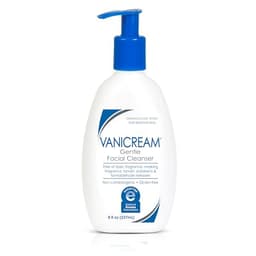
Vanicream
Gentle Facial Cleanser (8 fl oz)
The pick we would buy first, and the only one on this page the AAD's own guidance actually points at: a mild, fragrance-free cleanser, which is one of the three things it names as treatment. Unglamorous, and more likely to help than any acid here.
See it ranked in fullPrice as of October 10, 2026. #ad How we’re funded
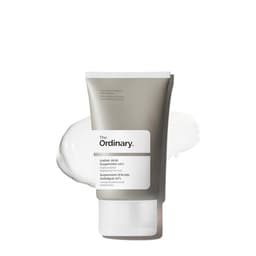
The Ordinary
Azelaic Acid Suspension 10%
If you are going to try azelaic acid, this is the cheapest way to find out whether your skin tolerates it. A stated 10%, a published pH of 4.00 to 5.00, no fragrance, and little enough money that stopping after a fortnight costs nothing.
Read our full reviewPrice as of October 10, 2026. #ad How we’re funded
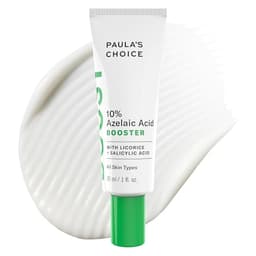
Paula's Choice
BOOST 10% Azelaic Acid Booster
The alternative 10% if the suspension's silicone-heavy texture does not suit you — a lighter booster you can mix into a moisturizer, which is a gentler way to introduce an acid onto skin that is already inflamed.
See it ranked in fullPrice as of October 10, 2026. #ad How we’re funded
Frequently asked questions
Does azelaic acid help perioral dermatitis?
It may, and it is not the first thing to reach for. The AAD's own patient guidance on perioral dermatitis names three things: stopping all corticosteroids including hydrocortisone cream, taking an antibiotic such as tetracycline or erythromycin, and changing your skincare routine to mild fragrance-free products. Azelaic acid is not on that list. It has anti-inflammatory and antibacterial activity and it is used off-label here by some clinicians, which makes it a reasonable adjunct — but if you are using it instead of stopping a steroid or instead of seeing a doctor, you have the order wrong.
What actually clears perioral dermatitis?
Most often, stopping whatever caused it. The AAD says many people develop this rash when they apply a corticosteroid medicine to their skin for too long, and that to clear it 'you must stop applying all corticosteroids, including hydrocortisone cream, to your skin'. It also warns that the rash can get worse when you stop — and that restarting the cream only brings temporary relief before the next flare. Beyond that, an oral antibiotic and a stripped-back fragrance-free routine are what the AAD names. Expect a few weeks to a few months.
Should I stop using my hydrocortisone cream?
If you are using it without a doctor's knowledge, the AAD's guidance is to stop. If it was prescribed, ask the doctor who prescribed it before you stop anything, and ask whether another medication could be used instead. The crucial part people are not warned about: when you stop, the rash can flare and look worse for a while. That is expected, and going back to the cream restarts the cycle.
Is perioral dermatitis the same as acne or rosacea?
No, although it is routinely mistaken for both. The AAD describes the rash as small red acne-like breakouts in lighter skin tones and skin-colored breakouts in deeper skin tones, often with dry flaky skin, around the mouth and sometimes the nose or eyes — 'peri-orificial dermatitis' being the more accurate name. The mistaking matters because the acne treatments people reach for, and especially a steroid used for assumed eczema, can make it worse. Get it identified rather than guessing.
Can I use azelaic acid around my mouth?
It is applied to the affected area in its prescription forms, so the location is not the problem. The sensible caution is that an acid on inflamed, barrier-compromised skin stings and can make things worse before it makes them better. If you try it, go in on alternate days over a moisturizer rather than straight onto bare inflamed skin, and stop if it is still stinging after a week. And keep any acid away from the eyelids — the AAD notes this rash can appear around the eyes, and that area is not a place for a leave-on acid.
What strength of azelaic acid should I use?
Every over-the-counter azelaic product is 10%, which is below both FDA-approved strengths: a 15% gel approved for the inflammatory papules and pustules of rosacea, and a 20% cream approved for mild-to-moderate inflammatory acne. Neither prescription is approved for perioral dermatitis, so this is off-label use of an unproven strength for a condition it was not tested on. That is the honest framing, and it is a reason to see a doctor rather than to escalate your own dose.
How long does azelaic acid take to work on it?
There is no trial of azelaic acid in perioral dermatitis that we can point you to, so there is no published timeline. For reference, the FDA label for the 15% prescription gel reports results from 12-week vehicle-controlled trials in rosacea, and the 20% cream's label describes improvement in the majority of acne patients with inflammatory lesions within four weeks. The AAD's timeline for perioral dermatitis itself is a few weeks to a few months to clear completely. Judge at weeks rather than days — and judge the whole plan, not just the acid.
Will azelaic acid sting?
Possibly, and the prescription labels give you a sense of the scale. The 15% gel's own trial data reports burning, stinging or tingling in 16% of patients as mild, 9% as moderate and 4% as severe, against 2% mild on vehicle. The 20% cream's label puts pruritus, burning, stinging and tingling at roughly 1 to 5%. Those are higher strengths than the 10% you can buy, but they are the only calibrated figures that exist, and they are a reason to introduce it slowly onto skin that is already sore.
Can I use it while pregnant?
That is a question for your doctor, not for us or for a product page. Azelaic acid is often raised in this context and we are not going to turn that into a recommendation — perioral dermatitis in pregnancy is a reason to get an actual consultation, particularly because the standard oral antibiotic options change.
What should I take out of my routine?
Fragrance, first, because the AAD specifically says you may need to use fragrance-free skincare products. Then anything heavy and occlusive around the mouth, any exfoliating acid while the skin is inflamed, retinoids until it settles, and — the one people forget — heavily flavoured or whitening toothpaste, since the AAD names toothpaste as a possible irritant. A lot of people clear this by subtraction alone.
Sources
- American Academy of Dermatology — Red rash around your mouth could be perioral dermatitis — The AAD's patient guidance, and the reason this page does not lead with an acid. The rash "often looks like small, red, acne-like breakouts in people with light-colored skin and skin-colored breakouts in people who have skin of color"; it can itch or burn, usually leaves "dry and flaky skin", and can appear around the eyes, nose or genitals as well as the mouth — "peri-orificial dermatitis" being the more accurate name. On cause: "It's not entirely clear what causes this rash. Something may be irritating your skin, such as a skin care product or toothpaste," and "Many people develop this rash when they apply a corticosteroid medicine to their skin for too long." On what clears it: "To clear perioral dermatitis, you must stop applying all corticosteroids, including hydrocortisone cream, to your skin" — stopping without a doctor's knowledge only if it was not prescribed, and asking the prescriber first if it was — with the explicit warning that "When you stop applying a corticosteroid or hydrocortisone cream, the rash can worsen," that restarting "will only bring temporary relief," and that continuing it can make the rash worse each time. Dermatologist treatment is to stop the steroid, "Take an antibiotic, such as tetracycline or erythromycin," and "Change your skin care routine" — specifically, "You may need to switch to a mild, fragrance-free cleanser and be very gentle when you wash your face. You may need to use fragrance-free skin care products." Timeline: "Expect gradual improvement. This rash tends to clear slowly. It may take a few weeks or a few months to clear completely." Azelaic acid is NOT among the treatments this page names (accessed October 11, 2026)
- A Comprehensive Review of Azelaic Acid: Pharmacological Properties, Clinical Applications and Topical Formulations (PMC) — Review of azelaic acid's action on pigmentation, inflammation and acne (accessed August 19, 2026)
- DailyMed — FINACEA (azelaic acid) Gel, 15% prescribing information — The FDA-approved label for the 15% prescription gel: indicated for the inflammatory papules and pustules of mild to moderate rosacea, applied twice daily. Two identical 12-week vehicle-controlled trials in 664 patients reduced inflammatory lesions by 57.9% vs 39.9% and 50.0% vs 38.2%, with investigator-rated success (clear, minimal or mild) of 61% vs 40% and 61% vs 48%. Burning, stinging or tingling was reported by 16% mild / 9% moderate / 4% severe on the drug against 2% mild on vehicle (accessed September 26, 2026)
- DailyMed — AZELEX (azelaic acid) Cream, 20% prescribing information — The FDA-approved label for the 20% prescription cream: indicated for mild-to-moderate inflammatory acne vulgaris, each gram containing 0.2 g azelaic acid, applied twice daily, with improvement in the majority of patients with inflammatory lesions within four weeks. Pruritus, burning, stinging and tingling occur in roughly 1-5% of patients; the label states the exact mechanism of action is not known (accessed September 26, 2026)
- The Ordinary — Azelaic Acid Suspension 10% (official product page) — The brand's own listing: the full eighteen-ingredient list (Aqua, Isodecyl Neopentanoate, Dimethicone, Azelaic Acid, Dimethicone/Bis-Isobutyl PPG-20 Crosspolymer, Dimethyl Isosorbide, Hydroxyethyl Acrylate/Sodium Acryloyldimethyl Taurate Copolymer, Polysilicone-11, Isohexadecane, Tocopherol, Trisodium Ethylenediamine Disuccinate, Isoceteth-20, Polysorbate 60, Triethanolamine, Ethoxydiglycol, Phenoxyethanol, Chlorphenesin), a stated pH of 4.00-5.00, the 30 mL and 100 mL sizes, twice-daily directions with sun protection, the non-comedogenic and alcohol-free claims, the fact that the brand does NOT claim it is silicone-free, and the conflict list (copper peptides, direct acids, direct vitamin C, EUK, niacinamide powder, peptides, retinoids) (accessed September 26, 2026)
- American Academy of Dermatology — Rosacea: Diagnosis and treatment — AAD on azelaic acid, metronidazole and ivermectin for rosacea (accessed August 19, 2026)
- American Academy of Dermatology — Face washing 101 — AAD guidance on gentle cleansing technique (accessed July 17, 2026)
Keep reading
Best azelaic acid
The three 10% products compared on what they actually contain, including the one that is a derivative.
See the picksAzelaic acid for rosacea
The condition azelaic acid is FDA-approved for, and the one perioral dermatitis gets confused with.
Read the guideBest gentle cleanser for sensitive skin
The product the AAD's own guidance points at, ranked on what is and is not in it.
See the picksHow to repair your skin barrier
The stripped-back routine to run while the rash settles, and the order things go back in.
Read the guideBest actives for redness and rosacea
The cross-ingredient version for persistent facial redness, once a diagnosis is settled.
See the picksBest actives for sensitive skin
What to use and what to avoid on skin that reacts to most things.
See the picks