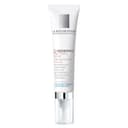
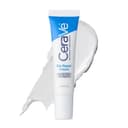
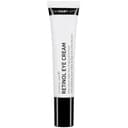
What the $50 ceiling adds over the $25 one
Two products, and they are not simply more expensive versions of what sits below them.
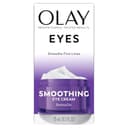
A pharmacy retinoid built for the thinnest skin on the face.The top pick comes from a brand whose formulation priority is tolerance, and it shows in the supporting cast rather than in a headline percentage — which it does not publish, and which we hold against it on principle while admitting it matters less here than anywhere else on this site. On eye-area skin, the smallest effective dose is the target. A formula that was designed to be used nightly without making the area sting is worth more than a figure you can quote.
A retinoid plus a barrier cream, in one step. The second pick carries ceramides and colloidal oatmeal alongside its retinol, which is the right architecture for the most common real-world under-eye complaint: not lines, but tight, flaky skin that gets worse the moment you put a retinoid near it. Nothing under $25 in our registry pairs a retinoid with that much barrier support.
What the ceiling does not add: a stronger retinoid. The highest published retinol figure in this entire band belongs to a $15 product. That is worth saying plainly on a page whose top two picks cost two and three times as much: if your only criterion is a printed dose, the band saves you nothing and the best eye cream under $25 page is where you should be shopping.
Does anyone actually need an eye cream?
A real question and we are not going to dodge it. The honest answer is a qualified yes, for one documented reason and two practical ones.
The documented reason.Published measurement of facial skin thickness shows the periorbital area is markedly thinner than adjacent facial skin. A product dosed for a cheek is therefore genuinely over-dosed for an eyelid, and the AAD’s retinoid guidance treats irritation as the expected cost of retinoid use. A lower-strength retinoid in a richer base is a rational response to both facts.
The practical ones.Eye creams come in small tubes with applicators that discourage over-application, and they are formulated to sit near the eye without migrating into it — which a thin facial serum often does. Those are unglamorous advantages and they are the ones most likely to matter to you.
And the case against.If you already use a well-tolerated facial retinoid and have no irritation, applying a small amount of it to the orbital bone — not the lid — is a legitimate approach that costs nothing. Several of the picks below are, in formulation terms, that idea sold separately. We would rather tell you that than sell you a sixth step. The fuller argument, with every eye product in the registry ranked, is at best retinol eye creams.
How we ranked them
1. Does the label publish a retinoid figure?Exactly one of the five below prints an exact number, and it is the cheapest retinoid product here. The rest publish nothing, which is the norm in this category — and we print “not published” rather than estimating.
2. What supports the retinoid? On eye-area skin this outranks the dose, which inverts our usual criterion and is the reason the published figure sits fourth rather than first. Ceramides, niacinamide, panthenol and a genuinely occlusive base all reduce the cost of using a retinoid where skin is thinnest.
3. Is it fragrance-free? Fragrance near the eye is a bad trade at any price. Where a formula carries it we would rank it down rather than omit the fact.
4. Is there a sensible option with no retinoid at all?Yes, and we rank it third overall, because a meaningful fraction of people arrive at this category for puffiness or dryness rather than for lines — and for them a retinoid is the wrong purchase at every price.
Which one, by what is bothering you
“Fine lines, and I want the best formula.” The pharmacy retinoid. It is the product in this band designed around using a retinoid nightly on the thinnest skin on your body without provoking it, and the one you are most likely to still be applying in six months. Start three nights a week on the orbital bone, never the lid, and go nightly only when nothing happens.
“Dry, tight, flaky under-eyes.” The ceramide cream. Retinol plus barrier ingredients in one step, which is the combination that stops the retinoid making the dryness worse. If your under-eyes crease when you smile because the skin is dehydrated rather than lined, this is the pick that addresses the actual cause.
“Darkness and puffiness, not lines.”The budget pick, and skip the retinoids entirely. It pairs niacinamide with ceramides and hyaluronic acid — the published niacinamide review covers barrier and anti-inflammatory effects — and at around ten dollars it is the cheapest honest answer on this page. One caveat we will not soften: under-eye darkness is often vascular or structural, in which case no cream on earth changes it, and the cosmetic fix is concealer.
“I want a number on the label.” The $15 one, which prints its retinol figure derived from a named complex and is the only product in the band that lets you check the claim. It is the best value here by a distance. What it does not have is the supporting formula of the two above it, which is why it ranks fourth on a page about the thinnest skin on your face rather than first.
“Something I can buy in any drugstore.” The niacinamide-and-retinol option in the upper tier. Fragrance-free, widely stocked, and the easiest of these to repurchase without thinking about it — which, on a product that works over months, is a real criterion rather than a consolation prize.
How to use an eye cream without wasting it
A grain of rice per eye, on the orbital bone. Not the lid, not the lash line. Product migrates upward and inward overnight on its own; placing it where you want it to end up is how people end up with irritated, watering eyes and conclude the product is defective.
Three nights a week before you go nightly. Every retinoid rule from how often to use retinol applies here with a smaller margin for error, because the skin is thinner and you cannot hide flaking under the eye.
Moisturizer first if it stings. Buffering works the same way here as on the face, and on this skin it is the difference between a routine you keep and one you abandon in week two.
Sunscreen in the morning, right up to the orbital bone.A retinoid increases sun sensitivity and the eye area is the part of the face most reliably left uncovered. If a lotion stings near your eyes, a mineral stick is the usual workaround — see best sunscreen for retinol users.
What this page refuses to tell you
That an eye cream removes dark circles. If the darkness is vascular or from a hollow under the orbital rim, nothing topical changes it. Pigment-based darkness can improve slowly with niacinamide, a retinoid and sunscreen. Those are different problems with the same appearance, and only one of them is a shopping problem.
A retinol percentage for four of these five.They do not publish one, we print the absence, and the sentence “contains a retinol complex” is not a specification.
That the expensive end works better. The highest published dose in this band is on the cheapest retinoid product in it. What the top of the band buys is tolerance engineering, which is worth real money on this skin and worth nothing if you are not irritated.
That we tested these.We own no units, publish no scores and run no trials. Every figure is read from a label or a brand’s own page, and every ranking argument is made from those plus the cited literature.
That the band will hold. The top pick sits three cents under the ceiling. Prices render at request time and Amazon moves them daily, so the button is the authority on what is in this band, not our ordering.