Retinol vs Vitamin C: Which One Should You Buy First?
They are the two best-evidenced actives you can buy without a prescription, and they do genuinely different jobs. Here is how to pick — and why most people end up using both.
How this is funded: we earn a commission if you buy through our links, at no extra cost to you. It never changes which product we recommend, and we’ll tell you when we’d skip one. Full disclosure.
Retinol and vitamin C are the two most-researched actives you can buy without a prescription, which is exactly why the comparison keeps coming up. The framing is usually wrong, though. These are not two competing solutions to the same problem — they are a repair ingredient and a defense ingredient, working at different times of day through different mechanisms. Knowing which one you need is mostly a matter of knowing which of those two things your skin is short on.
The short answer
Buy retinol first if your concern is lines, texture or long-term aging and your skin can tolerate a break-in period. It has the deepest evidence base of any over-the-counter active, particularly in photoaging. Buy vitamin C first if your concern is dullness, uneven tone or dark spots, if you want daytime antioxidant protection, or if your skin is reactive and you want the easier introduction. Most people who stick with skincare end up running both — vitamin C in the morning, retinol at night — because the two cover jobs the other cannot.
What each one actually does
Retinol is a vitamin A derivative that your skin converts into retinoic acid, the form that binds to receptors in skin cells and changes how they behave. The downstream effects are the ones with the research behind them: faster cell turnover, support for collagen production, and improvement in the appearance of fine lines, tone and texture over months of use. Reviews of topical retinol consistently find its strongest evidence in photoaging— the cumulative sun damage that shows up as roughness, uneven pigment and lines. It works at night, slowly, by remodelling.
Vitamin C— L-ascorbic acid, in its most-studied form — is an antioxidant. Its job is to neutralize free radicals generated by UV light and pollution before they damage skin proteins, and the classic research on combining it with vitamin E and ferulic acid found the trio measurably increased photoprotection. It also interferes with an early step in melanin production, which is why it evens tone and fades discoloration, and it is involved in collagen synthesis. It works in the morning, defensively, alongside sunscreen.
Head to head
| Retinol | Vitamin C | |
|---|---|---|
| Main job | Repair and remodel — turnover, collagen, texture | Defend and brighten — antioxidant, even tone |
| When to use it | Night | Morning, under sunscreen |
| Strongest evidence for | Photoaging: lines, texture, tone | Antioxidant photoprotection and pigmentation |
| Irritation risk | High during break-in: dryness, flaking, pinkness | Lower; stinging mainly at high strength and low pH |
| Time to visible change | Two to three months, longer for lines | Weeks for brightness; longer for spots |
| Sun sensitivity | Increases it — daily SPF is non-negotiable | No; it supports sun protection rather than undermining it |
| Formula headaches | Dose often unpublished; degrades in light and air | L-ascorbic acid oxidizes; watch for a serum turning orange |
The case for starting with vitamin C
Vitamin C is the easier active to live with, and that matters more than people expect. There is no adjustment period to survive, no schedule to ramp, and no window where your skin looks worse than when you started — which is the phase where most retinol attempts die. It also slots into the morning, where you were already applying sunscreen, so it adds a step to the routine you are most likely to be consistent about. And if your complaint is that your skin looks tired, gray or blotchy rather than lined, vitamin C targets that directly while retinol arrives at it the long way round.
The trade-off is formula fragility. L-ascorbic acid oxidizes on contact with light and air; a serum that has turned deep orange or brown has degraded and is no longer doing what you paid for. Opaque, well-sealed packaging is not a luxury in this category, and a smaller bottle you finish in three months beats a bargain size you nurse for a year. Gentler derivatives are more stable and less irritating but generally less potent — our L-ascorbic acid vs derivatives guide covers where that trade lands.
The case for starting with retinol
If you want the single most evidence-backed thing you can put on your face after sunscreen, it is a retinoid. The research record is decades deep, the mechanism is well characterized, and the effects reach further than tone: retinol works on texture, on the appearance of fine lines, and on collagen support in a way no antioxidant does. For anyone whose main concern is aging rather than brightness, starting anywhere else is starting with the weaker tool.
The trade-off is the break-in period. Expect dryness, flaking and pinkness for the first several weeks, expect your skin to look slightly worse before it looks better, and expect the whole thing to fail if you apply it nightly from day one. Two nights a week to start, a pea-sized amount, a moisturizer over the top, and daily sunscreen without exception, because retinoids increase sun sensitivity. Our how to use retinol guide has the ramp in full, and retinol side effects separates normal adjustment from a genuine stop signal.
Why most people end up using both
Because the two cover complementary halves of the same problem. UV damage is the main driver of visible skin aging; vitamin C helps mop up some of the oxidative damage as it happens during the day, and retinol helps repair the accumulated result overnight. Defense and repair. Neither substitutes for the other, and neither substitutes for sunscreen, which is the actual first line and the reason both of them have less to clean up.
The practical arrangement is the obvious one: vitamin C in the morning after cleansing, followed by moisturizer and SPF; retinol at nighton dry skin, followed by moisturizer. That splits the two potent steps across twelve hours, which keeps irritation manageable and neatly avoids the old pH argument about mixing them. If you specifically want to layer them in one routine, that is workable too once your skin is established — the layering guide at vitamin C and retinol covers how.
One caution worth repeating: add them one at a time.Starting both in the same week means that when your skin flares — and it may — you have no idea which ingredient to adjust. Establish one over four to six weeks, confirm your skin is settled, then introduce the second.
If your skin is reactive
Reactive skin should almost always begin with vitamin C, and preferably with a derivative rather than a high-strength L-ascorbic acid, because there is no tolerance to build and no flaking phase to endure. Once the barrier is comfortable and behaving, a low, stated-strength retinol in a buffered base can be introduced twice a week from there. That order — gentle active first, potent active second, months apart — is far more likely to end with you still using both a year later than starting with the hardest thing on the shelf. Our best retinol for sensitive skin roundup is where to look when you get to that stage.
The bottom line
This is not really a versus. Retinol is the stronger, better-proven ingredient for lines and texture and the harder one to tolerate; vitamin C is the easier, more immediately gratifying one for tone and daytime protection. Pick the one that matches your main concern, give it a genuine three months, and add the other when the first is uneventful. Do both under daily sunscreen, or you are repairing and defending against damage you are still busy accumulating.
General guidance, not medical advice. Actives & Acids is written by a skincare enthusiast, not a dermatologist. For a diagnosis, a reaction, or a prescription active like tretinoin, see a qualified professional. Introduce any new active slowly and patch-test first.
What we'd actually buy
Chosen from the same registry as our roundups, on published formulation facts rather than hands-on testing — here is exactly what we do instead.
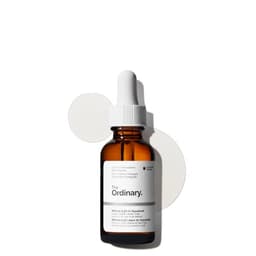
The Ordinary
Retinol 0.5% in Squalane
The retinol side of the decision at its most transparent: a printed 0.5% in a squalane base, priced so a slow ramp-up costs you almost nothing.
See it ranked against the other retinolsPrice as of October 15, 2026. #ad How we’re funded
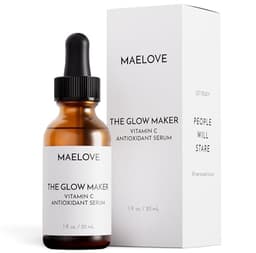
Maelove
Glow Maker Vitamin C Serum
The vitamin C side: L-ascorbic acid with vitamin E and ferulic acid, the antioxidant trio with the strongest published photoprotection evidence.
See it ranked against the other vitamin C serumsPrice as of October 15, 2026. #ad How we’re funded
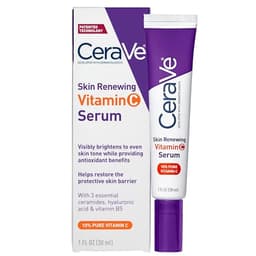
CeraVe
Vitamin C Serum with 10% Pure Vitamin C
The gentler vitamin C if you are running both actives and your barrier is already working hard on the retinol.
See the sensitive-skin picksFrequently asked questions
Should I use retinol or vitamin C first?
If you have to pick one, pick by your main concern. For lines, texture and long-term photoaging, retinol has the deeper evidence base and is the stronger buy. For dullness, uneven tone and dark spots — and for protecting what you already have — vitamin C in the morning is the better first purchase and much easier to tolerate. If your skin is reactive or you have never used an active before, starting with vitamin C is the gentler on-ramp.
Can you use retinol and vitamin C together?
Yes. The old advice to keep them permanently apart was based on pH incompatibility in the bottle rather than on what happens in a real routine. The practical concern is irritation, not chemistry: both are potent, and stacking them wet-on-wet during your first weeks is a reliable way to end up red and flaking. Vitamin C in the morning and retinol at night sidesteps the whole issue and is what most people settle on.
Which is better for dark spots, retinol or vitamin C?
They approach pigment from different angles, so both help. Vitamin C interferes earlier in melanin production and is the more direct tone-evening ingredient; retinol speeds cell turnover so pigmented cells clear faster and works on the texture around the spots too. For stubborn discoloration, using both — plus daily sunscreen, without which neither will hold — beats leaning harder on either alone.
Which one is more likely to irritate my skin?
Retinol, comfortably. Dryness, flaking and pinkness during the adjustment period are normal with retinol and are the number one reason people abandon it. Vitamin C can sting at high concentrations and low pH, particularly L-ascorbic acid at 15% or more, but it does not have a break-in period in the same way. Gentler vitamin C derivatives reduce even that.
Does vitamin C replace sunscreen?
No, and nothing on this site does. A topical antioxidant helps neutralize some of the free-radical damage UV causes after it gets through — it does not block UV in the first place. Vitamin C works alongside sunscreen, not instead of it. Retinol makes this more important still, since retinoids increase sun sensitivity.
Sources
- American Academy of Dermatology — Retinoid or retinol? — AAD on the difference between prescription retinoids and OTC retinol (accessed July 17, 2026)
- Human Skin Aging and the Anti-Aging Properties of Retinol (PubMed) — Review of topical retinol's effect on collagen and photoaging (accessed July 17, 2026)
- Vitamin C in dermatology (PMC) — Telang — review of topical vitamin C forms, stability and photoprotection (accessed July 17, 2026)
- Ferulic acid stabilizes a solution of vitamins C and E and doubles its photoprotection (PubMed) — Lin et al. — the L-ascorbic acid + vitamin E + ferulic acid evidence (accessed July 17, 2026)
Keep reading
Using vitamin C and retinol together
If you have decided on both, this is the layering guide — same routine or split across AM and PM.
Read the guideBest retinol serums
Five retinols compared on stated strength, base and buffering, with the ones that won't name a dose called out.
See the picksBest vitamin C serums
L-ascorbic acid versus the gentler derivatives, ranked by concentration, stability and who each one suits.
See the picksVitamin C vs niacinamide
The other brightening comparison people run into — and the one where the answer is genuinely different.
Compare the twoBest actives for aging skin
Where both ingredients sit in a full anti-aging routine, ranked by how much evidence each carries.
See the picks