Retinol vs Collagen: Which Actually Firms Skin?
One of these is an ingredient that acts on your skin's collagen. The other is collagen, applied to the outside of your skin, where it behaves like a very good moisturizer. That distinction is the whole comparison — here is what to buy instead.
How this is funded: we earn a commission if you buy through our links, at no extra cost to you. It never changes which product we recommend, and we’ll tell you when we’d skip one. Full disclosure.
This comparison has a tidy answer, and it rests on one fact that product packaging works hard to obscure: collagen and retinol are not two approaches to the same goal. One is an ingredient that acts on the collagen your skin makes. The other is collagen itself, applied to the outside of the skin, where the thing it is best at is holding water.
We should say up front that we do not stock a collagen cream and are not going to add one to recommend here. That is not an oversight; it is the conclusion of the page.
The short answer
Buy retinol if firmness, fine lines and texture are what you are after. It is the only one of these with a real clinical file behind it, and it works by prompting your own skin rather than by donating material to it.
Buy a collagen cream only as a moisturizer, judged on whether you like it as a moisturizer. It will make skin look plumper while you are using it. It will not build anything.
Consider a peptide serumif the idea of “supporting collagen” is what drew you here. Peptides are the honest middle ground — small enough that the mechanism is plausible, with evidence thinner than the retinoid file and prices low enough that the bet is cheap.
Why topical collagen cannot do what the jar implies
Collagen is a large structural protein. The collagen that matters for firmness sits in the dermis, below the epidermis, where it is assembled by your own fibroblasts. For a collagen cream to do what its marketing suggests, the protein would have to cross the stratum corneum — the layer whose entire job is keeping large molecules out — and then be incorporated into that existing structure.
It does not. What it does instead is useful but ordinary: a large water-binding protein sitting on the surface acts as a humectant and a film-former, which is one of the three functions the standard reference description of a moisturizer attributes to its ingredients, alongside emollients and occlusives. Skin looks smoother and plumper because it is better hydrated and because there is a film on it. Wash it off and the effect goes with it.
This is worth being precise about, because the honest version is not “collagen cream is a scam.” It is “collagen cream is a moisturizer whose active ingredient is a nice humectant, priced as a treatment.” If you like it, use it. Just do not expect it to be doing the job in the next section.
What retinol actually does
Retinoids are the reason dermatology takes over-the-counter anti-aging seriously at all. The clinical literature on topical retinoids in photoaging is the deepest in the category, and the reviews of retinol specifically describe effects on collagen and on epidermal turnover — structural change rather than an optical one. The AAD frames the difference between prescription retinoids and over-the-counter retinol as a matter of potency and speed, not of kind.
The mechanism is the whole point of this comparison. A retinoid does not supply collagen; it changes the behavior of the cells that make it. That is why the effect accumulates, why it takes months, and why it partly persists after you stop — none of which is true of a protein sitting on the surface.
The costs are real and well documented: dryness, flaking and stinging in the first weeks, increased UV vulnerability for as long as you use it, and a timeline measured in months. Retinol side effects and how long retinol takes to work set out both.
Retinol vs collagen vs peptides, side by side
| Retinol | Topical collagen | Peptides | |
|---|---|---|---|
| What it is | A vitamin A derivative | A large structural protein | Short amino-acid fragments |
| How it is meant to work | Acts on the cells that make collagen | In practice: holds water and forms a film on the surface | Signals to the same cells; small enough that absorption is at least plausible |
| Evidence quality | Strongest in the category — clinical trials in photoaging | Good as a moisturizing ingredient; not as a dermal builder | Mixed; the reviews are candid that absorption is the limiting problem |
| Time to any effect | Months | Immediate, and temporary | Weeks to months, if at all |
| Irritation risk | Real, especially early | Very low | Very low |
| Sun sensitivity | Yes — sunscreen required | No | No |
| Worth paying for? | Yes — and the cheap ones are the best documented | Only at moisturizer prices | At low prices, yes; at serum-of-the-year prices, no |
The peptide middle ground, honestly
If what attracted you to “collagen” was the idea of building rather than exfoliating — a gentler route to firmer skin than a retinoid — peptides are the legitimate version of that idea, and they deserve a fair hearing.
The reviews of cosmetic peptides are useful precisely because they do not oversell: they cover the mechanisms, and they are explicit that absorption is the central difficulty and that the evidence quality is uneven. Short fragments are a different proposition from whole collagen — small enough that penetration is at least arguable, and designed in some cases to act as signals rather than as raw material.
Our practical position: peptides are worth buying at low prices and not worth buying at high ones, they pair well with a retinoid because they have no adjustment phase and no sun-sensitivity consideration, and they are the right recommendation for someone who genuinely cannot tolerate a retinoid. Best peptide serums ranks the field and ceramides vs peptides covers the other question people really mean when they ask this one.
Where the money should go, in order
If “firmer skin” is the goal, this is the priority list and it is slightly deflating:
1. Daily broad-spectrum sunscreen. Nothing else on this page competes with it for preventing the thing you are trying to reverse, and the FDA points out that most people apply far less than the tested amount — so technique matters as much as the bottle. Our picks are on best sunscreen for retinol users.
2. A retinoid, used consistently for months. The format question is settled in retinol serum vs cream, and the gentle starting options are in best retinol for beginners.
3. A moisturizer that suits you — which can perfectly well be the collagen cream you already own.
4. A peptide serum, if you have budget left or cannot use a retinoid.
What is not on the list is a collagen cream bought as a treatment. The whole shortlist, with everything in priority order, is on best actives for anti-aging.
Bottom line
Retinol acts on your collagen; a collagen cream puts collagen on your skin, which is a different and much smaller thing. If firmness is the goal, buy sunscreen and a retinoid, keep whatever moisturizer you like the feel of, and treat peptides as a reasonable low-cost addition rather than a substitute. If you only take one sentence from this page: the word on the jar tells you what is inside it, not what it will do to your dermis.
General guidance, not medical advice. Actives & Acids is written by a skincare enthusiast, not a dermatologist. For a diagnosis, a reaction, or a prescription active like tretinoin, see a qualified professional. Introduce any new active slowly and patch-test first.
What we'd actually buy
Chosen from the same registry as our roundups, on published formulation facts rather than hands-on testing — here is exactly what we do instead.
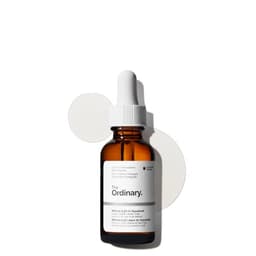
The Ordinary
Retinol 0.5% in Squalane
The cheapest honest way to buy the ingredient class with the actual evidence. A printed 0.5% retinol in squalane — and if 'firmer skin' is what you are shopping for, this is where the money belongs rather than in a collagen jar.
See it ranked in fullPrice as of October 10, 2026. #ad How we’re funded
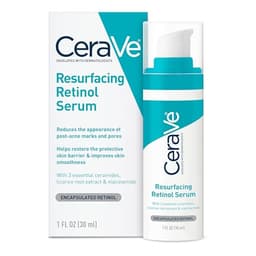
CeraVe
Resurfacing Retinol Serum
The gentler retinoid route for anyone who wants the effect without the first-month flaking. Encapsulated retinol with ceramides, fragrance-free; the strength is not published, which is the trade you make for tolerability.
See it ranked in full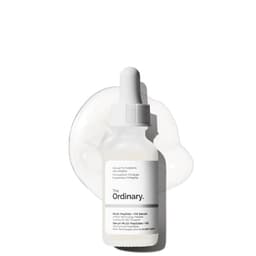
The Ordinary
Multi-Peptide + HA Serum
If 'collagen' is the word you were searching for, a peptide serum is the closest legitimate thing — signal fragments small enough to get somewhere, rather than whole collagen that cannot. The evidence is thinner than for retinoids and the price is low enough that the gamble is small.
See it ranked in full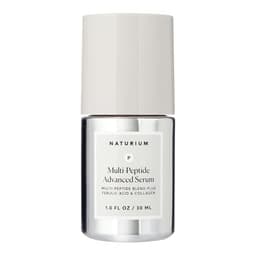
Naturium
Multi-Peptide Advanced Serum
The other peptide serum we would consider, and a reasonable partner to a retinoid on the nights you are not using it. Peptides have no adjustment phase and no sun-sensitivity consideration, which is their main practical advantage.
See it ranked in fullPrice as of October 10, 2026. #ad How we’re funded
Frequently asked questions
Is retinol or collagen better for skin?
Retinol, by a wide margin, if the question is about firmness and fine lines. Retinoids are the over-the-counter ingredient class with real clinical evidence for photoaging, and they work by acting on the collagen your skin makes. A topical collagen cream is applying the finished protein to the outside of your skin, where it is far too large a molecule to take up residence in your dermis — it functions as a humectant and film-former, which is to say a good moisturizer. Both can be in a routine; only one is a treatment.
Does collagen cream actually work?
It works as a moisturizer, and that is not nothing — hydrated skin looks smoother and creases less. What it does not do is add collagen to your skin's structure. Collagen is a very large protein; the standard reference framing of what a moisturizer does divides its job into humectants, emollients and occlusives, and a large water-binding protein sitting on the surface is doing the first of those. If you like how a collagen cream feels, keep using it, and buy your firming from somewhere else.
What about collagen peptides — are those different?
Yes, and this is the honest middle ground. Peptides are short fragments rather than whole protein, small enough that getting somewhere is at least plausible, and some are designed to act as signals rather than as building material. The published reviews of cosmetic peptides are genuinely useful here because they are candid about the limits: absorption is the central problem and the quality of the evidence is mixed. So peptides are a reasonable thing to spend modest money on and a poor thing to spend a lot on.
Do oral collagen supplements work better than creams?
That is a different question with a different literature, and it is not one a skincare publication should answer by implication. We review topicals, we have not reviewed the supplement trials, and we are not going to summarize a body of evidence we have not read. If you are considering a supplement, ask a doctor or a dietitian rather than taking a product page's word for it.
Can I use retinol and a collagen cream together?
Yes, easily, and it is a sensible pairing for a practical reason: retinol causes dryness and flaking in the first weeks, and a rich collagen cream is a moisturizer. Apply the retinoid first, the cream on top. You are not getting two firming treatments — you are getting a treatment and a buffer, which is exactly what the first month of a retinoid needs.
Retinol vs collagen vs hyaluronic acid?
Retinol is the treatment. Hyaluronic acid is the hydrator with published support for improving hydration and the appearance of fine lines while you use it. Collagen applied topically is, functionally, a third hydrator. So the practical line-up is one treatment and two things that make skin look better today — and if you are buying a hydrator, hyaluronic acid is cheaper and better characterized than collagen.
I am in my twenties — should I be using a collagen cream preventively?
If you want a moisturizer, buy a moisturizer you like. If you want prevention, the two things with the strongest case are daily sunscreen and, later, a retinoid — in that order, and sunscreen by a long way. The FDA's own guidance notes that most people apply much less sunscreen than the amount SPF is tested at, so getting that right beats adding a fourth product.
How long does retinol take to show a firming effect?
Months. The retinoid literature describes gradual change in texture, tone and fine lines, and the trials that established it ran for months rather than weeks. Nothing about 'firmness' happens in a fortnight with any topical. A collagen cream will make skin look plumper the day you use it, which is a real effect and a temporary one — telling those two things apart is most of what this page is for.
Sources
- American Academy of Dermatology — Retinoid or retinol? — AAD on the difference between prescription retinoids and OTC retinol (accessed July 17, 2026)
- Human Skin Aging and the Anti-Aging Properties of Retinol (PubMed) — Review of topical retinol's effect on collagen and photoaging (accessed July 17, 2026)
- The use of retinoids in the treatment of photoaging (PubMed) — Clinical-trial evidence for topical retinoids in photoaging (accessed July 17, 2026)
- Topical peptides as cosmeceuticals (PubMed) — Review of cosmetic peptides — mechanisms, absorption limits and evidence quality (accessed August 19, 2026)
- Moisturizers — StatPearls (NCBI Bookshelf) — Reference on humectants (hyaluronic acid), occlusives and emollients (accessed July 17, 2026)
- Benefits of topical hyaluronic acid for skin quality and signs of skin aging (PMC) — Literature review plus clinical evidence on what topically applied hyaluronic acid does for hydration and the appearance of fine lines (accessed September 12, 2026)
- U.S. FDA — Sunscreen: How to Help Protect Your Skin from the Sun — FDA on SPF numbers, broad-spectrum and application amount (accessed July 17, 2026)
Keep reading
Best peptide serums
If 'collagen' was the word you searched, this is the legitimate version — and the honest limits of the evidence.
See the picksBest retinol serums
The ingredient class with the actual firming evidence, every stated percentage compared.
See the picksCeramides vs peptides
Barrier repair against collagen signalling — which of the two your skin is actually asking for.
Compare themHyaluronic acid vs retinol
The same treatment-versus-hydration question, with the better-characterized hydrator.
Compare themBest actives for anti-aging
The whole shortlist in priority order, with sunscreen where it belongs — at the top.
See the picksRetinol benefits
What the evidence supports and what it does not, with the timelines attached.
Read the guide