Actives & Acids

Best Vitamin C Serum Under $20

Every vitamin C serum in our registry under $20 right now, ranked - and the architecture the price ceiling removes entirely, which is more interesting than the one it leaves behind.

By Stephen V.Last updated How we pick

The pick with the highest published dose under this ceiling — and the highest in our whole vitamin C registry, at any price — is The Ordinary Vitamin C Suspension 23% + HA Spheres 2%. The gentlest route to a printed figure, and the budget pick, is The Ordinary Ascorbyl Glucoside Solution 12%. And if you want the most serum for your money rather than the biggest number, TruSkin Brightening Vitamin C Serum comes in a bottle roughly twice the size of everything else here.

Now the part worth reading before you buy anything. Under $20, the formulation with the best-known evidence behind it is not on the shelf at all. The architecture that produced the most-cited result in topical vitamin C — L-ascorbic acid in water, stabilized with vitamin E and ferulic acid — starts above this ceiling in our registry and stays there. What $20 buys instead is one of two engineering workarounds: take the water out, or swap the molecule for a derivative. Both are legitimate. Neither is the same purchase. Every price below is live and dated from our own price layer, counted at the moment you load the page; we own no units, and our method is how we pick.

How this is funded: we earn a commission if you buy through our links, at no extra cost to you. It never changes which product we recommend, and we’ll tell you when we’d skip one. Full disclosure.

Quick picks

Ranked on formulation, stated concentration and buyer fit. Select a row to jump to the full write-up. We have not tested these products — here is exactly what we do instead.

#ProductBest forPrice
1
The Ordinary Vitamin C Suspension 23% + HA Spheres 2%

The Ordinary Vitamin C Suspension 23% + HA Spheres 2%

The least expensive route to a truly high 23% L-ascorbic acid dose — the trade being a gritty, silicone feel that not everyone can live with. A budget winner with a catch we won't hide.

Best overall, and the highest published strength at any price
$16.20 · View on Amazon

Price as of November 21, 2026. #ad How we’re funded

2
The Ordinary Ascorbyl Glucoside Solution 12%

The Ordinary Ascorbyl Glucoside Solution 12%

A water-based vitamin C derivative at a printed 12%, in a formula that sits near skin-neutral pH instead of the pH 3 that pure L-ascorbic acid needs. It is the gentlest route to a published vitamin C number that this registry sells, and the trade is honest: a derivative has to convert in the skin, and its evidence base is thinner than L-ascorbic acid's.

Gentlest published figure, and the budget pick
$14.80 · View on Amazon

Price as of November 21, 2026. #ad How we’re funded

3
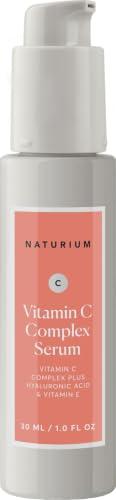
Naturium Vitamin C Complex Serum

Naturium Vitamin C Complex Serum

The most wearable texture of the budget vitamin C serums here, with hyaluronic acid and vitamin E in the base. It is also the least documented: the listing names a vitamin C "complex" without saying which form or how much, so we rank it on texture and support ingredients rather than on a number it does not publish.

Best texture
$16.79 · View on Amazon

$20.9920% off

Price as of November 21, 2026. #ad How we’re funded

4
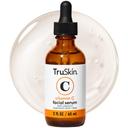
TruSkin Brightening Vitamin C Serum

TruSkin Brightening Vitamin C Serum

An Amazon top-seller founded on sodium ascorbyl phosphate — a mild vitamin C derivative rather than L-ascorbic acid. It irritates less, but it also brightens more gently and more slowly, so keep expectations grounded.

Most serum per dollar
$19.31 · View on Amazon

$38.9950% off

Price as of November 21, 2026. #ad How we’re funded

The picks in full

#1Best overall, and the highest published strength at any price

The Ordinary Vitamin C Suspension 23% + HA Spheres 2%

The least expensive route to a truly high 23% L-ascorbic acid dose — the trade being a gritty, silicone feel that not everyone can live with. A budget winner with a catch we won't hide.

Strengths

  • A labeled 23% pure L-ascorbic acid — seriously high
  • The waterless suspension holds up against oxidation better than water-based serums
  • The cheapest per application of any vitamin C on this list

Trade-offs

  • A gritty, slightly draggy feel is the frequent gripe
  • At 23% it can burn or trigger a purge on sensitive skin, so it's no place to begin
Key activeL-ascorbic acid (vitamin C)
Stated concentration23%
FormatGritty silicone suspension
Fragrance-freeYes
Best forOily, Resilient, Not sensitive

Formulation note. 23% L-ascorbic acid particles suspended in silicones, a waterless base chosen for stability. The strength is high and the texture compromise is real — and we'll come out and say it.

Ingredients and claims read from the product listing, on July 18, 2026. “Not published” means the brand does not state that figure.

#2Gentlest published figure, and the budget pick

The Ordinary Ascorbyl Glucoside Solution 12%

A water-based vitamin C derivative at a printed 12%, in a formula that sits near skin-neutral pH instead of the pH 3 that pure L-ascorbic acid needs. It is the gentlest route to a published vitamin C number that this registry sells, and the trade is honest: a derivative has to convert in the skin, and its evidence base is thinner than L-ascorbic acid's.

Strengths

  • The 12% is printed in the product name on the brand's own page — most vitamin C serums publish nothing
  • Water-based at a stated pH of 6.00-7.00, so it does not rely on the low pH that makes pure vitamin C sting
  • Twelve ingredients, no fragrance in the list, and the cheapest published vitamin C figure here

Trade-offs

  • Ascorbyl glucoside is a derivative: it has to convert to ascorbic acid in the skin, and the published clinical record behind it is thinner than L-ascorbic acid's
  • A 12% derivative is not equivalent to 12% L-ascorbic acid, and nobody publishes the conversion rate
  • No fragrance-free claim on the brand's page, even though no fragrance appears in the list
Key activeAscorbyl glucoside (vitamin C derivative)
Stated concentration12%
FormatLightweight water-based serum
Fragrance-freeNot published
Best forSensitive, Normal, Dry, Vitamin-C-intolerant

Formulation note. Read from the brand's own US product page: a water-based serum listing Aqua, Ascorbyl Glucoside, Propanediol, Aminomethyl Propanol, Triethanolamine, Isoceteth-20, Xanthan Gum, Dimethyl Isosorbide, Ethoxydiglycol, Trisodium Ethylenediamine Disuccinate, 1,2-Hexanediol and Caprylyl Glycol, with a stated pH of 6.00-7.00, one 30 mL size, and alcohol-free / oil-free / silicone-free / vegan flags (water-free: No). The pH is the thing to notice — a near-neutral formula is only possible because ascorbyl glucoside is a stabilized derivative rather than free ascorbic acid, which is exactly why it stings less and exactly why it is a step removed from the molecule the trials used.

Ingredients and claims read from the product listing, on November 21, 2026. “Not published” means the brand does not state that figure.

#3Best texture

Naturium Vitamin C Complex Serum

The most wearable texture of the budget vitamin C serums here, with hyaluronic acid and vitamin E in the base. It is also the least documented: the listing names a vitamin C "complex" without saying which form or how much, so we rank it on texture and support ingredients rather than on a number it does not publish.

Strengths

  • Hyaluronic acid and vitamin E in the same bottle, so it layers without a second hydrating step
  • A light, non-tacky serum texture, which is where high-percentage L-ascorbic acid formulas usually lose people
  • From a brand that does print exact figures on its other products, sold through mainstream US retail

Trade-offs

  • No vitamin C form and no percentage published anywhere on the listing — the word is "complex", which is not a specification
  • Without a form you cannot tell whether you are buying L-ascorbic acid or a milder derivative, and those are different purchases
  • We could not read the brand's own product page on the date this entry was written (the site rate-limited us), so every spec here is from the retail listing
Key activeVitamin C complex (form not published) + hyaluronic acid + vitamin E
Stated concentrationNot published
FormatLight fluid serum
Fragrance-freeNot published
Best forNormal, Combination, Dry

Formulation note. Read from the retail listing on the date above: a 1 fl oz (30 mL) serum sold as a vitamin C complex with hyaluronic acid and vitamin E. Neither the vitamin C form nor its percentage is stated, and no pH is given. On a site that ranks by what is published, that places it below the two serums here that print a figure — not because it is a bad formula, but because an undisclosed active cannot outrank a disclosed one.

Ingredients and claims read from the product listing, on November 21, 2026. “Not published” means the brand does not state that figure.

#4Most serum per dollar

TruSkin Brightening Vitamin C Serum

An Amazon top-seller founded on sodium ascorbyl phosphate — a mild vitamin C derivative rather than L-ascorbic acid. It irritates less, but it also brightens more gently and more slowly, so keep expectations grounded.

Strengths

  • Sodium ascorbyl phosphate holds up far better and stings far less than L-ascorbic acid
  • Rounds itself out with hyaluronic acid and vitamin E
  • Cheap and reviewed by the thousands

Trade-offs

  • Being a derivative, its brightening evidence lags behind L-ascorbic acid's
  • It carries botanical extracts that can trouble the most reactive complexions
Key activeSodium ascorbyl phosphate (vitamin C derivative)
Stated concentrationNot published
FormatLight lotion
Fragrance-freeNot published
Best forSensitive, Vitamin-C-intolerant

Formulation note. Runs on sodium ascorbyl phosphate instead of L-ascorbic acid. Derivatives are milder and more shelf-stable, but they have to convert in the skin and stand on less evidence — a reasonable swap for reactive skin.

Ingredients and claims read from the product listing, on October 24, 2026. “Not published” means the brand does not state that figure.

What the $20 ceiling actually removes

Price bands are usually boring: the cheap shelf is the shelf that publishes nothing, and the expensive shelf buys you disclosure. That is what this site has found over and over. This band breaks the pattern twice, and both breaks change what you should buy.

Break one: the cheapest shelf holds the highest published percentage in the entire category. A 23% L-ascorbic acid figure, printed on the label, for less than the cost of a cinema ticket. Nothing above this ceiling in our registry publishes a higher number — the serums at twice and three times the price publish 10%, 12% and 15%. If your only criterion is the biggest disclosed dose, the band does not cost you anything. It saves you money.

Break two, and the real finding: what the ceiling removes is not a percentage, it is an ARCHITECTURE. The dermatology review we cite on topical vitamin C is clear that the form and the stability of a formula decide whether it does anything, because L-ascorbic acid in water is chemically fragile and needs a low pH to penetrate. The famous answer to that problem is the L-ascorbic-acid-plus-vitamin-E-plus-ferulic-acid combination, where the published work found that ferulic acid stabilizes the solution and roughly doubles its photoprotection. In our registry, every serum built that way sits above $20. Under the ceiling, you get one of two different solutions to the same chemistry problem:

Workaround A: remove the water. No water means no pH to maintain and a far slower oxidation clock, which is exactly why a 23% figure is affordable in the first place. The cost is physical: the vitamin C is suspended as particles in silicone, so it feels gritty and drags a little, and plenty of people cannot live with that on their face at 7am. It is also too strong a dose to start on.

Workaround B: change the molecule.A derivative is stable in water at a comfortable pH, which is why the ascorbyl glucoside pick sits at a stated pH of 6.00–7.00 rather than the pH 3 a pure L-ascorbic acid serum needs. It barely stings. The trade is real and it is the one the whole derivative category turns on: the molecule has to convert to ascorbic acid in your skin, nobody publishes the conversion rate, and the clinical record behind derivatives is thinner than the record behind L-ascorbic acid. We lay that argument out properly in L-ascorbic acid vs vitamin C derivatives.

How we ranked them

1. Does the label publish a figure?This is the first filter on every roundup on this site and it splits this band cleanly in half. Two of the four print a percentage — 23% and 12% — and two publish nothing at all. Here is the uncomfortable detail: the split is not by price. Both disclosed serums come from the same brand, and the two that disclose nothing cost almost exactly the same as the two that do. In this band, disclosure is a brand policy, not a price tier.

2. Which form of vitamin C is it?L-ascorbic acid is the molecule the trials used, so it outranks a derivative where the two are otherwise comparable. A named derivative — ascorbyl glucoside, sodium ascorbyl phosphate — outranks an unnamed “complex”, because at least you can look the named one up. One pick here names no form whatsoever, and it is ranked accordingly rather than excluded, because the texture is genuinely the best of the four.

3. Price per milliliter, not per bottle.Vitamin C is a once-daily product you apply with an eyedropper, so bottle size decides your actual monthly cost. Three of these are 30 mL. One is roughly double that, which makes it the cheapest per application in the band despite having the highest sticker price in it — a reversal worth noticing, and the kind of thing a sticker-price ranking hides.

4. Can a beginner start on it?A 23% L-ascorbic acid suspension is not a first vitamin C serum, and we are not going to rank it as one just because it wins on the number. The ranking order and the “which one” section below pull in slightly different directions on purpose: first place is for the best product under the ceiling, and the section after tells you whether that is the best product for you.

Which one, by what you want

“The highest dose I can get for the money.” The 23% suspension, and nothing else is close. A printed 23% L-ascorbic acid in a waterless silicone base, fragrance-free, at the bottom of the price range. Go in knowing the two real cons: a gritty, draggy texture that is the single most common complaint about it, and a dose high enough to sting or trigger a purge on reactive skin. Apply it to dry skin, give it a minute, and do not layer it under something tacky.

“I want a number on the label but I cannot take the sting.” The ascorbyl glucoside 12%. It is the only product in this band that squares those two wishes: a figure printed in the product name, in a water-based formula at a stated pH of 6.00–7.00 that is nowhere near acidic enough to burn. Twelve ingredients, no fragrance in the list, and the cheapest bottle here. Understand what you are accepting: 12% of a derivative is not 12% of L-ascorbic acid, and nobody publishes what it converts to. It is the right first vitamin C serum for most people and the wrong one for someone chasing maximum strength.

“I want something I will actually enjoy using.” The Naturium complex. A light fluid with hyaluronic acid and vitamin E in the base, so it layers without a separate hydrating step, and the most wearable texture of the four by some distance — which matters more than purists admit, because the serum you like is the serum you finish. The cost of that is documentary: the listing names a vitamin C “complex” without saying which form or how much, and “complex” is not a specification. On a site that ranks by what is published, that is why it sits third rather than first. We also could not read the brand’s own product page on the day this was written, because the site rate-limited us, so every spec we hold for it came from the retail listing — and we would rather tell you that than imply we read more than we did.

“Whichever one lasts longest.”The TruSkin, comfortably. It runs on sodium ascorbyl phosphate, a mild derivative rather than L-ascorbic acid, with hyaluronic acid and vitamin E alongside it, in a bottle about twice the size of the rest of the band. It is the gentlest thing here and the slowest-acting, and it carries botanical extracts that the most reactive skin sometimes objects to. It is also the pick closest to the ceiling, so it is the one most likely to cross it on a price move — which is a good moment to repeat that the live buy button decides what is in this band, not our ordering.

What the ceiling leaves out, and why

Three serums we rank elsewhere are excluded by price rather than by judgment, and naming them is the point of a band page. Our Best overall for vitamin C generally — a 15% L-ascorbic acid with vitamin E and ferulic acid — sits above $20, as do the pharmacy-brand derivative serum and the ceramide-based 10% L-ascorbic acid option. If your budget is flexible by ten dollars, read best vitamin C serums and best vitamin C serum under $50 before you buy from this page, because that is where the evidence-led formulation lives.

Two other exclusions are about format, not money. A vitamin C creamin our registry falls under $20, and it is not here, because a cream and a serum are different purchases with different doses and different places in a routine — those are ranked at best vitamin C moisturizer. And we rank no vitamin C product whose active we cannot name at all; an unnamed form is a documentation problem we can live with, while an unnamed ingredient is not a product we can write about.

One thing the ceiling does not cost you: if dark spots rather than general dullness are why you are buying vitamin C, every serum in this band is a legitimate route, because vitamin C is one of only two ingredient classes a dermatology body names in its own melasma guidance. The cross-ingredient version of that argument, including where vitamin C ranks against azelaic acid and alpha arbutin on published evidence, is at hydroquinone alternatives.

Getting your money's worth out of a cheap serum

A budget vitamin C serum fails for boring reasons far more often than formulation ones, and all three are free to fix.

Use it in the morning, under sunscreen.The dermatology review we cite covers vitamin C’s antioxidant and photoprotective role, and the point of an antioxidant is to be present when the oxidative stress arrives. Vitamin C is not a sunscreen and does not have an SPF — the FDA’s own guidance is what defines what that number means — so it goes underneath one rather than instead of one. The sequencing is in vitamin C and sunscreen, and the morning-or-night question is settled at vitamin C morning or night.

Watch the color, and throw it out when it turns. This applies to the water-based L-ascorbic acid serums above this band more than to anything in it, and that is one of the quiet advantages of both workarounds here: the waterless suspension and the derivatives are far more stable in the bottle than a water-based L-ascorbic acid serum is. A serum that has gone amber or brown has already done what it is going to do.

Give it three months, not three weeks.Tone work is slow at every price. The AAD’s skincare basics guidance is the reference for the unglamorous version of this: consistency and sunscreen do more than product selection. If you are using a cheap serum properly every morning under SPF, you are ahead of most people using an expensive one twice a week. The full method is at how to use a vitamin C serum.

What this page refuses to tell you

That 23% beats 15% because 23 is bigger.It does not work like that. Higher L-ascorbic acid percentages are harder to stabilize and more likely to irritate, and the published photoprotection result that made this category famous was obtained with a 15% formula supported by vitamin E and ferulic acid — not with the biggest number anyone could print. We rank the 23% first on disclosure and value within this band, which is a narrower claim than “it works best”.

That a derivative percentage is comparable to an L-ascorbic acid percentage. It is not, no conversion figure is published for any derivative in this band, and we will not invent one. 12% ascorbyl glucoside and 12% L-ascorbic acid are different quantities of different molecules.

A verdict on how any of these feels on skin.We own no units and test nothing on our own faces. Where we describe a texture — gritty, light, draggy — it is read from the formulation and from what the listing states, and the texture complaint about the 23% suspension is reported as the common complaint it is, not as our experience of it.

That this band will still be this band tomorrow. Amazon prices move daily and one of these four sits within a dollar or two of the ceiling. This page counts the band at request time from the live price layer rather than from a number typed into the copy, so if a pick has crossed $20 since this was written, the button will tell you before the prose does. Trust the button.
Frequently asked questions

What is the best vitamin C serum under $20?

On published dose, The Ordinary Vitamin C Suspension 23% + HA Spheres 2% — a printed 23% L-ascorbic acid, which is the highest figure in our entire vitamin C registry at any price, in a waterless silicone base at the bottom of this band. It is not the best beginner choice, though: the texture is gritty and 23% is enough to sting reactive skin. For a first serum under $20 with a figure still printed on it, The Ordinary Ascorbyl Glucoside Solution 12% is the better buy, at a stated pH of 6.00 to 7.00 instead of the pH 3 a pure L-ascorbic acid formula needs.

Is a $15 vitamin C serum as good as a $40 one?

On disclosure, sometimes better — the cheapest serum in this band publishes a higher percentage than anything above it. On formulation architecture, no, and that is the honest answer to this question. The water-based L-ascorbic acid plus vitamin E plus ferulic acid combination, which is the formula behind the most-cited photoprotection result in this category, does not exist under $20 in our registry. Under the ceiling you are choosing between a waterless high-percentage suspension and a derivative, both of which are real solutions to vitamin C's stability problem and neither of which is that formula.

What is the difference between ascorbyl glucoside and vitamin C?

Ascorbyl glucoside is a vitamin C derivative rather than vitamin C itself: it is stable in water at a comfortable pH, which is why the serum here sits at a stated pH of 6.00 to 7.00 and barely stings, but it has to convert to ascorbic acid in your skin to do anything. Two consequences follow. First, nobody publishes the conversion rate, so 12% ascorbyl glucoside is not 12% L-ascorbic acid and we publish no equivalence. Second, the published clinical record behind derivatives is thinner than the record behind L-ascorbic acid. The trade is tolerance for evidence, and for a lot of people it is a sensible one.

Which serum under $20 lasts the longest?

The TruSkin, by a wide margin — it comes in a bottle roughly twice the size of the three 30 mL serums beside it, which makes it the cheapest per application in the band even though it has the highest sticker price in it. That is the argument for ranking vitamin C per milliliter rather than per bottle: this is a once-daily eyedropper product, so bottle size, not shelf price, decides what you actually spend per month.

Why isn't CeraVe or Maelove on this list?

Price, not judgment. Our Best overall for vitamin C generally is a 15% L-ascorbic acid with vitamin E and ferulic acid, and it sits above this ceiling, as do the CeraVe 10% and the La Roche-Posay derivative serum. A band page is only honest if it names what the band excludes, and in this case the exclusions include the best-evidenced formulation in the category. If your budget stretches by ten dollars, read our best vitamin C serums ranking before buying from this page.

Do the prices on this page update?

Yes. Every price renders from our live price layer at the moment you load the page, not from a number typed into the article, so the buy buttons are the authority on whether a pick is still under $20. That matters here because one of the four sits within a couple of dollars of the ceiling and Amazon prices move daily. If the button disagrees with the ordering, the button is right.

Can I use a cheap vitamin C serum with retinol or an acid?

Usually yes, with the timing separated rather than the products stacked. The conventional arrangement is vitamin C in the morning under sunscreen and the retinoid at night, which also happens to be when each one is most useful. Running a high-percentage L-ascorbic acid and an exfoliating acid in the same step is the main way people turn a cheap serum into a barrier flare, and a 23% suspension is the pick most likely to do it. Our layering and combination guides cover the specific pairings.

Sources

  • Vitamin C in dermatology (PMC) — Telang — review of topical vitamin C forms, stability and photoprotection (accessed July 17, 2026)
  • Ferulic acid stabilizes a solution of vitamins C and E and doubles its photoprotection (PubMed) — Lin et al. — the L-ascorbic acid + vitamin E + ferulic acid evidence (accessed July 17, 2026)
  • The Ordinary — Ascorbyl Glucoside Solution 12% (official product page) — The brand's own US listing, headed "Ascorbyl Glucoside Solution 12% for Antioxidant Support": the 12% is in the product name, the format is a water-based serum, the stated pH is 6.00-7.00, there is one 30 mL size, and the highlights read alcohol-free Yes, oil-free Yes, silicone-free Yes, vegan Yes, water-free No, with no fragrance-free claim. Twelve ingredients: Aqua, Ascorbyl Glucoside, Propanediol, Aminomethyl Propanol, Triethanolamine, Isoceteth-20, Xanthan Gum, Dimethyl Isosorbide, Ethoxydiglycol, Trisodium Ethylenediamine Disuccinate, 1,2-Hexanediol, Caprylyl Glycol. HONESTY NOTE, recorded because it changed what we published: the page carries a "Note:" paragraph comparing ascorbyl glucoside's stability in water against direct L-ascorbic acid, and we could NOT obtain that paragraph as reliable verbatim text on this date — two reads returned differently-worded summaries of it. So no sentence on this site is presented as a quotation from it. The derivative-versus-L-ascorbic-acid argument on our pages is sourced to pmcVitaminCDerm instead, and from this page we publish only the hard specs above, which were consistent across reads (accessed November 21, 2026)
  • American Academy of Dermatology — Skin care basics — AAD consumer guidance on cleansing, moisturizing and sun protection (accessed July 17, 2026)
  • U.S. FDA — Sunscreen: How to Help Protect Your Skin from the Sun — FDA on SPF numbers, broad-spectrum and application amount (accessed July 17, 2026)

Keep reading