How we ranked these
Every roundup on this site starts with the criteria, not the products, because otherwise the ranking is just taste. Here are the four things we weighed, in the order we weighed them.
1. Does the brand publish a retinol figure?
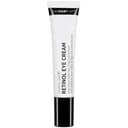
Retinol is a cosmetic ingredient in the United States, not a regulated over-the-counter drug like benzoyl peroxide, so there is no Drug Facts panel forcing anyone to disclose a percentage. Brands that publish one are choosing to. Around the eye that choice matters more than it does on the face, because the entire strategy is restraint— and you cannot practice restraint against a number nobody will give you. Only The INKEY List publishes here, and it does the honest version: it states the compound percentage and what that works out to in actual retinol. That is why it wins, even though the resulting dose is the gentlest on this page.
Watch for the trick that runs through this whole category: a big number on the front of the pack that describes a complex or a compound, not the retinol. Three percent of a slow-release compound is not three percent retinol, and a brand that prints only the first figure is counting on you not to ask. The same pattern shows up on face creams — we walk through it in the best retinol creams roundup, where one pick advertises a 2.5% complex that is nothing like a 2.5% dose.
2. What is buffering the retinol?
Because five of six creams here will not name a dose, the specification that reliably changes your experience is what the retinol is sitting in. Three things earn real credit:
- Ceramides— the lipids your barrier is built from. The eye area has fewer sebaceous glands to make its own, which is why a ceramide-carrying eye cream behaves noticeably better through the first irritating month.
- Niacinamide— of everything brands add alongside a retinoid, this has the strongest published record for barrier support and redness. If you want the long version, we cover the pairing in niacinamide and retinol.
- Emollients that seal without occluding the lash line — squalane, shea, glycerin, panthenol. Under-eye flaking is what makes people quit; a base that prevents it is doing more for your results than an extra hundredth of a percent of retinol.
Encapsulation deserves a smaller, honest mention. Slowing the release of retinol is a sensible delivery choice for thin skin and four of our six picks claim some version of it. But “encapsulated” is a formulation technique, not a dose, and it is frequently offered instead ofa number rather than alongside one. Treat it as a point in a cream’s favor, never as an answer to the question you actually asked.
3. Fragrance — and why it matters more here
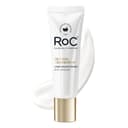
Fragrance is the single most avoidable irritant in skincare, and the eye area is where an avoidable irritant costs the most: thinner skin, a weaker barrier, and a retinoid already making both more reactive. Five of our six picks are explicitly fragrance-free. The sixth, RoC, simply makes no fragrance-free claim, so we record that as not published rather than assume either way. If you are choosing between two otherwise equal eye creams and one is fragranced, the decision is made for you.
4. Format, size and what you are really paying per use
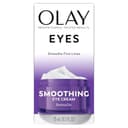
Every cream here is a 0.5 oz / 15 ml jar or tube, which is the category standard, and every one of them will last you months at the dose this area wants — roughly a grain of rice for both eyes. That flattens the price comparison in a useful way: the gap between the cheapest and the most expensive pick on this page is several-fold, but the gap in what they disclose about their active is not. A prestige price buys you a nicer base and a nicer box. It does not, on this page, buy you more information.
Do you actually need a separate eye cream?
Honestly: often not. The most common sensible answer is to bring your existing face retinol carefully toward the orbital bone and skip this purchase entirely. A dedicated eye cream earns its place in three situations.
You have tried and your under-eyes could not take it. If your face retinol is a stated 0.5% or 1% and the skin under your eyes went red and crepey within a week, a purpose-built cream at a fraction of that dose in a heavier base is a genuine fix, not an upsell. You want the buffering built in. Some people will not reliably layer a moisturizer over a treatment step at 11pm; a cream that carries the ceramides and the retinol together removes the step you were going to skip. Your face routine is already crowded. If you alternate an exfoliating acid and a retinol on the face, a low-dose eye cream you can use on the acid nights keeps the eye area on a steadier schedule.
Conversely, if your face retinol is a gentle, stated low dose and your under-eyes tolerate it, you already own the right product. Use it sparingly on the orbital bone, never on the lid or the lash line, and put the money toward a better moisturizer instead — our best ceramide moisturizers picks are the ones we would seal an eye area with. And if you have not chosen a face retinol yet, start with the best retinol serums, where the published percentages actually live.
How to start one without wrecking your under-eyes
The ramp matters more here than the product does. Start at two nights a week and hold there for three to four weeks before adding a night — longer than you would on the face, because this skin recovers more slowly. Use a grain of rice for both eyes and no more; a pea-sized amount is a face dose and it will migrate.
Apply it to the orbital bone, the ridge you can feel under your brow and beneath your lower lash line, and let the product move inward on its own. Never apply to the lid or the waterline. Pat with the ring finger rather than dragging. If you are prone to watering eyes or you sleep on your side, apply earlier in the evening so the cream has settled before you lie down — a retinol that migrates into the eye at 2am is the most common reason people describe an eye cream as “stinging.”
Buffer if you need to: moisturizer first, then the eye cream on top, which slows absorption without stopping it. Do not use an exfoliating acid around the eye on the same night while you are building tolerance. And wear sunscreen daily, because retinoids increase sun sensitivity and UV undoes the tone work you are paying for. If you go red or flaky, drop back a night rather than quitting — how often to use retinol has the full schedule by skin type, and retinol side effects covers what is normal adjustment versus a signal to stop.
What a retinol eye cream will not do
This is where most of the marketing in the category lives, so it is worth being blunt. A retinol eye cream can improve fine lines, crepiness and texture over a few months, because that is what retinoids do to skin anywhere. It has a modest, indirect effect on dark circles only when they come from thin, translucent skin over the vessels beneath — thickening the skin slightly makes them read lighter. It does very little for circles caused by pigment, by inherited tear-trough shadow, or by bone structure, and nothing at all changes those. It does not drain puffiness; caffeine, which several picks include, constricts vessels briefly and cosmetically, and that is the whole of it. And nothing topical touches under-eye fat pads or hollowing, which are structural.
You will see brands quote figures like “90% saw dark circles visibly reduced.” Read those carefully: they are almost always self-reported consumer-perception surveys run by the brand, not independent measurement, and the phrase “visibly reduced” is doing enormous work. We quote them as claims and label them as claims. If dark circles are your only concern, a vitamin C or azelaic acid routine plus honest expectations will serve you better than a retinoid — see dark spots and hyperpigmentation for what actually shifts pigment.
Timeline: what to expect, and when
Weeks one to four are the uncomfortable part — some dryness, possibly a little flaking, and no visible benefit whatsoever. Weeks four to eight are when texture starts to look smoother and makeup stops settling into the creases as fast. Meaningful change in fine lines takes three months and beyond, because collagen remodels on a timescale of months, not weeks. Take a photo at the start in consistent light, then judge the cream at the twelve-week mark rather than the three-week one. That single habit is the difference between a routine that works and a drawer of half-used jars.