Why vitamin C is the hardest active to put in a cream
Every active has a formulation constraint. Vitamin C has three, and they all push against what a moisturizer is.
Water.L-ascorbic acid is unstable in aqueous solution — it oxidizes, which is the chemistry behind the familiar advice that a serum which has turned deep orange or brown is past using. A cream is largely water by volume.
pH. L-ascorbic acid needs an acidic formula to cross the skin barrier in meaningful amounts. Moisturizers are generally formulated close to skin pH, because that is what feels comfortable on a product you apply liberally twice a day.
Air and light. The dermatology literature on topical vitamin C is consistent that the delivery system is as decisive as the concentration. A wide-mouth jar opened daily is the least protective packaging available.
There are real answers to all three, and the products that use them are the ones worth buying. Going water-freeremoves the stability problem outright — it is the same reasoning behind the anhydrous suspensions we rank among the serums. Using a derivative instead of L-ascorbic acid trades potency for stability, which is a legitimate trade and the subject of its own page: L-ascorbic acid vs vitamin C derivatives. And opaque, air-limiting packaging— a tube rather than a jar — buys the formula time.
What a buyer cannot do is tell which of those answers a given cream used, because almost none of them says.
What the labels in this category actually disclose
We checked every vitamin C cream we could resolve to a verifiable listing. Of the three in this ranking:
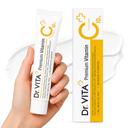
- One publishes a percentage— 10% pure ascorbic acid — and also states that it is water-free.
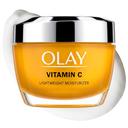
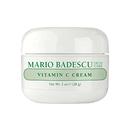
- Two publish neither a percentage nor the form of vitamin C used. Not the dose, and not which molecule.
- None publishes a pH.
The missing formis the part that should bother you most, and it is specific to this ingredient. With retinol, an undisclosed percentage still tells you the molecule. With vitamin C, “vitamin C” on a label could be L-ascorbic acid, sodium ascorbyl phosphate, magnesium ascorbyl phosphate, ascorbyl glucoside, tetrahexyldecyl ascorbate or 3-O-ethyl ascorbic acid, and those behave so differently — in stability, in strength, in the pH they need — that without the form the percentage would not help you much anyway.
That is why the ranking below puts the one product with a printed figure first and the least-documented one last, ahead of any judgment about texture. On a site that ranks by what is published, an undisclosed active cannot outrank a printed one.
How we ranked
1. Is the dose published, and the form with it? The first filter, and it separates this category immediately.
2. Does the format protect the active? Water-free beats water-based; a tube beats a jar. This is the criterion that lets a small brand outrank a large one here, because the large brands in this category have not published enough for their research budgets to count for anything.
3. What else is in it, and is it honest work? Niacinamide alongside vitamin C is a genuine addition with a real published record for tone and barrier support. A lactic acid in a daily leave-on cream is mild exfoliation you did not necessarily choose, which we count as a caveat rather than a feature. Fragrance on a product worn under sunscreen every morning is a mark against.
4. Does the cream format earn its place at all?If the honest answer for a reader is “buy a serum and a plain moisturizer”, the page has to say so — which is why one of our four picks is a serum.
When a vitamin C cream is the right buy
Three situations, and they are real rather than concessions.
You will not use two products. The best routine is the one you actually run. Adherence beats formulation: a vitamin C cream used every morning does more than a better-formulated serum that stays in the cupboard because the routine felt like work.
Your skin is dry and a serum alone leaves it tight. The AAD’s dry-skin guidance is an emollient applied consistently, and a cream carrying the active is one fewer layer between you and that.
L-ascorbic acid stings you.The low pH a serum needs is exactly what reactive skin objects to. A cream at a gentler pH, very likely using a derivative, is a softer landing — slower and milder, but used rather than abandoned.
And the situation where it is the wrong buy: if your reason for wanting vitamin C is a specific claim — fading dark spots, antioxidant protection under sunscreen — then the dose and the form are the whole point, and an undisclosed cream cannot deliver a claim it will not quantify. Buy from best vitamin C serums instead.
How to use it, and where it goes
Morning, after cleansing. If the vitamin C is in your moisturizer then the moisturizer step isthe treatment step, and sunscreen goes over it — always last, because a sunscreen film is the product and nothing should go on top of it. The AAD’s general ordering principle is thinnest to thickest, which puts a cream after any watery serum you are also using.
Two expectations worth setting. Vitamin C is an antioxidantadjunctunder sunscreen, not a substitute for any of it — the much-cited ferulic acid work found that ferulic acid stabilizes a solution of vitamins C and E and roughly doubles its photoprotection, which is an antioxidant finding and not an SPF multiplier. And for pigment, the AAD’s melasma guidance puts results on a three-to-twelve-month timescale with sun protection doing the work of prevention. Pair this page with best sunscreen for dark spots if marks are the reason you are here.
What we did not rank, and why
We left out vitamin C creams with no verifiable brand— the category is full of listings whose manufacturer we cannot establish, and we will not rank a percentage we cannot attribute to anyone. We left out sets and kits, which bundle a serum with a night cream and make it impossible to say what the reader is buying. We left out vitamin C body lotions, which are a different purchase at a different scale. And we left outcreams sold with an SPF claim: a moisturizer with SPF is applied at a fraction of the quantity a sunscreen label is tested at, so combining the two steps undermines the one that matters most in the morning.