The Ordinary Retinol 0.5% in Squalane Review
Eight ingredients, a printed percentage, and a storage instruction on the brand's own page that almost nobody follows. What the label actually says, what the squalane is really doing, and why the brand lists this as suited for dry skin only.
How this is funded: we earn a commission if you buy through our links, at no extra cost to you. It never changes which product we recommend, and we’ll tell you when we’d skip one. Full disclosure.
The Ordinary Retinol 0.5% in Squalane is the bottle this site points at more often than any other. It is the top pick on our retinol serum roundup, our beginner roundup and our serum versus cream comparison, and it has never had a page of its own. This is that page. It is reviewed the way every product on this site is — from what the brand publishes, never from hands-on use, because we own no units and run no trials. The method is set out in how we pick.
One sourcing note, in the open. The Ordinary’s product URLs carry an opaque numeric ID that cannot be guessed, and a wrong guess quietly returns a different product’s page with a 200 status. The page below was resolved from the brand’s own site search and confirmed to be the 0.5% product before anything was read off it.
The verdict in one paragraph
This is still the retinol we would hand most people who have decided to commit, and the reason is the number on the front. Almost nothing else on a drugstore shelf tells you how much retinol it contains; this tells you, and it sells a 0.2% and a 1% so the figure is a ladder rather than a marketing flourish. The formula is eight ingredients: squalane, caprylic/capric triglyceride, jojoba seed oil, retinol, tomato fruit extract, rosemary leaf extract, hydroxymethoxyphenyl decanone and BHT. Three caveats are worth knowing before you buy, and only one of them is usually mentioned. The base is an oil — the brand’s own highlights read oil-free: No, and Suited for: Dry Skin. There is no fragrance-free claim in those highlights, though no fragrance appears in the list. And the brand asks you to refrigerate the bottle after opening and finish it within three months, which is a genuine constraint that changes what the low price actually buys.
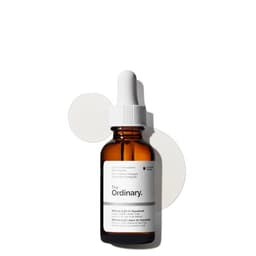
At a glance
The Ordinary Retinol 0.5% in Squalane
Stated active: 0.5% retinol, described by the brand as moderate strength. Ingredients: eight in total, no fragrance among them. Format: anhydrous — water-free, oil-based.
Size: 30 ml, the only size sold. Storage: refrigerate after opening, use within three months, per the brand.
Price as of October 19, 2026. #ad How we’re funded
Product image supplied by Amazon.
What is on the label
The full list, as published: Squalane, Caprylic/Capric Triglyceride, Simmondsia Chinensis (Jojoba) Seed Oil, Retinol, Solanum Lycopersicum (Tomato) Fruit Extract, Rosmarinus Officinalis (Rosemary) Leaf Extract, Hydroxymethoxyphenyl Decanone, BHT. Eight entries, and worth walking through, because four of them are doing a job that explains the product.
The first three are the vehicle. Squalane, caprylic/capric triglyceride and jojoba seed oil are emollients. There is no water in this formula at all — the brand gives the format as “Serum: Anhydrous” — and that is a deliberate choice rather than a cost saving. Retinol degrades in water, and taking the water out removes the pH problem and much of the stability problem in one move. It also means the product behaves on skin like a light facial oil, which is the single thing most reviews of it fail to say plainly.
The retinol is fourth. That is exactly what a declared 0.5% in an oil base should look like, and it is not a mark against the product. Ingredient order reflects quantity, not importance; 0.5% of anything sits below the carrier holding it.
The last two are the stability system. Hydroxymethoxyphenyl decanone is an antioxidant and BHT is a preservative antioxidant used to stop oils and sensitive actives going off. Their presence is the clearest signal on the label of what this category’s real problem is: retinol oxidizes, and a formulator who was not worried about it would not need two of these in an eight-item list.
There is no fragrance, and no fragrance-free claim. The brand’s highlights block lists water-free, alcohol-free, silicone-free, vegan, gluten-free and cruelty-free as yes, and oil-free as no. Fragrance-free is not among them. We report the absence of the claim and the absence of fragrance from the list as two separate facts, which is the pattern across this brand’s range.
The storage instruction nobody follows
On its own product page, under Notes, The Ordinary writes: “Once opened, this formulation should be refrigerated and used within a three-month period.” The usage directions repeat it: “Refrigerate after opening.”
This is the most consequential sentence on the label and it is almost never mentioned in discussion of this product. Two things follow from it.
The first is practical: if you are going to buy it, keep it in the fridge. It is a free intervention against the one degradation route the formula is clearly worried about. The second is about value. A 30 ml bottle used a few times a week will not be finished in three months by most people, so the honest way to read the price is as a quarterly cost rather than as a cheap bottle that lasts a year. It is still inexpensive on that basis — comfortably the cheapest way to buy a retinol with a published strength — but it is not the giveaway the sticker implies, and anyone comparing it against a pricier airless-pump rival should do the arithmetic on that footing.
What the brand says it is for — and what it says it is not
Three statements on the page deserve to be read literally.
“Suited for: Dry Skin.” That is the only skin type the brand lists. Combined with oil-free: No, it is a clear steer: this was formulated for skin that will welcome an oil. Oily-skinned readers are not excluded and many use it happily, but if you are oily and have a choice, the format question is worth reading first at retinol serum vs cream.
“This product is not a treatment for acne.” Printed on the brand’s own page. It is a statement about this product’s labeling rather than about vitamin A in general — over-the-counter adapalene is a genuine acne treatment, and we cover it in the adapalene guide. If your reason for buying a retinol is breakouts, that is the page to read instead of this one — along with best moisturizer for acne-prone skin, which is the step that decides whether anyone actually finishes a course of it.
“This product must not be used in conjunction with other retinoids.” Including retinol or retinoic acid. Obvious once stated, and routinely broken by people running a retinol serum under a retinol night cream.
Where 0.5% actually sits
The brand calls this “moderate strength” and positions it as the middle of a three-rung ladder, with an explicit instruction: “Start with Retinol 0.2% in Squalane and slowly work your way up to Retinol 0.5% in Squalane and Retinol 1% in Squalane.” It also offers an off-ramp for reactive skin, pointing people prone to sensitivity towards its Granactive Retinoid emulsion instead.
That ladder is the whole argument for buying this range rather than a branded alternative, and it is worth being precise about why. The published evidence for topical retinol concerns collagen and the visible signs of photoaging, and it is dose- and time-dependent — which means a product that will not tell you its dose cannot be compared with one that will. Look at our own registry: of the retinol creams we rank, every single one records “Not published” for concentration. Among serums, only this one and the Paula’s Choice 1% print a figure. Buying a stated 0.5% is not a claim that it outperforms an unstated rival; it is a claim that you can tell what happened when you move up or down, which over a year of use is worth more than a marginally better base.
The caution that comes with it is the brand’s own, and it is accurate: “Retinol can cause irritation, redness, and peeling, especially around the eyes and mouth, in the early stages of use while skin builds tolerance.” If that is where you are, retinol side effects covers what is normal and what is a reason to stop, and how often to use retinol covers the schedule that avoids most of it.
How to use it
The directions are short: “Apply a few drops to the face in the evening. Do not use with other retinoid products. Use sun protection during the day.” The brand also advises patch testing first, and applying only to unbroken skin.
Our own additions are the ones we would give for any retinoid. Start twice a week rather than nightly and build up over six to eight weeks. Apply it to dry skin, not damp, and put your moisturizer over the top rather than underneath if you are peeling — the layering order is in skincare routine order. Keep it away from the eyelids and the corners of the nose and mouth, which is exactly where the brand’s caution says irritation shows up first. And treat the sunscreen line as non-negotiable: retinoids increase sensitivity to UV, and the entire benefit you are chasing is a photoaging benefit, which sun exposure works directly against. Our picks for people using a retinoid are at best sunscreen for retinol users.
Who should buy it, and who should not
Buy it if you have used a low-strength retinoid without drama and want to move up deliberately; if you have dry or normal skin and like an oil finish; if you want a formula with nothing in it beyond the active, the carrier and two antioxidants; or if you simply want to find out whether retinol suits you without spending much.
Buy something else ifyou have never used a retinoid — start at the 0.2% or at a buffered branded serum; if you are oily and dislike oils on your face; if you are treating acne rather than texture or fine lines; if you will not refrigerate it; or if you are pregnant or breastfeeding, where the brand’s own note is to avoid retinoids entirely.
One more honest caveat about what this product is not. It is a cosmetic retinol, not a prescription retinoid, and the AAD’s own explanation of the difference is worth reading if you are expecting prescription results from it. For the full comparison we have retinol vs tretinoin.
General guidance, not medical advice. Actives & Acids is written by a skincare enthusiast, not a dermatologist. For a diagnosis, a reaction, or a prescription active like tretinoin, see a qualified professional. Introduce any new active slowly and patch-test first.
What we'd actually buy
Chosen from the same registry as our roundups, on published formulation facts rather than hands-on testing — here is exactly what we do instead.
The Ordinary
Retinol 0.5% in Squalane
The bottle this page is about, and still the one we would hand most people who are ready to move past an entry-level dose. A printed 0.5% in an eight-ingredient anhydrous base, for less than almost anything else with a number on the label — provided you can live with an oil finish and the three-month refrigerated window the brand asks for.
See it ranked against its rivalsPrice as of October 19, 2026. #ad How we’re funded
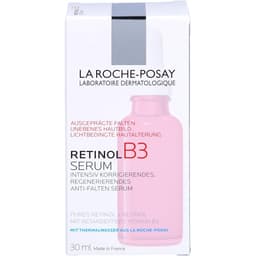
La Roche-Posay
Pure Retinol Face Serum (B3 + HA)
The buffered alternative if the bare version peels you. Retinol with niacinamide and hyaluronic acid in one bottle, from a brand built around reactive skin — no fragrance, a lotion-serum texture rather than an oil, and a far more comfortable first six weeks. The cost is the number: La Roche-Posay does not publish a retinol percentage at all.
See the gentle options rankedPrice as of October 19, 2026. #ad How we’re funded
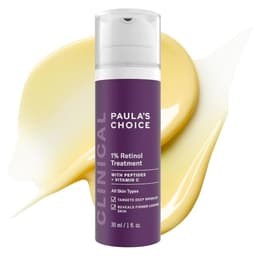
Paula's Choice
CLINICAL 1% Retinol Treatment
The step up once 0.5% every other night has been comfortable for a few months. A labeled 1% retinol with peptides and vitamin C in an air-limiting tube, which is the other formulation problem this category has. Do not start here, and do not move up until the lower strength is genuinely uneventful.
Compare the strengthsFrequently asked questions
Is The Ordinary Retinol 0.5% in Squalane good?
Yes, with two conditions. It is one of very few retinols at any price that prints its strength on the label, the formula is eight ingredients with nothing in it to react to, and it costs a fraction of the branded alternatives. The conditions are that the base is an oil — the brand's own highlights say oil-free: No — and that The Ordinary asks you to refrigerate it after opening and use it within three months, which is a real constraint on a 30 ml bottle most people treat as a six-month purchase.
Is 0.5% retinol strong?
It is the middle of The Ordinary's own three-rung ladder — 0.2%, 0.5% and 1% — and the brand's page labels it "moderate strength". In the wider market it is on the higher side of what drugstore retinols are thought to contain, though almost none of them publish a figure to compare it against. The brand's own advice is to start at 0.2% and work up, and if you are new to retinoids that advice is worth following rather than starting here.
Why is retinol fourth in the ingredient list?
Because the three things above it — squalane, caprylic/capric triglyceride and jojoba seed oil — are the carrier. Retinol is unstable and poorly water-soluble, so an anhydrous oil base is a sensible place to put it, and 0.5% of anything will always sit below the vehicle that holds it. Ingredient order reflects quantity, not importance, and the declared 0.5% is the figure that matters. What the oil-forward list does tell you is how the product will feel: this is a facial oil with a retinoid in it.
Do I really have to refrigerate it?
The brand says so: "Once opened, this formulation should be refrigerated and used within a three-month period." Retinol oxidizes on exposure to air, light and heat, and the formula carries BHT and an antioxidant to slow that down — the refrigeration instruction is the brand admitting those are not a complete answer. We would follow it. It also changes the value calculation: judged over three months rather than a year, a 30 ml bottle is a less dramatic bargain than the sticker price suggests, though still a cheap one.
Can I use it for acne?
The brand says no, in plain words on its own page: "This product is not a treatment for acne." That is a formulation and labeling statement rather than a claim about vitamin A in general — prescription retinoids and over-the-counter adapalene are genuine acne treatments. If acne is what you are treating, adapalene is the one to read about, and our adapalene guide covers it.
Can I use it with other actives?
Not with another retinoid: the brand's note says it "must not be used in conjunction with other retinoids, including retinol or retinoic acid". Beyond that, the sensible approach is the ordinary one — do not layer it the same night as an exfoliating acid while you are building tolerance, and use sunscreen every morning, which the brand states twice. Niacinamide alongside it is fine and is what several branded retinol serums do inside one bottle.
Is it suitable for oily skin?
The brand's own page lists it as "Suited for: Dry Skin" and flags oil-free as No. That is not a prohibition and plenty of oily-skinned people use it without trouble, but it is the brand telling you who it was formulated for. If you are oily and want a stated percentage, the honest options are to use a smaller amount, to layer it under a gel moisturizer, or to choose a non-oil base — our retinol serum versus cream comparison sets out the trade.
Can I use it while pregnant?
No. The brand's own note is that "when pregnant or breastfeeding, it is recommended to avoid any skincare products containing retinoids." That is the standing advice across the category and this page does not depart from it. Ask your doctor about what you can use instead.
Sources
- The Ordinary — Retinol 0.5% in Squalane (official product page) — The brand's own listing, headed "Anti-Aging Moderate Strength Retinol 0.5% in Squalane Serum" and summarized as "A moderate-strength retinol serum that targets general signs of skin aging." The complete INCI list runs to EIGHT entries: Squalane, Caprylic/Capric Triglyceride, Simmondsia Chinensis (Jojoba) Seed Oil, Retinol, Solanum Lycopersicum (Tomato) Fruit Extract, Rosmarinus Officinalis (Rosemary) Leaf Extract, Hydroxymethoxyphenyl Decanone, BHT — so the retinol is FOURTH, behind three emollients. Format is given as "Serum: Anhydrous" and the product highlights read water-free Yes, alcohol-free Yes, oil-free NO, silicone-free Yes, vegan, gluten-free and cruelty-free Yes; there is no fragrance-free claim, although no fragrance appears in the list. "Suited for" is given as Dry Skin only. The brand's own description: "Retinol 0.5% in Squalane offers a water-free solution containing 0.5% retinol — an ingredient that improves the appearance of fine lines that can arise from a loss of collagen and elastin, while evening the appearance of skin texture and tone," supported with squalane, "a moisturizing agent naturally found in your skin that nourishes to help it better withstand the drying effects of retinol." The Ordinary Tip: "Start with Retinol 0.2% in Squalane and slowly work your way up to Retinol 0.5% in Squalane and Retinol 1% in Squalane. That said, if you are prone to sensitivity, you may prefer to use newer retinoid technologies, such as those found in our Granactive Retinoid 2% Emulsion." Notes: "Retinoids can make the skin more sensitive to UV radiation. Sun protection is particularly important when using retinoids"; "This product must not be used in conjunction with other retinoids, including retinol or retinoic acid. This product is not a treatment for acne"; "When pregnant or breastfeeding, it is recommended to avoid any skincare products containing retinoids"; and, on storage, "Once opened, this formulation should be refrigerated and used within a three-month period." Usage directions: "Apply a few drops to the face in the evening. Do not use with other retinoid products. Use sun protection during the day," with the caution "Retinol can cause irritation, redness, and peeling, especially around the eyes and mouth, in the early stages of use while skin builds tolerance," plus "Refrigerate after opening," "Use only as directed on unbroken skin" and "Patch testing prior to use is advised." Sold in one 30 ml size (accessed October 17, 2026)
- American Academy of Dermatology — Retinoid or retinol? — AAD on the difference between prescription retinoids and OTC retinol (accessed July 17, 2026)
- Human Skin Aging and the Anti-Aging Properties of Retinol (PubMed) — Review of topical retinol's effect on collagen and photoaging (accessed July 17, 2026)
- The use of retinoids in the treatment of photoaging (PubMed) — Clinical-trial evidence for topical retinoids in photoaging (accessed July 17, 2026)
- U.S. FDA — Sunscreen: How to Help Protect Your Skin from the Sun — FDA on SPF numbers, broad-spectrum and application amount (accessed July 17, 2026)
- American Academy of Dermatology — Should I apply my skin care products in a certain order? — AAD on the order to apply cleanser, treatment, moisturizer and sunscreen (accessed July 17, 2026)
Keep reading
Best retinol serums
Where this bottle is ranked against five rivals on stated strength, base and buffering.
See the picksBest retinol for beginners
If 0.5% is more than you want for a first bottle, this is the gentler way in.
See the picksHow to use retinol
The schedule, the amount, and the first-six-weeks problems that are normal rather than a sign to stop.
Read the guideRetinol serum vs cream
Why the serum format is the one that tends to publish a number, and when a cream is the better buy anyway.
Read the comparisonThe Ordinary, decoded
Which bottles in the range are worth owning, and which overlap each other.
Read the guideRetinol side effects
The peeling, stinging and redness the brand's own caution warns about, and how long they last.
Read the guide