How to Use Retinol Body Lotion
A face routine does not scale to an area ten times the size. How often to start, how much to use, which patches to leave alone, and what the five brands' own directions say — because they disagree with each other on frequency and on sunscreen.
How this is funded: we earn a commission if you buy through our links, at no extra cost to you. It never changes which product we recommend, and we’ll tell you when we’d skip one. Full disclosure.
Body retinol is a face routine applied to roughly ten to twenty times the area, and almost every mistake people make with it comes from not adjusting for that. The product is the same molecule in a bigger bottle. The method has to change.
The short version
Patch test one forearm for a few nights. Then pick one region, apply at night to clean dry skin, use enough to cover it properly, and do that twice a week for a fortnight before you increase anything. Moisturize over the top if the area feels tight. Wear sunscreen on anything daylight touches, or restrict the lotion to skin your clothes cover. Judge results at twelve weeks.
That is more cautious than any of the five brands’ own directions, and deliberately so. The downside of going slowly is a few extra weeks; the downside of treating your whole body on night one is a week of itchy, flaking arms and a bottle you never finish.
What the brands themselves tell you to do
We read all five product pages, and they do not agree with each other. That disagreement is the most useful thing on this page, because it tells you how little settled practice there is in this category.
| Brand | Frequency in its own directions | Sunscreen instruction? | Strength published? |
|---|---|---|---|
| Gold Bond | Overnight — it is in the product name | Not in the directions | No |
| Nécessaire | “Use at night. Apply to areas where treatment is needed.” | Not in the directions | Yes — 0.1% encapsulated retinol |
| Naturium | Apply generously; reduce frequency if mild redness occurs; patch test advised | Yes — “Wear sunscreen during the day” | No |
| DRMTLGY | “Can be used up to twice daily” | Yes — broad spectrum SPF 30+ for morning use | No |
| Advanced Clinicals | “Best if used at night time”; dry or damp skin | Not in the directions | No |
Three things to take from that table. Twice daily is an outlier and we would not do it — not because the brand is wrong about its own product, but because nobody needs to find the ceiling on their first bottle. Only two of five mention sunscreen, which is a labeling gap rather than a difference in the chemistry; the AAD’s position on retinoids and UV applies to all of them. And one of five tells you its strength, which is why the starting frequency on this page is expressed in nights per week rather than in percentages.
Step by step
1. Patch test, properly
One inner forearm, a small amount, three or four separate nights — not one night. Retinoid irritation is cumulative, so a single application tells you almost nothing. The method is in how to patch test. Stop if redness, itching or stinging outlasts the hour.
2. Start with one region, not a body
The backs of the upper arms is the usual place to begin, because it is where the complaint most often is and it is easy to inspect. Shins, thighs, chest and back are all legitimate targets later. Doing one area at a time means that if something goes wrong you have one irritated patch rather than a whole irritated person, and you can tell what caused it.
3. Night, clean skin, dry or barely damp
After a shower, once the skin is no longer wet. One brand specifically says dry or damp skin; damp is fine and helps spreadability. Avoid applying it straight onto skin that is hot from a shower, which stings more for no benefit.
4. Use enough, which is more than you think
This is the step people get wrong. A lotion only does something where it reaches, and a face-sized squeeze spread across two arms is a product being wasted rather than economised. Apply a thin even layer over the whole region and massage until absorbed. If that means you will run through the bottle in six weeks, you have bought a bottle that is too small — which is the entire ranking argument in best retinol body lotion.
5. Twice a week, then every other night, then maybe nightly
Two nights in week one and two. If nothing has pinked up, flaked or itched, move to alternate nights for a month. Nightly is a destination, not a starting point, and plenty of people never need to get there. Naturium’s own direction — reduce frequency if mild redness occurs until skin adjusts — is the correct response at any point on that ladder.
6. Moisturize over the top, if the area needs it
Most of these products are moisturizers with retinol in them, so for many people the lotion is the whole step. If the treated area feels tight, add a plain fragrance-free cream over the top rather than cutting the retinol — the big tubs in best ceramide moisturizers are the sensible companion, and how to repair your skin barrier is the recovery plan if you have overdone it.
7. Sunscreen, or cover up
Retinoids increase UV vulnerability, and the arms, chest and shins are exactly the areas people never protect. Two of the five brands put the instruction in their own directions. The FDA’s own guidance is worth knowing here: most people apply considerably less sunscreen than the amount SPF is tested at, so the quantity matters as much as the number. If you are realistically not going to sunscreen your forearms every day, the honest adjustment is to use the lotion only on skin your clothes cover.
Where not to put it
Broken, shaved-raw, sunburned or actively inflamed skin. Eczema patches. Freshly shaved legs, which deserve a night off. And be careful about the face: one of these five is explicitly sold as a face-and-body lotion and is fine there, but one is built on a mineral-oil base that most faces do not want and one carries glycolic and mandelic acid at body strength. If your face is the priority, buy a face product — best retinol for beginners is the place to start, and retinol serum vs cream decides the format.
The neck and chest deserve a specific warning. They are the areas most people want to treat and the least able to take it: thinner skin than the arms, far more lifetime sun exposure, and a texture that shows irritation immediately. Treat them on a face schedule, not a shins schedule.
What to expect, and what not to
Expect gradual improvement in how the skin feels and how light falls on it — smoother texture, less roughness, a slightly more even tone — over three months of consistent use. The retinoid evidence base supports that kind of change, slowly.
Do not expect it to tighten loose skin after weight loss, clear established silvery stretch marks, or structurally reverse crepey skin. Several listings in this category imply all three. The honest position, which we also state on the roundup, is that no over-the-counter topical does any of them. And if bumpy upper arms are the real complaint, read glycolic acid for keratosis pilaris first — an acid is usually the cheaper and more direct route, with the retinol as the thing you add if the acid alone is not enough.
Bottom line
Treat it as a face retinoid with a volume problem and an adherence problem. Patch test, start on one region, use a real amount rather than a rationed one, twice a week for the first fortnight, moisturizer over the top when needed, sunscreen on anything exposed. The brands’ own directions are more permissive than this and they disagree with one another; the slow route costs you a month and saves you a bad fortnight.
General guidance, not medical advice. Actives & Acids is written by a skincare enthusiast, not a dermatologist. For a diagnosis, a reaction, or a prescription active like tretinoin, see a qualified professional. Introduce any new active slowly and patch-test first.
What we'd actually buy
Chosen from the same registry as our roundups, on published formulation facts rather than hands-on testing — here is exactly what we do instead.
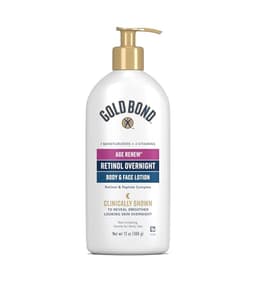
Gold Bond
Age Renew Retinol Overnight Body & Face Lotion
The easiest one to follow this method with, because there is enough of it. Fragrance-free, sold in a 13 oz bottle at drugstore money, and explicitly a face-and-body lotion — so the neck and chest are in scope rather than a separate purchase.
See it ranked in fullPrice as of October 10, 2026. #ad How we’re funded
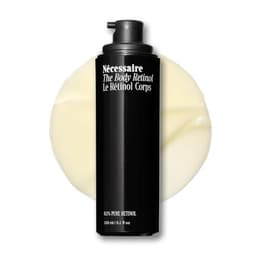
Nécessaire
The Body Retinol (0.1% retinol)
The one with a published strength — 0.1% encapsulated retinol — which is the only bottle here where you can follow a dose rather than a feeling. Note it also carries glycolic and mandelic acid, so it is a two-active product and the wrong one to start on.
See it ranked in fullPrice as of October 10, 2026. #ad How we’re funded
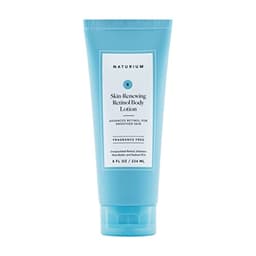
Naturium
Skin-Renewing Retinol Body Lotion
The middle option, and the one whose own directions come closest to the method on this page: apply generously, reduce frequency if mild redness occurs, wear sunscreen during the day, patch test first. Labeled fragrance-free.
See it ranked in fullPrice as of October 10, 2026. #ad How we’re funded
Frequently asked questions
How often should you use retinol body lotion?
Start at two nights a week and build from there over a month or two. The brands themselves are permissive — one explicitly allows up to twice daily and others simply say to apply at night — but body skin is being treated over a far larger area than a face, so going slowly costs you nothing and protects a lot of skin. One brand's own directions say to reduce frequency if mild redness occurs, which is the right instinct built into the label.
How much retinol body lotion should I use?
Enough to cover the area thinly and evenly, which on two upper arms is far more than a face-sized dose. This is the practical reason volume matters so much in this category: a product you have to ration is a product that only ever treats one patch of one forearm. One brand's direction is simply to apply a generous amount and massage until absorbed, which is the right idea.
Should I use it in the morning or at night?
At night. Three of the five brands we have read specify evening or overnight use, one of them in the product name. The reasons are the same as for a face retinoid: less UV exposure on freshly treated skin, and no interaction with the sunscreen you are applying in the morning. The brand that permits twice-daily use also tells you to wear broad-spectrum SPF 30 or higher if you use it in the morning.
Do I need sunscreen on my body if I use a retinol lotion?
On anything that will see daylight, yes. Retinoids make skin more vulnerable to UV wherever they are applied, and two of the five brands put the sunscreen instruction in their own directions rather than the small print. The honest difficulty is behavioral: almost nobody sunscreens their forearms and shins. If you will not do it, apply the lotion only to areas your clothes cover.
Where should I not use it?
Broken, shaved-raw, sunburned or actively inflamed skin; eczema patches; and freshly waxed or shaved legs on the same night. Keep it away from the face unless the product is sold for the face too — one of the five is explicitly a face-and-body lotion, one is built on a mineral-oil base that most faces do not want, and one carries acids at body strength. Treat the neck and chest as cautiously as a face, because the skin there is thinner and more sun-exposed than your arms.
Can I use a retinol body lotion on keratosis pilaris?
It is a reasonable adjunct and it is not the first tool. The AAD's guidance for keratosis pilaris names exfoliation with alpha hydroxy acids — glycolic and lactic — along with salicylic acid, retinoids and urea, so the ingredient class is on the list. In practice an acid is the cheaper and more direct route for bumpy arms, and a retinol lotion is something to add if the acid alone is not enough. Expect maintenance rather than cure either way.
How long before I see anything?
Months, and less than on the face. The retinoid evidence base is about gradual change in texture, tone and fine lines, and body skin is thicker in most places and treated less frequently. Judge it at the twelve-week mark, not the two-week mark. If a product promises to correct crepe or clear stretch marks, that is overselling — neither happens.
Can I use my face retinol on my body instead?
For the neck and chest, yes, and you do not need a second product — a retinol cream is the better shape for it than a serum. For anything below the collarbone the math stops working: a 30 mL face serum is an expensive way to cover two arms once. Buy for volume below the neck.
Can I use it with an exfoliating acid on my body?
Not on the same night. Acid plus retinoid over a large area is the fastest way to irritate a lot of skin at once. Alternate nights — acid one evening, retinol another — and drop one of them entirely if the area gets shiny, tight or stingy. Note that one of the five lotions already contains glycolic and mandelic acid, in which case you are running both whether you intended to or not.
Is it safe in pregnancy?
Topical retinoids are normally avoided in pregnancy and breastfeeding, and one of the five brands puts that warning on its own product page. The others do not, which does not make them different — the standing advice applies regardless of which bottle you bought. Ask your doctor rather than a product page.
Sources
- American Academy of Dermatology — Retinoid or retinol? — AAD on the difference between prescription retinoids and OTC retinol (accessed July 17, 2026)
- Gold Bond — Age Renew Retinol Overnight Body & Face Lotion (official product page) — The brand's own listing: sold as a 7 oz tube and a 13 oz bottle, with NO retinol percentage published anywhere on the page. The ingredient list runs water, hydroxyethyl urea, shea butter extract, dimethicone, glycerin, stearyl alcohol, niacinamide, selaginella lepidophylla extract, steareth-21, glyceryl stearate, cetyl alcohol, jojoba esters, jojoba/macadamia esters, squalene, phytosteryl macadamiate, phytosterols, tocopherol, retinol, cetearyl alcohol, caprylic/capric triglyceride, sodium ascorbate, palmitoyl hexapeptide-12, polysorbate 60, watermelon, apple and lentil fruit extracts, sodium lactate, sodium PCA, propylene glycol, hydroxyacetophenone, cocoa seed butter, behentrimonium methosulfate, stearamidopropyl PG-dimonium chloride phosphate, butylene glycol, polyacrylate crosspolymer-6, ethylhexylglycerin, guar hydroxypropyltrimonium chloride, panthenol, disodium EDTA, citric acid, C12-15 alkyl benzoate, tribehenin, ceramide NG, PEG-10 phytosterol and caramel. The brand states the formula is fragrance-free: "Yes, it's fragrance-free. So, you'll know it's there, but nobody else will." Niacinamide is seventh and retinol eighteenth (accessed October 10, 2026)
- Nécessaire — The Body Retinol (official product page) — The brand's own listing, and the only body retinol in this category we found that publishes a figure: "0.1% Pure Encapsulated Retinol", in a 150 ml / 5.1 fl oz bottle, described as fragrance-free. The ingredient list carries glycolic acid and mandelic acid alongside the retinol, plus niacinamide, palmitoyl tripeptide-1, palmitoyl tripeptide-5, palmitoyl hexapeptide-12, a Nicotiana benthamiana hexapeptide, tocopherol, tetrahexyldecyl ascorbate, sea buckthorn seed oil and sodium hyaluronate — and ends with citronellol and geraniol, two declarable fragrance allergens that arrive with the Rosa damascena flower water. Directions: "Use at night. Apply to areas where treatment is needed. Apply to clean skin." The brand's published results are a consumer self-report panel — 30-plus panelists over four weeks, third-party verified — reporting 85% more even skin texture, 85% less crepiness, 82% fewer lines, 82% fewer wrinkles and 75% more even tone. Those are perception figures, not measured endpoints (accessed October 10, 2026)
- Naturium — Skin-Renewing Retinol Body Lotion (official product page) — The brand's own listing: 8 FL OZ / 234 ML standard plus a 14 FL OZ / 414 ML jumbo, labeled "Fragrance Free", built on an "encapsulated stabilized pure retinol complex" with NO percentage published. Ingredients: water, isopropyl palmitate, safflower seed oil, glycerin, cetyl alcohol, dimethicone, cetearyl olivate, shea butter, sorbitan olivate, tridecyl stearate, neopentyl glycol dicaprylate/dicaprate, allantoin, retinol, cellulose acetate butyrate, linoleic acid, phospholipids, phytosterols, sodium hyaluronate, xanthan gum and the usual preservative and chelator set. Directions: "Apply a generous amount to body and massage until absorbed. If mild redness occurs, reduce frequency of use until skin adjusts. Wear sunscreen during the day. Patch test prior to use is advised." (accessed October 10, 2026)
- DRMTLGY — Retinol Body Lotion (official product page) — The brand's own listing: a 6 oz bottle carrying a fragrance-free badge, described as "non-irritating retinol, formulated for the body" with NO percentage published. Ingredients: water, cetearyl ethylhexanoate, glycerin, cetearyl olivate, sorbitan olivate, glyceryl stearate, cetearyl alcohol, isododecane, caffeine, dimethicone, retinol, darutoside, centella asiatica extract, ceramide NP, rosa canina fruit oil, trideceth-6 phosphate, tocopherol, shea butter, sunflower extract, rosemary leaf extract, allantoin, panthenol and rice bran extract. Directions: "Massage into skin from your neck down, or use as a spot treatment on rough, dry, or dull areas. Can be used up to twice daily," with "Wear a broad spectrum SPF 30 or higher when using this lotion" for morning use, and the warning "Do not use if pregnant or breastfeeding" (accessed October 10, 2026)
- Advanced Clinicals — Retinol Body Cream (official product page) — The brand's own listing for the 16 oz tub (also sold in 2 oz), with NO retinol percentage published. Ingredients: water, mineral oil, cetearyl alcohol, glyceryl stearate SE, isopropyl myristate, glycerin, butylene glycol, ceteareth-20, caprylic/capric triglyceride, retinol, aloe barbadensis leaf juice, camellia sinensis leaf extract, anthemis nobilis flower extract, acrylates/C10-30 alkyl acrylate crosspolymer, disodium EDTA, maltodextrin, phenoxyethanol, iodopropynyl butylcarbamate, caprylyl glycol and sodium hydroxide — so retinol is tenth, behind a mineral-oil occlusive base, and there is no ceramide and no humectant beyond glycerin and butylene glycol. The brand's claim wording is "No Added Fragrances. Dermatology & Allergy tested." Directions: "Apply to dry or damp skin, massaging until fully absorbed. Best if used at night time. Avoid combining with Benzoyl Peroxide or Vitamin C." (accessed October 10, 2026)
- American Academy of Dermatology — Keratosis pilaris: Diagnosis and treatment — AAD on exfoliating with AHA, glycolic, lactic, salicylic acid, retinoids and urea for KP (accessed August 19, 2026)
- Human Skin Aging and the Anti-Aging Properties of Retinol (PubMed) — Review of topical retinol's effect on collagen and photoaging (accessed July 17, 2026)
- U.S. FDA — Sunscreen: How to Help Protect Your Skin from the Sun — FDA on SPF numbers, broad-spectrum and application amount (accessed July 17, 2026)
Keep reading
Best retinol body lotion
The five body retinols ranked on cost per mL, disclosure and what is in the base.
See the picksHow to use retinol
The face version of this method, and the buffering trick that transfers to the body.
Read the guideRetinol side effects
What the adjustment phase looks like, and the point at which to stop rather than push on.
Read the guideBest chemical exfoliant for body
The other half of a body routine, and usually the cheaper first move for rough or bumpy skin.
See the picksGlycolic acid for keratosis pilaris
If bumpy upper arms are the reason you bought the lotion, start here.
Read the guideBest sunscreen for retinol users
The obligation that comes with the purchase, and the picks that make it bearable.
See the picks