Retinol Serum vs Cream: Which Should You Buy?
Same vitamin A, two very different vehicles. The format barely changes what retinol does — it changes how much of it you can verify, how much irritation you feel, and how long the bottle lasts. Which to buy, by skin type and by what you already own.
How this is funded: we earn a commission if you buy through our links, at no extra cost to you. It never changes which product we recommend, and we’ll tell you when we’d skip one. Full disclosure.
This is a question about vehicles, not about actives. A retinol serum and a retinol cream contain the same molecule doing the same thing; what differs is the stuff carrying it, and that turns out to matter for three practical reasons nobody mentions in the product copy.
The short answer
Buy a serum if you want to know your dose. Serums in this category are far more likely to print an exact percentage, which is the only way to start low on purpose and climb on purpose. Buy a creamif your skin is dry, if you flake easily, or if you want one product instead of two — the emollient base buffers the irritation that makes most people abandon retinol in the first month, and 50 mL of cream is usually better value than 30 mL of serum.
If you are choosing your first retinoid and have no strong preference, the cream is the easier road and the serum is the more informative one. Both work. Neither is stronger by virtue of its format.
Retinol serum vs cream at a glance
| Retinol serum | Retinol cream | |
|---|---|---|
| The active | Retinol, identical molecule | Retinol, identical molecule |
| Strength published? | Usually. In our registry: 0.5% and 1% both printed on the bottle | Rarely. Every cream in our registry says Not published, or names a “complex” rather than a retinol percentage |
| Typical size | 30 mL | 50 mL |
| Steps it replaces | None — you still need a moisturizer over it | Your night moisturizer, in most routines |
| Dryness and flaking | More noticeable; buffer it with a moisturizer on top | Less noticeable; the emollients are in the same product |
| Layering with other actives | Easier — thin, goes under things | Harder — it is the last step, so nothing goes over it |
| Suits | Oily, combination, humid climates, dose-climbers | Dry, mature, cold climates, minimal routines |
| Daily sunscreen needed | Yes | Yes |
Why the serum format usually tells you more
US cosmetic labeling does not require a brand to publish an active concentration, so most do not. But the convention has split along format lines, and the split is stark enough to be a buying criterion on its own.
Single-active serums are sold on their number — it is the product’s entire identity, and brands that build a range around “0.2%, 0.5%, 1%” have a commercial reason to print it. Creams are sold as moisturizers with a benefit, so the retinol is a feature among several and the percentage becomes a thing the brand would rather describe than state. Our retinol cream entries say Not publishedbecause that is what the labels say, and we would rather record the gap than guess at it. The one cream that does carry a figure names a “2.5% retinol complex”, which is a measure of a blend and not of retinol.
This matters because the entire sane method for using a retinoid — start low, stay there until your skin stops complaining, then move up one rung — depends on knowing which rung you are on. With an undisclosed cream you are tracking your skin’s reaction rather than a dose, which works but is slower and less transferable. The full ladder is in how often to use retinol.
Why the cream format is usually kinder
The standard reference description of a moisturizer splits its job three ways: humectants that draw water in, emollients that fill the gaps between skin cells, and occlusives that slow water leaving. A retinol cream is carrying all three alongside the active. A retinol serum, in most cases, is carrying the active and a solvent.
That is the whole of the tolerability difference, and it is not trivial. Retinoid irritation is largely a barrier problem: the active speeds cell turnover faster than the barrier can keep up, and you get tightness, flaking and stinging. Delivering it inside something that is simultaneously repairing the barrier is a sensible piece of formulation, and it is why people who have failed on a bare serum often succeed on a cream at an unknown but probably lower strength.
You can get most of the same effect from a serum by buffering — apply moisturizer first, or over the top, or both. The method is in how to use retinol, and best moisturizer to use with retinol is the companion purchase. Buffering costs you a step and a second product; the cream bakes it in.
What the format does not change
Three things are the same either way, and they are the three that decide whether you get a result.
The evidence is for the molecule, not the vehicle. The clinical work on topical retinoids in photoaging — the reason this ingredient is worth bothering with at all — tested prescription retinoids and retinol in various bases, and the conclusion is about retinoid activity on collagen and epidermal turnover. The AAD’s own framing of retinol versus prescription retinoids is a potency distinction, not a texture one. Nobody has shown that a cream base makes retinol work better or worse; it makes it feel different.
The timeline is the same, and it is long. Months, not weeks, for texture and fine lines — how long retinol takes to work sets out what to expect when. Switching format because nothing happened in a fortnight is the most common wasted purchase in this category.
Sunscreen is non-negotiable in both cases. Retinoids increase UV vulnerability regardless of what they are suspended in. Our picks are on best sunscreen for retinol users, and the thing most worth fixing is the quantity rather than the brand — the FDA points out that people routinely apply much less than the amount SPF is rated at.
How to choose, in one paragraph each
Dry, flaky, mature or cold-climate skin: buy the cream. You want the emollient load, you want one product at night rather than two, and you are unlikely to be chasing a precise dose. Start at best retinol creams and prioritize the fragrance-free options.
Oily, combination, humid, or breakout-prone: buy the serum. You do not want the occlusive layer, you want something thin that sits under a light moisturizer, and you benefit from knowing your percentage so you can push it up later. Start at best retinol serums. If acne rather than aging is the complaint, the better-evidenced retinoid is adapalene, and the comparison is in retinol vs adapalene.
Reactive or easily-irritated skin: cream, and low. The buffering is doing real work here. Best retinol for sensitive skin covers both formats with tolerability as the ranking criterion, and retinol vs bakuchiol is the honest version of the question “should I use a retinoid at all”.
Treating neck, chest or anything below: think in milliliters. Both face formats are priced for a face. For the body, the answer is a different shape of product entirely — best retinol body lotion ranks that lane on cost per milliliter, and how to use retinol body lotion covers the method.
Bottom line
The format is a comfort-and-information decision, not a potency one. Serums buy you a printed percentage and a thin layer you can build a routine around; creams buy you volume, a buffered experience and one fewer step at night. Pick on your skin type and your tolerance for dryness, not on which sounds more clinical. Then stick with it for three months, wear sunscreen, and do not stack both.
General guidance, not medical advice. Actives & Acids is written by a skincare enthusiast, not a dermatologist. For a diagnosis, a reaction, or a prescription active like tretinoin, see a qualified professional. Introduce any new active slowly and patch-test first.
What we'd actually buy
Chosen from the same registry as our roundups, on published formulation facts rather than hands-on testing — here is exactly what we do instead.
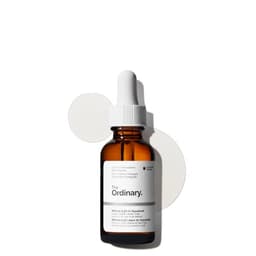
The Ordinary
Retinol 0.5% in Squalane
The serum to buy if you want the number on the label. A printed 0.5% in a squalane base, for a few dollars — which makes it the format's strongest argument: you know the dose and you can step up or down the ladder on purpose.
See it ranked in fullPrice as of October 10, 2026. #ad How we’re funded
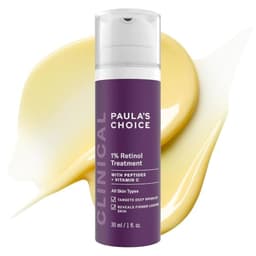
Paula's Choice
CLINICAL 1% Retinol Treatment
The serum for someone already past the adjustment phase who wants a stated 1% rather than a guess. Fragrance-free, 30 mL, and the strongest disclosed retinol in our registry. Not a first bottle.
See it ranked in full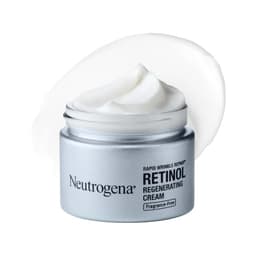
Neutrogena
Rapid Wrinkle Repair Retinol Face Moisturizer (Fragrance-Free)
The cream we would reach for first. 50 mL of moisturizer carrying the retinol, in the fragrance-free version specifically — the fragranced one exists and is the wrong buy. The strength is not published, which is the cream format's standing tax.
See it ranked in fullPrice as of October 10, 2026. #ad How we’re funded
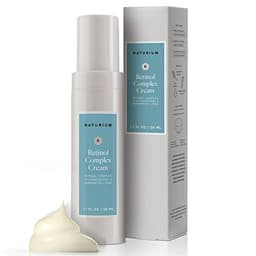
Naturium
Retinol Complex Face Cream 2.5%
The budget cream, and the one with the loudest number on the box — a '2.5% retinol complex', which is a complex rather than 2.5% retinol. Worth owning for the 50 mL of emollient base; worth reading the wording carefully before you pay for the figure.
See it ranked in fullFrequently asked questions
Is a retinol serum better than a retinol cream?
Not inherently. The format changes the vehicle, not the active. What tilts it is practical: serums in this category are far more likely to publish an exact percentage, which lets you pick a dose and climb deliberately, while creams bundle the retinol into a moisturizer so you apply one product instead of two and usually feel less dryness. If you want to know your dose, buy a serum. If your skin is dry or you want fewer steps, buy a cream.
Which is stronger, retinol serum or cream?
Neither, as a rule. Strength is the percentage of retinol and how it is delivered, and both formats are sold across the range. In our registry the highest disclosed strength is a serum at 1% and the lowest is a serum at 0.5%, while every cream declines to publish a figure at all. So in practice a serum is the only format where you can be sure what you bought — that is a disclosure difference, not a potency difference.
Should a beginner start with a retinol serum or cream?
A cream is the gentler first move for most people, because the emollient base buffers the dryness and flaking that make beginners quit in week three. The exception is someone who wants to start deliberately low and climb: a serum that prints 0.2% or 0.5% on the bottle is the only way to do that honestly. Either way, start twice a week at night, not nightly.
Can I use a retinol serum and a retinol cream together?
You can, but there is almost no reason to. Stacking two retinoids multiplies the irritation and gives you no way to tell which one your skin is reacting to. If you own both, use one as your treatment and the other as the night you want a lighter or heavier finish — never on the same night.
Do I still need a moisturizer if I use a retinol cream?
Often not a separate one, which is the format's main convenience. A retinol cream is a moisturizer with retinol in it, so for normal-to-dry skin in a mild climate it can be the last step. If you are peeling, or if your cream is a light lotion rather than a rich one, put a plain moisturizer over the top — that is the standard buffering move and it does not stop the retinol working.
Which format is better for oily or acne-prone skin?
A serum, usually. Oily skin rarely needs the emollient load a retinol cream brings, and a thin serum under a light gel moisturizer is easier to tolerate in humidity. If breakouts are the actual complaint rather than lines, note that adapalene is the better-evidenced retinoid for acne and it is sold as a gel.
Which lasts longer for the money?
Creams, usually, and by a wide margin on a cost-per-milliliter basis — 50 mL of cream is common while 30 mL is the serum standard, and the cream is replacing a moisturizer you were buying anyway. A serum's price buys disclosure and a cleaner, lighter layer rather than volume. If you are treating neck and chest as well as face, the volume math matters more than it looks.
Does the format change how much sun protection I need?
No. Retinoids make skin more vulnerable to UV whatever they are suspended in, so daily broad-spectrum sunscreen is the same non-negotiable with a serum as with a cream. The FDA's own guidance is that most people apply far less sunscreen than the amount SPF is tested at, which is the more useful thing to fix.
Sources
- American Academy of Dermatology — Retinoid or retinol? — AAD on the difference between prescription retinoids and OTC retinol (accessed July 17, 2026)
- Human Skin Aging and the Anti-Aging Properties of Retinol (PubMed) — Review of topical retinol's effect on collagen and photoaging (accessed July 17, 2026)
- The use of retinoids in the treatment of photoaging (PubMed) — Clinical-trial evidence for topical retinoids in photoaging (accessed July 17, 2026)
- Moisturizers — StatPearls (NCBI Bookshelf) — Reference on humectants (hyaluronic acid), occlusives and emollients (accessed July 17, 2026)
- U.S. FDA — Sunscreen: How to Help Protect Your Skin from the Sun — FDA on SPF numbers, broad-spectrum and application amount (accessed July 17, 2026)
Keep reading
Best retinol serums
If you chose the serum: every stated percentage compared, with the cost-per-mL math.
See the picksBest retinol creams
If you chose the cream: the night creams ranked on base, fragrance and what each brand will admit to.
See the picksBest retinol for beginners
The gentlest starting bottles in either format, and the schedule that gets you past week three.
See the picksHow to use retinol
Frequency, amount, buffering and the order it goes in — the method both formats share.
Read the guideRetinol side effects
What the adjustment phase actually looks like, and the point at which you are overdoing it.
Read the guideBest retinol body lotion
Below the collarbone the format question is settled by volume. The body lane, ranked on cost per mL.
See the picks