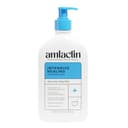
Free acid versus salt: the one thing to understand first
An alpha hydroxy acid loosens the bonds holding dead surface cells together. It can only do that while it is in its free-acid form, and how much of a formula sits in that form depends on how the product’s pH compares with the acid’s pKa — the pH at which exactly half of it is free acid and half is a salt. For lactic acid, the pKa is about 3.8.
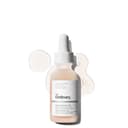
The Ordinary spells this out on its own product pages, which is rare enough to be worth quoting: “Lactic Acid has a pKa of 3.8 and pKa is the most important aspect to consider in formulating with acids. pKa implies acid availability. When pKa is close to pH, there is an optimal balance between salt and acidity, optimizing the delivery of the acid form.” Both its lactic serums are formulated at pH 3.60 to 3.80 for exactly that reason.
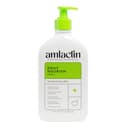
Ammonium lactate is what you get when lactic acid is neutralized with ammonium hydroxide before it ever reaches the bottle. It is a genuinely useful ingredient — it is a humectant as well as an exfoliant, which is why it works on dry, scaly body skin where a thin acid serum would do little — but a 12% of it is not a 12% of free lactic acid. The published use guideline the Cosmetic Ingredient Review panel gives for ammonium lactate is 10% or less at a pH of 3.5 or above with sun protection, which is a general guideline for the ingredient rather than a test of any product; we quote it only to show the figure a labeled 12% or 15% is sitting against.
None of this makes the body lotions bad buys. It makes them different buys, and it is the reason this page ranks a 10% face serum above a 15% body lotion rather than the other way round.
How we ranked
Four criteria, applied in this order.
1. Does the label publish a percentage?All five do, which makes lactic acid unusual — on the retinol shelf most products publish nothing at all. So this criterion separates nobody here, and we move straight to the second.
2. Is that percentage free acid or a salt, and at what pH?This is the criterion that sets the order. Two products publish a pH band (3.60–3.80, both from The Ordinary). One publishes a percentage of free acid but no pH. Two publish a percentage of ammonium lactate and no measured pH at all — “pH balanced” is marketing language, not a number.
3. Does the format match the job? Lactic acid is the AHA where this matters most, because the complaints people buy it for split cleanly by body part. Fine texture, dullness and uneven tone on the face want a 30 mL serum. Dry, rough, scaly skin on arms, legs and elbows wants a 400 mL-plus lotion, because two limbs is ten to twenty times the area of a face and a face-sized bottle is one application. We rank formats against the complaint, not against each other.
4. What else is in the bottle?Lactic acid’s own selling point is that it is the hydratingAHA, so a base that fights that is a real mark against a product — and conversely, squalane, ceramides, hyaluronic acid or an anti-irritant extract earns credit, because the alternative is layering them yourself.
Lactic acid versus glycolic acid, in one paragraph
Lactic acid’s molecule is larger than glycolic acid’s, which is the whole reason it has a different reputation: it moves into the skin more slowly, so at the same percentage and pH it tends to sting less and dry less. The published AHA literature treats molecular size as the main reason the AHAs differ in penetration speed, with glycolic acid the fastest of the common ones and mandelic the slowest. If your complaint is stubborn rough texture and your skin tolerates acids well, glycolic is the more efficient tool — we rank those at best glycolic acid. If your skin is dry, reactive, or new to acids, lactic is the easier place to start, and the full head-to-head is in lactic acid vs glycolic acid.
How to use it without wrecking your barrier
Start at two or three evenings a week, on dry skin, after cleansing and before moisturizer. Both The Ordinary serums carry the same instruction and the same caution: apply once daily, ideally in the evening, and do not use on sensitive, peeling or compromised skin. The brand also states that the formula can be diluted with other products to reduce strength while tolerance builds, which is a cheaper fix than buying a lower strength if you already own the 10%.
Wear sunscreen the next morning — the FDA’s own AHA guidance pairs consumer-strength AHA use with sun protection, and the US bottles carry the sunburn alert because of it. If you are also using a retinoid, run them on alternate nights rather than together; the reasoning is the same as in retinol and salicylic acid. And if your skin stings for more than a minute, flushes, or starts to feel tight and shiny, you are over-exfoliating — the tells are listed in signs of over-exfoliation.
What we did not rank, and why
Several products marketed as lactic acid treatments are really glycolic-led blendswith lactic acid further down the list — a 10% glycolic serum “+ lactic acid” is a glycolic product, and belongs on the glycolic page. We also left out acid body washes, which we rank separately at best exfoliating body wash, for the reason that page leads with: a wash has seconds of contact time against a leave-on’s hours. And we did not rank professional-strength lactic peels at all. The published AHA reviews put consumer leave-on use at roughly 10% or less above pH 3.5, trained-professional peels below pH 3 at up to 30%, and drug territory beyond that — a gap wide enough that a home peel kit is a different decision from the one this page is about.