Actives & Acids

AmLactin Alternatives

What to use instead of AmLactin on rough, bumpy skin - ranked by which of its jobs each swap actually does, with published acid percentages.

By Stephen V.Last updated How we pick

The best alternative to AmLactin is CeraVe SA Lotion for Rough & Bumpy Skin— it swaps the lactic acid for salicylic acid, which works on the plug inside the follicle rather than only on the surface, and it adds ceramides so the exfoliation does not come at the barrier’s expense. If the problem was that acids sting you, buy La Roche-Posay Lipikar Urea 10% instead, which is a keratolytic that is not an acid at all. And the budget pick is The Ordinary Lactic Acid 10% + HA, the same acid at a printed strength for a third of the money.

Worth naming the reasons people leave, because they decide which swap is right. AmLactin is a 12% or 15% lactic acid body lotion, and the three complaints about it are the sting, the smell, and the price per ounce. All three are addressable, and they point in different directions: the sting means changing the active, the smell means changing the base, and the price means changing the brand but not the molecule. The AAD’s own keratosis pilaris guidance describes the job as softening and removing the keratin plug plus keeping skin moisturized — and more than one ingredient does that. Prices render live from our price layer with the date they were read; we own no units, and here is our method.

How this is funded: we earn a commission if you buy through our links, at no extra cost to you. It never changes which product we recommend, and we’ll tell you when we’d skip one. Full disclosure.

Quick picks

Ranked on formulation, stated concentration and buyer fit. Select a row to jump to the full write-up. We have not tested these products — here is exactly what we do instead.

#ProductBest forPrice
1
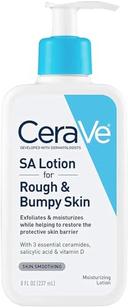
CeraVe SA Lotion for Rough & Bumpy Skin

CeraVe SA Lotion for Rough & Bumpy Skin

The leave-on most dermatology advice lands on for keratosis pilaris, and the one we would buy first: salicylic acid AND lactic acid in a ceramide base, fragrance-free, at a drugstore price in a bottle big enough to use on both arms every day. CeraVe will not tell you how much of either acid is in it.

Best overall, and the best mechanism swap
$14.99 · View on Amazon

$19.9925% off

Price as of November 22, 2026. #ad How we’re funded

2
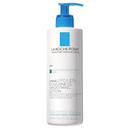
La Roche-Posay Lipikar Urea 10% Body Lotion

La Roche-Posay Lipikar Urea 10% Body Lotion

The option that is not an acid at all, and the one to try if acids have dried you out. Urea does two jobs at once — it holds water in the skin and it breaks down the keratin plugs — at a published 10%, in a 13.52 oz bottle with shea butter and allantoin alongside it.

Best if lactic acid stings
$17.26 · View on Amazon

$22.9925% off

Price as of November 22, 2026. #ad How we’re funded

3
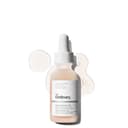
The Ordinary Lactic Acid 10% + HA

The Ordinary Lactic Acid 10% + HA

Lactic acid is the larger, more hydrating cousin of glycolic, so it smooths with less of the bite. A labeled 10% that makes a sensible first AHA for dry or normal skin.

Budget pick, and the same acid at a printed strength
$9.20 · View on Amazon

Price as of November 22, 2026. #ad How we’re funded

4
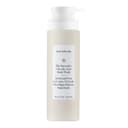
Naturium The Smoother Glycolic Acid Exfoliating Body Wash

Naturium The Smoother Glycolic Acid Exfoliating Body Wash

The most transparent label in the category: 5% glycolic acid, a stated pH of 4.25 to 4.75, 500 mL and a full ingredient list. Read that pH before you buy — it sits above glycolic acid's pKa, so a good deal of the acid is present as a salt rather than in the free-acid form, which is the honest reason this is a smoothing wash rather than a treatment.

Best wash-off route
$16.88 · View on Amazon

Price as of November 22, 2026. #ad How we’re funded

The picks in full

#1Best overall, and the best mechanism swap

CeraVe SA Lotion for Rough & Bumpy Skin

The leave-on most dermatology advice lands on for keratosis pilaris, and the one we would buy first: salicylic acid AND lactic acid in a ceramide base, fragrance-free, at a drugstore price in a bottle big enough to use on both arms every day. CeraVe will not tell you how much of either acid is in it.

Strengths

  • Two keratolytic actives — salicylic acid and lactic acid — plus ceramides and hyaluronic acid to offset the drying
  • Fragrance-free and allergy-tested, which matters on a product you apply to whole limbs daily
  • 8 oz at a drugstore price, so treating arms and legs properly costs very little

Trade-offs

  • No percentage published for either acid — the recurring CeraVe trade-off
  • No pH published either, so how much of the salicylic acid is active is unknown
  • A lotion base is lighter than the very dry, scaly skin at the severe end of this complaint needs
Key activeSalicylic acid + lactic acid (percentages not published)
Stated concentrationNot published
FormatBody lotion
Fragrance-freeYes
Best forDry, Rough body skin, Keratosis-pilaris-prone

Formulation note. Salicylic acid with lactic acid, vitamin D, hyaluronic acid and CeraVe's three ceramides, read from the listing, which states fragrance-free and allergy-tested. Neither acid carries a published percentage and no pH is given, which is the standing CeraVe position across this registry. The reason it still ranks first is the combination: a BHA to work inside the follicle, an AHA on the surface around it, and a barrier base for the daily, whole-limb use this complaint actually requires.

Ingredients and claims read from the product listing, on November 7, 2026. “Not published” means the brand does not state that figure.

#2Best if lactic acid stings

La Roche-Posay Lipikar Urea 10% Body Lotion

The option that is not an acid at all, and the one to try if acids have dried you out. Urea does two jobs at once — it holds water in the skin and it breaks down the keratin plugs — at a published 10%, in a 13.52 oz bottle with shea butter and allantoin alongside it.

Strengths

  • A stated 10% urea, an active the AAD's own keratosis pilaris guidance names alongside the AHAs
  • Urea is a humectant as well as a keratolytic, so it hydrates while it softens the plugs — no acid sting
  • 13.52 oz with shea butter and allantoin, which is the right size and the right base for daily all-over use

Trade-offs

  • Urea at 10% is a milder keratolytic than a 15% lactic acid or a salicylic lotion — expect slower smoothing
  • No pH published, though urea's mechanism does not depend on it the way an AHA's does
  • Not fragrance-free as far as we can verify, which matters on whole-limb daily use
Key activeUrea 10% (keratolytic humectant)
Stated concentration10%
FormatBody lotion
Fragrance-freeNot published
Best forVery dry, Rough body skin, Acid-intolerant

Formulation note. A stated 10% urea with shea butter and allantoin, read from the listing. Urea is worth understanding because it is the one active here that is not an exfoliating acid: at the concentrations used in body care it works as both a humectant, drawing water into the stratum corneum, and a keratolytic, loosening the keratin that forms the plugs — which is why it appears in the AAD's keratosis pilaris list next to the AHAs, salicylic acid and the retinoids. The practical consequence is that it does not sting and does not need a low pH.

Ingredients and claims read from the product listing, on November 7, 2026. “Not published” means the brand does not state that figure.

#3Budget pick, and the same acid at a printed strength

The Ordinary Lactic Acid 10% + HA

Lactic acid is the larger, more hydrating cousin of glycolic, so it smooths with less of the bite. A labeled 10% that makes a sensible first AHA for dry or normal skin.

Strengths

  • A disclosed 10% lactic acid at a budget price
  • The larger molecule is gentler and more hydrating than glycolic
  • Hyaluronic acid rides along to offset dryness

Trade-offs

  • Milder than glycolic, so tough texture may respond more slowly
  • It's still an exfoliant — build up gradually and wear SPF the next day
Key activeLactic acid (AHA)
Stated concentration10%
FormatLight serum
Fragrance-freeYes
Best forNormal, Dry, AHA-curious

Formulation note. 10% lactic acid with hyaluronic acid. Lactic's molecule is bigger than glycolic's, so it works a touch more slowly and tends to feel more hydrating — which is why it's an easier place to start with AHAs on dry or normal skin.

Ingredients and claims read from the product listing, on July 18, 2026. “Not published” means the brand does not state that figure.

#4Best wash-off route

Naturium The Smoother Glycolic Acid Exfoliating Body Wash

The most transparent label in the category: 5% glycolic acid, a stated pH of 4.25 to 4.75, 500 mL and a full ingredient list. Read that pH before you buy — it sits above glycolic acid's pKa, so a good deal of the acid is present as a salt rather than in the free-acid form, which is the honest reason this is a smoothing wash rather than a treatment.

Strengths

  • 5% glycolic acid plus lactic, malic, pyruvic and tartaric acids, all declared, with the glycolic third on the list
  • The only product here that publishes a pH figure at all (4.25 to 4.75)
  • 500 mL, fragrance-free, vegan and dermatologist-tested per the brand's own page

Trade-offs

  • That pH is above glycolic acid's pKa of about 3.8, so the share in active free-acid form is lower than 5% suggests
  • Sodium hydroxide is fourth on the list — the neutralizer is in there in quantity, by design
  • AHAs raise sun sensitivity and the brand's page carries no sunburn alert, so the sunscreen rule is on you
Key activeGlycolic acid 5% + AHA blend
Stated concentration5%
FormatFoaming gel body wash
Fragrance-freeYes
Best forNormal, Rough or bumpy, Dry

Formulation note. Read from Naturium's own page: water, sodium cocoyl isethionate, glycolic acid and sodium hydroxide lead, with cocamidopropyl hydroxysultaine, coconut acid, sodium methyl cocoyl taurate, then lactic, malic, pyruvic and tartaric acid, sodium PCA and glycerin following. Stated pH 4.25 to 4.75. The brand's directions suggest leaving it on "for a few minutes" before rinsing, which is the only contact-time instruction any wash in this group gives.

Ingredients and claims read from the product listing, on October 17, 2026. “Not published” means the brand does not state that figure.

What AmLactin actually does, so you can match the swap

Two jobs at once, and the second one is the half most people forget. It is a 12% or 15% lactic acid, which is an alpha hydroxy acid that loosens the bonds between surface cells — and the FDA’s own guidance on AHA products in cosmetics is the reference for what that class is and how it is labeled. It is also a humectant lotion: lactic acid attracts water as well as exfoliating, which is why the product works on dry rough skin rather than just on bumpy skin.

So a replacement has to do both, or you will notice. A pure acid with no moisturizing base will exfoliate and leave the skin tighter than before. A rich cream with no keratolytic will feel lovely and do nothing to the bumps. Three of our four picks do both jobs; the fourth is a wash that explicitly does one, and is ranked last for that reason.

The four swaps, and what each one trades

Salicylic acid: a different and arguably better mechanism.Salicylic acid is oil-soluble, which means it gets into a follicle in a way a water-soluble AHA does not — and since the bumps on the back of your arms are plugged follicles, that is a mechanistically better fit than lactic acid for this specific problem. Our pick pairs it with ceramides and hyaluronic acid, which covers the moisturizing half of the job. What you give up: the brand does not publish a salicylic acid percentage, which we hold against it and print as “not published” rather than guessing. On a site that ranks by disclosure, this is the one pick where the mechanism argument beat the documentation argument.

Urea: the keratolytic that is not an acid. If you are leaving AmLactin because it stings, this is the swap that solves that rather than reducing it. Urea at 10% softens and breaks down keratin by a different route than an AHA, and it is simultaneously one of the strongest humectants in cosmetic use. It prints its percentage. It feels like a moisturizer rather than a treatment, which is the point. What you give up: it is slower on bumps than an acid and the texture is heavier. See best lotion for keratosis pilaris for where it sits against the whole field.

The same acid, cheaper, at face strength.If your only problem with AmLactin is what it costs per ounce, the honest answer is that lactic acid is a commodity ingredient and a 10% printed formulation costs a third as much. The trade is real and it is about volume, not quality: this is a 30 mL face serum, not a 400 mL body lotion, so it is the right swap for a patch — upper arms, elbows, a few inches of shin — and the wrong one for your whole body. It also has no occlusive base, so it goes under a plain moisturizer rather than instead of one. Lactic acid benefits covers what the molecule does.

A glycolic wash: the route for people who will not do a leave-on. Compliance is the real variable in body exfoliation, and a surprising number of people who abandon a lotion will happily use a wash. A 5% glycolic body wash has a contact time measured in a minute or two, so it is weaker by design, and it is also the least irritating thing on this page. Use it as the maintenance product once the lotion has done the initial work, or as the whole routine if a leave-on is never going to happen. Best exfoliating body wash ranks the category.

How we ranked them

1. Does it do both of AmLactin’s jobs? Keratolytic plus humectant. Three of the four do; the wash does one and is ranked last accordingly, not because it is a bad product.

2. Does the label publish a percentage?Three of the four print one: 10% urea, 10% lactic acid, 5% glycolic acid. Our top pick does not publish its salicylic figure, and it is the single exception on this page where we let mechanism outweigh disclosure — because an oil-soluble acid in a follicle is a better fit for this problem than a water-soluble one at any printed strength.

3. Price per ounce, not per bottle. This is a body product, so you use five to ten times as much of it as you would of anything for your face. The cheapest sticker price on this page is also the smallest bottle by a wide margin, which inverts the ranking if you are treating both legs.

4. Will it sting? You may be here because the last one did. The order below is roughly an irritation order as well as a quality order, with the non-acid option second and the wash fourth.

Which swap, by why you are leaving

“It stings and smells faintly sour.” The urea lotion. Different mechanism, no acid, and it is a better moisturizer than AmLactin is. Expect it to be slower on the bumps and much more comfortable to apply.

“It is not working on my arms.”The salicylic lotion. If a 12–15% AHA has had three months and the follicular bumps are unchanged, switching to an oil-soluble acid that can get into the follicle is the most logical next move rather than going to a higher AHA percentage. Give it eight weeks. Glycolic acid for keratosis pilaris explains why AHA strength is not the variable people assume it is.

“It is too expensive to use on my whole body.” Honestly, the best answer here is the glycolic wash for the whole body plus the cheap lactic serum on the two patches that bother you most. That combination costs less than one bottle of branded body lotion and covers both jobs.

“I want the strongest thing available.” Then you probably should not leave — a printed 15% lactic acid in a humectant base is a strong over-the-counter body product, and the page that ranks it is best lotion for keratosis pilaris. Higher percentages than that are a prescription conversation.

“It made my skin red and itchy.” Stop all of it for two weeks, use a plain moisturizer, and then start the urea option twice a week. Over-exfoliated body skin behaves exactly like over-exfoliated facial skin, and the signs are at signs of over-exfoliation.

What this page refuses to tell you

That any of these cures keratosis pilaris.The AAD’s guidance is clear that it is a chronic condition that is managed rather than cured, and that it often improves with age on its own. Every product here is maintenance. Stop using it and the bumps come back, which is true of AmLactin too.

A salicylic acid percentage for the top pick. The brand does not publish one. We say so rather than inventing a figure, and we tell you that this is the one ranking on the page where documentation lost to mechanism.

That these are interchangeable with AmLactin by volume. One of them is a 30 mL face serum. Read the size on the comparison table above before you decide it is the cheap option, because per ounce it is not.

That we tested these.We own no units, publish no scores and run no trials. Every percentage here is read from a label or a brand’s own product page, and where there is no figure we print the absence.
Frequently asked questions

What is comparable to AmLactin?

CeraVe SA Lotion for Rough & Bumpy Skin is the closest everyday substitute and arguably the better mechanism: it uses salicylic acid, which is oil-soluble and can get into the plugged follicle that causes the bumps, and it adds ceramides to cover the moisturizing half of the job. If acids sting you, La Roche-Posay Lipikar Urea 10% does the keratolytic job without being an acid at all.

Is salicylic acid or lactic acid better for bumpy arms?

Salicylic acid has the better mechanistic fit, because it is oil-soluble and the bumps are plugged follicles, while lactic acid is water-soluble and works mainly on the surface. Lactic acid has the better moisturizing profile, because it is a humectant as well as an exfoliant. In practice: try salicylic if a lactic lotion has had three months and nothing has changed, and keep the moisturizer step either way.

What can I use if AmLactin stings?

Urea at 10%. It softens and breaks down keratin by a different route than an alpha hydroxy acid, so it addresses the same problem without the acid sting, and it is simultaneously one of the strongest humectants in cosmetic use — so it feels like a moisturizer rather than a treatment. It prints its percentage on the label. Expect it to work more slowly on bumps than an acid does.

Is there a cheaper version of AmLactin?

Yes, in molecule terms: lactic acid is a commodity ingredient and a printed 10% serum costs a fraction as much. The catch is volume — that product is a 30 mL face serum, not a 400 mL body lotion, so it is the right swap for upper arms or elbows and the wrong one for your whole body. For whole-body coverage on a budget, a glycolic body wash plus a plain moisturizer is the cheaper route.

How long does it take for a body acid lotion to work?

Six to eight weeks of near-daily use before you judge it, and the bumps usually soften before they flatten. Redness around each bump often outlasts the texture change by months, and sun exposure makes that worse. If nothing at all has changed after three months of consistent use, change the mechanism — acid to urea, or AHA to salicylic — rather than increasing the percentage.

Can I use a body wash instead of a lotion?

As maintenance, yes; as the whole treatment, it is weaker by design. A glycolic body wash has a contact time of a minute or two rather than hours, which makes it the gentlest option here and the one most people actually keep using. The sensible arrangement is a leave-on lotion to do the initial work and the wash to hold the result — and if a leave-on is never going to happen for you, the wash alone beats nothing.

Does keratosis pilaris ever go away?

It is a chronic condition that is managed rather than cured, and dermatology guidance notes it often improves on its own with age. Everything on this page is maintenance: it works while you use it and the bumps return when you stop, which is equally true of AmLactin. That is worth knowing before you spend money hoping for a permanent fix.

Sources

  • American Academy of Dermatology — Keratosis pilaris: Diagnosis and treatment — AAD on exfoliating with AHA, glycolic, lactic, salicylic acid, retinoids and urea for KP (accessed August 19, 2026)
  • U.S. FDA — Alpha Hydroxy Acids — FDA on AHAs and increased sun sensitivity (accessed July 17, 2026)
  • AmLactin — Daily Nourish Body Lotion, 12% Lactic Acid (Amazon retailer listing) — Read from the marketplace listing because we found no brand-hosted page publishing the active's form, and it is the form that decides what the percentage means. The listing states it directly: "clinically proven 12% lactic acid (ammonium lactate), that boosts the skin's natural renewal process through gentle exfoliation" — ammonium lactate being lactic acid already neutralized with ammonium hydroxide, i.e. the SALT and not the free acid a 10% face serum delivers. The listing's only pH language is the unquantified claim "pH balanced"; no measured pH figure is published for this product by the brand or any retailer we checked, and the ingredient lists carried by different retailers do not agree with each other (Steareth-2 and potassium sorbate on some, Steareth-21 and phenoxyethanol on others), so no INCI order is recorded here. For scale on the 12%: the Cosmetic Ingredient Review panel's published use guideline for ammonium lactate is 10% or less at a pH of 3.5 or above with sun protection — a general guideline for the ingredient, not a test of this product. The 14.1 oz size and In Stock status were confirmed with a live price on this date. This is a retailer citation that doubles as a money link, so it routes through the cloaked /go resolver exactly like the buy button on the product's own card (ASIN B07BRDVQ4B, registered in content/products.ts) (accessed October 24, 2026)
  • The Ordinary — Lactic Acid 10% + HA (official product page) — The brand's own listing, headed "Lactic Acid 10% + HA: High-Strength Exfoliator for Dry Skin" and summarized as "A high-strength exfoliator that works to reveal smoother skin." The full fifteen-ingredient INCI list has the acid SECOND, behind only water: Aqua (Water), Lactic Acid, Glycerin, Pentylene Glycol, Propanediol, Sodium Hydroxide, Sodium Hyaluronate Crosspolymer, Tasmannia Lanceolata Fruit/Leaf Extract, Acacia Senegal Gum, Xanthan Gum, Isoceteth-20, Trisodium Ethylenediamine Disuccinate, Ethylhexylglycerin, 1,2-Hexanediol, Caprylyl Glycol. Stated pH 3.60-3.80, with the brand's own formulation rationale spelled out on the page: "The pH of this formula is approximately 3.8. Lactic Acid has a pKa of 3.8 and pKa is the most important aspect to consider in formulating with acids. pKa implies acid availability. When pKa is close to pH, there is an optimal balance between salt and acidity, optimizing the delivery of the acid form to ensure it provides an effective exfoliation that can be used daily." Tasmanian pepperberry extract is described as "a known anti-irritant" and the serum as "ideal for dry skin". One 30 mL size. Highlights: water-free No, alcohol-free Yes, oil-free Yes, silicone-free Yes, vegan, gluten-free and cruelty-free Yes — there is NO fragrance-free claim, though no fragrance appears in the list. Directions: "Apply once daily, ideally in the evening," with "The formula can be diluted with other products to reduce strength until skin develops tolerance" and "Do not use on sensitive, peeling, or compromised skin." It carries the FDA-recommended AHA Sunburn Alert, and a ten-item conflict list (copper peptides, direct vitamin C, EUK, niacinamide powder, peptides, retinoids, direct acids, Saccharomyces Ferment 30% Milky Toner, GF 15% Solution, Multi-Active Delivery Essence). A 5% version of the same formula is sold alongside it (accessed October 11, 2026)
  • CeraVe — SA Body Wash for Rough & Bumpy Skin (official product page) — The brand's own page. Full ingredient list, in order: Aqua/Water/Eau, Cocamidopropyl Hydroxysultaine, Glycerin, Sodium Lauroyl Sarcosinate, Niacinamide, Gluconolactone, PEG-150 Pentaerythrityl Tetrastearate, Sodium Methyl Cocoyl Taurate, Zea Mays Oil (Corn Oil), Ceramide NP, Ceramide AP, Ceramide EOP, Carbomer, Calcium Gluconate, Sodium Chloride, Salicylic Acid, Sodium Benzoate, Sodium Lauroyl Lactylate, Cholecalciferol, Cholesterol, Phenoxyethanol, Disodium EDTA, Tetrasodium EDTA, Hydrolyzed Hyaluronic Acid, Phytosphingosine, Xanthan Gum, Ethylhexylglycerin — the salicylic acid is SIXTEENTH, below sodium chloride, and gluconolactone (a polyhydroxy acid) is sixth. NO salicylic acid percentage is stated anywhere on the page. Claims: "Free of Added Fragrance" ("To avoid fragrance irritation") and non-comedogenic ("Won't clog pores"). Key ingredients named by the brand: ceramides, salicylic acid, niacinamide and hyaluronic acid; lactic acid is NOT in this formula. Directions: "Wet skin with lukewarm water, massage the cleanser into skin in a gentle, circular motion, then rinse," usable anytime. Marketed for rough and bumpy skin, with a dermatologist quote on the page naming keratosis pilaris. The page also states that "CeraVe does not treat underlying skin conditions" and that ingredient lists are updated regularly (accessed October 17, 2026)
  • American Academy of Dermatology — Dermatologists' top tips for relieving dry skin — AAD on moisturizing damp skin and choosing a cream for dry skin (accessed July 17, 2026)

Keep reading