Retinol and Azelaic Acid: Can You Use Them Together?
Of all the active pairings people worry about, this is the one that needs the least worrying. Azelaic acid is not an exfoliating acid, which is why it behaves completely differently next to a retinoid than glycolic or salicylic acid does. Here is the split that works, the one schedule we would not run, and what to buy.
How this is funded: we earn a commission if you buy through our links, at no extra cost to you. It never changes which product we recommend, and we’ll tell you when we’d skip one. Full disclosure.
Why this pairing is easier than the ones you have read about
Almost every layering warning you have seen is really a warning about exfoliation stacking: two products that both loosen the surface of your skin, applied to the same face on the same night, so the irritation adds up while the barrier has nothing left to repair itself with. That is the genuine problem with a retinoid plus a glycolic or salicylic acid.
Azelaic acid is not in that category, despite the word in its name. It is a dicarboxylic acid, and its mechanisms are completely different: the AAD describes it as unclogging pores and keeping them open, acting on the bacteria involved in acne, and reducing acne inflammation, with an additional effect on pigment production. None of that is the bond-dissolving surface exfoliation an AHA or BHA performs. So putting it next to a retinoid does not double anything — it adds a second, differently-aimed active to a routine.
There is a second reason it suits a retinoid routine specifically. Retinoids are famous for the adjustment phase: dryness, flaking, a period of redness. Azelaic acid is the active clinicians reach for in rosacea-prone skin, which is to say the skin least able to take a retinoid. Pairing a demanding active with a calming one is a better structure than pairing two demanding ones.
The routine, in the order we would actually run it
Morning:cleanse, azelaic acid, moisturizer, sunscreen. Azelaic acid has no light-sensitivity problem of its own, it sits comfortably under an SPF, and putting it here means it is not competing for the same slot as the retinoid. If pigment or post-acne marks are your main reason for using it, the morning placement is also where daily sunscreen does the other half of that job — and on melasma specifically, sun protection is the part the AAD credits with preventing its return.
Night:cleanse, retinol on dry skin, moisturizer over the top. The AAD’s guidance on retinoids is that they can make skin more sun-sensitive, which is the reason they belong in the evening and the reason the morning sunscreen is not optional.
The ramp: introduce one of them first. Whichever you start with, give it three or four weeks of settled, comfortable use before the second arrives. This is the single most useful instruction on this page, because if you start both together and your skin reacts, you have no way of knowing which one to pull.
Frequency:retinol two or three nights a week to begin with, climbing only when the previous frequency has been uneventful for a few weeks. Azelaic acid can usually be daily from early on — and both the prescription labels and The Ordinary’s own page direct twice daily for azelaic acid, so once-daily morning use is already the conservative version. Running it twice a day means it meets the retinol in the evening routine, which is fine for settled skin and the one thing we would not do in month one.
What the honest expectations are
The firmest number available for azelaic acid comes from the prescription 20% cream’s own FDA label: improvement in the majority of patients with inflammatory lesions within four weeks. Rosacea is slower — the 15% gel’s two vehicle-controlled trials in 664 patients ran twelve weeks and cut inflammatory lesions by 57.9% against 39.9% on vehicle in one and 50.0% against 38.2% in the other. Pigment is slowest of all, measured in months.
Scale those down honestly for an over-the-counter 10%: it is the right molecule at a strength no trial has tested, which is the position we take on every page where this product appears. Retinol’s own timeline is a months-long one for the fine lines and tone it is bought for. Neither active is a fortnight’s purchase.
The one thing most people get wrong
They skip the moisturizer, or they use something that looks like a moisturizer and does not seal anything. Two actives in a routine means two chances to compromise the barrier, and the AAD’s dry-skin guidance is blunt about what fixes that: a plain emollient, applied while skin is still slightly damp, used consistently. A ceramide-and-niacinamide moisturizer over the retinol night is not an upsell — it is the reason you will still be using the retinol in three months, which is when it starts to pay.
If your barrier is already compromised — tight, shiny, stinging at things that never stung, flaking around the nose — stop both actives and read how to repair your skin barrier first. A two-week detour saves two months.
When this is the wrong pairing
Severe inflammatory acne.Azelaic acid carries a conditional recommendation in the 2024 acne guidance while benzoyl peroxide and topical retinoids carry strong ones, so for painful, inflamed acne the better combination is a different one — see best acne treatments.
Active rosacea flare. Azelaic acid belongs in that routine; the retinoid is the part to discuss with a clinician before adding, because retinoids can aggravate rosacea. Start with azelaic acid for rosacea.
Three or four actives already.If you are running a vitamin C, an exfoliating acid, a retinoid and now azelaic acid, the limiting factor is not which pair is compatible — it is the total load. Drop something.
Bottom line
Azelaic acid in the morning, retinol at night, a plain moisturizer in both routines and sunscreen every day. Introduce one at a time, three or four weeks apart, and judge the result at three months rather than three weeks. Of all the active pairings this site covers, this is the one where the honest advice is not “be careful” — it is “this is a good routine, build it slowly.”
General guidance, not medical advice. Actives & Acids is written by a skincare enthusiast, not a dermatologist. For a diagnosis, a reaction, or a prescription active like tretinoin, see a qualified professional. Introduce any new active slowly and patch-test first.
What we'd actually buy
Chosen from the same registry as our roundups, on published formulation facts rather than hands-on testing — here is exactly what we do instead.
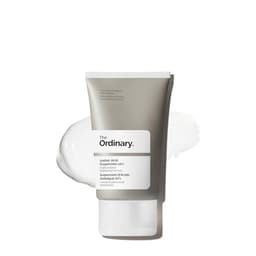
The Ordinary
Azelaic Acid Suspension 10%
The azelaic half, and the cheapest honest way into the molecule: a stated 10% of the free acid. Put it in the morning, where it has no conflict with anything and sits happily under sunscreen.
See it ranked in fullPrice as of October 24, 2026. #ad How we’re funded
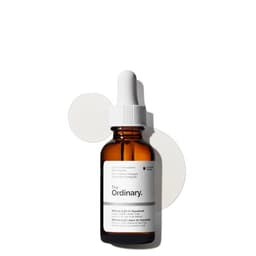
The Ordinary
Retinol 0.5% in Squalane
The retinoid half. A printed 0.5% means that when your skin complains you can lower the dose rather than guess at it — which is the entire reason we rank disclosed percentages above mystery complexes.
See it ranked in fullPrice as of October 24, 2026. #ad How we’re funded
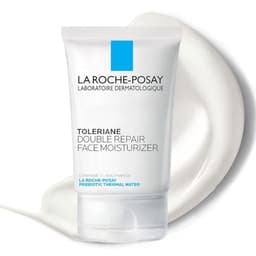
La Roche-Posay
Toleriane Double Repair Face Moisturizer
The part of this routine people skip and then blame on the actives. A plain ceramide-and-niacinamide moisturizer over the retinol night, every night — it is what makes running two actives survivable for the months they need.
See it ranked in fullPrice as of October 24, 2026. #ad How we’re funded
Frequently asked questions
Can you use azelaic acid and retinol together?
Yes, and this is one of the easier pairings to run. Azelaic acid is not an alpha or beta hydroxy acid — it is a dicarboxylic acid that works on inflammation, on the bacteria involved in acne and on pigment production, rather than by dissolving the bonds between surface cells. That means stacking it with a retinoid does not double up on exfoliation the way a glycolic or salicylic acid would. The simplest routine is azelaic acid in the morning and retinol at night.
Can I apply them at the same time, in the same routine?
You can, once your skin is used to both, and the order is thinnest first: azelaic acid, let it settle, then the retinol, then moisturizer. But there is no documented advantage to same-session use over a morning-and-night split, and the split costs you nothing. The Ordinary's own conflict list for its azelaic suspension names retinoids, which is more cautious than the evidence supports — worth knowing because it is the brand's own instruction and we are not going to pretend it does not exist.
Which goes on first, azelaic acid or retinol?
If you are using both in one session, the thinner product first. That usually means the azelaic acid, although The Ordinary's suspension is a silicone-based gel that can feel heavier than a squalane retinol serum does, so judge it by what you are actually holding. The better answer for most people is that neither goes first because they are in different routines — azelaic acid in the morning under sunscreen, retinol at night.
Is azelaic acid gentler than retinol?
On most skin, yes, and that asymmetry is why the pairing works. Azelaic acid is the active dermatologists reach for with rosacea-prone skin, which is a population that generally cannot tolerate a retinoid at all. Tolerance is not guaranteed, though: the prescription 15% gel's own label records burning, stinging or tingling as mild in 16% of patients, moderate in 9% and severe in 4%. An over-the-counter 10% is lower than that, but it is not nothing.
What does each one actually do, so I know which is working?
Retinol works on the long game: cell turnover and collagen, which shows up as softened fine lines and more even texture over months. Azelaic acid works on what is red and what is dark — inflammatory spots, rosacea-type redness, and the flat brown marks acne leaves behind. If your skin looks calmer and the marks are fading, that is the azelaic acid. If the texture and fine lines are changing, that is the retinol. They are not interchangeable and they are not competing.
Can I add vitamin C or niacinamide to this routine?
Niacinamide, yes, and it is a sensible addition because its published evidence is for barrier support and redness — exactly what a retinoid routine needs. Vitamin C is fine too, in the morning, though if you want azelaic acid in the morning as well you are stacking two tone-brightening actives in one routine and should introduce the second only after the first is comfortable. Adding a third and fourth active at once is the commonest way people end up blaming a product for a routine's fault.
How long before I see anything?
Four weeks is the earliest honest figure for the azelaic half, and that comes from the FDA label for the prescription 20% cream, which records improvement in the majority of patients with inflammatory lesions within four weeks. Rosacea redness is a twelve-week question on the published trials, and pigment is a three-to-twelve-month one. Retinol is slower still on the things it is bought for. If nothing has changed at three months of consistent use, change something — but not before.
Is this combination safe in pregnancy?
Ask the clinician managing your pregnancy. The class with an explicit avoid-in-pregnancy instruction from its own manufacturers is the retinoid class — The Ordinary's retinol page carries that warning in writing. Azelaic acid is a different molecule with a different safety discussion, and it is not our discussion to have. Nothing on this page is medical advice.
Sources
- American Academy of Dermatology — Retinoid or retinol? — AAD on the difference between prescription retinoids and OTC retinol (accessed July 17, 2026)
- A Comprehensive Review of Azelaic Acid: Pharmacological Properties, Clinical Applications and Topical Formulations (PMC) — Review of azelaic acid's action on pigmentation, inflammation and acne (accessed August 19, 2026)
- The Ordinary — Azelaic Acid Suspension 10% (official product page) — The brand's own listing: the full eighteen-ingredient list (Aqua, Isodecyl Neopentanoate, Dimethicone, Azelaic Acid, Dimethicone/Bis-Isobutyl PPG-20 Crosspolymer, Dimethyl Isosorbide, Hydroxyethyl Acrylate/Sodium Acryloyldimethyl Taurate Copolymer, Polysilicone-11, Isohexadecane, Tocopherol, Trisodium Ethylenediamine Disuccinate, Isoceteth-20, Polysorbate 60, Triethanolamine, Ethoxydiglycol, Phenoxyethanol, Chlorphenesin), a stated pH of 4.00-5.00, the 30 mL and 100 mL sizes, twice-daily directions with sun protection, the non-comedogenic and alcohol-free claims, the fact that the brand does NOT claim it is silicone-free, and the conflict list (copper peptides, direct acids, direct vitamin C, EUK, niacinamide powder, peptides, retinoids) (accessed September 26, 2026)
- The Ordinary — Retinol 0.5% in Squalane (official product page) — The brand's own listing, headed "Anti-Aging Moderate Strength Retinol 0.5% in Squalane Serum" and summarized as "A moderate-strength retinol serum that targets general signs of skin aging." The complete INCI list runs to EIGHT entries: Squalane, Caprylic/Capric Triglyceride, Simmondsia Chinensis (Jojoba) Seed Oil, Retinol, Solanum Lycopersicum (Tomato) Fruit Extract, Rosmarinus Officinalis (Rosemary) Leaf Extract, Hydroxymethoxyphenyl Decanone, BHT — so the retinol is FOURTH, behind three emollients. Format is given as "Serum: Anhydrous" and the product highlights read water-free Yes, alcohol-free Yes, oil-free NO, silicone-free Yes, vegan, gluten-free and cruelty-free Yes; there is no fragrance-free claim, although no fragrance appears in the list. "Suited for" is given as Dry Skin only. The brand's own description: "Retinol 0.5% in Squalane offers a water-free solution containing 0.5% retinol — an ingredient that improves the appearance of fine lines that can arise from a loss of collagen and elastin, while evening the appearance of skin texture and tone," supported with squalane, "a moisturizing agent naturally found in your skin that nourishes to help it better withstand the drying effects of retinol." The Ordinary Tip: "Start with Retinol 0.2% in Squalane and slowly work your way up to Retinol 0.5% in Squalane and Retinol 1% in Squalane. That said, if you are prone to sensitivity, you may prefer to use newer retinoid technologies, such as those found in our Granactive Retinoid 2% Emulsion." Notes: "Retinoids can make the skin more sensitive to UV radiation. Sun protection is particularly important when using retinoids"; "This product must not be used in conjunction with other retinoids, including retinol or retinoic acid. This product is not a treatment for acne"; "When pregnant or breastfeeding, it is recommended to avoid any skincare products containing retinoids"; and, on storage, "Once opened, this formulation should be refrigerated and used within a three-month period." Usage directions: "Apply a few drops to the face in the evening. Do not use with other retinoid products. Use sun protection during the day," with the caution "Retinol can cause irritation, redness, and peeling, especially around the eyes and mouth, in the early stages of use while skin builds tolerance," plus "Refrigerate after opening," "Use only as directed on unbroken skin" and "Patch testing prior to use is advised." Sold in one 30 ml size (accessed October 17, 2026)
- DailyMed — FINACEA (azelaic acid) Gel, 15% prescribing information — The FDA-approved label for the 15% prescription gel: indicated for the inflammatory papules and pustules of mild to moderate rosacea, applied twice daily. Two identical 12-week vehicle-controlled trials in 664 patients reduced inflammatory lesions by 57.9% vs 39.9% and 50.0% vs 38.2%, with investigator-rated success (clear, minimal or mild) of 61% vs 40% and 61% vs 48%. Burning, stinging or tingling was reported by 16% mild / 9% moderate / 4% severe on the drug against 2% mild on vehicle (accessed September 26, 2026)
- American Academy of Dermatology — Rosacea: Diagnosis and treatment — AAD on azelaic acid, metronidazole and ivermectin for rosacea (accessed August 19, 2026)
- American Academy of Dermatology — Dermatologists' top tips for relieving dry skin — AAD on moisturizing damp skin and choosing a cream for dry skin (accessed July 17, 2026)
Keep reading
How to layer actives
The full conflict matrix — every pairing on this site, and which ones genuinely need separating.
Read the guideBest azelaic acid
The azelaic half ranked in full: free acid against derivative, with the published percentages and what each one is for.
See the picksRetinol and salicylic acid
The same question for an exfoliating acid, and a harder answer — why that pair needs alternate nights and this one does not.
Read the guideAzelaic acid for rosacea
Where azelaic acid has real drug evidence behind it, and what the prescription strengths achieved in trials.
Read the guideRetinol side effects
What the adjustment phase looks like, how long it lasts, and the point at which it is not adjustment any more.
Read the guide