The Ordinary Azelaic Acid Suspension 10% Review
The cheapest way to put azelaic acid on your face, reviewed off its label and the drug evidence rather than a testimonial. All seventeen ingredients, what a 10% buys you next to the 15% and 20% prescriptions, why the texture divides people, and the three kinds of skin that should buy something else.
How this is funded: we earn a commission if you buy through our links, at no extra cost to you. It never changes which product we recommend, and we’ll tell you when we’d skip one. Full disclosure.
Azelaic acid is the odd one out among the actives on this site. It is the only one you can buy over the counter that also exists as two separate FDA-approved prescription drugs, and it is the only strong ingredient dermatologists routinely hand to rosacea-prone skin. The Ordinary sells the cheapest version there is — a stated 10% in a silicone suspension, for about the price of a sandwich — and it is the product people write to us about by name more than any other acid. That is why it gets a page of its own rather than a row in the azelaic acid roundup, where it happens to be the top pick.
A word on what this review is. We have not used this product, and we do not review by using things — no lab, no panel, no “I tried it for six weeks.” What we did instead is read the brand’s own ingredient list, pH and claims off its product page, read the Amazon listing our button links to, and then set both against the two FDA-approved azelaic acid labels and the published reviews. Every one of those is linked in the Sources block; the method is spelled out in how we pick. What you get is a review of what is in the tube, what the evidence says that molecule can do at that strength, and who should buy it. What you do not get is a description of how it felt on our face.
The verdict in one paragraph
If redness, post-acne marks or uneven tone is your complaint, this is the cheapest honest way into an ingredient with real drug evidence behind it, and the label backs that up: a printed 10% azelaic acid, seventeen ingredients, a stated pH of 4.00 to 5.00, no fragrance in the list, and a price that makes a failed experiment cost almost nothing. The caveats are equally plain. Ten percent sits below both prescriptions — a 15% gel for rosacea and a 20% cream for acne — and The Ordinary publishes no clinical trial of this formula, so you are buying the right molecule at an unproven strength. The silicone suspension that makes a 10% load possible at this price is also the reason people describe grit and pilling, and it is the single most common reason they stop. And the brand’s conflict list is far more restrictive than the evidence warrants. None of that changes the recommendation for the skin it was built for; it changes who else should buy something different, which we get to below.
At a glance
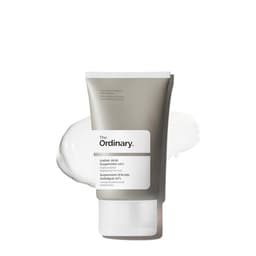
The Ordinary Azelaic Acid Suspension 10%
Stated active: 10% azelaic acid (free acid, not a derivative). Ingredients: 17, no fragrance in the list. Brand-stated pH: 4.00–5.00.
Sizes: 30 mL and 100 mL on the brand’s site. The Amazon listing our button links to is the 30 mL.
Product image supplied by Amazon.
What is on the label
The Ordinary publishes its full ingredient list, which is the first thing that separates it from most of the shelf. Read from the brand’s product page on September 26, 2026, in the order printed, it is: Aqua (Water), Isodecyl Neopentanoate, Dimethicone, Azelaic Acid, Dimethicone/Bis-Isobutyl PPG-20 Crosspolymer, Dimethyl Isosorbide, Hydroxyethyl Acrylate/Sodium Acryloyldimethyl Taurate Copolymer, Polysilicone-11, Isohexadecane, Tocopherol, Trisodium Ethylenediamine Disuccinate, Isoceteth-20, Polysorbate 60, Triethanolamine, Ethoxydiglycol, Phenoxyethanol, Chlorphenesin. Seventeen ingredients, and the interesting thing is the order.
- Azelaic acid is fourth, not second — behind water and two emollient-and-silicone ingredients. That is not a red flag; it is physics. Azelaic acid is poorly soluble in water, so a 10% load cannot simply be dissolved the way niacinamide can. It has to be carried.
- Isodecyl neopentanoate, dimethicone, the dimethicone crosspolymer, polysilicone-11 and isohexadecane are that carrier: a light ester plus a silicone system that holds solid acid particles evenly in place. This is the whole reason the word “suspension” is on the front of the tube, and it is why the finish is a silicone-smooth film rather than a watery serum. It is also, honestly, why some people cannot get on with it.
- Dimethyl isosorbide and ethoxydiglycol are penetration solvents — they help the acid move off the film and into the skin rather than sitting on top of it.
- The hydroxyethyl acrylate copolymer is the gelling agent that gives the cream-like body; isoceteth-20 and polysorbate 60 keep the water and oil phases together; triethanolamine adjusts the pH upward, which is how a carboxylic acid ends up at a skin-friendly 4.00 to 5.00 rather than sharply lower.
- Tocopherol is vitamin E, present as an antioxidant; trisodium ethylenediamine disuccinate is a chelator that keeps trace metals from destabilizing the formula; phenoxyethanol and chlorphenesin are the preservatives.
Absent from the list: fragrance, essential oils, drying alcohol and plant oils. The brand states the formula is alcohol-free, vegan and gluten-free, and — unlike its niacinamide serum — it does not claim to be silicone-free, because it plainly is not. It also does not carry a fragrance-free claim, though no fragrance appears in the seventeen ingredients. The one number worth dwelling on is the pH of 4.00 to 5.00. For an AHA that figure decides whether the product works at all; for azelaic acid it matters far less, because azelaic acid is not a surface exfoliant working by pH the way glycolic acid is. A mildly acidic pH is simply comfortable skin territory, and it is one more reason reactive skin tends to tolerate this better than a glycolic acid toner.
What a 10% actually buys you
Here is the context the marketing never gives you, and it is the most useful thing on this page. Azelaic acid is not only a cosmetic ingredient — it is a prescription drug, twice over, and both labels are public.
- The 15% gel is approved for the inflammatory papules and pustules of mild to moderate rosacea, applied twice daily. Two identical 12-week, multicenter, randomized, double-blind, vehicle-controlled studies in 664 patients cut inflammatory lesions by 57.9% against 39.9% for vehicle in one trial and 50.0% against 38.2% in the other, with investigator-rated success — clear, minimal or mild — reached by 61% of treated patients against 40% and 48% on vehicle.
- The 20% cream is approved for mild-to-moderate inflammatory acne vulgaris, also twice daily, and its label states that improvement occurs in the majority of patients with inflammatory lesions within four weeks.
The Ordinary’s suspension is a 10%. It is the same molecule, at two-thirds the rosacea strength and half the acne strength, and no trial of this formulation exists — the brand publishes none, and we found none. That is the honest frame for everything below: you are buying a well-evidenced ingredient at a strength the evidence does not cover, for a fraction of a prescription co-pay. For mild unevenness, post-acne marks and the general look of redness that is a sensible trade. For inflamed, pustular rosacea or moderate acne it is the wrong tool, and the right move is a conversation about the 15% gel instead of a second tube of this.
The flip side of a lower strength is tolerance, and the prescription labels quantify that too. On the 15% gel, burning, stinging or tingling was reported as mild by 16% of patients, moderate by 9% and severe by 4%, against 2% mild on vehicle; pruritus ran 6%, 4% and 1%. On the 20% cream, pruritus, burning, stinging and tingling each occur in roughly 1 to 5% of patients. So azelaic acid is well tolerated by most people but not sting-free for everyone, and a 10% is the version most likely to be comfortable on skin that has reacted badly to acids before.
What the evidence says it does
Three jobs, with three different strengths of evidence behind them, and it is worth being precise about which is which.
Redness and rosacea is the strongest. The American Academy of Dermatology names azelaic acid among the treatments used for rosacea, and the 15% gel’s approval rests on the two trials above. This is also the reason azelaic acid keeps turning up in advice for skin that cannot tolerate anything else: it reduces inflammation without the barrier cost of an exfoliating acid or a retinoid.
Pigmentation — post-acne marks, melasma, general unevenness is the reason most people buy this tube, and the mechanism is well described in the published review we cite: azelaic acid interferes with tyrosinase, the enzyme step in pigment production, and appears to act selectively on overactive pigment cells rather than on normal ones. That selectivity is why it is a standard alternative where hydroquinone is unsuitable, and it is why the 20% cream’s label lists depigmentation only as a rare event rather than an expected one. Our azelaic acid for dark spots guide covers what to expect, and over how long.
Acne is the weakest of the three, and we say so on the page dedicated to it. Azelaic acid has genuine antibacterial activity and normalizes keratinization — the 20% cream’s label says exactly that, while also stating that the exact mechanism of action is not known — but in the 2024 AAD acne guideline azelaic acid is a conditional recommendation, where topical benzoyl peroxide and topical retinoids are strong ones. If acne is the main problem, start at azelaic acid for acne and expect to be pointed at adapalene first.
The brand’s claims, checked against the page
The Ordinary calls this a “cream-like brightening formulation that improves the look of uneven skin tone and visibly improves skin texture,” targeting textural irregularities, dullness, the look of redness and uneven skin tone. All four are defensible — they are carefully worded around appearance rather than treatment, which is the correct line for a cosmetic. Three specifics deserve a closer look.
- “A natural and effective antioxidant, which means it’s gentle enough for daily use.” The conclusion does not follow from the premise. Plenty of antioxidants are not gentle, and plenty of gentle ingredients are not antioxidants. Azelaic acid is generally well-tolerated — the prescription numbers above show that — but it is tolerated because of how it acts on inflammation, not because it is an antioxidant. Treat this sentence as marketing and the tolerance data as the reason.
- “Non-comedogenic and suitable for all skin types.” The page does not publish the study behind the non-comedogenic claim, unlike the brand’s niacinamide serum, which cites a 35-subject, 8-week test. “Suitable for all skin types” is a stretch in one direction: very dry skin will find a twice-daily silicone film either welcome or suffocating, and there is no way to know which without trying it.
- The conflict list. The brand tells you not to use this with direct acids, direct vitamin C, niacinamide powder, peptides, copper peptides, EUK or retinoids. That is a long list for one of the most layerable actives there is, and it reads as a rule written to stop people stacking six of the brand’s own droppers rather than as chemistry. Azelaic acid and niacinamide are a well-behaved pair. Azelaic acid and vitamin C have a real but manageable overlap, and splitting them morning and night settles it. Retinol on the same night is a tolerance decision, not an incompatibility. Following the brand’s instruction costs you nothing, but do not take it as evidence the combinations are harmful.
Texture, the silicone base, and the pilling problem
We will not describe the feel, because we have not felt it. What the ingredient list tells you is this: a water base carrying solid acid particles in a silicone-and-ester system will behave like a thin, silky cream that dries to a faint film, with a slight graininess where the suspended acid sits. Both of those are design consequences, not defects. The film is why a 10% load stays put; the grain is the acid itself.
The consequence is the single most common complaint about this product, and the one that makes people quit: it rolls up into little balls under sunscreen or makeup. Silicone films and the layers that go on top of them are a known bad pairing, and in nearly every case the fix is the amount. A pea-sized amount covers the face; the brand’s own direction is “a small amount.” Spread it thin rather than dabbing it thick, wait a full minute before the next layer, and press that layer on rather than rubbing it in circles. If it still pills at a pea, the base is the problem rather than your technique — and that is exactly what the two alternatives below exist for.
Price, sizes and where to buy it
This is the cheapest credible azelaic acid on the market, and it would still be the value pick at twice the price — the smoother Paula’s Choice booster carries the same stated 10% for several times the cost per milliliter. The brand sells a 30 mL and a 100 mL. Buy the 30 mL first: you use this twice a day over the whole face, so it goes faster than a dropper serum, but the texture is the thing most likely to end the experiment, and a 100 mL of something you dislike is an expensive lesson. The Amazon listing our button points at is the 30 mL, and the price on the button is Amazon’s live price, refreshed daily and stamped with the date, rather than a number we typed in once. We have no incentive to steer you to one listing over another.
Who it is for
Buy it if the complaint is post-acne marks, general unevenness, melasma or the look of redness, and you want the molecule the prescriptions use at the lowest price it sells for. It is an unusually good first treatment for reactive and rosacea-prone skin, because it does not sun-sensitize the way a retinoid does, it does not depend on a low pH the way an AHA does, and it layers with almost everything. It is also the right pick if you already run an exfoliating acid and want a second active that will not compound the irritation.
Buy something else in three cases. If the problem is inflamed, pustular rosacea or moderate acne, a 10% cosmetic is under-powered for it — the 15% gel and the 20% cream are approved drugs and a prescription is the better spend. If silicone films and pilling are a standing problem in your routine, this formula will not be the exception; a water-based azelaic is the answer. And if what you actually want is barrier support, oil control and general evenness rather than a treatment for a specific mark or flush, then niacinamide is the cheaper, easier ingredient, and azelaic acid vs niacinamide makes that call properly.
How to use it
A pea-sized amount on clean, dry skin, morning and evening as the brand directs, after any water-based serum and before moisturizer — the thinnest-to-thickest order the American Academy of Dermatology describes for every routine. Avoid the eye contour. Sunscreen in the morning, which the brand’s directions also ask for: azelaic acid does not sun-sensitize the way a retinoid does, but the tone and mark benefits you are paying for are undone by unprotected sun. Reactive skin should start once daily on alternate days and build up, and everyone should patch test first, as the brand’s own page asks. Then leave it alone for twelve weeks before deciding whether it did anything — the rosacea trials ran twelve weeks, the acne label measures inflammatory lesions at four, and pigment is slower than either.
Against the alternatives
Two products compete with it directly, and both are ranked in full in best azelaic acid products.
Paula’s Choice BOOST 10% Azelaic Acid Booster is the like-for-like upgrade: the same stated 10% of free azelaic acid, plus salicylic acid and licorice, in a cream-gel built to disappear into a layered routine rather than sit on it as a film. What you are paying several times more for is texture, and if pilling is the specific reason you have abandoned azelaic acid before, that is a real thing to pay for. The added salicylic acid is a bonus only if you are not already running a separate BHA.
Naturium’s 10% needs a clearer distinction than most roundups give it, and it is the most useful comparison on this page. Read off the brand’s own ingredient list, its active is potassium azeloyl diglycinate — a glycinated azelaic derivative, water-soluble where azelaic acid is not, alongside niacinamide and ethyl ascorbic acid. The brand now sells it as “Azelaic Acid Derivative Complex 10%,” which is the accurate name. That derivative is genuinely more comfortable and dissolves into a light cream instead of needing a silicone suspension, and for tone and marks on skin that hates silicone films it is a sensible buy. But it is not the molecule the rosacea and acne trials used, and nobody should assume a 10% derivative equals a 10% of the free acid. If you want the studied ingredient, The Ordinary’s suspension and the Paula’s Choice booster are the two that carry it.
Bottom line
The Ordinary Azelaic Acid Suspension 10% earns its place on the label rather than the marketing. It is the right molecule, honestly disclosed at a stated strength, in a seventeen-ingredient formula with no fragrance and a published pH, priced so low that finding out whether azelaic acid suits you costs almost nothing. Know that 10% sits below both prescription strengths and that no trial of this formula exists; know that the silicone suspension is the price of that strength at that cost, and that a pea-sized amount is the difference between a smooth film and a pilling mess; and ignore the conflict list unless your skin tells you otherwise. For marks, unevenness and the look of redness — especially on skin that cannot take an acid or a retinoid — it is still the first tube we would point most people at. For inflamed rosacea or real acne, the prescriptions exist, and we would rather you spent the money there. The rest of the brand’s range, sorted by what each bottle is actually for, is in The Ordinary, decoded.
General guidance, not medical advice. Actives & Acids is written by a skincare enthusiast, not a dermatologist. For a diagnosis, a reaction, or a prescription active like tretinoin, see a qualified professional. Introduce any new active slowly and patch-test first.
What we'd actually buy
Chosen from the same registry as our roundups, on published formulation facts rather than hands-on testing — here is exactly what we do instead.
The Ordinary
Azelaic Acid Suspension 10%
The tube this page is about. Buy it if redness, post-acne marks or uneven tone is the complaint and you want the studied molecule at the lowest price it sells for. A pea-sized amount, spread thin — the grit and the pilling people describe are nearly always the dose.
See it ranked against its rivals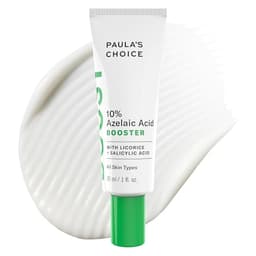
Paula's Choice
BOOST 10% Azelaic Acid Booster
The same stated 10% of free azelaic acid in a smoother cream-gel, with salicylic acid and licorice alongside it. The alternative if the silicone suspension's texture is the reason you stopped using azelaic acid — and the price difference is the price of that texture.
See it ranked in fullPrice as of September 26, 2026. #ad How we’re funded
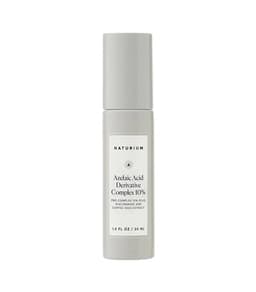
Naturium
Azelaic Acid Derivative Complex 10%
A 10% glycinated azelaic DERIVATIVE (potassium azeloyl diglycinate) rather than free azelaic acid, with niacinamide and vitamin C for tone. A comfortable water-based cream for marks and unevenness, but not the molecule the rosacea and acne trials used — read the section below before choosing it.
See it ranked in fullPrice as of September 26, 2026. #ad How we’re funded
Frequently asked questions
Is The Ordinary Azelaic Acid Suspension 10% strong enough to work?
For tone, marks and the look of redness, a stated 10% is a reasonable place to start, and it is the same molecule the prescriptions use. But be clear about the gap: the FDA-approved products are a 15% gel for the papules and pustules of rosacea and a 20% cream for mild-to-moderate inflammatory acne. Nothing at 10% has been through those trials, and The Ordinary publishes no trial of its own formula. So expect a milder version of a real effect, judged over months rather than weeks — and if inflamed rosacea or inflamed acne is the actual problem, the prescription strengths exist for a reason.
Why does it feel gritty or grainy?
Because azelaic acid is barely soluble in water, so it is suspended rather than dissolved. The label tells you how: after water come isodecyl neopentanoate, dimethicone and then the acid itself, held in place by a silicone crosspolymer, polysilicone-11 and isohexadecane. That silicone suspension is what carries a 10% load at this price, and the faint graininess is the suspended acid. It is not a fault in your tube and it is not the product going off.
Why does it pill under sunscreen or makeup?
Silicone films and the layers on top of them are a known bad match, and the fix is almost always the amount. Use a pea-sized amount for the whole face, spread it thin rather than dabbing it thick, wait a full minute, and press the next layer on rather than rubbing it in circles. If it still rolls up at that dose, the base is the problem rather than your technique, and a water-based azelaic like the Naturium derivative or the Paula's Choice cream-gel is the fix.
Can I use it with niacinamide, vitamin C or retinol?
The brand's page says not to, listing direct acids, direct vitamin C, niacinamide powder, peptides, copper peptides and retinoids as conflicts. That list is written to keep buyers from stacking six of the brand's own droppers at once, and it is more cautious than the evidence. Azelaic acid is one of the easier actives to layer: it is not pH-dependent the way an AHA is, and it sits comfortably with niacinamide. Retinol on the same night is a tolerance question, not a chemistry one — start on alternate nights. Our layering guides work through each pairing.
Is it safe for rosacea-prone or sensitive skin?
Azelaic acid is one of the treatments the American Academy of Dermatology names for rosacea, which is unusual for an active this effective. It is not free of sting, though: on the 15% prescription gel, burning, stinging or tingling was reported as mild by 16% of patients, moderate by 9% and severe by 4%. A 10% should be gentler than that, but if your skin is reactive, start once a day on alternate days, on skin that is not freshly cleansed, and patch test first as the brand's own page asks.
Does it bleach or lighten normal skin?
It should not. Azelaic acid acts on overactive pigment-producing cells rather than on normal melanocytes, which is the main reason it is used where hydroquinone is avoided. The 20% prescription cream's label does list depigmentation as a rare reported reaction, so it is not impossible — if you have deeper skin and notice any patchy lightening, stop and speak to a dermatologist.
How long before I see anything?
Give it twelve weeks, and do not judge it at two. The rosacea trials behind the 15% gel ran for twelve weeks; the 20% acne cream's label says improvement occurs in the majority of patients with inflammatory lesions within four weeks. Marks and melasma are the slowest of all because they depend on pigment clearing. At a 10% every figure above is the ceiling, not the expectation.
Should I buy the 30 mL or the 100 mL?
Start with the 30 mL. Twice a day over the whole face uses this faster than a serum, so the 100 mL is genuinely better value if you already know the texture suits you — but the texture is exactly the thing that makes people abandon this product, and a 100 mL of something you dislike is an expensive lesson. The Amazon listing our button points at is the 30 mL; the price shown is Amazon's live price, refreshed daily and stamped with the date we read it.
Sources
- The Ordinary — Azelaic Acid Suspension 10% (official product page) — The brand's own listing: the full eighteen-ingredient list (Aqua, Isodecyl Neopentanoate, Dimethicone, Azelaic Acid, Dimethicone/Bis-Isobutyl PPG-20 Crosspolymer, Dimethyl Isosorbide, Hydroxyethyl Acrylate/Sodium Acryloyldimethyl Taurate Copolymer, Polysilicone-11, Isohexadecane, Tocopherol, Trisodium Ethylenediamine Disuccinate, Isoceteth-20, Polysorbate 60, Triethanolamine, Ethoxydiglycol, Phenoxyethanol, Chlorphenesin), a stated pH of 4.00-5.00, the 30 mL and 100 mL sizes, twice-daily directions with sun protection, the non-comedogenic and alcohol-free claims, the fact that the brand does NOT claim it is silicone-free, and the conflict list (copper peptides, direct acids, direct vitamin C, EUK, niacinamide powder, peptides, retinoids) (accessed September 26, 2026)
- DailyMed — FINACEA (azelaic acid) Gel, 15% prescribing information — The FDA-approved label for the 15% prescription gel: indicated for the inflammatory papules and pustules of mild to moderate rosacea, applied twice daily. Two identical 12-week vehicle-controlled trials in 664 patients reduced inflammatory lesions by 57.9% vs 39.9% and 50.0% vs 38.2%, with investigator-rated success (clear, minimal or mild) of 61% vs 40% and 61% vs 48%. Burning, stinging or tingling was reported by 16% mild / 9% moderate / 4% severe on the drug against 2% mild on vehicle (accessed September 26, 2026)
- DailyMed — AZELEX (azelaic acid) Cream, 20% prescribing information — The FDA-approved label for the 20% prescription cream: indicated for mild-to-moderate inflammatory acne vulgaris, each gram containing 0.2 g azelaic acid, applied twice daily, with improvement in the majority of patients with inflammatory lesions within four weeks. Pruritus, burning, stinging and tingling occur in roughly 1-5% of patients; the label states the exact mechanism of action is not known (accessed September 26, 2026)
- A Comprehensive Review of Azelaic Acid: Pharmacological Properties, Clinical Applications and Topical Formulations (PMC) — Review of azelaic acid's action on pigmentation, inflammation and acne (accessed August 19, 2026)
- American Academy of Dermatology — Rosacea: Diagnosis and treatment — AAD on azelaic acid, metronidazole and ivermectin for rosacea (accessed August 19, 2026)
- American Academy of Dermatology — Updated guidelines for the management of acne — AAD 2024 acne management guideline summary (accessed July 17, 2026)
- Naturium — Azelaic Acid Derivative Complex 10% (official product page) — The brand's own listing, which names the active as potassium azeloyl diglycinate — a glycinated azelaic acid DERIVATIVE rather than free azelaic acid — alongside niacinamide and ethyl ascorbic acid, in a 30 mL size. Confirms the product formerly sold as 'Azelaic Topical Acid 10%' is a derivative complex (accessed September 26, 2026)
- American Academy of Dermatology — Should I apply my skin care products in a certain order? — AAD on the order to apply cleanser, treatment, moisturizer and sunscreen (accessed July 17, 2026)
Keep reading
Best azelaic acid products
This suspension ranked against the Paula's Choice booster and the Naturium derivative on stated strength, texture and cost-per-mL.
See the rankingAzelaic acid for rosacea
The condition this ingredient has an FDA-approved drug for, and how a 10% OTC suspension fits next to the 15% prescription gel.
Read the guideAzelaic acid for dark spots
Post-acne marks and melasma are where this bottle earns its reputation. What to expect, and over how many weeks.
Read the guideAzelaic acid for acne
Why the 2024 AAD guideline calls azelaic acid a conditional recommendation while benzoyl peroxide and retinoids are strong ones.
Read the guideThe Ordinary, decoded
Which of the brand's bottles does what, by concern — where this suspension sits among the four most people actually need.
Read the guideAzelaic acid vs niacinamide
The treatment against the supporter. If you can only buy one this month, this decides which.
Compare the two