Retinol and Salicylic Acid: Can You Use Them Together?
You can own both and get the benefit of both. What you cannot do, at least at the start, is put them on the same face on the same night and expect your barrier to be fine. Here is the schedule that works, the one combination that is safe every day, and the tells that you have overdone it.
How this is funded: we earn a commission if you buy through our links, at no extra cost to you. It never changes which product we recommend, and we’ll tell you when we’d skip one. Full disclosure.
The short answer:yes — on different nights. Retinol two or three nights a week, salicylic acid on one or two of the others, moisturizer alone on the rest. If you want both every day, get the salicylic acid from a cleanser instead of a leave-on, which is the one version of this combination nobody needs to be careful about.
There is no chemical conflict to manage here. The reason to separate them is that each one, on its own, asks something of your skin barrier — and the two asks add up.
Why people pair them in the first place
Because they fix different things, and most people reading this have both problems. Salicylic acid is the beta hydroxy acid, which the FDA describes in exactly those terms, and the property that makes it useful is that it is oil-soluble: it gets into the follicle and loosens the plug, which is why it is the answer for blackheads and congestion.
Retinolis not an exfoliant at all. It is a vitamin A derivative that changes cell behaviour over months, and the published work on topical retinol and skin aging is the strongest over-the-counter case for improving the signs of sun damage. The AAD’s own explainer separates it from the prescription retinoids, which are the more potent version of the same idea.
So one of them is clearing your pores this month and the other is changing your skin over the next six. Keeping both is a sensible goal. The question is only how.
The schedule
If both ingredients are already familiar to your skin:
Monday: retinol, then moisturizer. Tuesday: moisturizer only. Wednesday: salicylic acid, then moisturizer. Thursday: retinol, then moisturizer. Friday to Sunday: moisturizer only, or add a second BHA night if your skin is comfortable.
If either is new, run the new one alone for four weeks before the other joins it. This is slow and it is the only approach that tells you which product did what. Paula’s Choice’s own guidance for its 2% BHA is to begin two or three times a week rather than daily, and The Ordinary’s page for its salicylic solution lists retinoids among the things not to layer with it directly — both brands are telling you the same thing we are.
The daily version: move the acid into your cleanser
The most useful thing on this page for anyone impatient. Contact time is most of what determines how much an acid does and how much it irritates. A leave-on BHA sits on your skin for hours; a BHA cleanser is rinsed away in under a minute. That is why we describe an acid wash as a daily nudge rather than a treatment — and it is exactly why it stacks safely with a nightly retinoid.
So: wash with the salicylic acid cleanser, pat dry, apply the retinol, moisturize. Every night, if you like. You are trading potency for compatibility, and for a lot of people with mild congestion that is the right trade.
If you insist on the same night
Some people with resilient, oily skin run both in one session without trouble. If that is you:
BHA first, on clean dry skin. It is the thinnest product and it wants bare skin.
Wait until it has dried.Not a chemistry requirement — a comfort one.
Retinol next, then moisturizer. Or sandwich it: moisturizer, retinol, moisturizer. The buffered version costs a little potency and prevents a lot of flaking; how to use retinol has the method.
Once a week, not four times. And not at all during a flaking phase.
We would still rather you alternated. There is no published reason to think same-night use produces a better result, and the downside is measured in weeks.
The mistakes that cause the problems
Starting both in the same week. Then something stings and you have no idea which bottle to blame.
Treating irritation as purging.Purging belongs to turnover-accelerating actives and looks like small spots in your usual places, resolving. Stinging, tightness, flaking and new redness are irritation — signs of over-exfoliation has the tells, and pushing through it makes it worse.
Skipping the moisturizer.The moisturizer is not optional furniture in this routine; it is what makes the pairing survivable. The AAD’s dry-skin guidance — moisturize while skin is still damp — applies here more than anywhere. Best moisturizer to use with retinol is the page for that half.
Skipping sunscreen. Retinol is a night active and exfoliated skin is less forgiving of sun. Daily broad-spectrum sunscreen is the price of admission for this routine.
When this is the wrong pairing
Inflamed, painful acne.The guideline-based advice puts benzoyl peroxide and a topical retinoid ahead of a BHA, so the better combination is a different one — see best acne treatments.
Rosacea-prone or reactive skin. Two irritants is the wrong direction. Azelaic acid is the active that suits that skin, and it layers with a retinoid far more comfortably than a BHA does.
An already-damaged barrier. Fix that first. How to repair your skin barrier is a two-week detour that saves two months.
Bottom line
Retinol and salicylic acid are compatible goals and incompatible nights. Alternate them, keep a moisturizer in every one of those nights, and wear sunscreen every morning. If you want both daily, put the acid in your cleanser and the retinol on your face — that version works for most people and asks for no scheduling at all.
General guidance, not medical advice. Actives & Acids is written by a skincare enthusiast, not a dermatologist. For a diagnosis, a reaction, or a prescription active like tretinoin, see a qualified professional. Introduce any new active slowly and patch-test first.
What we'd actually buy
Chosen from the same registry as our roundups, on published formulation facts rather than hands-on testing — here is exactly what we do instead.
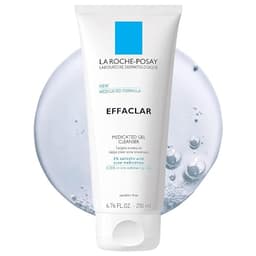
La Roche-Posay
Effaclar Medicated Gel Cleanser (2% Salicylic Acid)
The low-risk way to run both every day: get the salicylic acid from a wash. A cleanser is on your skin for under a minute, so it will not stack irritation onto a retinoid night the way a leave-on does — which is exactly why it is a gentle assist rather than a replacement for one.
See it ranked in fullPrice as of October 19, 2026. #ad How we’re funded
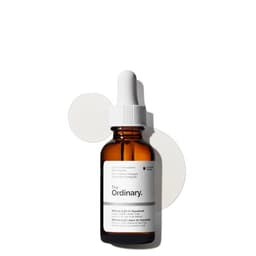
The Ordinary
Retinol 0.5% in Squalane
The retinoid half, and the one to buy if you are going to alternate nights: a printed 0.5% means you know what you applied, so when your skin complains you can lower the dose rather than guess at it.
See it ranked in fullPrice as of October 19, 2026. #ad How we’re funded
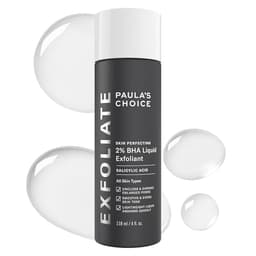
Paula's Choice
Skin Perfecting 2% BHA Liquid Exfoliant
The leave-on BHA half. A labeled 2% at a working pH, and the product whose own guidance is to start two or three times a week — which is the frequency that makes alternating with a retinoid possible in the first place.
See it ranked in fullPrice as of October 19, 2026. #ad How we’re funded
Frequently asked questions
Can you use retinol and salicylic acid together?
Yes, as part of the same routine — on different nights. Both are useful and they target different things: salicylic acid clears the inside of the pore, retinol changes how skin cells behave over months. What you should not do while you are building tolerance is apply both on the same night, because you are stacking two irritants on a barrier that has to recover from both, and if your skin reacts you will not know which one caused it.
Can I use them on the same night once my skin is used to them?
Some people can, and the sequence that works best is the BHA first on clean skin, then the retinol after it has dried, then a moisturizer. But there is no benefit worth chasing here — nothing published suggests same-night use outperforms alternating nights, and the cost of getting it wrong is weeks of barrier repair. If you want to try it, try it once a week and watch what happens.
Which comes first, salicylic acid or retinol?
If you are using both in one session, thinnest first: the watery BHA liquid, let it dry, then the retinol, then moisturizer. The AAD's general order guidance is the same principle — thinnest to thickest. That said, the better answer for most people is that neither comes first because they are on different nights.
What is the best schedule for both?
A workable one for someone already tolerant of each: retinol on Monday and Thursday, salicylic acid on Saturday, moisturizer only on the other nights. If either ingredient is new to you, run that one alone for a month before introducing the second. Sunscreen every morning is non-negotiable with either active in the routine.
Does salicylic acid cancel out retinol?
No. This is a persistent myth built on the fact that both are sold as actives and that one of them is an acid. Salicylic acid does not deactivate retinol, and there is no chemical conflict to manage — the reason to separate them is tolerance, not chemistry. The brand that makes the most-owned 2% salicylic acid does list retinoids among the things not to layer with it directly, which is a tolerance instruction rather than a stability one.
Can I use a salicylic acid cleanser with retinol every day?
This is the best shortcut on the page, yes. A cleanser is rinsed off in well under a minute, so the acid has very little contact time — which is why we describe a BHA wash as a gentle daily assist rather than a substitute for a leave-on. Wash, dry, apply your retinol, moisturize. If your skin is in a flaking phase, drop the acid wash until it settles.
What does over-doing it look like?
Tightness and a shiny, taut look; stinging from products that never stung before; flaking around the nose and mouth; new redness; and paradoxically more breakouts as the barrier gives up. That is over-exfoliation, not purging, and the fix is to stop both actives for a week or two and rebuild with a bland cleanser, a ceramide moisturizer and sunscreen.
Is this combination good for acne?
It is a reasonable over-the-counter pairing for comedonal acne and texture, with one caveat: for inflamed acne, the guideline-based advice puts benzoyl peroxide and a topical retinoid at the front rather than a BHA and a retinol. If spots are painful and inflamed rather than clogged, read our acne pages before buying a salicylic acid.
Can I use both while pregnant?
Ask your doctor or midwife. Retinoids are the class people are usually told to avoid, and that question belongs with a clinician who knows your history rather than with a skincare site. Nothing here is medical advice.
Sources
- American Academy of Dermatology — Retinoid or retinol? — AAD on the difference between prescription retinoids and OTC retinol (accessed July 17, 2026)
- U.S. FDA — Beta Hydroxy Acids in Cosmetics — FDA on salicylic acid as a beta hydroxy acid (accessed July 17, 2026)
- The Ordinary — Salicylic Acid 2% Solution (official product page) — The brand's own listing for the water-based original: the salicylic acid is declared as a US over-the-counter DRUG active — "Salicylic Acid 2% (Acne Treatment)" — with the remaining eleven ingredients listed separately and alphabetically (Water, Chlorphenesin, Citric Acid, Glycerin, Isoceteth-20, Pentylene Glycol, Phenoxyethanol, Saccharide Isomerate, Sodium Citrate, Sodium Hydroxide, Xanthan Gum); a stated pH of 3.20-4.00; a single 30 mL size; Drug Facts directions to "cover the entire affected area with a thin layer one to three times daily," starting at once daily; the water-based, alcohol-free, oil-free, silicone-free, vegan, gluten-free and cruelty-free claims (there is NO fragrance-free claim, though no fragrance appears in the list); the warning that "skin irritation and dryness is more likely to occur if you use another topical acne medication at the same time"; the targeted concerns (acne, textural irregularities, signs of congestion); and a ten-item conflict list (copper peptides, direct acids, direct vitamin C, EUK, niacinamide powder, peptides, retinoids, Saccharomyces Ferment 30% Milky Toner, GF 15% Solution, Multi-Active Delivery Essence) (accessed October 5, 2026)
- Human Skin Aging and the Anti-Aging Properties of Retinol (PubMed) — Review of topical retinol's effect on collagen and photoaging (accessed July 17, 2026)
- American Academy of Dermatology — Updated guidelines for the management of acne — AAD 2024 acne management guideline summary (accessed July 17, 2026)
- American Academy of Dermatology — Dermatologists' top tips for relieving dry skin — AAD on moisturizing damp skin and choosing a cream for dry skin (accessed July 17, 2026)
Keep reading
How to layer actives
The full conflict matrix, including every pair that genuinely needs separating.
Read the guideBest salicylic acid
The BHA half ranked in full, with percentage, pH and cost per millilitre.
See the picksHow to use retinol
The ramp, the sandwich method, and how to survive the adjustment phase.
Read the guideBenzoyl peroxide and retinol
The same question for the other acne active — with a different answer.
Read the guideSigns of over-exfoliation
What stacking these two looks like when it goes wrong, and how to recover.
Read the guideBest moisturizer to use with retinol
The product that makes this pairing survivable, ranked seven ways.
See the picks