Azelaic Acid vs Niacinamide: Which One for Your Skin?
Azelaic acid is the treatment — for rosacea redness, inflamed bumps and the brown marks a breakout leaves. Niacinamide is the supporter — barrier, oil and general tone. Most skin that needs one is better off using both.
How this is funded: we earn a commission if you buy through our links, at no extra cost to you. It never changes which product we recommend, and we’ll tell you when we’d skip one. Full disclosure.
Short answer: choose azelaic acid when you have something to treat — rosacea redness, inflamed bumps, or the brown marks left behind after a breakout. Choose niacinamide when you want a daily supporting layer for barrier, oil and general evenness. They do not conflict, so if both descriptions fit you, use both. The two get compared constantly because they overlap on the same shelf label — “redness,” “tone,” “blemishes” — but they are not the same class of ingredient. Azelaic acid is a treatment. Niacinamide is a supporter. That distinction settles almost every version of this question.
Azelaic acid: the treatment
Azelaic acid is a dicarboxylic acid, which despite the name means it does not exfoliate the way glycolic or salicylic acid does. It works on three fronts at once: it interferes with the enzyme pathway that produces melanin, it calms inflammation, and it is antibacterial against the organisms involved in acne. That unusual combination is why one bottle is used for rosacea, mild-to-moderate acne and pigmentation, and why the published reviews of it read like three different drugs. The American Academy of Dermatology lists it among the treatments for both acne and rosacea.
Over the counter it is sold at a labeled 10%. Prescription azelaic sits at 15% (rosacea) or 20% (acne), so the drugstore version is a genuinely lower dose — useful context if you have read a clinical trial and expect the same result. Its other quirk is texture: the cheapest 10% formulas suspend the acid in silicone, which gives a faintly grainy, primer-like feel that can pill under some sunscreens. Pay more and what you mostly buy is a smoother base, not a stronger active.
It is also, unusually for a treatment active, well tolerated by reactive skin. A short-lived tingle in the first fortnight is normal; a burn is not. That tolerance is exactly why azelaic ends up recommended to people whose skin cannot handle glycolic or salicylic acid.
Niacinamide: the supporter
Niacinamide is a form of vitamin B3, and its job description is broader and quieter. It helps skin manufacture the ceramides that hold a barrier together, reduces redness, moderates oil production, and slows the transfer of pigment into surface skin cells — which is how it fades post-blemish marks over months rather than weeks. Bissett’s well-known work used a 5% concentration and found measurable improvement in spots, texture and fine lines, and the review literature since has stayed in roughly that range.
This is the number worth carrying into a shop. The bottles on the shelf say 10% and 12%, comfortably above what has actually been studied, and the extra percentage buys a higher chance of a warm, flushed feeling rather than a better result. A stated 10% is a perfectly sensible default; if a formula stings you, going down to 5% costs you almost nothing. We go through this in detail in our best niacinamide serums comparison.
Azelaic acid vs niacinamide at a glance
| Azelaic acid | Niacinamide | |
|---|---|---|
| Ingredient class | Dicarboxylic acid — a treatment active | Vitamin B3 — a supporting active |
| How it works | Blocks pigment production, calms inflammation, antibacterial | Builds barrier lipids, regulates oil, slows pigment transfer |
| Best for | Rosacea redness, inflamed bumps, post-acne marks, melasma | Compromised barrier, oiliness, enlarged-looking pores, general evenness |
| Typical strength | 10% over the counter; 15–20% on prescription | 4–5% in the studies; 10–12% on the shelf |
| Speed | Weeks for redness and bumps; months for pigment | Weeks for oil and comfort; months for marks |
| Tolerance | Good, but expect a settling-in tingle | Excellent — one of the gentlest actives there is |
| Texture caveat | Silicone suspensions feel grainy and can pill | Water-light; suspended zinc can drag slightly |
| Together? | Yes — different mechanisms, no destabilizing interaction. Niacinamide helps buffer azelaic’s early tingle. | |
Choose azelaic acid if…
- You have persistent facial redness or rosacea-pattern flushing and bumps.
- Breakouts leave brown marks that outlast the spot by months.
- You have melasma or stubborn patchy pigment that niacinamide has not shifted.
- Glycolic and salicylic acid are too much for your skin but you still need a treatment.
Choose niacinamide if…
- Your skin is oily or shiny by midday and pores look congested.
- Your barrier is fragile, and everything you add stings.
- You want one low-risk active that layers with retinol, acids and vitamin C without a fight.
- Your goal is general evenness rather than a specific patch or a specific flare.
Using both, without overloading your skin
This pairing is genuinely easy. Neither destabilizes the other, they act by different mechanisms, and niacinamide’s barrier support offsets the tingle azelaic can cause while your skin adjusts. Two workable arrangements:
- Same routine, thinnest first. Niacinamide serum on clean skin, wait a moment, then azelaic, then moisturizer. This suits skin that already tolerates both.
- Split the day. Niacinamide in the morning under sunscreen, azelaic at night. This is the safer start for reactive or rosacea-prone skin, and the one to use if the silicone suspension pills under your SPF.
Introduce them one at a time, a fortnight apart, so that if something stings you know which bottle to blame. Start azelaic every other night and build up. And keep the rest of the routine boring while you do it — our layering guide has the full conflict matrix if you are also running retinol or an exfoliating acid.
The verdict
Azelaic acid is the one to buy if you have a visible problem — redness, bumps, or marks that will not fade. Niacinamide is the one to buy if you want daily barrier and oil support with almost no risk. Treat the comparison as treatment-versus-maintenance rather than a head-to-head, and the choice usually makes itself. If you want the specific bottles, our best azelaic acid and best niacinamide serums comparisons cover the stated percentages and what the price difference actually buys. For every other matchup on the site, start at the ingredient comparison hub.
General guidance, not medical advice. Actives & Acids is written by a skincare enthusiast, not a dermatologist. For a diagnosis, a reaction, or a prescription active like tretinoin, see a qualified professional. Introduce any new active slowly and patch-test first.
What we'd actually buy
Chosen from the same registry as our roundups, on published formulation facts rather than hands-on testing — here is exactly what we do instead.
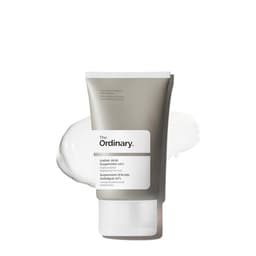
The Ordinary
Azelaic Acid Suspension 10%
The cheapest way to try a labeled 10% azelaic acid. Gritty silicone base, but the active load is the same one the reviews are written about — and it is usually calm enough for rosacea-prone skin.
See it ranked against the other 10% picksPrice as of October 19, 2026. #ad How we’re funded
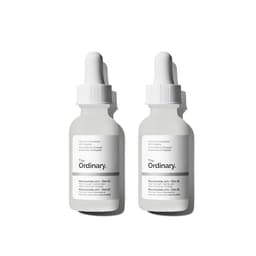
The Ordinary
Niacinamide 10% + Zinc 1%
A stated 10% niacinamide with 1% zinc for a couple of dollars. Note that most of the published benefit sits nearer 5%, so this is a value pick, not a strength pick.
See the full niacinamide comparisonPrice as of October 19, 2026. #ad How we’re funded
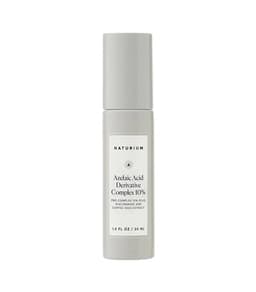
Naturium
Azelaic Acid Derivative Complex 10%
If you would rather run one bottle than two: a labeled 10% azelaic derivative with niacinamide and vitamin C in a lightweight cream, aimed squarely at uneven tone and leftover marks.
See how it comparesPrice as of October 19, 2026. #ad How we’re funded
Frequently asked questions
Azelaic acid or niacinamide — which is better?
They are not really rivals. Azelaic acid is a treatment-strength active with evidence for rosacea redness, inflammatory acne bumps and pigmentation, so it is the stronger choice when you have a visible problem to fix. Niacinamide is a supporting active that steadies the barrier, tempers oil and gradually evens tone, so it is the better everyday layer. Pick azelaic for a specific complaint, niacinamide for general maintenance.
Can you use azelaic acid and niacinamide together?
Yes, and it is a sensible pairing. They work by different routes, neither destabilizes the other, and niacinamide's barrier support helps offset the tingle azelaic can cause in the first couple of weeks. Apply the thinner one first, or simply use niacinamide in the morning and azelaic at night if your skin is reactive.
Which one fades dark spots faster?
Azelaic acid, in most cases. It interferes with pigment production directly and is the one with published use for melasma and post-inflammatory hyperpigmentation. Niacinamide works further downstream — it slows pigment transfer into skin cells — so it fades marks more gently and more slowly. Using both is a common, reasonable approach.
Is azelaic acid an exfoliating acid like glycolic or salicylic?
Not in the usual sense. Despite the name it is a dicarboxylic acid and it does not exfoliate the way an AHA or BHA does — it works on pigment production, inflammation and the bacteria involved in acne. That is why it can often be used by skin that cannot tolerate glycolic or salicylic acid.
What percentage should I look for?
Over the counter, 10% azelaic acid is the standard and every pick we list states it. Prescription strength is 15% to 20%. For niacinamide, the classic studies cluster around 4-5%; 10% is the common shelf strength and is fine for most people, while 12% mainly suits very oily skin that tolerates actives easily.
Sources
- A Comprehensive Review of Azelaic Acid: Pharmacological Properties, Clinical Applications and Topical Formulations (PMC) — Review of azelaic acid's action on pigmentation, inflammation and acne (accessed August 19, 2026)
- American Academy of Dermatology — Rosacea: Diagnosis and treatment — AAD on azelaic acid, metronidazole and ivermectin for rosacea (accessed August 19, 2026)
- Niacinamide: A B vitamin that improves aging facial skin appearance (PubMed) — Bissett et al. — 5% niacinamide improves wrinkles, spots and texture (accessed July 17, 2026)
- Mechanistic Basis and Clinical Evidence for Nicotinamide (Niacinamide) in Skin (PMC) — Review of niacinamide's barrier, ceramide and pigmentation effects (accessed July 17, 2026)
- American Academy of Dermatology — Acne: Diagnosis and treatment — AAD overview of benzoyl peroxide, retinoids, salicylic and azelaic acid for acne (accessed July 17, 2026)
Keep reading
Best azelaic acid products
If azelaic is your pick, this is which stated 10% to actually buy — and what the texture difference costs.
See the picksBest niacinamide serums
Every stated percentage compared, with an honest note on why 12% is not better than 5% for most skin.
See the picksEvery ingredient comparison
The full matchup hub — which active beats which, for which job, in one place.
Browse the comparisonsAzelaic acid for rosacea
The condition azelaic has the strongest evidence for, and how to introduce it on reactive skin.
Read the guideDark spots & hyperpigmentation
Where both actives fit in a full fading routine — and which one does the heavier lifting.
Read the guide