The Ordinary Mandelic Acid 10% + HA Review
The acid people reach for when everything else stings, reviewed off its label rather than its reputation. A thirteen-ingredient formula that starts with a glycol rather than water, a stated pH band a full point wide, and the molecular-weight argument the brand makes for it — checked.
How this is funded: we earn a commission if you buy through our links, at no extra cost to you. It never changes which product we recommend, and we’ll tell you when we’d skip one. Full disclosure.
Mandelic acid is the acid people are sent to when the others have gone badly. It has a reputation for being the gentle one, that reputation is broadly deserved, and almost nobody checks it against the label. So that is what this page does — and the label turns out to contain two facts that complicate the story in useful ways.
A word on what this review is. We have not used this product and we do not review by using things — no lab, no panel, no “I tried it for six weeks.” We fetched and read the brand’s own product page for the complete ingredient list, the stated pH band, the directions and the claim badges, and set that against the published consumer-safety limits for alpha hydroxy acids and against what the AHA trial base actually tested. Every source is linked below; the method is in how we pick.
The verdict in one paragraph
Buy itif you want to exfoliate and your skin has previously objected — if glycolic acid stung, if salicylic acid dried you out, if you are in the group that reads every acid review looking for the one that will not cause a week of regret. The molecular-weight argument behind its gentleness is real, and the stated pH ceiling of 4.5 is the highest in the range, which matters more than the shared 10% figure. Two caveats to carry with you: the pH band is a full point wide, so two bottles of the same product are not necessarily the same exposure, and the brand still prints the same “do not use on sensitive, peeling, or compromised skin” direction here as on its harshest acids. Buy the lactic instead if your skin is dry rather than reactive, and buy a BHA instead if your actual complaint is congestion.
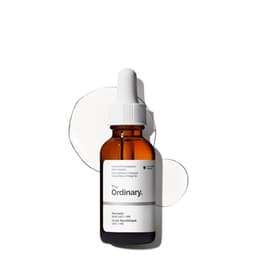
At a glance
The Ordinary Mandelic Acid 10% + HA
Stated active: 10% mandelic acid. Ingredients: 13, no fragrance in the list. Brand-stated pH:3.5–4.5.
Sizes: one 30 mL size. No lower-strength version is sold.
Price as of October 10, 2026. #ad How we’re funded
Product image supplied by Amazon.
What is on the label
The complete ingredient list, from the brand’s page, in order:
Propanediol, Aqua (Water), Mandelic Acid, Glycerin, Dimethyl Isosorbide, Sodium Hyaluronate Crosspolymer, Tasmannia Lanceolata Fruit/Leaf Extract, Pentylene Glycol, Polysorbate 20, Sodium Hydroxide, Ethylhexylglycerin, 1,2-Hexanediol, Caprylyl Glycol.
Thirteen items, and the first one is the interesting one. This is the only acid in the range whose list starts with a glycolrather than water. Propanediol is a solvent and humectant, and it is in first position because mandelic acid is not especially water-soluble — the formula needs something that will dissolve it. Dimethyl isosorbide at fifth is doing the same job from a different angle; it is a penetration-enhancing solvent that also appears in the brand’s niacinamide and azelaic formulas.
That is a formulation necessity, not a defect, but it has two consequences worth knowing before you buy. The texture is slicker than a watery toner, which some people dislike. And it is a direct echo of the situation on Paula’s Choice 2% BHA, where two solvents sit ahead of the salicylic acid for exactly the same reason — a poorly soluble acid needs carrying. When you see solvents high in an acid’s ingredient list, that is usually what they are there for.
After that the list is reassuringly short. Glycerin fourth is a humectant holding water in. The “+ HA” is sodium hyaluronate crosspolymer, sixth. Tasmanian pepperberry extract, seventh, is the same extract the brand calls “a known anti-irritant” on its lactic acid page — a brand characterization rather than a published trial result, and we are not going to imply otherwise. Sodium hydroxide is the pH adjuster. Polysorbate 20 is a solubiliser; the last three items are the preservative-and-humectant tail.
No fragrance, no alcohol, no oil, no silicone — consistent with the brand’s published highlights of alcohol-free, oil-free, silicone-free, vegan, gluten-free and cruelty-free. Fragrance-free is again not among the claims, despite no fragrance appearing in the formula. That is the pattern across this entire range and we note it every time rather than filling the gap in on the brand’s behalf.
The molecular-weight argument, checked
The brand’s own explanation, from the product page: the acid “helps improve the look of skin clarity by balancing uneven skin tone, and correcting the look and feel of skin texture in a gentle, yet effective manner. This is because it has a larger molecular weight than other alpha hydroxy acids, which results in a slower, more balanced distribution.”
This holds up. The 2024 review of AHAs in dermatological practice makes the same point from the other end: it attributes glycolic acid’s speed to its small molecular size, which is why it penetrates fastest of the AHAs, and it names mandelic acid’s larger molecule as the reason it stings less. Glycolic, lactic and mandelic acid form a ladder of molecule size, and that ladder runs in the same direction as the sting ladder. If you have been told mandelic acid is gentler, this is the actual mechanism, and it is sound.
What the argument does notestablish is that it is as effective. A slower, more balanced distribution is a trade, not a free upgrade: you are choosing less irritation and accepting a gentler effect per application. The same review is blunt that “the optimal concentrations for therapeutic efficacy with minimal side effects are yet to be precisely defined,” and almost every AHA efficacy trial it covers is a professional peel at 20% to 70%, not a leave-on cosmetic. So the honest expectation for this bottle is gradual surface improvement on skin that cannot tolerate anything stronger — which is a genuinely useful thing for a product to be.
The pH band nobody mentions
Here is the fact that surprised us most. The brand publishes a pH of 3.5 to 4.5 for this product. Its lactic acid publishes 3.60 to 3.80. Its glycolic toner publishes 3.5 to 3.9. Its salicylic solution publishes 3.20 to 4.00.
A one-point band is the widest in the range by a distance, and pH is not a cosmetic detail on a leave-on acid — it decides what proportion of the acid is in its active free form rather than as its salt. A bottle sitting at pH 3.5 and a bottle sitting at pH 4.5 are materially different products wearing the same label. The low end of this band overlaps the glycolic toner’s entire range; the high end is well above the US guidance threshold of pH 3.5 that the AHA review describes, which is the pH above which a 10% AHA is considered appropriate for over-the-counter daily use.
We are not suggesting the product is badly made — a wide published band may simply be an honest statement of batch variation that other brands handle by not publishing a number at all. But it does mean two things practically. First, if a friend tells you this product was fine and it stings on you, the formula is a plausible explanation rather than your skin. Second, a consequence of the high end of the band: at pH 4.5 you are getting comparatively little free acid, so if nothing at all seems to be happening, that is also a plausible explanation. Short-range pH strips settle the question for a couple of dollars, which is why we keep recommending them.
Mandelic against its two closest rivals
Everything in this table is read from the brands’ own published pages on the dates in the Sources block.
| Mandelic Acid 10% + HA | Lactic Acid 10% + HA | Paula’s Choice 2% BHA | |
|---|---|---|---|
| Acid class | AHA (largest molecule) | AHA (mid-size molecule) | BHA (oil-soluble) |
| Stated strength | 10% | 10% | 2% |
| Brand-stated pH | 3.5–4.5 | 3.60–3.80 | Not published |
| Ingredient count | 13 | 15 | 8 |
| Where the acid sits | 3rd, behind two solvents | 2nd, behind water | 4th, behind two solvents |
| Best for | Texture and tone on reactive skin | Texture and dullness on dry skin | Congestion, blackheads, body breakouts |
| Size | 30 mL | 30 mL | 118 mL |
The row that most often changes a purchase is “best for.” A large share of people who buy a gentle AHA actually have a congestion problem, and no AHA is the right class for that. If your complaint is blackheads or spots rather than roughness, mandelic acid vs salicylic acid is the comparison to read before you spend anything.
How to use it
The brand says once daily, ideally in the evening. We would say two or three evenings a week to start, after cleansing, before moisturizer. The whole reason to choose mandelic acid is tolerability, and running it nightly from the outset discards the advantage you paid for.
The brand’s own dilution note applies here too: the formula can be diluted with other products to reduce strength until skin develops tolerance. Mixing a few drops into a moisturizer for the first fortnight is a legitimate way in. Do not stack it with another acid or a retinoid on the same night — how to layer actives has the conflict matrix and a build-your-own schedule.
The label’s prohibitions are identical to the harsher products in the range, which is itself the point: “Do not use on sensitive, peeling, or compromised skin.” Gentler than glycolic is not the same as safe on an inflamed barrier. And the FDA-recommended AHA Sunburn Alert applies, so daily broad-spectrum sunscreen comes with the purchase. Watch for the signs in signs of over-exfoliation and stop entirely for a week if you see them.
Price, size and value
One 30 mL size, and no 5% version to step down to — which is a real gap in a product sold on gentleness. On cost per milliliter it is the cheapest of the three acids in the table above, and the cheapest route into leave-on exfoliation we would recommend to someone with reactive skin. For anything below the neck, 30 mL is the wrong purchase whatever the price; the large-format options are ranked in best chemical exfoliant for body.
The price on the button above is Amazon’s live price, refreshed daily and date-stamped, rather than a number we typed in once. We have no incentive to steer you to one listing over another.
Bottom line
A short, clean, cheap formula with a correct and well-explained reason for being kinder than its rivals, let down slightly by a published pH band wide enough to make two bottles behave differently. Buy it if acids have gone badly for you before and texture or uneven tone is the complaint; start at twice a week; dilute it into a moisturizer for the first fortnight if you are nervous; wear sunscreen. Buy the lactic if your skin is dry rather than reactive, and buy a salicylic acid if what you are actually looking at in the mirror is congestion.
General guidance, not medical advice. Actives & Acids is written by a skincare enthusiast, not a dermatologist. For a diagnosis, a reaction, or a prescription active like tretinoin, see a qualified professional. Introduce any new active slowly and patch-test first.
What we'd actually buy
Chosen from the same registry as our roundups, on published formulation facts rather than hands-on testing — here is exactly what we do instead.
The Ordinary
Mandelic Acid 10% + HA
The product reviewed on this page. The first leave-on acid we would put on skin that has reacted badly to glycolic or salicylic, and the one with the highest stated pH ceiling in the range — which is most of the reason it is kinder.
See it ranked in fullPrice as of October 10, 2026. #ad How we’re funded
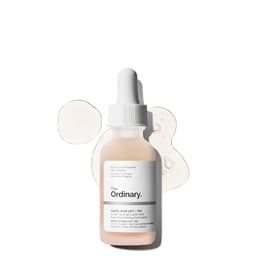
The Ordinary
Lactic Acid 10% + HA
The step up, at the same percentage from the same range. A tighter and lower pH band of 3.60 to 3.80, water rather than a glycol first, and glycerin high in the list — the better buy if your skin is dry rather than reactive.
Read our full reviewPrice as of October 10, 2026. #ad How we’re funded
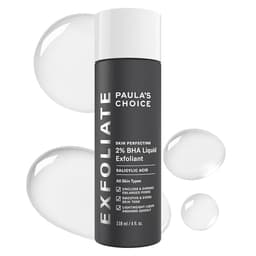
Paula's Choice
Skin Perfecting 2% BHA Liquid Exfoliant
The different-class alternative. If what you actually have is congestion, blackheads or breakouts rather than rough texture, an AHA is the wrong tool and an oil-soluble BHA is the right one — and this is the one with the most volume for the money.
Read our full reviewPrice as of October 10, 2026. #ad How we’re funded
Frequently asked questions
Is The Ordinary Mandelic Acid 10% good for sensitive skin?
It is the gentlest leave-on acid in the range and a reasonable choice for skin that has reacted to glycolic or salicylic — but note that the brand's own directions still say not to use it on sensitive, peeling or compromised skin, exactly as on its harsher siblings. Read 'gentler' as relative to other acids, not as safe for an irritated barrier. If your skin is currently inflamed, the right purchase is a moisturizer.
What is the pH of The Ordinary Mandelic Acid 10%?
The brand publishes 3.5 to 4.5. That is a full point wide, which is unusual — the lactic serum in the same range publishes 3.60 to 3.80 and the glycolic toner 3.5 to 3.9. A one-point band is a meaningful difference in how much of the acid is in its active free form, so the honest reading is that a bottle at the top of this range behaves quite differently from one at the bottom, and you cannot tell which you have.
Mandelic acid or lactic acid — which should I buy?
Mandelic if your skin is reactive and your history with acids is bad; lactic if your skin is dry and your complaint is roughness or dullness. The mechanistic argument the brand itself makes is molecular weight: mandelic is a larger molecule, which it says results in a slower, more balanced distribution. The published AHA review agrees on the direction — it names mandelic acid's larger molecule as the reason it stings less. Lactic has the tighter pH band and the lower-strength 5% option if you want to start carefully.
Why does the ingredient list start with propanediol instead of water?
Because mandelic acid is poorly soluble in water, so the formula is built on a glycol that will dissolve it. Propanediol is first, water second and the acid third. That is a formulation necessity rather than a flaw, but it is worth knowing: a glycol-dominant base feels and spreads differently from a watery toner, and people who dislike a slightly slick finish should know before they buy.
Is it fragrance-free?
No fragrance appears in the ingredient list, and the brand does not claim fragrance-free. Its published highlights are alcohol-free, oil-free, silicone-free, vegan, gluten-free and cruelty-free. We report both the absence of fragrance and the absence of the claim, because a claim a brand declines to make is information.
How often should I use it?
The label says once daily, ideally in the evening. Start at two or three evenings a week regardless — the reason to buy mandelic acid is tolerability, and using it daily from day one throws that advantage away. The brand also notes the formula can be diluted into other products to reduce strength while skin builds tolerance, which is a sensible first-fortnight approach.
Does mandelic acid help with acne?
It is often recommended for breakout-prone skin and it is a reasonable adjunct, but it is not the best-evidenced choice. For congestion, blackheads and inflamed spots the better-supported actives are salicylic acid, benzoyl peroxide, adapalene and azelaic acid — the ones the acne guidelines actually name. Buy mandelic acid for texture and tone on skin that cannot take a stronger acid, not as an acne treatment.
Is there a lower-strength version?
No. Unlike the lactic acid, which is sold at 5% as well as 10%, mandelic acid comes in one strength and one 30 mL size. If 10% is too much for you, the options are to use it less often, dilute it as the brand suggests, or buy the 5% lactic instead.
Do I need sunscreen with it?
Yes. It carries the same FDA-recommended AHA Sunburn Alert as every other alpha hydroxy acid in the range: the product may increase your skin's sensitivity to the sun and particularly the possibility of sunburn. Being the gentlest acid in a line-up does not exempt it from that.
Sources
- The Ordinary — Mandelic Acid 10% + HA (official product page) — The brand's own listing, headed "Mandelic Acid 10% + HA: Improve Skin Clarity and Texture" and summarized as "A gentle exfoliator, in serum form." The full thirteen-ingredient INCI list is notable for what comes FIRST — a glycol, not water: Propanediol, Aqua (Water), Mandelic Acid, Glycerin, Dimethyl Isosorbide, Sodium Hyaluronate Crosspolymer, Tasmannia Lanceolata Fruit/Leaf Extract, Pentylene Glycol, Polysorbate 20, Sodium Hydroxide, Ethylhexylglycerin, 1,2-Hexanediol, Caprylyl Glycol. Stated pH 3.5-4.5 — a one-point band, and at its top end well above the lactic serum's 3.60-3.80. The brand's rationale: the acid "helps improve the look of skin clarity by balancing uneven skin tone, and correcting the look and feel of skin texture in a gentle, yet effective manner. This is because it has a larger molecular weight than other alpha hydroxy acids, which results in a slower, more balanced distribution." One 30 mL size. Highlights: water-free No, alcohol-free Yes, oil-free Yes, silicone-free Yes, vegan, gluten-free and cruelty-free Yes — again NO fragrance-free claim although no fragrance is listed. Directions are identical to the lactic serum: "Apply once daily, ideally in the evening," dilutable to build tolerance, and "Do not use on sensitive, peeling, or compromised skin." It carries the same FDA-recommended AHA Sunburn Alert and the same ten-item conflict list. No lower-strength version is sold (accessed October 11, 2026)
- The Ordinary — Lactic Acid 10% + HA (official product page) — The brand's own listing, headed "Lactic Acid 10% + HA: High-Strength Exfoliator for Dry Skin" and summarized as "A high-strength exfoliator that works to reveal smoother skin." The full fifteen-ingredient INCI list has the acid SECOND, behind only water: Aqua (Water), Lactic Acid, Glycerin, Pentylene Glycol, Propanediol, Sodium Hydroxide, Sodium Hyaluronate Crosspolymer, Tasmannia Lanceolata Fruit/Leaf Extract, Acacia Senegal Gum, Xanthan Gum, Isoceteth-20, Trisodium Ethylenediamine Disuccinate, Ethylhexylglycerin, 1,2-Hexanediol, Caprylyl Glycol. Stated pH 3.60-3.80, with the brand's own formulation rationale spelled out on the page: "The pH of this formula is approximately 3.8. Lactic Acid has a pKa of 3.8 and pKa is the most important aspect to consider in formulating with acids. pKa implies acid availability. When pKa is close to pH, there is an optimal balance between salt and acidity, optimizing the delivery of the acid form to ensure it provides an effective exfoliation that can be used daily." Tasmanian pepperberry extract is described as "a known anti-irritant" and the serum as "ideal for dry skin". One 30 mL size. Highlights: water-free No, alcohol-free Yes, oil-free Yes, silicone-free Yes, vegan, gluten-free and cruelty-free Yes — there is NO fragrance-free claim, though no fragrance appears in the list. Directions: "Apply once daily, ideally in the evening," with "The formula can be diluted with other products to reduce strength until skin develops tolerance" and "Do not use on sensitive, peeling, or compromised skin." It carries the FDA-recommended AHA Sunburn Alert, and a ten-item conflict list (copper peptides, direct vitamin C, EUK, niacinamide powder, peptides, retinoids, direct acids, Saccharomyces Ferment 30% Milky Toner, GF 15% Solution, Multi-Active Delivery Essence). A 5% version of the same formula is sold alongside it (accessed October 11, 2026)
- The Ordinary — Glycolic Acid 7% Exfoliating Toner (official product page) — The brand's own listing: the full 42-ingredient INCI list with glycolic acid SECOND, behind only water (Aqua, Glycolic Acid, Rosa Damascena Flower Water, Centaurea Cyanus Flower Water, Aloe Barbadensis Leaf Water, Propanediol, Glycerin, Triethanolamine, Aminomethyl Propanol, Panax Ginseng Root Extract, Tasmannia Lanceolata Fruit/Leaf Extract, then nineteen amino acids and sugars, Hexyl Nicotinate, Dextrin, Citric Acid, Polysorbate 20, Gellan Gum, Trisodium Ethylenediamine Disuccinate, Sodium Chloride, Hexylene Glycol, Potassium Sorbate, Sodium Benzoate, 1,2-Hexanediol, Caprylyl Glycol); a stated pH of 3.5-3.9 described in the copy as "approximately 3.6"; the 100 mL and 240 mL sizes; once-daily evening face/neck directions AND a three-times-weekly dry-scalp direction; the alcohol-free, oil-free, silicone-free, vegan, gluten-free and cruelty-free claims (there is NO fragrance-free claim, though no fragrance appears in the list); the "do not use on sensitive, peeling, or compromised skin" instruction; the FDA-recommended AHA Sunburn Alert; the note that the Tasmanian Pepperberry extract may cause seasonal color variation in the formula; and the conflict list (copper peptides, direct vitamin C, EUK, niacinamide powder, peptides, retinoids, direct acids) (accessed October 3, 2026)
- Evaluating the Efficacy and Safety of Alpha-Hydroxy Acids in Dermatological Practice: A Comprehensive Clinical and Legal Review (PMC) — Almeman, Clinical, Cosmetic and Investigational Dermatology 2024 — a narrative review that sets the consumer AHA limits side by side: the 2005 US FDA guidance of no more than 10% AHA at pH 3.5 or higher for over-the-counter use (with SPF formulated in or a label instruction to use one), against the EU SCCS's far more conservative 2000 recommendation of glycolic acid up to 4% at pH of at least 3.8, and Australia's exemption at 20% or less at pH 3.5 or higher (glycolic acid having been listed there as a Priority Existing Chemical after repeated skin-irritation reports). It describes three regulatory tiers — up to 10% for daily home use above pH 3.5, under 30% for trained professionals near pH 3, drug territory above that below pH 3 — notes glycolic acid's small molecular size as the reason it penetrates fastest of the AHAs and mandelic acid's larger molecule as the reason it stings less, and states plainly that "the optimal concentrations for therapeutic efficacy with minimal side effects are yet to be precisely defined." Every efficacy trial it reviews for glycolic acid is a professional peel at 20% to 70%, not a leave-on cosmetic strength (accessed October 3, 2026)
- U.S. FDA — Alpha Hydroxy Acids — FDA on AHAs and increased sun sensitivity (accessed July 17, 2026)
- Chemical Peels for Skin Resurfacing — StatPearls (NCBI Bookshelf) — Reference overview of AHA/BHA exfoliation mechanisms (accessed July 17, 2026)
Keep reading
The Ordinary Lactic Acid 10% + HA review
The sibling at the same strength, and the one whose page argues its pH from the acid's pKa.
Read the reviewMandelic acid benefits
What the ingredient does, where the molecular-weight argument comes from, and its limits.
Read the guideMandelic acid vs salicylic acid
Surface texture against congestion — the comparison that decides whether an AHA is the right class at all.
Compare themAzelaic vs mandelic acid
Two gentle options with very different jobs: redness and marks against texture and tone.
Compare themBest chemical exfoliants for sensitive skin
The whole field ranked on tolerability, which is where this serum earns its place.
See the picksHow often to exfoliate
Why the label's once-daily permission is more than most skin needs.
Read the guide