Azelaic Acid vs Salicylic Acid: Which One Is Yours?
Both are called acids and that is roughly where the similarity ends. Salicylic acid is oil-soluble and works inside the pore, which makes it the blackhead tool. Azelaic acid barely exfoliates at all — it works on inflammation and on pigment, which makes it the redness-and-marks tool. Pick by complaint, not by strength.
How this is funded: we earn a commission if you buy through our links, at no extra cost to you. It never changes which product we recommend, and we’ll tell you when we’d skip one. Full disclosure.
The verdict: buy salicylic acid— Paula’s Choice 2% BHA is our top pick — if your complaint is blackheads, clogged pores or oily congestion. Buy azelaic acid— The Ordinary’s 10% suspension is the value choice — if your complaint is redness, inflamed-looking bumps or the flat brown marks spots leave behind. All four picks are below with live prices.
These two get compared because they are both “acids” sold for “acne”. In practice they share almost no mechanism, and choosing between them on strength or price is choosing on the wrong axis.
What each one actually does
Salicylic acid is the beta hydroxy acid, and the FDA describes it in exactly those terms as a cosmetic exfoliant ingredient. The property that matters is that it is oil-soluble, so unlike a water-soluble AHA it travels into the follicle and loosens the plug from the inside. That is why it is the long-standing answer for blackheads, whiteheads and congestion, and why it also turns up for body complaints that are follicular — razor bumps, chest and back breakouts.
Azelaic acidis a dicarboxylic acid and behaves nothing like that. The comprehensive review of its pharmacology describes anti-inflammatory activity, action against the bacteria involved in acne, and effects on pigment production — the last of which is why it is used for melasma and post-inflammatory marks. It is not doing much keratolytic work at all. It is in the “acids” aisle because of its name.
The regulatory picture reinforces the split. Azelaic acid exists as FDA-approved prescription drug products — a 15% gel for rosacea and a 20% cream for acne, both with full labels we can read — while the over-the-counter versions sit at 10%. Salicylic acid’s formal role is as an over-the-counter acne active at the strengths on the shelf. Two different categories of product with two different jobs.
Side by side
| Azelaic acid | Salicylic acid | |
|---|---|---|
| Class | Dicarboxylic acid | Beta hydroxy acid (BHA) |
| Solubility | Not the point — it is not working by exfoliation | Oil-soluble — reaches inside the pore |
| Primary use | Redness, rosacea-type flushing, pigment and marks | Blackheads, clogged pores, oily congestion |
| Works on pigment? | Yes — pigment production is part of its described activity | Only indirectly, by exfoliating the surface |
| Rosacea-prone skin | Named in AAD rosacea guidance; approved at 15% on prescription | No role, and often an irritant on flushing skin |
| Place in acne guidance | A conditional option in the 2024 guideline | A standard over-the-counter active for comedonal acne |
| Strengths in our registry | 10% (two free-acid products, one derivative) | 2% (leave-on), plus 2% in a cleanser |
| Prescription versions | Yes — 15% gel, 20% cream | Not in this sense; higher strengths are wart and callus drugs |
| Typical complaint | Stinging, and a gritty finish from the suspension format | Dryness, and over-use from going daily too soon |
| Can they be combined? | Yes — little mechanistic overlap | Yes, in separate slots rather than mixed |
The one number either side publishes about tolerance
Most of what you read about which acid is “gentler” is assertion. There is one calibrated set of figures available, and it belongs to azelaic acid: the FDA label for the 15% gel reports stinging, burning or tingling broken out by severity, against a much lower rate in the vehicle group. That is a real number from a real trial, at a strength higher than anything you can buy over the counter.
We have no equivalent figure for 2% salicylic acid, and we are not going to invent one. What the two products’ own labels and brand pages describe is a different failure mode: salicylic acid complaints are about dryness and over-use rather than about immediate stinging. If you have reactive skin, that distinction is worth more than a general claim about which is kinder — one may sting on contact, the other may quietly dry you out over three weeks.
Running both
This is a genuinely compatible pair, which is unusual. Azelaic acid is not competing for the same mechanism, has no pH requirement in the way an AHA does, and is one of the few actives that layers comfortably with almost anything. A workable arrangement:
Morning: azelaic acid, then moisturizer and sunscreen. Two or three nights a week: salicylic acid, then moisturizer. Other nights:moisturizer only. If you are also running a retinoid, keep the BHA and the retinoid on separate nights and leave azelaic acid where it is — how to layer actives has the full matrix.
One label check before you buy two bottles: the Paula’s Choice azelaic booster contains salicylic acid. If that is your azelaic pick, you may not need a separate BHA at all, and stacking a third acid on top is how people end up at signs of over-exfoliation.
Which to buy, by complaint
Blackheads on the nose and chin. Salicylic acid. Nothing on this page competes with it for that job.
Background redness, flushing, visible vessels.Azelaic acid — and if the pattern looks like rosacea, read azelaic acid for rosacea before buying anything else.
Flat brown marks where spots used to be. Azelaic acid. Our azelaic acid for hyperpigmentation page covers the timeline, which is longer than anyone wants.
Inflamed, painful spots. Honestly, neither first. The guideline-based answer starts with benzoyl peroxide and a topical retinoid; see best acne treatments.
Body breakouts.Salicylic acid, in a format with enough volume to cover a back — best exfoliating body wash rather than a 30 mL face serum.
Bottom line
Salicylic acid is a pore tool and azelaic acid is an inflammation and pigment tool, and the word they share tells you nothing useful. Buy the one that matches what bothers you, give it six weeks before judging it, and if you want both, put them in different slots rather than on the same cotton pad. The only mistake this page is really trying to prevent is buying a BHA for redness, or a 10% azelaic for blackheads, and concluding that acids do not work on you.
General guidance, not medical advice. Actives & Acids is written by a skincare enthusiast, not a dermatologist. For a diagnosis, a reaction, or a prescription active like tretinoin, see a qualified professional. Introduce any new active slowly and patch-test first.
What we'd actually buy
Chosen from the same registry as our roundups, on published formulation facts rather than hands-on testing — here is exactly what we do instead.
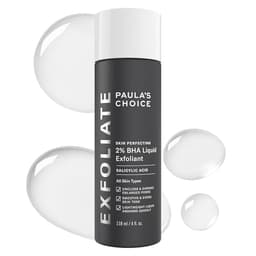
Paula's Choice
Skin Perfecting 2% BHA Liquid Exfoliant
The salicylic acid to buy if your complaint is blackheads or congestion. A labeled 2% at a working pH in 118 mL — the most recommended leave-on BHA there is, and the one we rank first on the salicylic roundup.
See it ranked in fullPrice as of October 19, 2026. #ad How we’re funded
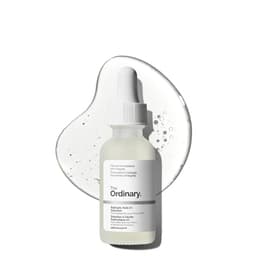
The Ordinary
Salicylic Acid 2% Solution
The cheap way into the same acid: a printed 2% leave-on in 30 mL. Fine as a trial or a spot-use bottle, and the honest reason it ranks below the 118 mL option is cost per millilitre rather than the formula.
See it ranked in fullPrice as of October 19, 2026. #ad How we’re funded
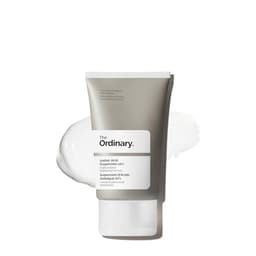
The Ordinary
Azelaic Acid Suspension 10%
The azelaic acid to buy if your complaint is redness, flushing or the flat brown marks old spots leave behind. A labeled 10% for a few dollars; the silicone suspension has a distinctive grainy feel that is the main thing people dislike.
See it ranked in fullPrice as of October 19, 2026. #ad How we’re funded
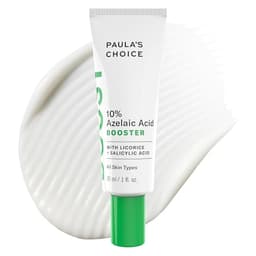
Paula's Choice
BOOST 10% Azelaic Acid Booster
The azelaic option with a smoother texture, if the grit of the suspension is what stopped you last time. Same 10% headline figure, in a cream-gel, with salicylic acid and licorice along for the ride — which also means it overlaps a separate BHA.
See it ranked in fullPrice as of October 19, 2026. #ad How we’re funded
Frequently asked questions
Which is better, azelaic acid or salicylic acid?
Whichever matches your complaint, because they are not substitutes. Salicylic acid is oil-soluble, so it penetrates into the follicle and clears the plug — that is the blackhead and congestion tool. Azelaic acid is not a meaningful exfoliant; the reviewed pharmacology credits it with anti-inflammatory, antibacterial and pigment-related activity, which makes it the tool for redness, rosacea-type flushing and post-acne marks. Blackheads, salicylic. Red and blotchy, azelaic.
Can you use azelaic acid and salicylic acid together?
Yes, and this is one of the more sensible pairings in skincare — they have almost no mechanistic overlap. Most people do better putting them in different slots than mixing them: salicylic acid at night two or three times a week, azelaic acid in the morning or on the alternate nights. Note that one of our azelaic picks already contains salicylic acid, so check the label before adding a third product.
Which is better for acne?
It depends on the kind. For comedonal acne — blackheads, whiteheads, congestion — salicylic acid is the better-targeted of the two, and it is a long-standing over-the-counter acne active. For inflamed acne, the honest answer is that neither is where the strongest recommendations sit: the 2024 guideline-based advice puts benzoyl peroxide and topical retinoids at the front, with azelaic acid as a conditional option. Azelaic acid earns its place when inflammation and leftover marks are the problem, or when retinoids and benzoyl peroxide are not tolerated.
Which is better for rosacea?
Azelaic acid, and this one is not close. The AAD's rosacea guidance names azelaic acid among the topical treatments for it, and there are FDA-approved azelaic acid drug products for rosacea at 15%. Salicylic acid has no such role, and on skin that flushes easily a leave-on BHA is more likely to be the irritant than the treatment.
Which is better for dark spots and post-acne marks?
Azelaic acid. The reviewed pharmacology describes activity on pigment production, which is why it turns up in guidance for melasma and post-inflammatory marks — and there is a 20% prescription azelaic product for acne in the US. Salicylic acid can help the surface look more even by exfoliating, but it does not act on pigment formation.
Which stings more?
Azelaic acid, in the data we can actually quote. The FDA label for the 15% azelaic gel reports stinging, burning or tingling in a meaningful minority of users, graded mild, moderate and severe, against a much lower rate on vehicle. Over-the-counter 10% products are lower-strength than that label, and most people tolerate them. Salicylic acid at 2% stings less often, but it dries more — different complaints, from different mechanisms.
Can I use either while pregnant?
Ask your doctor or midwife — that is not a dodge, it is the only responsible answer from a skincare publication, and the decision depends on your medical history rather than on an ingredient list. Both of these come up in that conversation, and your clinician is the person with the context to answer it.
Is azelaic acid an exfoliant at all?
Barely, and treating it as one is the most common misunderstanding about it. It sits in the exfoliating-acids section of most sites — including ours — because of the word 'acid', but its useful activity is anti-inflammatory and pigment-related rather than keratolytic. If you want exfoliation, the acid you want is a BHA for pores or an AHA for surface texture.
Which one should I buy first?
Look in the mirror and name the complaint. If what bothers you is texture, visible pores and blackheads across the nose and chin, buy the salicylic acid. If what bothers you is background redness, flushing, bumps that look inflamed, or flat brown marks where spots used to be, buy the azelaic acid. If it is genuinely both, start with one for six weeks so you know what each is doing.
Sources
- U.S. FDA — Beta Hydroxy Acids in Cosmetics — FDA on salicylic acid as a beta hydroxy acid (accessed July 17, 2026)
- A Comprehensive Review of Azelaic Acid: Pharmacological Properties, Clinical Applications and Topical Formulations (PMC) — Review of azelaic acid's action on pigmentation, inflammation and acne (accessed August 19, 2026)
- DailyMed — FINACEA (azelaic acid) Gel, 15% prescribing information — The FDA-approved label for the 15% prescription gel: indicated for the inflammatory papules and pustules of mild to moderate rosacea, applied twice daily. Two identical 12-week vehicle-controlled trials in 664 patients reduced inflammatory lesions by 57.9% vs 39.9% and 50.0% vs 38.2%, with investigator-rated success (clear, minimal or mild) of 61% vs 40% and 61% vs 48%. Burning, stinging or tingling was reported by 16% mild / 9% moderate / 4% severe on the drug against 2% mild on vehicle (accessed September 26, 2026)
- DailyMed — AZELEX (azelaic acid) Cream, 20% prescribing information — The FDA-approved label for the 20% prescription cream: indicated for mild-to-moderate inflammatory acne vulgaris, each gram containing 0.2 g azelaic acid, applied twice daily, with improvement in the majority of patients with inflammatory lesions within four weeks. Pruritus, burning, stinging and tingling occur in roughly 1-5% of patients; the label states the exact mechanism of action is not known (accessed September 26, 2026)
- American Academy of Dermatology — Acne: Diagnosis and treatment — AAD overview of benzoyl peroxide, retinoids, salicylic and azelaic acid for acne (accessed July 17, 2026)
- American Academy of Dermatology — Updated guidelines for the management of acne — AAD 2024 acne management guideline summary (accessed July 17, 2026)
- American Academy of Dermatology — Rosacea: Diagnosis and treatment — AAD on azelaic acid, metronidazole and ivermectin for rosacea (accessed August 19, 2026)
- The Ordinary — Salicylic Acid 2% Solution (official product page) — The brand's own listing for the water-based original: the salicylic acid is declared as a US over-the-counter DRUG active — "Salicylic Acid 2% (Acne Treatment)" — with the remaining eleven ingredients listed separately and alphabetically (Water, Chlorphenesin, Citric Acid, Glycerin, Isoceteth-20, Pentylene Glycol, Phenoxyethanol, Saccharide Isomerate, Sodium Citrate, Sodium Hydroxide, Xanthan Gum); a stated pH of 3.20-4.00; a single 30 mL size; Drug Facts directions to "cover the entire affected area with a thin layer one to three times daily," starting at once daily; the water-based, alcohol-free, oil-free, silicone-free, vegan, gluten-free and cruelty-free claims (there is NO fragrance-free claim, though no fragrance appears in the list); the warning that "skin irritation and dryness is more likely to occur if you use another topical acne medication at the same time"; the targeted concerns (acne, textural irregularities, signs of congestion); and a ten-item conflict list (copper peptides, direct acids, direct vitamin C, EUK, niacinamide powder, peptides, retinoids, Saccharomyces Ferment 30% Milky Toner, GF 15% Solution, Multi-Active Delivery Essence) (accessed October 5, 2026)
Keep reading
Best salicylic acid
The BHA side ranked in full, with percentage, pH and cost per millilitre.
See the picksBest azelaic acid
The azelaic side ranked in full, including which products are the free acid.
See the picksAzelaic acid for rosacea
Where the strongest case for azelaic acid lives, with the approved strengths.
Read the guideBenzoyl peroxide vs salicylic acid
The other half of the acne question, if inflamed spots are your complaint.
Read the comparisonAzelaic acid vs niacinamide
The gentler matchup, for anyone who found 10% azelaic too much.
Read the comparisonGlycolic acid vs salicylic acid
AHA or BHA — the exfoliation question this page deliberately leaves alone.
Read the comparison