The Ordinary Glycolic Acid 7% Toner Review
The biggest-selling cheap AHA on the shelf, reviewed off its label and the consumer-safety limits rather than a testimonial. All 42 ingredients, what 7% at a stated pH of 3.6 actually means, the one ingredient in it that nobody writes about, and the skin the brand itself tells you not to put it on.
How this is funded: we earn a commission if you buy through our links, at no extra cost to you. It never changes which product we recommend, and we’ll tell you when we’d skip one. Full disclosure.
This is the bottle that made The Ordinary famous with people who do not otherwise read ingredient lists: a 240 mL of a stated 7% glycolic acid, sold for roughly what a bottle of drugstore toner costs, in a brown glass bottle that looks like it came from a lab supplier. It is the top pick in our glycolic acid roundup, it gets recommended constantly, and it is also the product most responsible for people arriving at a site like this with a stinging, shiny, over-exfoliated face. Both of those things are true at once, and working out which one applies to you is what this page is for.
A word on what this review is. We have not used this product, and we do not review by using things — no lab, no panel, no “I tried it for six weeks.” What we did instead is read the brand’s own ingredient list, pH band, directions and claims off its product page, read the Amazon listing our button links to, and then set both against the actual consumer safety limits for alpha hydroxy acids in the US, the EU and Australia, and against what the published glycolic acid trials really tested. Every source is linked in the Sources block; the method is spelled out in how we pick. What you get is a review of what is in the bottle, what that strength is and is not evidenced to do, and who should buy something else. What you do not get is a description of how it felt on our face.
The verdict in one paragraph
For normal, oily or resilient skin whose complaint is dull, rough surface texture, this is an honest product at an almost unreasonable price, and the label backs it up: a printed 7% glycolic acid, second on the ingredient list behind only water, a published pH band of 3.5 to 3.9, no fragrance, no alcohol, no silicone, and 240 mL of it. The caveats are specific rather than vague. 7% at pH 3.6 sits inside the US guidance for an over-the-counter AHA and well above what the EU’s scientific committee recommended for consumer glycolic, so “toner” on the front of the bottle is a format description, not a strength description. The glycolic evidence base is overwhelmingly professional peels at 20% to 70%, not leave-on 7%, so expect slow cumulative smoothing rather than peel results. There is a vasodilator in the formula that the brand never mentions. And the brand’s own label tells you not to use this on sensitive, peeling or compromised skin, which is the single most-ignored sentence on the bottle. None of that changes the recommendation for the skin it was built for; it changes who else should buy something different.
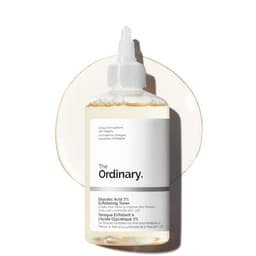
At a glance
The Ordinary Glycolic Acid 7% Exfoliating Toner
Stated active: 7% glycolic acid. Ingredients: 42, no fragrance in the list. Brand-stated pH: 3.5–3.9 (“approximately 3.6” in the brand’s own copy).
Sizes: 100 mL and 240 mL on the brand’s site. The Amazon listing our button links to is the 240 mL.
Price as of October 3, 2026. #ad How we’re funded
Product image supplied by Amazon.
What is on the label
The Ordinary publishes its full ingredient list, which is the first thing that separates it from most of the shelf. Read from the brand’s product page on October 3, 2026, in the order printed, it runs: Aqua (Water), Glycolic Acid, Rosa Damascena Flower Water, Centaurea Cyanus Flower Water, Aloe Barbadensis Leaf Water, Propanediol, Glycerin, Triethanolamine, Aminomethyl Propanol, Panax Ginseng Root Extract, Tasmannia Lanceolata Fruit/Leaf Extract, then nineteen amino acids and sugars (aspartic acid, alanine, glycine, serine, valine, isoleucine, proline, threonine, histidine, phenylalanine, glutamic acid, arginine, PCA, sodium PCA, sodium lactate, fructose, glucose, sucrose, urea), then Hexyl Nicotinate, Dextrin, Citric Acid, Polysorbate 20, Gellan Gum, Trisodium Ethylenediamine Disuccinate, Sodium Chloride, Hexylene Glycol, Potassium Sorbate, Sodium Benzoate, 1,2-Hexanediol and Caprylyl Glycol. Forty-two ingredients, and four things in that order matter.
- Glycolic acid is second, behind only water. Compare that with the brand’s azelaic acid suspension, where the acid is fourth because it has to be carried in a silicone system. Glycolic acid is small and water-soluble, so it simply dissolves. That is why this is a thin, watery liquid rather than a cream, and it is why a 7% is deliverable at this price in a bottle this size.
- Triethanolamine and aminomethyl propanol are the pH adjusters. They are the reason a 7% solution of a carboxylic acid ends up at 3.5 to 3.9 instead of somewhere far more aggressive, and the brand’s copy calls the result “a carefully calibrated pH of approximately 3.6.” For an AHA this number is not trivia — it decides how much of the acid is in its active free form and therefore whether the product works at all. Publishing it is genuinely more than most brands do.
- The soothing and hydrating block is most of the rest: aloe leaf water, rose and cornflower flower waters, propanediol and glycerin, ginseng root, and a long natural-moisturizing-factor stack of amino acids, PCA, sodium lactate, sugars and urea. The Tasmanian pepperberry extract is there specifically to temper the sting of exfoliation, and the brand notes it can cause seasonal color variation in the formula — so a bottle that looks a slightly different shade than your last one is not spoiled.
- Hexyl nicotinate is the one to know about, and we have given it a section of its own below.
Absent from the list: fragrance, essential oils, drying alcohol, silicone and oil. The brand states the formula is alcohol-free, oil-free, silicone-free, vegan, gluten-free and cruelty-free. It does not carry a fragrance-free claim, though no fragrance appears in the forty-two ingredients — which is worth noting precisely because its nearest rival, the 5% tonic, is fragranced.
What a 7% at pH 3.6 actually means
Here is the context the marketing never gives you, and it is the most useful thing on this page. “Toner” sounds like a mild, optional step. What governs whether a leave-on AHA is mild is the pair of numbers — the percentage and the pH — and three different regulators have drawn that line in three different places.
- The United States. FDA guidance for over-the-counter cosmetic AHAs is no more than 10% at a pH of 3.5 or higher, with the product either formulated with sunscreen or carrying a label instruction to use one daily. This toner is a 7% at pH 3.5 to 3.9, so it is inside that envelope on both numbers — and only just inside on pH, at the bottom of its own stated band.
- The European Union. The EU’s Scientific Committee recommended consumer glycolic acid at up to 4% at a pH of at least 3.8 — less than two-thirds the strength at a higher pH. By that yardstick this product is well above the recommended consumer limit.
- Australia. More permissive again: glycolic acid exempted at 20% or less at pH 3.5 or higher for skin care, and 10% or less around the eye. Worth knowing that glycolic acid was listed there as a Priority Existing Chemical in the first place after repeated reports of skin irritation.
The review we take those figures from sorts AHA use into three tiers: up to 10% above pH 3.5 for daily home use, under 30% near pH 3 for trained professionals, and drug territory above that. This bottle is at the upper middle of the home-use tier. None of this makes it unsafe — it is legally sold on both sides of the Atlantic and millions of bottles behave themselves. What it does is explain why the same product gets described as “gentle enough for every night” by one person and “it burned my face” by the next. Treat the word toner as a description of the texture and nothing else, and read our how to use glycolic acid guide before the first application rather than after it.
What the evidence says it does — and what it tested
Glycolic acid’s mechanism is well described and not in dispute. It is the smallest of the common alpha hydroxy acids, which is why it penetrates fastest and resurfaces hardest; it loosens the bonds holding dead cells at the surface so they shed more evenly, and at higher exposures it drives the collagen and epidermal changes that make it a staple of in-office resurfacing. For dullness, rough patches and uneven surface tone, that is the right mechanism for the job, and it is why mandelic acid — a much larger molecule that moves in slowly — is the standard recommendation for people who find glycolic too sharp.
Now the part that almost no review tells you. Open the glycolic acid trial literature and nearly every study is a professional peel at 20% to 70%, applied for minutes under supervision and then neutralized: 35% peels for melasma and post-acne pigmentation, 30% against salicylic acid for acne, 50% and 70% against other peeling agents, 20% to 70% against a retinaldehyde cream for fine lines. Those are real results and they are not this product. A few drops of a 7% left on overnight is a different exposure in every dimension that matters. The review we cite states the problem plainly: the optimal concentrations for efficacy with minimal side effects are, in its words, yet to be precisely defined.
So the honest expectation from this bottle is cumulative: smoother surface texture and more even light reflection over weeks and months of consistent, correctly-spaced use. Not a peel result, not a fix for a scar, not a pigmentation treatment on its own. If defined dark spots are the actual complaint, an AHA is the supporting act and the treatment is elsewhere — start at actives for dark spots.
The ingredient nobody writes about
Hexyl nicotinate appears near the back of the list, which means the amount is small, and the brand offers no explanation for it. It is worth knowing what it is, because it is not an emollient or a preservative. Hexyl nicotinate is a nicotinic acid ester and a documented cutaneous vasodilator: applied topically it widens the small vessels near the skin surface and increases blood flow. In the 1987 study we cite, it produced dose-related visible redness and dose-related increases in skin blood cell flux measured by laser Doppler in ten healthy volunteers — and in several of them, blood flow rose while visible redness stayed barely detectable.
We are not going to overstate this. The concentration here is clearly low, there is no published work on this formula, and the plausible intent is a mild warming or “glow” effect, or improved penetration. But it is a real pharmacological ingredient in a product millions of people put on their face nightly, it is absent from every discussion of this toner we found, and it is a reasonable partial answer to the most common first-use report: a tingle and a slight flush. If your skin is redness or rosacea-prone, an ingredient whose documented action is to increase facial blood flow is a specific reason to pick a different acid, on top of the general one.
The brand’s claims, checked against the page
The Ordinary calls this “a daily glycolic acid toner that smooths skin texture, evens tone, and enhances luminosity,” targeting textural irregularities, dullness and uneven skin tone. All three are defensible and carefully worded around appearance, which is the correct line for a cosmetic. Three specifics deserve a closer look.
- “Reducing the visibility of fine lines, wrinkles, and other signs of aging.” This is the weakest claim on the page at this strength. The anti-aging glycolic data is peel data — in one trial 20%, 50% and 70% peels against a retinaldehyde cream, where the cream beat the peels on skin texture. A 7% leave-on will smooth surface texture, which reads as a softening of fine lines. If lines are the goal, a retinoid is the better-evidenced spend and we would say so even though this bottle is a tenth of the price.
- “Do not use on sensitive, peeling, or compromised skin.” This is the brand being more honest than its reputation suggests, and it is the sentence buyers skip. It rules out reactive skin, skin mid-retinoid-adjustment, skin that is already flaking, and sunburned skin. If that describes you, our sensitive-skin exfoliant picks are the right page instead of this one.
- The Sunburn Alert. The label carries the AHA warning verbatim — use sunscreen, wear protective clothing and limit sun exposure while using the product and for a week afterwards. The FDA’s own research is the reason: after four weeks of AHA use, volunteers’ sensitivity to UV reddening rose by 18% and their sensitivity to UV-induced cell damage roughly doubled, reversing within about a week of stopping. That is a real, measured, temporary effect, and it makes daily sunscreen part of the cost of this product rather than optional advice. Our sunscreen picks work just as well for acid users.
Format, the scalp direction, and the 240 mL problem
We will not describe the feel, because we have not felt it. What the list tells you is this: a water-based solution with no oil, no silicone and a humectant-and-amino-acid stack will behave like a thin, fast-absorbing liquid that leaves no film — which is exactly why it layers under everything and why, unlike the brand’s azelaic suspension, pilling is not the complaint people have about it. The complaint people have about it is overuse.
That is partly the bottle’s fault. 240 mL of anything invites generous use, and a cotton pad soaked in a 7% AHA and swept over the whole face is a much larger dose than a few drops pressed in with fingers. The brand’s face direction is once daily in the evening; we would start at two or three nights a week and let your skin, not the label, set the ceiling. Our how often to exfoliate guide has the cadence by skin type, and signs of over-exfoliation is the page to bookmark before you need it.
The brand also now directs this product at the scalp — a dry scalp, three times a week, dispensed from the nozzle front to back, massaged in, not rinsed. That is a newer and broader instruction than the product launched with, and a thin water-based acid is a sensible thing to put on a flaky scalp. The same cautions apply with more force: nothing on broken or irritated skin, nowhere near the eyes, and expect more sting on an area you have been scratching.
Price, sizes and where to buy it
On cost per milliliter this is not merely the cheapest credible glycolic acid we have found — it is cheaper by a multiple. The 240 mL costs a fraction per milliliter of the 5% tonic in a comparable bottle, and a small fraction of the 8% leave-on gel. If you already know glycolic suits you, the 240 mL is obviously the right buy, and it is the listing our button points at. If you do not know yet, buy small: a bottle this size used two or three nights a week lasts most of a year, and a year’s supply of something that stings is money burned. The price on the button is Amazon’s live price, refreshed daily and stamped with the date, rather than a number we typed in once. We have no incentive to steer you to one listing over another.
Who it is for
Buy it if your skin is normal, oily or resilient, your complaint is dull or rough surface texture rather than a specific mark, you are not currently running a retinoid or another acid, and you will actually wear sunscreen every morning. It is also a sensible pick if you have used a 5% glycolic comfortably for months and want the next step without paying more, and it is the best-value bottle on the market for body uses like keratosis pilaris, where 240 mL stops being excessive and starts being the point.
Buy something else in four cases. If your skin is sensitive, reactive or currently peeling, the brand’s own label excludes you — take it at its word. If you are redness or rosacea-prone, the combination of a fast-penetrating acid and a documented vasodilator is the wrong direction, and azelaic acid is the ingredient with actual rosacea evidence behind it. If your skin is dry or you have been stung by glycolic before, lactic acid does the same job more slowly and hydrates while it works. And if the complaint is blackheads and congestion rather than surface dullness, you want an oil-soluble BHA instead — glycolic acid vs salicylic acid settles that in a paragraph.
How to use it
Patch test first. Then, on clean, dry skin in the evening, a few drops on a cotton pad or fingertips over the face and neck, avoiding the eye contour, followed by moisturizer — the thinnest-to-thickest order the American Academy of Dermatology describes for every routine. Start two or three nights a week and hold there for a month before adding a night. Nothing else strong on the same night: no retinoid, no second acid, no vitamin C in the same step. Sunscreen every morning without exception, which the label itself demands. A brief tingle is ordinary; lingering burning, tightness or a shiny-red look means you have overdone it, so stop for a week and rebuild. If you are fitting it alongside other actives, our layering guide has the conflict matrix.
Against the alternatives
Three products compete with it directly, and all three are ranked in full in best glycolic acid products.
Pixi Glow Tonic is the step down in strength: the same acid at a stated 5%, with aloe and ginseng, in a bottle plenty of people work up to using most nights. You pay for that twice — several times more per milliliter, and it is fragranced where this one is not. It is still the better first glycolic for anyone who has been burned before, because the cheapest bottle is not a bargain if it ends the experiment.
Paula’s Choice Skin Perfecting 8% AHA Gel Exfoliant is the step up: a stated 8% in a leave-on gel formulated at a working pH, in a far smaller bottle for several times the price. What the money buys is a more controlled dose and a format that does not invite a soaked cotton pad. For skin already comfortable with acids and wanting more resurfacing, it is a legitimate upgrade; for everyone else it is the same job at eight times the cost per milliliter.
The Ordinary Lactic Acid 10% + HA is the one we would put in most hesitant hands, and the comparison deserves care. A 10% sounds stronger than a 7% and behaves gentler, because lactic acid is a substantially larger molecule than glycolic and moves into the skin more slowly — the same molecule-size logic that makes mandelic acid gentler still. It also brings hyaluronic acid and genuinely hydrates as it exfoliates. The catch is the bottle: 30 mL in a dropper, against 240 mL here, so the sticker price is misleading and the real cost per milliliter is many times higher. Lactic acid vs glycolic acid makes the full call.
Bottom line
The Ordinary Glycolic Acid 7% Exfoliating Toner earns its reputation on the label rather than the marketing. The acid is second on a forty-two-ingredient list, the strength is printed, the pH band is published, there is no fragrance or alcohol or silicone, the soothing and humectant block is more thoughtful than the price suggests, and 240 mL of it costs less than a single serving of most things that do less. Know that a 7% at pH 3.6 is a real exfoliant and not the mild step the word toner implies — inside the US limit, above the EU’s recommendation for consumer glycolic. Know that the glycolic trial evidence is peel evidence, so the honest promise here is slow cumulative smoothing, not a resurfacing result. Know that there is a vasodilator in the formula, and that if your skin flushes easily that matters. And take the brand’s own “not for sensitive, peeling or compromised skin” literally, because almost nobody does. For resilient skin that wants surface glow on a budget, used two or three nights a week with sunscreen every morning, it is still the first bottle we would point most people at. The rest of the brand’s range, sorted by what each bottle is actually for, is in The Ordinary, decoded.
General guidance, not medical advice. Actives & Acids is written by a skincare enthusiast, not a dermatologist. For a diagnosis, a reaction, or a prescription active like tretinoin, see a qualified professional. Introduce any new active slowly and patch-test first.
What we'd actually buy
Chosen from the same registry as our roundups, on published formulation facts rather than hands-on testing — here is exactly what we do instead.
The Ordinary
Glycolic Acid 7% Exfoliating Toner
The bottle this page is about, and the cheapest glycolic per milliliter we have found. Buy it if your skin is normal, oily or resilient, your complaint is dull, rough surface texture, and you will genuinely wear sunscreen every morning. Start two or three nights a week, not the once-daily the label permits.
See it ranked against its rivalsPrice as of October 3, 2026. #ad How we’re funded
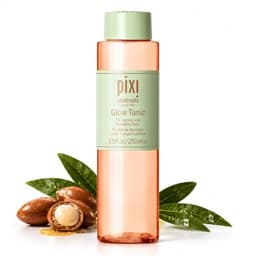
Pixi
Glow Tonic (5% Glycolic Acid)
The same acid at a lower stated strength — 5% rather than 7% — with aloe and ginseng, in a bottle plenty of people work up to using most nights. It costs several times more per milliliter and it is fragranced, so this is a step down in strength you pay for twice. The right first glycolic if 7% has burned you before.
See it ranked in fullPrice as of October 3, 2026. #ad How we’re funded
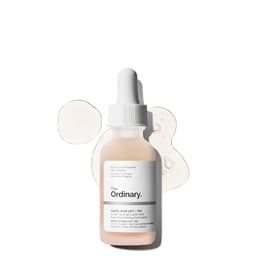
The Ordinary
Lactic Acid 10% + HA
A different acid, not a weaker one: a stated 10% lactic acid, a larger molecule that moves into skin more slowly and hydrates as it exfoliates. The alternative for dry, reactive or easily-stung skin — the skin The Ordinary's own glycolic label warns away. Note the tiny 30 mL dropper bottle, which is why it looks cheap and is not.
Lactic vs glycolic, comparedPrice as of October 3, 2026. #ad How we’re funded
Frequently asked questions
Is The Ordinary Glycolic Acid 7% Toner too strong for everyday use?
The brand says once daily, ideally in the evening. We would start at two or three nights a week and only climb if your skin stays comfortable, and we say that because 7% is at the stronger end of what a leave-on consumer AHA is meant to be. The US FDA's guidance for over-the-counter AHAs is 10% or less at a pH of 3.5 or higher, so a 7% at a stated pH of 3.5 to 3.9 is inside the line but not far inside it. The brand's own label also tells you not to use it on sensitive, peeling or compromised skin — which is unusually candid, and worth taking literally.
Why is 7% glycolic acid allowed in the US but not in Europe?
Because the two regulators drew the line in different places. US FDA guidance says cosmetic AHA products should contain no more than 10% at a pH of 3.5 or above, with sunscreen either formulated in or a label instruction to wear one. The EU's Scientific Committee recommended glycolic acid for consumer use at up to 4% at a pH of at least 3.8 — far more conservative. This product is a 7% at pH 3.5 to 3.9, so it sits comfortably inside the US guidance and above the EU recommendation. That is not a safety scandal and the product is sold in Europe; it is a useful calibration of how strong "a toner" can be.
What is hexyl nicotinate doing in a glycolic toner?
Hexyl nicotinate is a nicotinic acid ester and a known cutaneous vasodilator — it widens the small vessels near the skin surface and raises blood flow. In a 1987 study it produced dose-related increases in skin blood flow in ten volunteers, and in several of them blood flow rose while visible redness was barely detectable. It sits near the back of this ingredient list, so the amount is small, and the brand does not explain why it is there. But it is a reasonable part of the answer to "why does this tingle and look slightly flushed" — some of that is the acid, and some of it may be an ingredient whose job is to flush the skin.
Does the evidence for glycolic acid apply to a 7% toner?
Only loosely, and this is the most important caveat on the page. Almost every published glycolic acid trial uses a professional peel at 20% to 70% applied for minutes and then neutralized — a different exposure from a few drops of 7% left on overnight. The AHA review we cite says outright that the optimal concentrations for efficacy with minimal side effects are not yet precisely defined. So the mechanism is real and well described, the peel results are real, and the honest expectation from a 7% leave-on is slower, milder, cumulative smoothing over months rather than anything resembling a peel result.
Do I really need sunscreen with it?
Yes, and the FDA has measured why. In its own research, four weeks of AHA application increased volunteers' sensitivity to UV-induced skin reddening by 18 percent, and their sensitivity to UV-induced cell damage roughly doubled. The good news is that it reverses: a week after stopping, researchers found no significant difference. That is exactly why the label carries the Sunburn Alert and asks for sunscreen during use and for a week afterwards. Using a glycolic acid without daily sunscreen undoes the tone and texture you are paying for.
Can I use it on my scalp?
The brand now directs it there — apply to a dry scalp three times a week using the nozzle, massage in, do not rinse — which is a newer, broader instruction than this product launched with. It is a sensible use for a thin, 240 mL, water-based acid. The same cautions apply with more force: not on broken, irritated or sunburned skin, keep it away from the eyes and the hairline you have just scratched, and expect it to sting more if you scratch or shave the area.
Can I use it with retinol, vitamin C or niacinamide?
The brand's conflict list names direct acids, direct vitamin C, niacinamide powder, peptides, copper peptides, EUK and retinoids. Unlike its azelaic acid list, most of this one is defensible. Glycolic acid plus a retinoid on the same night is how people damage their barrier, and alternating nights is the standard fix. Vitamin C in the morning and the toner at night is the easy arrangement. Niacinamide in a finished serum is fine alongside it — the brand means its loose powder. Our layering guide works through each pairing.
Should I buy the 100 mL or the 240 mL?
The 240 mL is the better value by a wide margin and it is the listing our button points at. Buy it only if you already know glycolic acid suits you — a bottle this size at two or three uses a week lasts the better part of a year, and a year's supply of something that stings is a waste. If this is your first glycolic, the 100 mL, a 5% tonic, or a lactic acid is the smaller bet. The price on the button is Amazon's live price, refreshed daily and stamped with the date we read it.
Sources
- The Ordinary — Glycolic Acid 7% Exfoliating Toner (official product page) — The brand's own listing: the full 42-ingredient INCI list with glycolic acid SECOND, behind only water (Aqua, Glycolic Acid, Rosa Damascena Flower Water, Centaurea Cyanus Flower Water, Aloe Barbadensis Leaf Water, Propanediol, Glycerin, Triethanolamine, Aminomethyl Propanol, Panax Ginseng Root Extract, Tasmannia Lanceolata Fruit/Leaf Extract, then nineteen amino acids and sugars, Hexyl Nicotinate, Dextrin, Citric Acid, Polysorbate 20, Gellan Gum, Trisodium Ethylenediamine Disuccinate, Sodium Chloride, Hexylene Glycol, Potassium Sorbate, Sodium Benzoate, 1,2-Hexanediol, Caprylyl Glycol); a stated pH of 3.5-3.9 described in the copy as "approximately 3.6"; the 100 mL and 240 mL sizes; once-daily evening face/neck directions AND a three-times-weekly dry-scalp direction; the alcohol-free, oil-free, silicone-free, vegan, gluten-free and cruelty-free claims (there is NO fragrance-free claim, though no fragrance appears in the list); the "do not use on sensitive, peeling, or compromised skin" instruction; the FDA-recommended AHA Sunburn Alert; the note that the Tasmanian Pepperberry extract may cause seasonal color variation in the formula; and the conflict list (copper peptides, direct vitamin C, EUK, niacinamide powder, peptides, retinoids, direct acids) (accessed October 3, 2026)
- Evaluating the Efficacy and Safety of Alpha-Hydroxy Acids in Dermatological Practice: A Comprehensive Clinical and Legal Review (PMC) — Almeman, Clinical, Cosmetic and Investigational Dermatology 2024 — a narrative review that sets the consumer AHA limits side by side: the 2005 US FDA guidance of no more than 10% AHA at pH 3.5 or higher for over-the-counter use (with SPF formulated in or a label instruction to use one), against the EU SCCS's far more conservative 2000 recommendation of glycolic acid up to 4% at pH of at least 3.8, and Australia's exemption at 20% or less at pH 3.5 or higher (glycolic acid having been listed there as a Priority Existing Chemical after repeated skin-irritation reports). It describes three regulatory tiers — up to 10% for daily home use above pH 3.5, under 30% for trained professionals near pH 3, drug territory above that below pH 3 — notes glycolic acid's small molecular size as the reason it penetrates fastest of the AHAs and mandelic acid's larger molecule as the reason it stings less, and states plainly that "the optimal concentrations for therapeutic efficacy with minimal side effects are yet to be precisely defined." Every efficacy trial it reviews for glycolic acid is a professional peel at 20% to 70%, not a leave-on cosmetic strength (accessed October 3, 2026)
- U.S. FDA — Alpha Hydroxy Acids — FDA on AHAs and increased sun sensitivity (accessed July 17, 2026)
- Hexyl-nicotinate-induced vasodilation in normal human skin (PubMed) — Dowd, Whitefield and Greaves, Dermatologica 1987;174(5):239-43 — hexyl nicotinate lotion applied to the clinically normal skin of 10 healthy volunteers produced dose-related visible redness and dose-related increases in skin blood cell flux measured by laser Doppler; in several subjects blood flow rose while visible redness was barely detectable, so the authors conclude it "may be an effective cutaneous vasodilator even in the presence of minimal erythema" (accessed October 3, 2026)
- Chemical Peels for Skin Resurfacing — StatPearls (NCBI Bookshelf) — Reference overview of AHA/BHA exfoliation mechanisms (accessed July 17, 2026)
- American Academy of Dermatology — Should I apply my skin care products in a certain order? — AAD on the order to apply cleanser, treatment, moisturizer and sunscreen (accessed July 17, 2026)
- American Academy of Dermatology — Face washing 101 — AAD guidance on gentle cleansing technique (accessed July 17, 2026)
Keep reading
Best glycolic acid products
This toner ranked against the 5% tonic, the 8% leave-on gel, the lactic alternative and the weekly peel, on stated strength, format and cost-per-mL.
See the rankingHow to use glycolic acid
The method this review assumes: patch test, build frequency slowly, nothing else strong on the same night, sunscreen every morning without exception.
Read the guideLactic acid vs glycolic acid
The molecule-size argument that decides which AHA your skin should get. Short version: glycolic is faster and sharper, lactic is slower and kinder.
Compare the twoSigns of over-exfoliation
Glycolic acid is the acid people most often overdo. How to tell a normal tingle from a damaged barrier, and how to climb back out.
Read the guideThe Ordinary, decoded
Which of the brand's bottles does what, by concern — where this toner sits among the four most people actually need.
Read the guideGlycolic acid for armpits
The off-label use this 240 mL bottle gets bought for. What an AHA can plausibly do under the arm, and the extra rules for thinner, shaved skin.
Read the guide