Why the price ceiling barely bites on this ingredient
Vitamin C is the category where the prestige markup is hardest to justify on paper, and the reason is that the formulation question was settled in public. The most-cited work in this area is on a solution of L-ascorbic acid with vitamin E, where adding ferulic acid stabilized the mixture and roughly doubled its photoprotection. That is a published recipe, not a trade secret, and it is why a serum under $50 can state the same three ingredients at the same percentages as one costing several times more.
What a higher price can buy is real but narrow: better packaging against air and light, a more pleasant texture, and tighter batch freshness through a controlled retail channel. Those are worth something. They are worth less than people think, because the single biggest variable in whether topical vitamin C does anything is whether the L-ascorbic acid in your bottle is still L-ascorbic acid, and that depends on how old the bottle is and how you store it rather than on what you paid.
The practical consequence is counter-intuitive and it is the most useful sentence on this page: a fresh $20 serum beats a half-oxidised $150 one, and buying at this end of the market makes replacing the bottle every few months an easy decision instead of a painful one.
How we ranked inside the band
1. Is the form of vitamin C published?This matters more than the percentage. “Vitamin C” on a label could be L-ascorbic acid or one of several derivatives, and they differ in strength, stability and the pH they need. Four of the five below name the molecule.
2. Is the percentage published, and is it a sane one? The dermatology literature discusses L-ascorbic acid in roughly a 10 to 20% range, with absorption falling away above that rather than climbing. So a stated 10% in a well-built base is not a weaker buy than a stated 23% — which is why the highest number here is the value award rather than the overall winner.
3. What else is in the base, and who is it for? Ceramides make a vitamin C serum tolerable for reactive skin; salicylic acid alongside the vitamin C makes a different product aimed at congestion as well as tone. These are the distinctions that decide which of five good serums is the one for you.
4. Volume, at equal quality.One pick here is a 59 mL bottle in a category where 30 mL is standard. On an active you should be replacing regularly, a bigger bottle is not automatically better value — it is better value only if you will finish it before it turns.
Which one, by skin and by goal
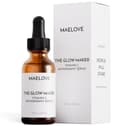
You want the studied formula. Maelove. L-ascorbic acid at a published 15% with vitamin E and ferulic acid is the arrangement the research actually examined, and nothing else under $50 in our registry assembles all three.
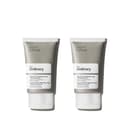
You want the most active for the least money.The Ordinary’s 23% suspension. It is anhydrous, which is the formulation answer to the stability problem, and its texture is the price you pay: a silicone suspension with a faint grit that some people never get used to. Do not read 23% as “twice as good as 10%” — read it as a high dose in a format that keeps it intact.
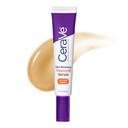
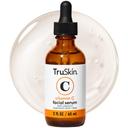
Vitamin C has stung you before.Either the CeraVe 10% in a ceramide base, which is the gentlest L-ascorbic acid option here, or the TruSkin derivative serum, which sidesteps the low pH that reactive skin objects to. The trade with derivatives is milder and slower, which is a genuine trade rather than a downgrade — the detail is on L-ascorbic acid vs vitamin C derivatives.
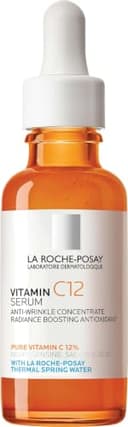
Your skin is oily and congested as well as uneven. The La Roche-Posay 12%, which carries salicylic acid alongside the vitamin C. It is the most expensive pick in the band and the only one doing two jobs.
Getting your money’s worth out of the bottle
Four habits, all free. Morning, not night— the antioxidant role sits alongside sunscreen, and the AAD’s ordering principle of thinnest to thickest puts a watery serum before your moisturizer. Sunscreen over the top, every time— vitamin C is an adjunct to photoprotection, not a replacement for any of it; a serum plus SPF 15 is not SPF 30. Keep it dark and cool and away from a sunny bathroom shelf. And throw it out when it goes deep orange or brown, which is oxidation you can see. If marks are the reason you are buying, set the timescale honestly: the AAD’s melasma guidance puts pigment results on a three-to-twelve-month horizon with daily sun protection doing the prevention.
What we did not rank, and why
The $25 band.We checked it first, because it is also a live search. Only two serums in this registry sit under $25 with a live price, which is below our floor of three for a band page — so publishing a “best under $25” would have meant padding the list with vitamin C creams, which are a different purchase. They are ranked on best vitamin C moisturizer.
Prestige serums above the band.Excluded by the premise rather than by judgment. If what you want is the famous one, the useful question is which cheaper serum matches it on the published formula — which is the subject of SkinCeuticals C E Ferulic alternatives.
Serums with no published form or percentage. A large share of this market tells you neither. We will not rank a dose we cannot read.
Vitamin C with an SPF claim, and vitamin C sheet masks or kits. A moisturizer with SPF is applied at a fraction of the quantity a sunscreen label is tested at, and a kit makes it impossible to say what the reader is actually buying.