Retinol vs Niacinamide
One rebuilds, the other repairs and calms — and most people asking this question need both, in that order. The head-to-head on published evidence, irritation and what each ingredient is honestly for.
How this is funded: we earn a commission if you buy through our links, at no extra cost to you. It never changes which product we recommend, and we’ll tell you when we’d skip one. Full disclosure.
The short answer: if your complaint is fine lines, rough texture or sun-damaged skin, retinol is the stronger tool, and nothing over the counter has a deeper evidence base for those things. If your complaint is redness, oiliness, visible pores, uneven tone or skin that reacts to everything, niacinamide is the better buy and the safer place to start. They are not rivals in any practical sense — most people who ask this question end up using both, and the reason is that niacinamide treats the side effects retinol causes.
Retinol vs niacinamide at a glance
| Retinol | Niacinamide | |
|---|---|---|
| What it is | A vitamin A derivative; converts in skin toward retinoic acid | Vitamin B3 (nicotinamide) |
| Best evidenced for | Fine lines, texture, photoaging, collagen support, acne | Barrier function, redness, sebum, uneven tone and spots |
| Irritation risk | High at first: dryness, flaking, stinging for several weeks | Low; occasional flushing or stinging at higher percentages |
| Sun sensitivity | Yes — night use and daily sunscreen are part of the deal | No increase reported |
| Typical strengths on the shelf | 0.2% to 1%, and most brands do not disclose it | 5% to 12%, usually printed on the label |
| How soon you see anything | 8 to 12 weeks for texture; months for lines | 2 to 4 weeks for oil and redness; about 12 for tone |
| Use it | At night, 2–3 nights a week building to nightly | Morning, night or both, daily |
| Pregnancy | Avoided — ask your doctor before using any retinoid | Generally considered fine; still worth asking |
What retinol is actually good at
Retinol is the over-the-counter member of the vitamin A family, and once in the skin it converts toward retinoic acid — the molecule prescription tretinoin delivers directly. The published work on topical retinol and skin aging is about that pathway: increased epidermal turnover, effects on collagen, and measurable improvement in photoaged skin across the retinoid trial literature. Prescription strengths do more and faster, which is why the AAD’s own explainer separates retinoids from retinol in the first place, and why our retinol vs tretinoin comparison exists. But the mechanism is the same family, and no non-prescription ingredient has a stronger case for wrinkles.
The cost is irritation. Dryness, flaking and stinging in the first weeks are the normal adjustment rather than a sign it is not for you, and the published photoaging trials were not run on people who quit in week three. It also raises sun sensitivity, which is why it is a night product and why sunscreen is not optional alongside it. The whole management problem is laid out in how to use retinol without the flaking and retinol side effects.
What niacinamide is actually good at
Niacinamide is vitamin B3, and the reviewed evidence puts it in a different category of ingredient entirely: it supports the skin’s own ceramide production and barrier function, it has anti-inflammatory activity relevant to redness, and it has effects on pigment transfer that make it useful for uneven tone. The most quoted clinical anchor is Bissett’s work on facial skin appearance, where 5% niacinamide improved the appearance of fine lines, hyperpigmented spots, red blotchiness and skin texture over twelve weeks.
Two honest observations follow. The first is that 5% is the studied dose and the shelf sells 10% and 12% — above the evidence, with nothing published to show the extra does more, and with the stinging complaints concentrated at the higher end. The second is that niacinamide’s wins are broad but moderate. It will not do for deep lines what a retinoid does. What it will do is make the barrier more robust, calm visible redness, take the shine off oily skin and nudge spots lighter — and it will do all of that without an adjustment phase. More detail sits in niacinamide benefits and in our review of the most-bought 10% serum.
Which one should you buy first?
Start with niacinamide if any of these is true: your skin is oily or shiny by midday; you flush or stay red; your pores are the thing you notice; you have tried an active before and abandoned it over irritation; or your barrier is currently unhappy — tight, stinging at moisturizer, flaking in patches. In that last case a retinoid now would make things worse, and niacinamide is part of the repair rather than another insult. The route back is in how to repair your skin barrier.
Start with retinol if your skin is reasonably robust, you already wear sunscreen daily, and your complaint is lines, crepey texture or the cumulative look of sun exposure. Pick a stated strength rather than an undisclosed one, start at 0.2% to 0.5%, and plan for a slow ramp — the beginner-grade options are ranked in best retinol for beginners. If you are acne-prone rather than aging-focused, the retinoid to look at is adapalene instead, compared in retinol vs adapalene.
Using both: the order, and the myth
You can use them together, and the warning you may have read is a misreading. The concern was that niacinamide converts to nicotinic acid — which can flush skin — and that this would neutralize retinol. That conversion is a heat-and-time reaction in a container, not something that happens on your face in the seconds between two layers. Several products in our registry put retinol and niacinamide in the same bottle deliberately, including the encapsulated-retinol serum among the picks below, which rather settles the practical question.
For order, follow the general rule in the AAD’s guidance on applying products: thinnest to thickest, treatment before moisturizer. In practice that means niacinamide serum, then retinol, then moisturizer — or, if your retinol stings, niacinamide-containing moisturizer first as a buffer, then the retinol on top. Both work. The detailed version, including the sandwich method, is in niacinamide and retinol, and the whole-routine sequencing is in how to layer actives.
What this comparison is not
It is not a verdict on which ingredient is “stronger”, because they are not measured on the same scale, and anyone selling you one as a replacement for the other is selling rather than explaining. Niacinamide is not a gentle retinol; if you want a gentler retinol alternative with its own (thinner) evidence base, that argument is retinol vs bakuchiol. And neither ingredient substitutes for sunscreen, which outperforms both for preventing the damage they are being bought to treat.
General guidance, not medical advice. Actives & Acids is written by a skincare enthusiast, not a dermatologist. For a diagnosis, a reaction, or a prescription active like tretinoin, see a qualified professional. Introduce any new active slowly and patch-test first.
What we'd actually buy
Chosen from the same registry as our roundups, on published formulation facts rather than hands-on testing — here is exactly what we do instead.
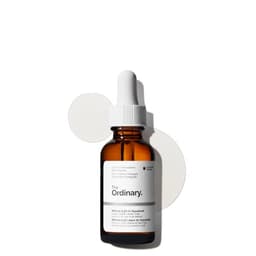
The Ordinary
Retinol 0.5% in Squalane
The retinol side of the argument at its most transparent: a printed 0.5% in a squalane base, cheap enough that easing in over two months costs you nothing. The right first bottle if lines, texture and sun damage are the complaint.
See the retinols rankedPrice as of October 5, 2026. #ad How we’re funded
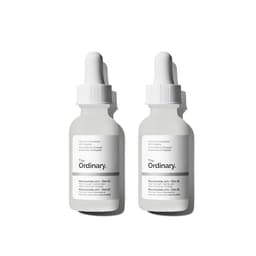
The Ordinary
Niacinamide 10% + Zinc 1%
The niacinamide side at the same price point: a stated 10% with 1% zinc PCA. Buy this one first if your skin is oily, reactive, or already irritated — it is the ingredient that makes a retinoid survivable later.
See the niacinamides ranked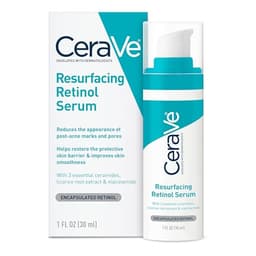
CeraVe
Resurfacing Retinol Serum
The gentler way onto the retinol side: encapsulated retinol with ceramides and niacinamide already in the formula, so one bottle covers both halves of this comparison. The strength is undisclosed, which is the trade-off.
See the gentle retinols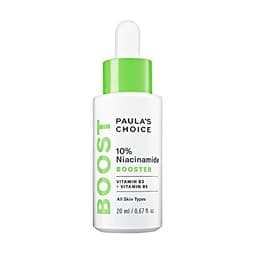
Paula's Choice
BOOST 10% Niacinamide Booster
The premium niacinamide, at the same stated 10%, in a booster you can mix into a moisturizer — the easiest way to add it to a routine that already has a retinoid in it without adding a step.
See it ranked in fullPrice as of October 5, 2026. #ad How we’re funded
Frequently asked questions
Which is better, retinol or niacinamide?
They are not competing for the same job. Retinol has the deeper evidence base for the things people mean by anti-aging — fine lines, texture, photoaged skin — because it acts on cell turnover and collagen. Niacinamide has published evidence for barrier function, redness, oil and uneven tone, and it is far better tolerated. If your complaint is wrinkles, retinol. If it is redness, oiliness, large pores or sensitivity, niacinamide.
Can you use retinol and niacinamide together?
Yes. The old warning that niacinamide neutralizes retinol does not hold up — it came from heat-driven conversion of niacinamide to nicotinic acid in a lab, not from what happens in a routine. In practice they complement each other: niacinamide supports the barrier that retinol stresses. Apply niacinamide first or use a moisturizer containing it after the retinol.
Which should a beginner start with?
Niacinamide, in most cases. It is the lower-risk introduction to actives: it does not increase sun sensitivity, it does not cause a peeling adjustment phase, and if your barrier is already struggling it treats the problem rather than adding to it. Add retinol once your routine is stable and you have a sunscreen habit.
Does niacinamide help with wrinkles?
Modestly, and the published figure to anchor it is 5%: in the Bissett work on facial skin appearance, 5% niacinamide improved the appearance of fine lines, hyperpigmented spots, red blotchiness and skin texture over twelve weeks. That is a real result and a smaller one than topical retinoid trials report for photoaging. Use niacinamide as the supporting act for wrinkles, not the lead.
Is 10% niacinamide better than 5%?
There is no good evidence that it is. The most-cited facial-appearance trial used 5%, and the serums on our shelf are mostly labeled 10% or 12% — above the studied dose with nothing published to show the extra helps. Higher percentages are also the ones associated with stinging and flushing complaints. A 5% product is not a compromise.
Can I use both in the same routine every day?
You can use niacinamide every day, morning and night. Retinol is the one to build up: two or three nights a week at first, climbing only when there is no tightness or flaking the next morning. Many people land on niacinamide daily plus retinol three or four nights a week, which is a sensible steady state.
Sources
- Human Skin Aging and the Anti-Aging Properties of Retinol (PubMed) — Review of topical retinol's effect on collagen and photoaging (accessed July 17, 2026)
- The use of retinoids in the treatment of photoaging (PubMed) — Clinical-trial evidence for topical retinoids in photoaging (accessed July 17, 2026)
- Niacinamide: A B vitamin that improves aging facial skin appearance (PubMed) — Bissett et al. — 5% niacinamide improves wrinkles, spots and texture (accessed July 17, 2026)
- Mechanistic Basis and Clinical Evidence for Nicotinamide (Niacinamide) in Skin (PMC) — Review of niacinamide's barrier, ceramide and pigmentation effects (accessed July 17, 2026)
- American Academy of Dermatology — Retinoid or retinol? — AAD on the difference between prescription retinoids and OTC retinol (accessed July 17, 2026)
- American Academy of Dermatology — Should I apply my skin care products in a certain order? — AAD on the order to apply cleanser, treatment, moisturizer and sunscreen (accessed July 17, 2026)
Keep reading
Niacinamide and retinol together
The layering guide: order, timing, and why the deactivation myth will not die.
Read the guideBest retinol serums
Five retinols ranked on stated strength, base and buffering — the retinol side of this decision.
See the picksBest niacinamide serums
Four niacinamides ranked on stated percentage, zinc content and formula — the other side.
See the picksRetinol vs vitamin C
The other matchup people confuse this one with: night repair against daytime defense.
Compare themHyaluronic acid vs niacinamide
Hydrator or barrier active — whether you actually need both in the same routine.
Compare themAll ingredient comparisons
Every head-to-head on the site in one place, from AHA vs BHA to retinol vs tretinoin.
Browse them