What the $25 ceiling actually removes
Two jars in our registry sit above this band, and it is worth being precise about what they are, because the usual assumption about price does not hold here. One is a pure-mineral-brand pharmacy cream that pairs retinol with retinyl linoleate, an ester that releases more slowly and stings less. The other is a prestige cream that cushions encapsulated retinol with squalane, ceramide NG, colloidal oatmeal, allantoin and aloe. Both are genuinely nicer to wear than most of the list below.
Neither one publishes a retinol concentration. So the thing the extra money buys is tolerance and texture, which are real and which some people should pay for — and the thing it does not buy is the number. If you have flared from an eye cream before, the softer base is a reasonable reason to go over the line, and both are ranked on best retinol eye creams. If what you wanted was a stronger or a verifiable dose, spending more does not get you one.
How we ranked the under-$25 shelf
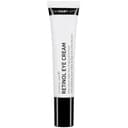
1. Is a retinol figure published, and what is it counting? One product here publishes one, and it publishes it properly: the front of the pack carries a 3% figure for the slow-release complex, and the brand separately states the retinol content as 0.09%. Those are two different numbers describing the same jar, and a brand that gives you both has told you everything. That settles the top slot. It also sets the trap to watch for on this shelf — a big percentage on the front of an eye cream is usually a percentage of a blend, not of retinol.
2. What else is in the base? On eyelid skin this carries more weight than it does on the cheek. One pick here combines encapsulated retinol with three ceramides, cholesterol and a peptide pair; another puts niacinamide high in the formula, which is the one partner ingredient with a published record for barrier support and redness. Those are the two best supporting formulas under $25, and both cost drugstore money.
3. Fragrance, and whether the brand will even claim it. Four of the five picks below are fragrance-free per their own listings. One is not fragrance-free — the brand makes no such claim, so we record it as not published rather than assume it either way, and the write-up says so. On skin this thin, applied at night to an area a retinoid has already made reactive, that is a real tiebreaker.
4. Do you need an active here at all?This is the question most eye cream rankings refuse to ask. If the complaint is dryness, crepeyness that improves when you drink water, or tightness under concealer, the answer is a barrier cream and not a retinoid — so one of the five picks is deliberately not an active product, and it is also the cheapest.
Why eyelid skin changes the math
The published mapping of facial skin thickness puts the eyelid at the thinnest point measured anywhere on the face. That single fact drives everything that is different about this category: ingredients get through more readily, irritation shows up sooner and looks worse because the area is mobile and visible, and the margin between “working” and “angry” is narrower than on your forehead.
Two consequences follow, and both favor the cheap end of this shelf. First, a low published dose is a feature here, not a weakness— 0.09% retinol would be a token amount in a face serum and is a sensible amount on an eyelid. Second, frequency matters more than strength: two or three nights a week, a grain-of-rice amount, patted along the orbital bone rather than rubbed into the lash line. The published work behind retinol for photoaging runs on months of consistent use, so there is nothing to be won by going nightly in week one. If it stings, use it less often before you blame the product — the pattern is laid out in retinol side effects.
Which one, by who you are
Your first retinoid anywhere near your eyes. The INKEY List jar, two nights a week. Published dose, lowest risk, almost no money at stake if you decide the whole category is not for you.
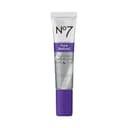
Dry, crepey under-eyes that flake by mid-morning. The No7 cream. Encapsulated retinol is the sensible delivery choice for this area, and the ceramide-and-cholesterol set behind it is the most complete supporting formula on the page. Read its cons first: the marketplace title advertises a percentage the brand’s own page does not state.
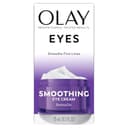
Redness and reactivity are your usual problem.The Olay cream, for the niacinamide sitting high in the formula. Of everything brands add alongside retinol, niacinamide has the strongest published record for supporting the barrier and calming redness, and here it is in the jar rather than in a second product. The “24” in the name is a hydration claim, not a strength.
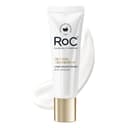
You want something you can buy at any drugstore, forever. The RoC cream. It has been on those shelves longer than anything else here and it is pure retinol plus a mineral complex. Read the dark-circle numbers in its marketing as the consumer-perception survey they are, and note the near-identically named siblings beside it on the shelf.
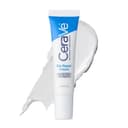
You are not actually sure you want an active.The CeraVe cream. Ceramides, niacinamide and hyaluronic acid, no retinoid, no break-in period, the cheapest jar on the page. The honest frame is that this is a moisturizer for a specific patch of thin skin — which, per the standard reference on moisturizers, is a humectant-and-emollient job rather than an active one.
What no eye cream at this price will do
It will not erase inherited dark circles.Most under-eye darkness is structure and pigment you were born with — the shadow cast by the orbital bone, the blue of vessels under thin skin, or genuine melanin. None of those is a thing a topical removes, at any price, and a caffeine tingle that makes the area look briefly tighter is cosmetic and short-lived. We say the same thing on the full ranking, and we would rather lose the click than sell the promise.
It will not substitute for sunscreen. Retinoids raise sun sensitivity, and the area you are treating is the area people skip. There is a filter-type comparison at mineral vs chemical sunscreen if you need to choose one that does not sting.
It will not run out quickly, which is the quiet argument for shopping here.These jars are 14–15 mL, used at a grain of rice per eye a few nights a week. That is months of product. The whole cost of finding out whether a retinol eye cream does anything for you, at the top of this band, is less than one prestige jar — and the prestige jar lasts exactly as long.
What we did not rank, and why
Anything above the line. Two eye creams in this registry are priced over $25 and are excluded by the premise rather than by judgment. Prices move: a jar sitting a dollar either side of the band this week can be on the other side next week, so trust the live figure on each button rather than our ordering.
Eye masks, patches and rollerballs. A patch delivers an unknowable dose for an unknowable contact time, and a metal rollerball is a cold compress with a marketing budget. Neither belongs in a ranking built on published figures.
Using your face retinol around your eyes.This is a legitimate option, not a mistake — plenty of dermatologists suggest it, and a published 0.5% serum costs less than every jar here. It is excluded because it is a different purchase with a different risk profile: a face dose on eyelid skin needs buffering with a moisturizer and real restraint on frequency. If that is the route you want, start from best retinol under $25 and read how to use retinol first.
“Retinol eye cream” listings with no resolvable brand. The bottom of this category is full of jars whose manufacturer we cannot establish and whose percentage we therefore cannot attribute to anyone. We will not rank those.
Prescription retinoids for the eye area. Not a shelf product and not a decision to make from a roundup. If you want the non-prescription version of that strength ladder, it is at tretinoin alternatives.