What $25 buys, and what it does not
The good news first: price is not the limiting factor on retinol. The published work behind retinoids is about the molecule and the dose, not the packaging, and a 0.5% retinol for under ten dollars is the same molecule at the same strength as a 0.5% retinol for sixty. The AAD lists retinoids as a first-line anti-aging treatment without reference to price tier, and the trials behind that are run on concentrations, not brands.
What the budget shelf costs you is disclosure and delivery. Disclosure, because the drugstore tradition is to put “retinol” on the front and no number anywhere — which means you cannot tell whether you are stepping up or down when you switch bottles, and you cannot compare two products at all. Delivery, because encapsulation and buffering systems are formulation work that generally shows up at higher prices: an encapsulated retinol in a ceramide base is a different experience from bare retinol in oil, even at the same percentage.
Neither of those is a reason to spend more if the money is not there. They are reasons to know which of the two you are buying.
How we ranked the under-$25 shelf
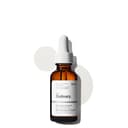
1. Is a retinol percentage published? One product here publishes a real one. On a site whose whole position is that a printed number beats an unprinted one, that settles the top slot before anything else is considered.
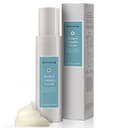
2. What exactly is the printed number counting? This matters more on the cheap shelf than anywhere else. A figure like “2.5% retinol complex” is a percentage of a blend, not of retinol — the retinol inside that blend is some unstated fraction of it. That is still more information than silence, and it is not the same information as a 0.5% retinol. We rank it as what it is.
3. Serum or cream, and what is in the base? A retinol in squalane is retinol and an emollient oil. A retinol in a ceramide-and-niacinamide lotion is doing two jobs. If you already own a moisturizer you like, the serum is the better buy; if this is your only night product, buy the cream.
4. Fragrance. It counts against a leave-on product applied to skin a retinoid has already made more reactive. One pick here is fragranced and the write-up says so.
Which one, by who you are
First retinol ever, and you want to know the dose. The 0.5% serum, two nights a week to start. Published strength, lowest price, and a dose that is a real step rather than a token one. Read how to use retinol before the first application rather than after the peeling.
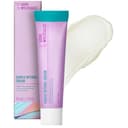
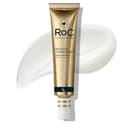
Dry skin, and one night product only.A cream. The AAD’s dry-skin guidance is an emollient used consistently, and a retinol cream is that step carrying the active — one fewer layer rather than one more. The RoC cream is the richest option here; the Good Molecules one is the cheapest.
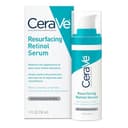
You are treating marks left by spots, not lines. The CeraVe serum, whose encapsulated retinol sits in a base with ceramides and niacinamide — a combination aimed at the post-acne mark rather than at the wrinkle. It is also the gentlest introduction on this list.
You have used retinol for a year and want more. Then your product is above this price band, and that is the honest answer. The step up is a published 1%, which is on the main ranking and is not under $25 in any week we have checked.
How to buy cheap retinol without wasting it
Three things decide whether a cheap bottle works, and none of them costs money. Frequency: start at two nights a week and add a night every two weeks; the published results take months, so there is nothing to be gained by rushing to nightly in week one. Sunscreen: non-negotiable the next morning, and the reason is in the mechanism rather than in a warning label. Storage:retinol degrades with light and air, so an opaque tube or bottle kept out of the bathroom window is worth more than a few dollars of price difference. If your skin stings, the fix is almost always less often rather than a different brand — see retinol side effects.
What we did not rank, and why
Anything above the line. Three retinoids in our registry are priced over $25 and are excluded by the premise rather than by judgment: a 1% treatment, a pure-retinol serum with niacinamide and hyaluronic acid, and a drugstore night cream with peptides. All three are ranked on best retinol serums and best retinol creams. Prices move, so a product sitting a few cents either side of the band this week may be on the other side next week — the live figure on each button is the one to trust, not our ordering.
Retinol eye creams. A different purchase with a different formulation problem, ranked separately on best retinol eye creams — and with this same ceiling applied at best eye cream under $25, where the finding runs the other way: there, the cheapest jars disclose more than the dearest ones.
Prescription retinoids.Tretinoin is not a shelf product and adapalene is its own ranking — retinol vs tretinoin covers why that comparison is not about price, and tretinoin alternatives ranks the over-the-counter ladder for anyone who cannot get the prescription.
“Retinol” products with no resolvable brand. The sub-$15 end of this category is full of listings whose manufacturer we cannot establish. We will not rank a percentage we cannot attribute to anyone.