Lactic Acid vs Mandelic Acid: Which Gentle AHA?
Two acids with the same reputation and different reasons for it. Lactic acid is gentle because it hydrates while it exfoliates; mandelic acid is gentle because its molecule is too big to rush. The honest discriminator is not which is milder — it is which kind of mild you need, and what pH the bottle is actually formulated at.
How this is funded: we earn a commission if you buy through our links, at no extra cost to you. It never changes which product we recommend, and we’ll tell you when we’d skip one. Full disclosure.
The same reputation, two different reasons
Both of these acids get recommended with the word “gentle” attached, and both deserve it. They earn it differently, and that is the whole basis for choosing between them.
Lactic acid is gentle because it hydrates.It is a humectant as well as an exfoliant — it holds water at the surface while it loosens the bonds between dead cells — which is why it is the one AHA with a genuine reputation for leaving skin feeling better rather than tighter. Its molecule is mid-sized: bigger than glycolic acid’s, so slower and less stinging, but not the slowest available.
Mandelic acid is gentle because it is slow.It has the largest molecule of the common alpha hydroxy acids, and the published AHA literature treats molecular size as the main reason these acids differ in penetration speed — glycolic fastest, mandelic slowest. The Ordinary makes the same argument on its own product page: the acid “has a larger molecular weight than other alpha hydroxy acids, which results in a slower, more balanced distribution.” It brings no hydrating property of its own.
So the question is not which is milder in the abstract. It is whether you want an acid that gives something back (lactic) or an acid that takes its time (mandelic).
The asymmetry nobody mentions
Here is something you can check across every product on this site, and which complicates the tidy version of the molecule-size story.
An AHA exfoliates in its free-acidform, and how much of a formula sits in that form depends on the gap between the product’s pH and the acid’s pKa — the pH at which half is free acid and half is a salt. Lactic acid’s pKa is about 3.8. Mandelic acid’s is lower, about 3.4. A lower pKa means a mandelic formula has to be more acidic than a lactic one to keep the same proportion of its acid active.
Now look at what the brands actually publish. The Ordinary states pH 3.60–3.80 for both its lactic serums — and explains why, in its own words: “When pKa is close to pH, there is an optimal balance between salt and acidity.” Its mandelic serum is stated at pH 3.5–4.5, a full point wide and running higher. Good Molecules states a single pH of 4.0 for its mandelic serum. Paula’s Choice states an optimal band of 3.0–4.0 for its mandelic-and-lactic blend.
So the acid that needs more acidity is consistently sold in lessacidic formulas. That is not a scandal — it is a deliberate formulation choice, and it is why mandelic products feel as mild as they do. But it means the gentleness you get from a mandelic serum is only partly about the molecule. A good share of it is the formulator deciding, on your behalf, to keep more of the acid in salt form.
The practical consequence: a 10% lactic and a 10% mandelic are not the same dose of exfoliation, and the gap between them is wider than the molecule argument alone would suggest.
Side by side
| Lactic acid | Mandelic acid | |
|---|---|---|
| Class | Alpha hydroxy acid (AHA) | Alpha hydroxy acid (AHA) |
| Molecule size | Mid — larger than glycolic, smaller than mandelic | Largest of the common AHAs, so the slowest to distribute |
| pKa | About 3.8 | About 3.4 — needs a more acidic formula to stay active |
| Published pH of the products we rank | 3.60–3.80 (both The Ordinary serums) | 3.5–4.5, 4.0, and a 3.0–4.0 band — all higher |
| Second property | Humectant — hydrates while it exfoliates | None of its own; the base does the cushioning |
| Best for | Dry or dehydrated skin, dullness, fine texture, body skin | Reactive and sensitised skin, breakout-prone skin, uneven tone |
| Speed | Weeks for smoothness; faster of the two | Weeks to months — the commonest mistake is quitting at three weeks |
| Body formats | Plentiful — 12% and 15% lotions in 14 oz bottles (as the neutralized salt, ammonium lactate) | Almost none; 30 mL face serums are the category |
| Highest stated strength we rank | 15% (body, salt form) | 12% (face, no published pH) |
| Our top pick | The Ordinary Lactic Acid 10% + HA | The Ordinary Mandelic Acid 10% + HA |
Choose lactic acid if…
Your skin is dry or dehydrated.This is the strongest single reason to pick one over the other. An exfoliant that is also a humectant is a better fit for skin that is already short of water, and the AAD’s dry-skin guidance — plain emollients, applied to slightly damp skin, used consistently — works with lactic acid rather than against it.
You are treating your body, not your face.Lactic acid owns this category and mandelic acid barely competes: the shelf has 12% and 15% lactic lotions in 14 oz bottles, and nothing comparable in mandelic. Two limbs is ten to twenty times the area of a face, so a 30 mL serum is about one application. Read the body percentages carefully though, because they are ammonium lactate — the neutralized salt — rather than free acid.
You want the dose and the condition both printed. The lactic serums are the only products across both categories that publish a percentage and a tight pH band together, at a budget price.
Choose mandelic acid if…
Glycolic or lactic acid has already gone badly.Mandelic is the sensible next thing to try rather than a lower-strength version of what already stung you — a different molecule and a milder formula, not just a smaller number.
Your skin is breakout-prone as well as reactive. It is the AHA most often suggested for this combination, and it is a reasonable option when the stronger acne actives are not tolerated. It is not a replacement for them: the strong recommendations in acne care sit with benzoyl peroxide and topical retinoids, and for blackheads the oil-soluble BHA is better matched than any AHA.
You are working on uneven tone and want to minimize risk. The slow-penetration argument becomes a risk-management one: gentler exfoliation carries less chance of provoking the pigmentation you were trying to treat, which is why mandelic acid comes up so often for deeper skin tones. We have no trial of these specific products to point at, so treat that as sound reasoning rather than demonstrated performance.
What neither of them is
Neither is an acne treatment in the sense the guidelines use the word, and neither will fade a dark mark on its own in the timeframe people hope for. Both are surface exfoliants whose job is texture, dullness and the gradual turnover of pigmented surface cells. If your target is redness, azelaic acid is the better-evidenced molecule. If it is blackheads and congestion, salicylic acid gets inside the pore in a way an AHA cannot. And if it is fine lines and collagen over the long term, that is retinoid territory.
Bottom line
Dry skin, dullness, or anything below the neck: lactic acid. Reactive skin, breakouts, or a history of acids going wrong: mandelic acid. If you are genuinely undecided, note that the two top picks are the same brand at the same price, so the cost of choosing wrong is about ten dollars — and that the lactic serum is the one with the tighter published pH, which makes it the more predictable of the two purchases.
General guidance, not medical advice. Actives & Acids is written by a skincare enthusiast, not a dermatologist. For a diagnosis, a reaction, or a prescription active like tretinoin, see a qualified professional. Introduce any new active slowly and patch-test first.
What we'd actually buy
Chosen from the same registry as our roundups, on published formulation facts rather than hands-on testing — here is exactly what we do instead.
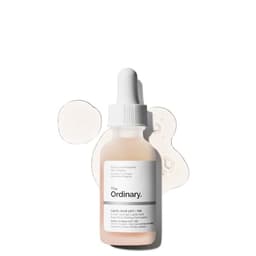
The Ordinary
Lactic Acid 10% + HA
The lactic side, and the one to buy if your skin is dry or your complaint is dullness and fine texture. A disclosed 10% at a published pH of 3.60-3.80 — the only pairing of both numbers in either category at this price.
See it ranked in fullPrice as of October 31, 2026. #ad How we’re funded
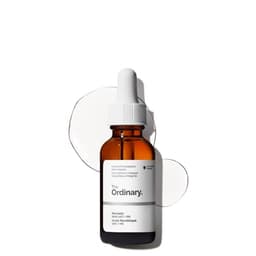
The Ordinary
Mandelic Acid 10% + HA
The mandelic side, same brand and same price, so the comparison is as close to controlled as a shelf allows. A disclosed 10% at a published pH band of 3.5-4.5 — note that band runs higher than the lactic serum's, which is the asymmetry this page is about.
See it ranked in fullPrice as of October 31, 2026. #ad How we’re funded
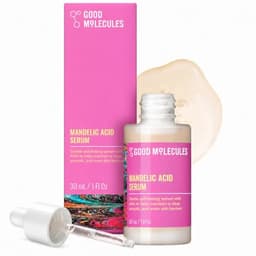
Good Molecules
Mandelic Acid Serum
The mandelic pick for genuinely reactive skin, and the most transparently labeled acid on this site: 10% mandelic, 1% phytic and 1% gluconolactone at a published pH of 4.0. That pH is why it is the mildest option here — and why it is the slowest.
See it ranked in fullPrice as of October 31, 2026. #ad How we’re funded
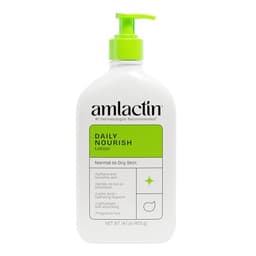
AmLactin
Daily Nourish Body Lotion 12% Lactic Acid
The reason the lactic side wins below the neck: a 12% in a 14.1 oz bottle, which is the only format that treats whole limbs. Read the percentage carefully though — it is ammonium lactate, the neutralized salt, not free acid.
See it ranked in fullFrequently asked questions
Which is gentler, lactic acid or mandelic acid?
Mandelic acid, on molecule size — it is the largest of the common alpha hydroxy acids, so it moves into skin more slowly and gives less of a sting at the same percentage. But the products complicate the answer. Every mandelic product we rank is formulated at a higher pH than every lactic one, and an AHA only exfoliates in free-acid form, so the mandelic bottles are milder than their percentages suggest and milder still than the molecule argument alone implies. If you want genuinely minimal, a mandelic at pH 4.0 is the mildest thing on either page.
Which is better for dry skin?
Lactic acid, and this is the clearest call on the page. Lactic acid is a humectant as well as an exfoliant, so it draws water into the surface while it loosens dead cells — the one AHA with a genuine hydrating reputation rather than a marketed one. Mandelic acid has no equivalent property. If your skin is dry or dehydrated and you want an acid, start with lactic.
Which is better for acne and breakouts?
Mandelic acid, with a caveat. It is the AHA most often suggested for breakout-prone and sensitive skin, and it is a reasonable choice when stronger actives are not tolerated. The caveat is that neither of these is where the strong recommendations for acne sit — benzoyl peroxide and topical retinoids are, and for blackheads specifically salicylic acid is the better-matched active because it is oil-soluble and works inside the follicle. An AHA works on the surface.
Which is better for hyperpigmentation and dark spots?
Both help with the surface component by speeding up the turnover of pigmented cells, and mandelic acid is the one more often recommended for deeper skin tones because gentler exfoliation carries less risk of provoking more pigment. Neither is the strongest tool. Azelaic acid has drug-level evidence behind the molecule for pigment, and daily sunscreen does more than either acid — the visible-light part of that is covered in our dark-spots sunscreen guide.
Can I use lactic acid and mandelic acid together?
Not on the same night, and there is no reason to. They do the same job by the same mechanism, so stacking them doubles the irritation without adding anything, and one commercial product already blends them — Paula's Choice puts 6% mandelic with 2% lactic in a single bottle, which is the sensible way to have both. Alternate them if you own both, or just use the one that matches your skin.
Which is stronger, a 10% lactic or a 10% mandelic?
The 10% lactic, on two counts. Lactic acid's smaller molecule penetrates faster, and the lactic products are formulated at a lower pH than the mandelic ones, so a larger share of the acid is in the active free-acid form. Two bottles both reading 10% are not the same dose of exfoliation, and the pH on the label is what tells you so — when the brand publishes it.
Is mandelic acid or lactic acid better for a peel?
Neither, at the strengths this page covers. The published AHA reviews describe three practical tiers: consumer leave-on use at roughly 10% or less above pH 3.5, trained-professional peels near pH 3 at up to 30%, and drug territory below that. A home peel kit is a different decision from the leave-on serums here, and the gap between the tiers is wide enough that we do not rank peels at all.
Sources
- Evaluating the Efficacy and Safety of Alpha-Hydroxy Acids in Dermatological Practice: A Comprehensive Clinical and Legal Review (PMC) — Almeman, Clinical, Cosmetic and Investigational Dermatology 2024 — a narrative review that sets the consumer AHA limits side by side: the 2005 US FDA guidance of no more than 10% AHA at pH 3.5 or higher for over-the-counter use (with SPF formulated in or a label instruction to use one), against the EU SCCS's far more conservative 2000 recommendation of glycolic acid up to 4% at pH of at least 3.8, and Australia's exemption at 20% or less at pH 3.5 or higher (glycolic acid having been listed there as a Priority Existing Chemical after repeated skin-irritation reports). It describes three regulatory tiers — up to 10% for daily home use above pH 3.5, under 30% for trained professionals near pH 3, drug territory above that below pH 3 — notes glycolic acid's small molecular size as the reason it penetrates fastest of the AHAs and mandelic acid's larger molecule as the reason it stings less, and states plainly that "the optimal concentrations for therapeutic efficacy with minimal side effects are yet to be precisely defined." Every efficacy trial it reviews for glycolic acid is a professional peel at 20% to 70%, not a leave-on cosmetic strength (accessed October 3, 2026)
- The Ordinary — Lactic Acid 10% + HA (official product page) — The brand's own listing, headed "Lactic Acid 10% + HA: High-Strength Exfoliator for Dry Skin" and summarized as "A high-strength exfoliator that works to reveal smoother skin." The full fifteen-ingredient INCI list has the acid SECOND, behind only water: Aqua (Water), Lactic Acid, Glycerin, Pentylene Glycol, Propanediol, Sodium Hydroxide, Sodium Hyaluronate Crosspolymer, Tasmannia Lanceolata Fruit/Leaf Extract, Acacia Senegal Gum, Xanthan Gum, Isoceteth-20, Trisodium Ethylenediamine Disuccinate, Ethylhexylglycerin, 1,2-Hexanediol, Caprylyl Glycol. Stated pH 3.60-3.80, with the brand's own formulation rationale spelled out on the page: "The pH of this formula is approximately 3.8. Lactic Acid has a pKa of 3.8 and pKa is the most important aspect to consider in formulating with acids. pKa implies acid availability. When pKa is close to pH, there is an optimal balance between salt and acidity, optimizing the delivery of the acid form to ensure it provides an effective exfoliation that can be used daily." Tasmanian pepperberry extract is described as "a known anti-irritant" and the serum as "ideal for dry skin". One 30 mL size. Highlights: water-free No, alcohol-free Yes, oil-free Yes, silicone-free Yes, vegan, gluten-free and cruelty-free Yes — there is NO fragrance-free claim, though no fragrance appears in the list. Directions: "Apply once daily, ideally in the evening," with "The formula can be diluted with other products to reduce strength until skin develops tolerance" and "Do not use on sensitive, peeling, or compromised skin." It carries the FDA-recommended AHA Sunburn Alert, and a ten-item conflict list (copper peptides, direct vitamin C, EUK, niacinamide powder, peptides, retinoids, direct acids, Saccharomyces Ferment 30% Milky Toner, GF 15% Solution, Multi-Active Delivery Essence). A 5% version of the same formula is sold alongside it (accessed October 11, 2026)
- The Ordinary — Lactic Acid 5% + HA (official product page) — The brand's own listing for the LOWER-strength half of the pair, fetched on this date. Stated pH 3.60-3.80 — the same band the brand publishes for the 10%, which is the single most useful fact about this product: moving from 10% to 5% is a DOSE change at an unchanged pH, not a move to a milder kind of formula. The brand's formulation note on the pair explains why the band is what it is: "Lactic Acid has a pKa of 3.8 and pKa is the most important aspect to consider in formulating with acids... When pKa is close to pH, there is an optimal balance between salt and acidity." Lactic acid sits SECOND in the ingredient list behind only water, with glycerin, sodium hyaluronate crosspolymer and Tasmannia Lanceolata (Tasmanian pepperberry) fruit/leaf extract — which the brand describes as a known anti-irritant — alongside it. One 30 mL size, evening application, dilutable to build tolerance, carrying the same FDA-recommended AHA Sunburn Alert and the same ten-item conflict list as the 10%. As with the 10%, there is NO fragrance-free claim badge although no fragrance appears in the list (accessed October 24, 2026)
- The Ordinary — Mandelic Acid 10% + HA (official product page) — The brand's own listing, headed "Mandelic Acid 10% + HA: Improve Skin Clarity and Texture" and summarized as "A gentle exfoliator, in serum form." The full thirteen-ingredient INCI list is notable for what comes FIRST — a glycol, not water: Propanediol, Aqua (Water), Mandelic Acid, Glycerin, Dimethyl Isosorbide, Sodium Hyaluronate Crosspolymer, Tasmannia Lanceolata Fruit/Leaf Extract, Pentylene Glycol, Polysorbate 20, Sodium Hydroxide, Ethylhexylglycerin, 1,2-Hexanediol, Caprylyl Glycol. Stated pH 3.5-4.5 — a one-point band, and at its top end well above the lactic serum's 3.60-3.80. The brand's rationale: the acid "helps improve the look of skin clarity by balancing uneven skin tone, and correcting the look and feel of skin texture in a gentle, yet effective manner. This is because it has a larger molecular weight than other alpha hydroxy acids, which results in a slower, more balanced distribution." One 30 mL size. Highlights: water-free No, alcohol-free Yes, oil-free Yes, silicone-free Yes, vegan, gluten-free and cruelty-free Yes — again NO fragrance-free claim although no fragrance is listed. Directions are identical to the lactic serum: "Apply once daily, ideally in the evening," dilutable to build tolerance, and "Do not use on sensitive, peeling, or compromised skin." It carries the same FDA-recommended AHA Sunburn Alert and the same ten-item conflict list. No lower-strength version is sold (accessed October 11, 2026)
- Good Molecules — Mandelic Acid Serum (official product page) — The brand's product page, which exists and resolves but renders its specification table client-side, so the figures below are recorded from the brand's own published listing text as returned by a live search of goodmolecules.com on this date rather than from markup we parsed. They are corroborated by an independent ingredient database carrying the same pH. Published actives: 10% mandelic acid, 1% phytic acid and 1% gluconolactone — a PHA — and a published pH of 4.0, which is the figure that matters most here, because mandelic acid's pKa is roughly 3.4 and a pH of 4.0 therefore leaves a large share of the acid in salt rather than free-acid form. The brand publishes percentages for almost the whole formula, not just the actives: water at 67.0%, mandelic acid at 10.0%, dimethyl isosorbide at 9.0%, propanediol at about 6.4% and potassium hydroxide — the alkali raising that pH — at 2.7%. Stated fragrance-free, 30 mL, and positioned by the brand for sensitive skin. We are aware of no other acid in this registry whose maker publishes its ingredient percentages to one decimal place (accessed October 24, 2026)
- U.S. FDA — Alpha Hydroxy Acids — FDA on AHAs and increased sun sensitivity (accessed July 17, 2026)
- American Academy of Dermatology — Dermatologists' top tips for relieving dry skin — AAD on moisturizing damp skin and choosing a cream for dry skin (accessed July 17, 2026)
Keep reading
Best lactic acid
The lactic side ranked in full — including the body lotions whose 12% and 15% are a neutralized salt rather than free acid.
See the picksBest mandelic acid
The mandelic side ranked in full, decided on published pH rather than published percentage.
See the picksLactic acid vs glycolic acid
The same comparison against the fastest AHA, for anyone who found lactic acid too slow rather than too strong.
See the comparisonAzelaic acid vs mandelic acid
Two gentle-reputation actives from different chemical families — which matches redness, marks or texture.
See the comparisonAHA vs BHA vs PHA
The level above this one: which acid CLASS suits your skin before you pick a molecule inside it.
Read the guide