Retinol vs Glycolic Acid: Which One Do You Need?
One works on the surface you can see; the other works on the layer you cannot. Glycolic acid changes how your skin looks in a fortnight. Retinol has the evidence for changing what sun damage did over months. The honest answer for most people is both, on different nights — here is how to decide which comes first.
How this is funded: we earn a commission if you buy through our links, at no extra cost to you. It never changes which product we recommend, and we’ll tell you when we’d skip one. Full disclosure.
The verdict: if you want visible change in weeks, start with a glycolic acid— The Ordinary’s labeled 7% is the cheapest honest way in. If your reason for reading this is sun damage, lines or the long game, start with retinol, and buy one that prints its percentage. Both picks are below with live prices.
And the answer almost nobody wants to hear: for most people the end state is both, on alternating nights. These are not rivals. They are a surface tool and a signalling tool.
What each one actually does
Glycolic acidis an alpha hydroxy acid — the smallest of them, which is why it penetrates fastest of the AHAs. Its job is to loosen the bonds holding dead surface cells together so they shed sooner than they otherwise would. The reference texts on chemical exfoliation describe it as working at and just below the surface, depending on concentration, pH and how long it stays on. The effect is physical and the feedback is fast: smoother texture, more reflective skin, a more even surface tone.
Retinolis a vitamin A derivative, and it is not an exfoliant at all — the flaking it causes is a side effect, not the mechanism. It converts in the skin and acts on cell behaviour, and the reviewed literature on topical retinol and skin aging credits it with effects on collagen and the appearance of photoaged skin. The AAD’s own explainer draws the line between this and the prescription retinoids, which are more potent versions of the same idea.
So one of them removes what is already dead, and the other changes what your skin does next. That is the whole distinction, and every practical difference below falls out of it.
Side by side
| Retinol | Glycolic acid | |
|---|---|---|
| What it is | Vitamin A derivative — a cell-signalling active | Alpha hydroxy acid — a chemical exfoliant |
| Where it works | Deeper, by changing cell behaviour over time | At and just below the surface, immediately |
| Time to visible change | Weeks to months; trials run 12 weeks and up | Days to weeks, on texture and glow |
| Strongest evidence for | The structural signs of photoaging | Surface texture, dullness, pigmented surface cells |
| Published consumer-use band | None that we are aware of | Yes — the FDA’s AHA consumer guidance names 10% or less at pH 3.5 or above, with sun protection |
| Strength published in our registry | Two of six serums (0.5%, 1%); every cream says Not published | Both picks here: 7% and 8% |
| Adjustment phase | Yes — dryness and flaking for two to six weeks | Usually mild; stinging on application is the common complaint |
| Sun caveat | Night use, sunscreen by day | Formal: the FDA addresses AHA sun sensitivity directly |
| Pregnancy and nursing | Ask a doctor — retinoids are the class people are told to avoid | Ask a doctor, but AHAs are not in the same conversation |
The asymmetry worth noticing
One row in that table is more interesting than the rest. For alpha hydroxy acids there is a quantifiedconsumer-use reference: the FDA’s AHA information names a concentration of 10% or less at a pH of 3.5 or above, used with sun protection, and the reviews of AHA clinical and regulatory history discuss that band at length. Nothing comparable exists for over-the-counter retinol. There is no published figure telling a consumer what strength of retinol is a sensible ceiling.
That has a practical consequence. With a glycolic acid, the numbers on the bottle can be checked against something — our 7% and 8% picks both sit inside the FDA’s band, and both publish the figure. With retinol, the number is whatever the brand chooses to tell you, and most brands tell you nothing: in our own registry only two retinol serums print a percentage, and every retinol cream records “Not published”.
So if you value knowing what you applied, the acid category is the one currently better behaved — and within retinol, the serums that print a figure are worth paying slightly more for than the ones that do not.
How to run both without wrecking your barrier
Alternate nights, and do it on purpose rather than by mood. A workable schedule for someone already tolerant of both:
Monday and Thursday: retinol, then moisturizer. Saturday: glycolic acid, then moisturizer. Every other night: cleanser and moisturizer only. If you are new to either, halve that and build up over a couple of months. The full set of rules, including which pairs genuinely conflict, is in how to layer actives.
Two mistakes do most of the damage. The first is using both the same night in the belief that more actives means faster results — it means stinging, a compromised barrier and no idea which product to blame. The second is mistaking the resulting irritation for “purging” and pushing through it; signs of over-exfoliation lists the tells.
Which to buy, by complaint
Dull, rough, flaky-looking skin. Glycolic acid, two nights a week. This is the complaint it was made for and the one where you will see a difference inside a month.
Fine lines, crepey texture, years of sun. Retinol, and patience. Twelve weeks is the unit of measurement here, not ten days.
Flat brown marks left by old spots.Either will help, but our registry’s better answer is azelaic acid — it works on pigment production directly and is kinder than both of these. Azelaic acid for hyperpigmentation makes the case.
Blackheads and congestion. Neither. Glycolic is water-soluble and works on the surface; the pore lining is an oily environment, which is why salicylic acid is the tool. Glycolic acid vs salicylic acid covers that fork.
Rough, bumpy arms and legs.Glycolic, at volume — and from a body product, not a 30 mL face serum. Best chemical exfoliant for body is the right page.
Sensitive or rosacea-prone skin.Possibly neither, at least to begin with. Both are irritants in the technical sense, and there are gentler routes to the same goals — mandelic acid instead of glycolic, and a low, buffered retinoid rather than a 1% serum.
Bottom line
Glycolic acid buys you a visible surface improvement quickly and comes with a published use band you can check a product against. Retinol buys you the best over-the-counter evidence for the structural signs of sun damage and asks for months of tolerance in return. Pick the one that matches your complaint, run it alone until your skin is settled, then add the other on separate nights. Wear sunscreen either way — with these two, that is not a throwaway line.
General guidance, not medical advice. Actives & Acids is written by a skincare enthusiast, not a dermatologist. For a diagnosis, a reaction, or a prescription active like tretinoin, see a qualified professional. Introduce any new active slowly and patch-test first.
What we'd actually buy
Chosen from the same registry as our roundups, on published formulation facts rather than hands-on testing — here is exactly what we do instead.
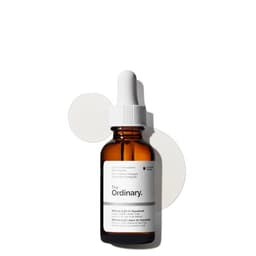
The Ordinary
Retinol 0.5% in Squalane
The retinoid to start with if you want to know your dose. A printed 0.5% in squalane at a price where easing in slowly costs nothing — and the strength on the label is what lets you climb deliberately rather than guess.
See it ranked in fullPrice as of October 19, 2026. #ad How we’re funded
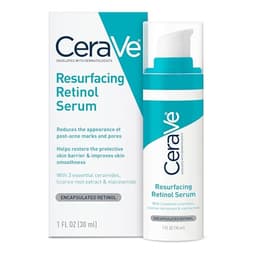
CeraVe
Resurfacing Retinol Serum
The gentler retinoid, and the one to pick if your complaint is post-acne marks rather than lines. Encapsulated retinol with three ceramides and niacinamide; the trade is that CeraVe never publishes the percentage.
See it ranked in full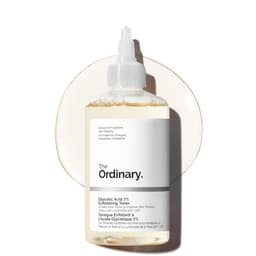
The Ordinary
Glycolic Acid 7% Exfoliating Toner
The cheapest honest way to try a glycolic acid: a labeled 7% in 240 mL. Called a toner, but it is a genuine exfoliant — two or three nights a week to start, not daily, and never the same night as the retinol.
See it ranked in fullPrice as of October 19, 2026. #ad How we’re funded
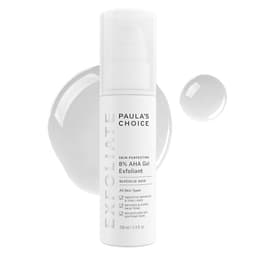
Paula's Choice
Skin Perfecting 8% AHA Gel Exfoliant
The better-built glycolic if you would rather pay for the formula than the volume: a stated 8% at a working pH in a fragrance-free leave-on gel, with green tea. The pick for dry or sun-damaged skin that a watery toner leaves tight.
See it ranked in fullPrice as of October 19, 2026. #ad How we’re funded
Frequently asked questions
Which is better, retinol or glycolic acid?
They do different jobs, so the better one depends on your complaint. Glycolic acid is an exfoliant that works on the surface — it is the faster route to smoothness, glow and a more even surface tone, usually within two to four weeks. Retinol works through cell signalling in the deeper layer and carries the stronger clinical evidence for the structural signs of photoaging, over months rather than weeks. If you want to look brighter by next month, start with glycolic. If you are treating sun damage over a year, start with retinol.
Can you use retinol and glycolic acid together?
On different nights, yes, and that is how most people should do it. On the same night, usually not — you are stacking two sources of irritation onto a barrier that has to recover from both, and if your skin reacts you have no way of telling which product caused it. Alternate: retinol two or three nights a week, glycolic on one or two of the others, with plain moisturizer nights in between.
Which works faster?
Glycolic acid, clearly. Exfoliation produces a visible change in surface texture and reflectivity quickly, which is why acid toners feel like they are working and retinol does not. Retinol's advantage is at the other end of the timeline: the published work on topical retinol and photoaging is measured over twelve weeks and beyond. Fast and strong are different axes here.
Which is better for wrinkles?
Retinol, on the evidence. The clinical literature on topical retinoids in photoaging is the best-supported over-the-counter case for improving the appearance of fine lines and the texture changes that come with sun damage. Glycolic acid smooths the surface and that genuinely improves how fine lines read in the mirror, but it is not the same claim and it does not persist in the same way.
Which is better for dark spots and post-acne marks?
Both help and they help differently, which is why people get confused. Glycolic acid speeds the removal of pigmented surface cells, so it works on the visible layer. Retinol speeds cell turnover and, over months, the reviewed literature supports its effect on the appearance of pigmented spots. For flat brown post-acne marks our own registry has a third option worth considering first — azelaic acid, which acts directly on pigment production and is better tolerated than either.
Which is better for acne?
Neither is the first-line answer. For acne proper, a topical retinoid plus benzoyl peroxide is where the guideline-based advice points, and salicylic acid is the acid built for pores because it is oil-soluble. Glycolic acid is water-soluble and works on the surface, so it helps with texture and marks rather than with the follicle. If acne is your main complaint, start at our acne hub rather than with either product on this page.
Does either make you more sun-sensitive?
Both come with a sun caveat, and one of them is formalised. The FDA's consumer information on alpha hydroxy acids specifically addresses increased sun sensitivity and advises sun protection as part of use. Retinoids are also conventionally used at night with sunscreen by day. Either way the answer is the same: daily broad-spectrum sunscreen is not optional alongside either of these.
Can I just use a glycolic acid instead of retinol?
If what you want is smoother, brighter-looking skin, yes — and plenty of people are perfectly well served by an acid, a moisturizer and sunscreen with no retinoid at all. What you are giving up is the one over-the-counter active with the strongest published case for the structural signs of sun damage. That is a reasonable trade if retinol irritates you; it is not a free swap.
Which should a beginner start with?
Start with whichever matches your complaint, and start with one. If you have never used an active, a glycolic acid two nights a week is the easier introduction because the adjustment phase is shorter and the feedback is faster. If your reason for being here is sun damage or lines, start with retinol at twice a week and accept that the first month looks worse before it looks better.
Sources
- American Academy of Dermatology — Retinoid or retinol? — AAD on the difference between prescription retinoids and OTC retinol (accessed July 17, 2026)
- Human Skin Aging and the Anti-Aging Properties of Retinol (PubMed) — Review of topical retinol's effect on collagen and photoaging (accessed July 17, 2026)
- The use of retinoids in the treatment of photoaging (PubMed) — Clinical-trial evidence for topical retinoids in photoaging (accessed July 17, 2026)
- U.S. FDA — Alpha Hydroxy Acids — FDA on AHAs and increased sun sensitivity (accessed July 17, 2026)
- Chemical Peels for Skin Resurfacing — StatPearls (NCBI Bookshelf) — Reference overview of AHA/BHA exfoliation mechanisms (accessed July 17, 2026)
- Evaluating the Efficacy and Safety of Alpha-Hydroxy Acids in Dermatological Practice: A Comprehensive Clinical and Legal Review (PMC) — Almeman, Clinical, Cosmetic and Investigational Dermatology 2024 — a narrative review that sets the consumer AHA limits side by side: the 2005 US FDA guidance of no more than 10% AHA at pH 3.5 or higher for over-the-counter use (with SPF formulated in or a label instruction to use one), against the EU SCCS's far more conservative 2000 recommendation of glycolic acid up to 4% at pH of at least 3.8, and Australia's exemption at 20% or less at pH 3.5 or higher (glycolic acid having been listed there as a Priority Existing Chemical after repeated skin-irritation reports). It describes three regulatory tiers — up to 10% for daily home use above pH 3.5, under 30% for trained professionals near pH 3, drug territory above that below pH 3 — notes glycolic acid's small molecular size as the reason it penetrates fastest of the AHAs and mandelic acid's larger molecule as the reason it stings less, and states plainly that "the optimal concentrations for therapeutic efficacy with minimal side effects are yet to be precisely defined." Every efficacy trial it reviews for glycolic acid is a professional peel at 20% to 70%, not a leave-on cosmetic strength (accessed October 3, 2026)
Keep reading
Best retinol serums
Every retinol we would buy, ranked on whether the strength is published.
See the picksBest glycolic acid
The glycolic side ranked in full, with the percentage and pH for each.
See the picksHow to layer actives
The conflict matrix, including why these two want separate nights.
Read the guideGlycolic acid vs salicylic acid
If your real complaint is blackheads and congestion, this is the comparison you want.
Read the comparisonRetinol vs tretinoin
The other direction: what you gain by taking the retinoid question to a doctor.
Read the comparisonSigns of over-exfoliation
What running both on the same night looks like, and how to climb back out.
Read the guide