Hyaluronic Acid vs Sodium Hyaluronate
They are the same molecule in two forms, and the label difference tells you far less than the molecular weight does. What each term means on an INCI list, and which serums actually disclose what you are buying.
How this is funded: we earn a commission if you buy through our links, at no extra cost to you. It never changes which product we recommend, and we’ll tell you when we’d skip one. Full disclosure.
Short answer: sodium hyaluronate is the sodium salt of hyaluronic acid — the same molecule, in the more stable, water-soluble form that most cosmetic formulas actually use. Seeing “sodium hyaluronate” on an ingredient list instead of “hyaluronic acid” is not a downgrade, a dilution or a cheat. It is the normal way the raw material is supplied, and a brand that writes “hyaluronic acid” on the front of the bottle and sodium hyaluronate in the INCI list is being accurate in both places.
What the two names actually mean
Hyaluronic acid — hyaluronan — is a long-chain sugar molecule that occurs naturally in skin, where it binds water and gives tissue its plumpness. The review literature on hyaluronan in skin aging describes both that role and the way its content in skin changes over the decades, which is the background for every serum sold on the subject.
In its free-acid form the molecule is awkward to formulate with: less stable, less soluble. Convert it to its sodium salt and you get sodium hyaluronate, which dissolves readily in water and keeps better in a bottle. That is the entire difference. Once it is on your skin and in contact with water it behaves as the same humectant either way.
The thing that does matter: molecular weight
If you want a real criterion to shop on, it is not the name — it is the size of the chains, and sometimes the salt form is supplied at a lower molecular weight than raw hyaluronic acid, which is where the folklore about one “penetrating deeper” comes from. That is a property of the particular raw material a formulator bought, not of the word on the label.
Broadly: high-molecular-weight chains are too large to go far, so they sit at the surface, hold water there and give the immediate smooth, plumped look. Low-molecular-weight fragments move further into the outer layer, where the hydration lasts longer and feels less superficial. Neither is better; a formula using several weights is doing both jobs, which is why “multi-weight” appears on so much marketing copy.
The problem is disclosure. Almost no brand publishes the weights it used, so “multi-molecular-weight hyaluronic acid” is usually an unverifiable claim. That is why one serum on our shelf stands out: the L’Oréal Revitalift serum publishes a 1.5% total split as 1% low-molecular-weight and 0.5% high-molecular-weight, with sodium hyaluronate third on its INCI list behind water and glycerin. We do not rank it top of our HA roundup for that disclosure alone — it carries no barrier lipids, so it needs a moisturizer over it — but on this specific question it is the only product giving you the numbers.
How to read an INCI list for this
Three practical habits. First, look for where the hyaluronate sits in the list: on an ingredient list ordered by descending concentration, sodium hyaluronate near the top means more of it than sodium hyaluronate below the preservatives. Second, look for hydrolyzed hyaluronic acid and sodium acetylated hyaluronate, which are further processed versions — the first broken into smaller fragments, the second modified to be more substantive on skin. Third, look for what else is in the bottle, because that is what decides how long the hydration survives.
On that last point the published work on moisturizers is useful: a moisturizer works through humectants that attract water, emollients that smooth, and occlusives that slow water leaving. A hyaluronic acid serum is pure humectant. Left alone on the skin it is the least durable of the three mechanisms, which is the mechanical reason a plain HA serum underperforms unless something goes over the top of it. A serum that already carries ceramides and B5 is doing two of the three jobs in one step.
Why your HA serum sometimes makes skin feel worse
This is the most common real-world complaint about hyaluronic acid, and the explanation is not complicated. A humectant needs water to grab. In dry indoor air, applied to a dry face with nothing over it, it will take some of that water from the upper layers of your own skin — which is why a hydrating serum can leave skin tighter than it found it.
The fix is a sequence rather than a different product: apply it to damp skin, within a minute or two of washing, then moisturize over it. The AAD gives the same instruction for dry skin generally, because the cream then traps the water already on the surface. The step-by-step version is in how to use hyaluronic acid.
What to buy, given all that
If you want the disclosure, buy the serum that publishes its weights. If you want the cheapest competent multi-weight option, the 2% from The Ordinary is it — applied damp and sealed. If you would rather not think about any of this, buy a hyaluronic acid serum that already contains ceramides and vitamin B5, so the holding-it-in part is handled in the same bottle. All three are below, and the fuller ranking, including the cushioned premium option and the minimal reactive-skin booster, is in best hyaluronic acid serums. What none of them is, on the published evidence, is a treatment: topical hyaluronic acid is reviewed for hydration and the appearance of fine lines, not for rebuilding what is under them.
General guidance, not medical advice. Actives & Acids is written by a skincare enthusiast, not a dermatologist. For a diagnosis, a reaction, or a prescription active like tretinoin, see a qualified professional. Introduce any new active slowly and patch-test first.
What we'd actually buy
Chosen from the same registry as our roundups, on published formulation facts rather than hands-on testing — here is exactly what we do instead.
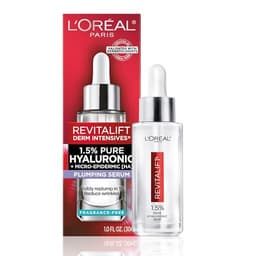
L'Oreal Paris
Revitalift 1.5% Pure Hyaluronic Acid Serum
The only serum on our shelf that publishes the split: 1.5% total, stated as 1% low-molecular-weight and 0.5% high. Its INCI list leads with water, glycerin and sodium hyaluronate — the salt form — which is exactly the disclosure this whole question is about. No barrier lipids in it, so it needs a moisturizer on top.
See it ranked in full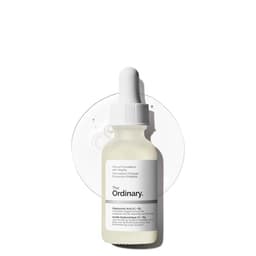
The Ordinary
Hyaluronic Acid 2% + B5
A labeled 2% across low, medium and high molecular weights with B5 — the cheap way to get the multi-weight approach rather than a single size. Apply it to damp skin and seal it: in dry air a humectant with nothing over it can pull water the wrong way.
See the HA serums rankedPrice as of October 5, 2026. #ad How we’re funded
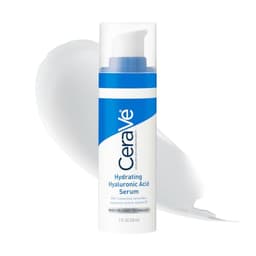
CeraVe
Hyaluronic Acid Serum (B5 + Ceramides)
The better buy if you would rather not think about molecular weights at all: hyaluronic acid with three ceramides and vitamin B5, so the thing that holds the water in is already in the bottle. Fragrance-free, and the most well-rounded of the three.
See it ranked in fullFrequently asked questions
Is sodium hyaluronate the same as hyaluronic acid?
Effectively, yes — sodium hyaluronate is the sodium salt of hyaluronic acid. It is the form most cosmetic formulas use because it is more stable and dissolves readily in water. If a label says sodium hyaluronate rather than hyaluronic acid, that is not a downgrade or a dilution; it is the normal way the ingredient is supplied.
Which one is better for skin?
Neither name tells you. What matters is molecular weight and how much is in there: large molecules sit on the surface and hold water, small ones move further into the outer layer. A serum using several weights covers both jobs. Almost no brand discloses the weights, which is why the one product on our shelf that publishes its 1% low-weight and 0.5% high-weight split is genuinely unusual.
Does sodium hyaluronate penetrate deeper?
Sometimes, because the salt form is often supplied at a lower molecular weight than raw hyaluronic acid — but that is a property of the particular raw material, not of the name on the label. Deeper is also not automatically better: surface hydration is most of what a topical humectant delivers, and the review literature on topical hyaluronic acid is about hydration and the appearance of fine lines rather than about rebuilding the dermis.
Why does my hyaluronic acid serum make my skin feel drier?
Because a humectant needs water to hold on to. In dry air, with nothing applied over it, it can draw moisture from the upper layers of your skin instead of from the environment. The fix is mechanical: apply it to damp skin, then put a moisturizer over the top within a minute or two. The AAD gives the same advice for dry skin generally — moisturize while skin is still damp.
Do I need hyaluronic acid at all?
It is a comfort and plumpness step, not a treatment. Your skin already contains hyaluronan, and the review literature describes its content changing with age. A topical layer temporarily holds water at the surface, which looks and feels good and makes stronger actives more tolerable. If you only buy three things, a moisturizer, a sunscreen and a retinoid matter more.
Is 2% hyaluronic acid better than 1.5%?
Not meaningfully, and a higher percentage of a humectant is not a straightforward win — past a point it just gets tackier. The percentages are also not comparable between brands unless both disclose the molecular weights, which almost none do. Buy on the formula around it: ceramides and B5 do more for how long the hydration lasts than another half a percent of the humectant.
Sources
- Hyaluronic acid: A key molecule in skin aging (PubMed) — Papakonstantinou et al., Dermato-Endocrinology 2012 — review of hyaluronan's role in skin hydration and how its content changes with age (accessed September 12, 2026)
- Benefits of topical hyaluronic acid for skin quality and signs of skin aging (PMC) — Literature review plus clinical evidence on what topically applied hyaluronic acid does for hydration and the appearance of fine lines (accessed September 12, 2026)
- Moisturizers — StatPearls (NCBI Bookshelf) — Reference on humectants (hyaluronic acid), occlusives and emollients (accessed July 17, 2026)
- American Academy of Dermatology — Dermatologists' top tips for relieving dry skin — AAD on moisturizing damp skin and choosing a cream for dry skin (accessed July 17, 2026)
Keep reading
Best hyaluronic acid serums
Five serums ranked on stated dose, supporting ingredients and texture.
See the picksHyaluronic acid benefits
What a topical humectant is genuinely doing, and what it is not.
Read the guideHow to use hyaluronic acid
The damp-skin rule and the sealing step that decide whether it works at all.
Read the guideHyaluronic acid vs niacinamide
Hydrator or barrier active — whether a routine needs both.
Compare themBest hyaluronic acid serum for mature skin
The same shelf weighted for skin whose own hyaluronan content has declined.
See the picksBest ceramide moisturizers
The creams that hold the water a humectant brings in — the half people skip.
See the picks