Actives & Acids

Best Vitamin C Serums for Sensitive Skin

Gentler vitamin C for reactive skin — buffered L-ascorbic and low-irritation derivatives that brighten without the sting.

By Stephen V.Last updated How we pick

Vitamin C is one of the best-studied brightening antioxidants, but the form that gets the most attention — high-strength L-ascorbic acid — is also the form most likely to sting reactive skin. That doesn’t mean sensitive skin has to skip vitamin C. It means being a little choosier about the formula: a lower, well-buffered percentage of L-ascorbic, or a gentler vitamin C derivative that trades a bit of raw potency for a much easier ride. Either route can even out tone and add antioxidant protection without leaving your face pink and tight.

The picks below are ordered for reactive, easily-irritated skin. We favored fragrance-free, barrier-friendly formulas, gentler forms of vitamin C, and brands with a track record in sensitive skin, and we weighted tolerance as heavily as brightening. Whichever you choose, the approach matters as much as the product: start slow, patch test, and remember that a lower percentage used consistently beats a high one your skin can’t stand. If you have reactive skin, this is where to begin with vitamin C.

How this is funded:we earn a commission if you buy through our links, at no extra cost to you. It never changes which product we recommend, and we’ll tell you when we’d skip one. Full disclosure.

Quick picks

Ranked on formulation, stated concentration and buyer fit. Select a row to jump to the full write-up. We have not tested these products — here is exactly what we do instead.

#ProductBest forPrice
1
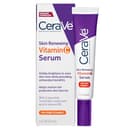
CeraVe Vitamin C Serum with 10% Pure Vitamin C

CeraVe Vitamin C Serum with 10% Pure Vitamin C

A labeled 10% pure vitamin C rounded out with ceramides and hyaluronic acid — the easiest on-ramp to L-ascorbic acid, since the barrier support rides along in the same bottle. No fragrance.

Best overall
$23.86 · View on Amazon

$28.9918% off

Price as of August 30, 2026. #ad How we’re funded

2
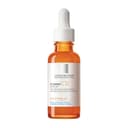
La Roche-Posay Pure Vitamin C10 Serum

La Roche-Posay Pure Vitamin C10 Serum

10% pure vitamin C with a touch of salicylic acid and hyaluronic acid, adding light texture-smoothing on top of the brightening. It fits oilier, breakout-prone skin best.

Best from a sensitive-skin brand
$37.99 · View on Amazon

$44.9916% off

Price as of August 30, 2026. #ad How we’re funded

3
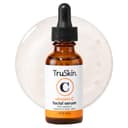
TruSkin Vitamin C Serum

TruSkin Vitamin C Serum

An Amazon top-seller founded on sodium ascorbyl phosphate — a mild vitamin C derivative rather than L-ascorbic acid. It irritates less, but it also brightens more gently and more slowly, so keep expectations grounded.

Best gentle derivative
$19.99 · View on Amazon

Price as of August 30, 2026. #ad How we’re funded

4
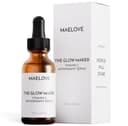
Maelove Glow Maker Vitamin C Serum

Maelove Glow Maker Vitamin C Serum

Builds on the one antioxidant trio with real research support — L-ascorbic acid alongside vitamin E and ferulic acid — for a sliver of the price of the prestige serum it mimics. Reach for it when you want the studied formulation.

Best well-buffered L-ascorbic
$39.90 · View on Amazon

Price as of August 30, 2026. #ad How we’re funded

The picks in full

#1Best overall

CeraVe Vitamin C Serum with 10% Pure Vitamin C

A labeled 10% pure vitamin C rounded out with ceramides and hyaluronic acid — the easiest on-ramp to L-ascorbic acid, since the barrier support rides along in the same bottle. No fragrance.

Strengths

  • Names a 10% pure vitamin C dose — a disclosed, level-headed place to start
  • Ceramides and hyaluronic acid counter the dryness L-ascorbic acid can bring on
  • Fragrance-free and easy to find on shelves

Trade-offs

  • The opaque tube aids stability, yet it also hides any oxidation from view
  • 10% does the job but isn't the strongest option out there
Key activeL-ascorbic acid (vitamin C)
Stated concentration10%
FormatLight lotion-serum
Fragrance-freeYes
Best forSensitive, Dry, Normal

Formulation note. 10% pure vitamin C with hyaluronic acid and three essential ceramides. Those ceramides are the reason it works as a gentle entry point.

Ingredients and claims read from the product listing, on July 18, 2026. “Not published” means the brand does not state that figure.

#2Best from a sensitive-skin brand

La Roche-Posay Pure Vitamin C10 Serum

10% pure vitamin C with a touch of salicylic acid and hyaluronic acid, adding light texture-smoothing on top of the brightening. It fits oilier, breakout-prone skin best.

Strengths

  • A disclosed 10% L-ascorbic acid
  • A dose of salicylic acid works on texture and congestion
  • Built for sensitive skin in spite of the active load

Trade-offs

  • That salicylic acid is wasted if a BHA is already in your routine
  • Expensive compared with the drugstore 10% alternatives
Key activeL-ascorbic acid (vitamin C)
Stated concentration10%
FormatLightweight serum
Fragrance-freeNo
Best forOily, Combination, Blemish-prone

Formulation note. 10% pure vitamin C with salicylic acid and hyaluronic acid. The BHA turns it into a two-for-one, which only helps if you aren't exfoliating somewhere else already.

Ingredients and claims read from the product listing, on July 18, 2026. “Not published” means the brand does not state that figure.

#3Best gentle derivative

TruSkin Vitamin C Serum

An Amazon top-seller founded on sodium ascorbyl phosphate — a mild vitamin C derivative rather than L-ascorbic acid. It irritates less, but it also brightens more gently and more slowly, so keep expectations grounded.

Strengths

  • Sodium ascorbyl phosphate holds up far better and stings far less than L-ascorbic acid
  • Rounds itself out with hyaluronic acid and vitamin E
  • Cheap and reviewed by the thousands

Trade-offs

  • Being a derivative, its brightening evidence lags behind L-ascorbic acid's
  • It carries botanical extracts that can trouble the most reactive complexions
Key activeSodium ascorbyl phosphate (vitamin C derivative)
Stated concentrationNot published
FormatLight lotion
Fragrance-freeNot published
Best forSensitive, Vitamin-C-intolerant

Formulation note. Runs on sodium ascorbyl phosphate instead of L-ascorbic acid. Derivatives are milder and more shelf-stable, but they have to convert in the skin and stand on less evidence — a reasonable swap for reactive skin.

Ingredients and claims read from the product listing, on July 18, 2026. “Not published” means the brand does not state that figure.

#4Best well-buffered L-ascorbic

Maelove Glow Maker Vitamin C Serum

Builds on the one antioxidant trio with real research support — L-ascorbic acid alongside vitamin E and ferulic acid — for a sliver of the price of the prestige serum it mimics. Reach for it when you want the studied formulation.

Strengths

  • L-ascorbic acid, vitamin E and ferulic acid — the antioxidant combination the studies actually looked at
  • Lightweight and free of fragrance
  • A fraction of the cost of the high-end serum it's patterned after

Trade-offs

  • L-ascorbic acid degrades with time, so buy it fresh, keep it cool and toss it once it browns
  • It may prickle at first while skin gets used to it
Key activeL-ascorbic acid (vitamin C)
Stated concentration15%
FormatLightweight fluid
Fragrance-freeYes
Best forNormal, Combination, Dull skin

Formulation note. 15% L-ascorbic acid with vitamin E and ferulic acid — the mix the dermatology literature credits with steadying vitamin C and improving sun protection. This is the version worth seeking out.

Ingredients and claims read from the product listing, on July 18, 2026. “Not published” means the brand does not state that figure.

Why high-strength L-ascorbic can sting

L-ascorbic acid is the pure, most-researched form of vitamin C, and to stay stable and absorb well it has to sit at a low, acidic pH. That acidity is exactly what reactive skin can feel as a sting, and higher concentrations — the 15% and 20% serums people reach for — tend to bite harder. On resilient skin that’s manageable; on a sensitive or compromised barrier it can tip into redness, burning, and flaking. The fix isn’t to abandon vitamin C, it’s to lower the intensity: a smaller percentage, a better-buffered formula, or a different form of vitamin C altogether.

Derivatives trade some potency for tolerance

Beyond pure L-ascorbic acid, formulators use gentler vitamin C derivatives— forms such as sodium ascorbyl phosphate and other stabilized esters — that sit at a more skin-friendly pH and tend to cause far less stinging. The trade-off is that most derivatives are considered less potent gram-for-gram than fresh L-ascorbic acid, since the skin has to convert them. For sensitive skin that’s often a trade worth making: a derivative you can actually use every day will do more for your tone than a high-strength L-ascorbic serum that leaves your face raw after two applications. Think of derivatives as the on-ramp, not a consolation prize.

Buffering and supporting ingredients help

Formula context changes how a vitamin C serum feels. A lower percentage of L-ascorbic that’s well buffered— formulated to be less aggressive — and rounded out with soothing, barrier-supporting ingredients like ceramides, hyaluronic acid, vitamin E, and niacinamide is far easier on reactive skin than a bare, high-acid serum. Fragrance-free is a sensible default when your skin flares easily, since added fragrance is a common trigger. These supporting ingredients don’t just reduce the sting; a healthier barrier tolerates actives better across the board, which is why sensitive-skin routines lean on gentle, hydrating companions rather than stacking irritants.

Start slow and patch test

With reactive skin, how you introduce vitamin C matters as much as which one you pick. Start at two to three mornings a week rather than daily, and only build up if your skin stays comfortable. Before the first full application, patch test: dab a little on an out-of-the-way spot, like the side of your neck or behind the ear, for a few days and watch for reaction. Give the serum a few minutes to settle, then follow with a bland moisturizer to buffer it further, and keep the rest of your routine simple while you find out how your skin responds. A brief, mild tingle can be normal; lingering burning, itching, or angry redness is your cue to scale back the frequency or step down to a lower strength or a derivative. Our sensitive skin overview covers how to build an active routine on a reactive barrier without overwhelming it.

A lower percentage is completely fine

It’s worth saying plainly, because the marketing pushes the opposite: you do not need the strongest vitamin C serum to get results, and for sensitive skin a high percentage is often counterproductive. A 10% (or lower) formula, or a gentle derivative, used consistently and paired with daily sunscreen, delivers the antioxidant protection and gradual tone benefits that make vitamin C worth using. The best vitamin C serum for your skin is the one you can actually wear every day without dreading it. If you want to weigh vitamin C against a famously gentle alternative, our vitamin C vs niacinamide comparison lays out where each one shines.
Frequently asked questions

Can sensitive skin use vitamin C at all?

Yes — it just pays to choose the right form and go slowly. High-strength L-ascorbic acid at a low pH is the version most likely to sting reactive skin, but a lower, well-buffered percentage or a gentler vitamin C derivative can brighten and protect without the irritation. Fragrance-free formulas with soothing ingredients like ceramides and hyaluronic acid tend to be the easiest to tolerate.

Are vitamin C derivatives as effective as L-ascorbic acid?

Most derivatives are considered somewhat less potent than fresh L-ascorbic acid gram-for-gram, because your skin has to convert them. But they sit at a friendlier pH and sting far less, which for sensitive skin is often the better trade — a gentler derivative you can use every day will do more for your tone than a strong L-ascorbic serum you can only tolerate occasionally.

What strength of vitamin C is best for sensitive skin?

Lower is usually better for reactive skin. A 10 percent or lower L-ascorbic formula, or a gentle derivative, gives you the antioxidant and brightening benefits with much less risk of stinging than the 15 to 20 percent serums. You do not need the highest percentage to see results — consistency and daily sunscreen matter far more than chasing the strongest number on the label.

How do I start vitamin C without irritating my skin?

Patch test first on an out-of-the-way spot like the side of your neck for a few days. Then begin at two to three mornings a week rather than daily, apply to dry skin, and follow with a bland moisturizer to buffer it. Build up only if your skin stays comfortable. A brief mild tingle can be normal, but lingering burning or redness means you should scale back the frequency or step down to a gentler formula.

Sources

Keep reading