Can You Use Vitamin C and Hyaluronic Acid Together?
Yes — this is one of the few pairings in skincare with genuinely nothing to manage. The only real decision is the order, and that depends on how wet your face is.
How this is funded: we earn a commission if you buy through our links, at no extra cost to you. It never changes which product we recommend, and we’ll tell you when we’d skip one. Full disclosure.
Most “can I use X with Y” questions in skincare have a complicated answer with caveats about pH, timing and tolerance. This one does not. Vitamin C and hyaluronic acid are a genuinely uncomplicated pairing — different jobs, no conflict, frequently sold in the same bottle by brands whose formulators know exactly what they are doing. The only thing worth getting right is the order, and even that comes down to one variable most people never think about: how wet your face is when you apply.
What each one is doing
Vitamin C is an active treatment. In its most-studied form, L-ascorbic acid, it is a topical antioxidant that helps neutralize the free radicals UV and pollution generate, and it interferes with an early step in melanin production, which is why it evens tone and fades discoloration over time. It needs a low pH to be stable and to penetrate, which is the source of both its potency and its occasional sting.
Hyaluronic acid is not a treatment at all — it is a humectant. It is a large sugar molecule that binds water and holds it in the upper layers of the skin, which is why it makes skin look plumper and feel less tight almost immediately. It does not change how your skin behaves, does not fade anything, and does not compete with vitamin C for anything. It is the hydration layer, not the active.
That distinction is the whole reason there is no conflict here. A pH-sensitive antioxidant and a water-binding sugar are not fighting over the same chemistry. Where two actives genuinely need managing — two exfoliating acids, an acid plus a retinoid — the issue is cumulative irritation, and hyaluronic acid contributes none.
The order, and the one exception
The default rule on this site is thinnest to thickest, treatment before hydration. That puts vitamin C first: on clean skin, before anything else has formed a layer between it and your face, then wait a minute or so before the next step. Hyaluronic acid goes on top, moisturizer over that, sunscreen last if it is the morning. This is the right sequence for the large majority of people and the one to default to if you do not want to think about it.
The exception is worth understanding rather than memorizing. Hyaluronic acid works best on damp skin, because it needs water to bind — applied to a bone-dry face in dry air, a humectant can end up pulling moisture from deeper in the skin instead of from the environment, which is the opposite of the intent. If your routine involves patting HA onto a still-damp face straight out of the shower, applying it first and following with vitamin C is a defensible flip. You lose a little of the vitamin C’s direct contact with clean skin and gain a better-hydrated base for everything else. Either order works. The version that fails is applying HA to dry skin in a dry room and leaving it unsealed.
Why this pairing is more useful than it looks
The practical benefit is not that hyaluronic acid boosts vitamin C — it does not, in any measurable sense. It is that hyaluronic acid makes a strong vitamin C routine survivable. High-percentage L-ascorbic acid at low pH is the version with the best evidence and the worst tolerability, and the most common reason people abandon it is tightness and stinging rather than any dramatic reaction. A humectant layer plus a proper moisturizer on top keeps the surface comfortable enough that you stay on the treatment, which is the only way a slow-acting tone ingredient ever pays off.
There is a secondary benefit for anyone using other actives. If you are also running a retinoid or an exfoliating acid on other nights, your barrier is doing a lot of work, and a humectant step is the cheapest insurance you can add. It is not a treatment, so it costs you nothing in irritation budget, and it directly counteracts the dryness the actual actives cause.
Building the routine
In the morning: cleanse, apply vitamin C to clean skin, wait a minute, apply hyaluronic acid, then moisturizer, then sunscreen. That is the full sequence and it takes about ninety seconds. Vitamin C belongs in the morning because its antioxidant role complements sunscreen against daytime UV and pollution — not because it is unsafe at night, but because that is where the value is. Our morning or night guide covers the reasoning if you want it.
At night, hyaluronic acid is fine on its own, and it is the ideal companion to a retinol evening: apply the retinoid to dry skin, let it settle, then HA and a moisturizer over the top to offset the drying. If your skin tolerates a lot, you can run vitamin C at night too, but there is rarely a reason to.
Two practical notes. First, do not use too much HA— a few drops covers a face, and slathering a viscous humectant on invites pilling under sunscreen. Second, always seal it. Hyaluronic acid without a moisturizer over the top is the single most common way people get the opposite of what they wanted, particularly in winter or in air conditioning. Full detail in how to use hyaluronic acid.
One bottle or two?
Plenty of vitamin C serums already include hyaluronic acid, and that is a perfectly good way to buy this pairing — it is one step, one purchase, and the formulator has handled the balance. Buying separately buys you flexibility instead: you choose the vitamin C strength on its own merits, you can use the humectant on nights you are not using vitamin C at all, and when a vitamin C serum oxidizes you replace only that. If you are new to actives, a combined serum is the simpler start. If you are already running a routine with a retinoid or acids in it, two products gives you more to work with.
What this pairing will not do
It will not replace sunscreen. Vitamin C helps clean up some of the damage UV causes after it arrives; it does not stop UV arriving, and a routine that skips SPF is undoing tone work faster than it does it. It will not fix dehydration on its own either — hyaluronic acid holds water it can reach, but if your barrier is compromised that water leaves again, which is a job for ceramides and a proper moisturizer rather than more humectant. And it will not be fast. Brightness may lift within a few weeks; actual discoloration takes months of consistency, whatever you layer it with.
General guidance, not medical advice. Actives & Acids is written by a skincare enthusiast, not a dermatologist. For a diagnosis, a reaction, or a prescription active like tretinoin, see a qualified professional. Introduce any new active slowly and patch-test first.
What we'd actually buy
Chosen from the same registry as our roundups, on published formulation facts rather than hands-on testing — here is exactly what we do instead.
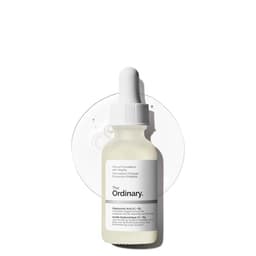
The Ordinary
Hyaluronic Acid 2% + B5
The cheapest way to add the humectant half of this pairing, and thin enough to sit under a vitamin C serum without pilling.
See it ranked in fullPrice as of October 15, 2026. #ad How we’re funded
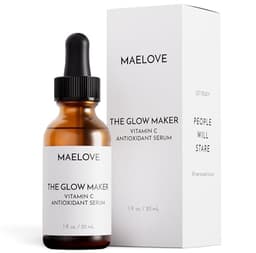
Maelove
Glow Maker Vitamin C Serum
The vitamin C we would pair it with: L-ascorbic acid with vitamin E and ferulic acid, the combination with the strongest published photoprotection data.
See it ranked in fullPrice as of October 15, 2026. #ad How we’re funded
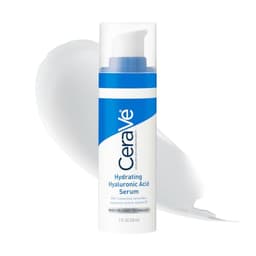
CeraVe
Hyaluronic Acid Serum (B5 + Ceramides)
If your barrier is struggling with a strong vitamin C, this pairs hyaluronic acid with ceramides so the water you pull in has something holding it there.
See it ranked in fullFrequently asked questions
Which goes first, vitamin C or hyaluronic acid?
Vitamin C first in almost every case. It is usually the thinner, lower-pH product and it is the treatment step, so it should reach clean skin without a layer in between. Apply it, wait a minute, then apply hyaluronic acid on top and seal both with moisturizer. The one exception is if you are applying HA to deliberately damp skin, in which case flipping the order is a reasonable trade.
Do vitamin C and hyaluronic acid cancel each other out?
No. There is no interaction to worry about at all. They do unrelated jobs — vitamin C is an antioxidant that works on tone and photoprotection, hyaluronic acid is a humectant that holds water in the upper layers of skin — and plenty of serums put both in the same bottle deliberately. This is one of the few pairings in skincare where the answer really is just 'yes, go ahead'.
Does hyaluronic acid make vitamin C less irritating?
It often helps, yes. A strong, low-pH L-ascorbic acid serum can sting, and layering a humectant on top plus a moisturizer over that buffers the surface and keeps the barrier better hydrated, which usually makes the whole routine more comfortable. It does not reduce the vitamin C's potency in any meaningful way — it just makes it easier to keep using.
Can I use both in the morning and at night?
Vitamin C is best used in the morning, where its antioxidant effect complements sunscreen. Hyaluronic acid has no timing preference and is fine twice a day. A common setup is vitamin C plus HA plus moisturizer plus SPF in the morning, and HA plus moisturizer at night, with retinol or an acid slotted in on the nights you use one.
Is a two-in-one vitamin C and hyaluronic acid serum as good as two products?
It is more convenient and perfectly legitimate — the two are frequently formulated together. Buying them separately gives you control: you can choose the vitamin C strength independently, use the HA on nights you skip the vitamin C, and replace an oxidized vitamin C without throwing out the humectant. Neither approach is better in the abstract.
Sources
- Vitamin C in dermatology (PMC) — Telang — review of topical vitamin C forms, stability and photoprotection (accessed July 17, 2026)
- Moisturizers — StatPearls (NCBI Bookshelf) — Reference on humectants (hyaluronic acid), occlusives and emollients (accessed July 17, 2026)
- Ferulic acid stabilizes a solution of vitamins C and E and doubles its photoprotection (PubMed) — Lin et al. — the L-ascorbic acid + vitamin E + ferulic acid evidence (accessed July 17, 2026)
Keep reading
How to use hyaluronic acid
The damp-skin rule, why it can backfire in dry air, and how much to actually apply.
Read the guideHow to use a vitamin C serum
Where it goes in the routine, how much to use, and how to tell when a serum has oxidized.
Read the guideBest vitamin C serums
L-ascorbic acid versus the gentler derivatives, ranked on concentration, stability and packaging.
See the picksBest hyaluronic acid serums
Which formulas pair HA with the ceramides and humectants that make it hold water properly.
See the picksSkincare routine order
The wider rule this pairing is a special case of: thinnest to thickest, with one exception.
See the order