Actives & Acids

Best Retinol Under $50

The retinols under $50, ranked - and the reason this ceiling matters more than the $25 one: it is the only band where a published 1% figure becomes buyable.

By Stephen V.Last updated How we pick

The best retinol under $50 is Paula’s Choice CLINICAL 1% Retinol Treatment— the only product in our registry that prints a 1% retinol figure, and the only reason this price band is worth a page of its own. If your skin is reactive, buy La Roche-Posay Pure Retinol Face Serum instead. And if you have never used a retinoid, do not buy either: start on the budget pick, The Ordinary Retinol 0.5% in Squalane, which costs about a fifth as much and prints a figure too.

Here is the specific thing a $50 ceiling does in this category, and it is not what a price band usually does. Nearly every retinol we carry is under $25. What the $25-to-$50 shelf adds is exactly two products — and they are the only two in the registry built around a published 1% figure or a pharmacy-grade delivery system. So this band does not buy you more choice. It buys you access to the top of the dose range, which is the part of the range the published photoaging work is actually about. Whether that is worth four times the money depends entirely on how long you have been using retinoids, and the section below is honest about who should ignore it. Prices render live from our price layer with the date they were read; we own no units, and here is our method.

How this is funded: we earn a commission if you buy through our links, at no extra cost to you. It never changes which product we recommend, and we’ll tell you when we’d skip one. Full disclosure.

Quick picks

Ranked on formulation, stated concentration and buyer fit. Select a row to jump to the full write-up. We have not tested these products — here is exactly what we do instead.

#ProductBest forPrice
1
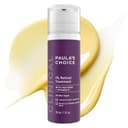
Paula's Choice CLINICAL 1% Retinol Treatment

Paula's Choice CLINICAL 1% Retinol Treatment

A labeled 1% retinol backed by peptides and vitamin C, aimed at people who've built tolerance and are ready to level up. The strength is printed plainly, which is exactly why you'd trade up from a beginner formula.

Best overall, and the only published 1% in the registry
$45.50 · View on Amazon

$65.0030% off

Price as of November 22, 2026. #ad How we’re funded

2
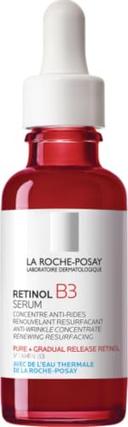
La Roche-Posay Pure Retinol Face Serum (B3 + HA)

La Roche-Posay Pure Retinol Face Serum (B3 + HA)

Combines pure retinol with niacinamide and hyaluronic acid, baking the anti-flaking buffer into the bottle instead of leaving you to layer it on. Of the genuine retinols here, this is the mildest.

Best for sensitive skin at the top of the band
$44.99 · View on Amazon

Price as of November 22, 2026. #ad How we’re funded

3
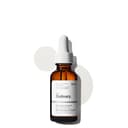
The Ordinary Retinol 0.5% in Squalane

The Ordinary Retinol 0.5% in Squalane

About as transparently labeled as retinol gets: a precise 0.5% suspended in squalane, priced so cheaply that easing in slowly costs you nothing. For most people, this is the right first bottle.

Budget pick, and the best first retinoid
$9.30 · View on Amazon

Price as of November 22, 2026. #ad How we’re funded

4
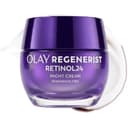
Olay Retinol Night Cream (Fragrance-Free)

Olay Retinol Night Cream (Fragrance-Free)

Retinol with niacinamide and peptides in a genuinely rich night cream. The supporting cast is the reason to buy it: niacinamide is the best-evidenced partner for making a retinol routine tolerable.

Best cream in the upper tier
$29.99 · View on Amazon

Price as of November 22, 2026. #ad How we’re funded

5
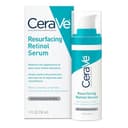
CeraVe Resurfacing Retinol Serum

CeraVe Resurfacing Retinol Serum

Encapsulated retinol paired with ceramides and licorice root, pointed at post-acne marks more than lines. It's mild, barrier-kind and inexpensive, though the dose is never named.

Best for post-acne marks
$16.49 · View on Amazon

$21.9925% off

Price as of November 22, 2026. #ad How we’re funded

The picks in full

#1Best overall, and the only published 1% in the registry

Paula's Choice CLINICAL 1% Retinol Treatment

A labeled 1% retinol backed by peptides and vitamin C, aimed at people who've built tolerance and are ready to level up. The strength is printed plainly, which is exactly why you'd trade up from a beginner formula.

Strengths

  • States a firm 1% — a legitimately strong dose
  • Peptides and licorice extract fill out the anti-aging picture
  • The air-limiting tube helps keep the retinol from degrading

Trade-offs

  • At 1% it'll overwhelm skin that hasn't earned tolerance, so it's no starter product
  • Costs a premium per milliliter
Key activeRetinol
Stated concentration1%
FormatLightweight lotion
Fragrance-freeYes
Best forNormal, Retinol-experienced

Formulation note. 1% retinol with peptides, vitamin C and licorice root. It's a high dose the label doesn't hide — ramp up gradually and follow with a moisturizer each night.

Ingredients and claims read from the product listing, on July 18, 2026. “Not published” means the brand does not state that figure.

#2Best for sensitive skin at the top of the band

La Roche-Posay Pure Retinol Face Serum (B3 + HA)

Combines pure retinol with niacinamide and hyaluronic acid, baking the anti-flaking buffer into the bottle instead of leaving you to layer it on. Of the genuine retinols here, this is the mildest.

Strengths

  • Niacinamide, glycerin and hyaluronic acid take the edge off retinol's dryness
  • No added fragrance, from a label that made its name on easily-irritated skin
  • A comfortable texture that sits neatly beneath a moisturizer

Trade-offs

  • The retinol percentage isn't disclosed, so you're taking the brand at its word
  • One of the costlier choices here, and for a strength it won't name
Key activeRetinol
Stated concentrationNot published
FormatSilky lotion-serum
Fragrance-freeYes
Best forSensitive, Dry, Normal

Formulation note. Retinol alongside niacinamide (vitamin B3) and hyaluronic acid. The supporting cast is the real draw, since the retinol dose goes unstated — a gap we point out instead of filling with a guess.

Ingredients and claims read from the product listing, on July 18, 2026. “Not published” means the brand does not state that figure.

#3Budget pick, and the best first retinoid

The Ordinary Retinol 0.5% in Squalane

About as transparently labeled as retinol gets: a precise 0.5% suspended in squalane, priced so cheaply that easing in slowly costs you nothing. For most people, this is the right first bottle.

Strengths

  • The 0.5% figure is printed on the label, something the vast majority of drugstore retinols never disclose
  • Its squalane carrier seals the skin and softens the sting
  • Sold in 0.2%, 0.5% and 1% versions, letting you climb strengths on purpose

Trade-offs

  • It's straight retinol in a waterless oil, with no calming extras thrown in
  • Layered over other oils, the squalane finish can turn heavy
Key activeRetinol
Stated concentration0.5%
FormatLightweight oil serum
Fragrance-freeYes
Best forNormal, Dry, Not-too-sensitive

Formulation note. Retinol suspended in squalane with no water phase, which sidesteps the pH and packaging headaches vitamin C demands. Having the percentage right there on the label is the exception rather than the norm.

Ingredients and claims read from the product listing, on July 18, 2026. “Not published” means the brand does not state that figure.

#4Best cream in the upper tier

Olay Retinol Night Cream (Fragrance-Free)

Retinol with niacinamide and peptides in a genuinely rich night cream. The supporting cast is the reason to buy it: niacinamide is the best-evidenced partner for making a retinol routine tolerable.

Strengths

  • Niacinamide alongside the retinol — the pairing that most reliably eases retinol dryness
  • Fragrance-free despite being a mainstream beauty-aisle cream
  • Rich enough to be the entire moisturizer step in winter

Trade-offs

  • The retinol percentage is not published
  • Too heavy for oily skin, and priced above the budget creams here
Key activeRetinol + niacinamide + peptides
Stated concentrationNot published
FormatRich night cream
Fragrance-freeYes
Best forDry, Mature, Normal

Formulation note. Retinol supported by niacinamide and peptides in a fragrance-free night cream. Of those three, niacinamide has by far the strongest published record — for barrier support and redness — and it is the reason a formula like this tends to be easier to keep using than bare retinol.

Ingredients and claims read from the product listing, on August 19, 2026. “Not published” means the brand does not state that figure.

#5Best for post-acne marks

CeraVe Resurfacing Retinol Serum

Encapsulated retinol paired with ceramides and licorice root, pointed at post-acne marks more than lines. It's mild, barrier-kind and inexpensive, though the dose is never named.

Strengths

  • Ceramides and niacinamide prop up the barrier while the retinol does its job
  • The encapsulated form is easier on touchy skin
  • Among the cheapest legitimate retinol serums going

Trade-offs

  • The concentration goes undisclosed
  • It's pitched at marks rather than deep wrinkles, so calibrate your hopes
Key activeEncapsulated retinol
Stated concentrationNot published
FormatFluid lotion-serum
Fragrance-freeYes
Best forAcne-prone, Normal, Sensitive

Formulation note. Encapsulated retinol with three essential ceramides, niacinamide and licorice root extract. That ceramide load is what keeps it wearable, while the retinol strength stays off the label.

Ingredients and claims read from the product listing, on July 18, 2026. “Not published” means the brand does not state that figure.

What the extra $25 actually buys

Two things, and only two. Both are real.

A published figure at the top of the range.The controlled work on cosmetic retinol reports measurable improvement in fine lines and texture over months of use, and dose is part of that picture — which is why a brand that prints 1% is making a checkable claim that almost nobody under $25 makes. Here is the uncomfortable detail that keeps this page honest: our budget pick also prints a figure, 0.5%, for a fifth of the price. Disclosure is not what the extra money buys. The extra money buys twice the printed dose, in a formula designed to carry it.

Formulation built for tolerance at that dose.This is the part price bands usually hide. A high retinol percentage in a careless base is worse than a lower one in a good base, because irritation is dose-dependent and a face you have stripped stops tolerating anything. The two picks at the top of this band are both built around supporting ingredients — antioxidants and soothing agents in one, niacinamide and hyaluronic acid in the other — and both come in airtight, light-excluding packaging, which matters because retinol degrades in air and light. A jar of high-strength retinol is a contradiction.

What it does not buy: speed. Nothing in this band works faster than anything in the $25 band. The retinoid literature is measured in weeks and months regardless of what you paid, and buying the 1% to get there sooner is the single most common way people give themselves eight weeks of flaking and then quit.

Who should ignore the top two picks entirely

Anyone who has not used a retinoid in the last six months. Go and read best retinol for beginnersinstead, buy the budget pick, and use it twice a week for a month. The AAD’s own retinoid guidance treats irritation as the expected cost of the mechanism, and the way to manage a cost is to start small. A 1% retinol is not a shortcut past that; it is the same road at double the speed limit.

Anyone with reactive or rosacea-prone skin.The sensitive pick at the top of this band is a genuinely better formula for you than the 1%, and a lower-strength option may be better than either — best retinol for sensitive skin has that ranking.

Anyone whose real problem is post-acne marks rather than lines. The cheapest serum on this page with niacinamide and ceramides addresses that case as well as anything above it, for a third of the money. Our best serum for acne scars ranking is the fuller argument.

Anyone who wants to spend less and still get a printed number. That is exactly what best retinol under $25 is for, and it is a better page for most readers than this one. We would rather say that than pretend a higher ceiling is an upgrade for everybody.

How we ranked them

1. Does the label publish a retinol percentage?Two of the five below do. Three do not, which is normal in this category — drugstore retinols almost never print a figure, and we write “not published” rather than estimating. Between two otherwise comparable products, the one that publishes wins.

2. Is the delivery system built for the dose? Encapsulation, slow-release bases, airless or opaque packaging, and supporting ingredients that offset irritation. A high figure in a clear jar ranks below a lower figure in an airless tube.

3. Serum or cream — does the format match the skin? A cream carries its retinoid in an occlusive base, which buffers irritation and suits dry or mature skin; a serum layers under your own moisturizer and suits oily skin and anyone who wants control over the buffering. Retinol serum vs cream is the full comparison, and it is why the list below is not all serums.

4. Will you still be using it in three months? Everything here works on that timescale, so tolerability is the criterion rather than a footnote. This is why the budget pick is third overall rather than fifth: it is the product most people on this page should actually buy.

Which one, by what you want

“The strongest thing I can buy without a prescription.” The 1% treatment. It is the highest printed retinol figure in our registry, in a formula with supporting antioxidants, in packaging that protects it. Go in knowing the cost: at 1%, dryness and flaking in the first six weeks are the expectation rather than the exception, and the correct response is to reduce frequency rather than to quit. Retinol side effects tells you which reactions are normal and which mean stop.

“I want the upper tier but my skin is fragile.”The pharmacy serum. It pairs its retinol with niacinamide and hyaluronic acid in a formula from a brand whose whole positioning is reactive skin, and it publishes no percentage — which we hold against it on principle and which matters less here, because on this skin the smallest effective dose is the goal anyway.

“This is my first retinoid.”The budget pick, without hesitation. 0.5% printed on the label, in squalane, fragrance-free, at under ten dollars — so if it turns out retinoids are not for you, you have lost the price of a coffee rather than fifty dollars. Twice a week, over moisturizer, for a month. Our how often to use retinol page is the ramp.

“I want a cream, not a serum.”The night cream in the upper tier. It carries its retinoid in a moisturizing base with niacinamide, is fragrance-free, and is the most comfortable thing on this page to use nightly on dry or mature skin. It publishes no figure, and in a cream that omission is harder to excuse than in a drugstore serum — we rank it fourth for that reason rather than for how it performs.

“It is marks, not lines.” The ceramide serum. Encapsulated retinol with niacinamide and ceramides, in an opaque tube, at the cheap end of the band. No published percentage, but the supporting formula is the right one for skin that is dealing with the aftermath of acne rather than with photoaging.

What this page refuses to tell you

That 1% is better than 0.5% because 1 is bigger. Higher retinol percentages are harder to tolerate and the published results depend on consistent use over months, not on peak strength. A 1% you use once a fortnight because it stings is worth less than a 0.5% you use three nights a week for a year.

That any of these is equivalent to tretinoin. They are not the same molecule and the conversion step matters. That comparison is argued at retinol vs tretinoin, and the honest summary is that cosmetic retinol is a slower, gentler, non-prescription relative.

A percentage for a brand that does not print one. Three of these five publish nothing, and we print the absence. A guessed figure would be the most useful-looking lie on the page.

That we tested any of this.We own no units and publish no scores. Every figure here is read from the label or the brand’s own product page, and every ranking argument is made from those plus the cited literature.

That the band will hold. Both top picks sit within a few dollars of the ceiling, prices render at request time, and Amazon moves them daily. The button decides what is in this band.
Frequently asked questions

What is the best retinol under $50?

Paula's Choice CLINICAL 1% Retinol Treatment — the only product in our registry that prints a 1% retinol figure, in a formula with supporting antioxidants and in packaging that protects retinol from air and light. It is not the right first retinoid: at that strength, dryness and flaking in the first six weeks is the expectation. For reactive skin, La Roche-Posay Pure Retinol is the better pick at the same end of the band.

Is a $45 retinol better than a $10 one?

It buys two specific things: twice the printed dose, and a formula and packaging built to carry that dose. It does not buy disclosure — our $9 budget pick prints 0.5% on the label — and it does not buy speed, because the published retinoid results are measured in months regardless of price. If you have been using retinoids for a year and want to move up, the money is well spent. If this is your first bottle, it is not.

How is this different from your best retinol under $25 page?

The $25 ceiling excludes the only two retinols we carry that are built around a published 1% figure or a pharmacy-tier delivery system, and those two are the top picks here. Almost every other retinol in our registry is already under $25, so this band does not add choice — it adds access to the top of the dose range. If you want a printed figure for as little as possible, the $25 page is the better page.

What percentage of retinol should I use?

The highest one you can use two or three nights a week without flaking, which is a different number for different people. Beginners should start at 0.5% or lower and stay there for at least a month. Experienced users who have had no irritation at 0.5% for several months are the people 1% is for. The published photoaging work concerns consistent use over months, so frequency you can sustain beats peak strength.

Why do most retinols not publish a percentage?

Because they are cosmetics rather than drugs, so there is no requirement to, and because a printed figure invites comparison. Three of the five picks on this page publish nothing — which is normal for drugstore retinol — and we write 'not published' rather than estimating a number. Between two otherwise comparable products, the one that prints a figure ranks higher on this site, because a checkable claim is worth more than an adjective.

Serum or cream for retinol?

A cream if your skin is dry or mature: the occlusive base buffers irritation and you get moisturizer and retinoid in one step. A serum if your skin is oily, or if you want to control the buffering yourself by applying your own moisturizer first or second. Neither format is inherently stronger — the strength is in the percentage and the delivery system, not the texture.

Do the prices on this page update?

Yes. Every price renders from our live price layer at the moment you load the page, with the date it was read, so the buy buttons are the authority on whether a pick is still under $50. Both top picks sit within a few dollars of the ceiling, which makes them the rows most likely to fall out on a price move. If the button disagrees with the ordering, the button is right.

Sources

  • Human Skin Aging and the Anti-Aging Properties of Retinol (PubMed) — Review of topical retinol's effect on collagen and photoaging (accessed July 17, 2026)
  • The use of retinoids in the treatment of photoaging (PubMed) — Clinical-trial evidence for topical retinoids in photoaging (accessed July 17, 2026)
  • American Academy of Dermatology — Retinoid or retinol? — AAD on the difference between prescription retinoids and OTC retinol (accessed July 17, 2026)
  • The Ordinary — Retinol 0.5% in Squalane (official product page) — The brand's own listing, headed "Anti-Aging Moderate Strength Retinol 0.5% in Squalane Serum" and summarized as "A moderate-strength retinol serum that targets general signs of skin aging." The complete INCI list runs to EIGHT entries: Squalane, Caprylic/Capric Triglyceride, Simmondsia Chinensis (Jojoba) Seed Oil, Retinol, Solanum Lycopersicum (Tomato) Fruit Extract, Rosmarinus Officinalis (Rosemary) Leaf Extract, Hydroxymethoxyphenyl Decanone, BHT — so the retinol is FOURTH, behind three emollients. Format is given as "Serum: Anhydrous" and the product highlights read water-free Yes, alcohol-free Yes, oil-free NO, silicone-free Yes, vegan, gluten-free and cruelty-free Yes; there is no fragrance-free claim, although no fragrance appears in the list. "Suited for" is given as Dry Skin only. The brand's own description: "Retinol 0.5% in Squalane offers a water-free solution containing 0.5% retinol — an ingredient that improves the appearance of fine lines that can arise from a loss of collagen and elastin, while evening the appearance of skin texture and tone," supported with squalane, "a moisturizing agent naturally found in your skin that nourishes to help it better withstand the drying effects of retinol." The Ordinary Tip: "Start with Retinol 0.2% in Squalane and slowly work your way up to Retinol 0.5% in Squalane and Retinol 1% in Squalane. That said, if you are prone to sensitivity, you may prefer to use newer retinoid technologies, such as those found in our Granactive Retinoid 2% Emulsion." Notes: "Retinoids can make the skin more sensitive to UV radiation. Sun protection is particularly important when using retinoids"; "This product must not be used in conjunction with other retinoids, including retinol or retinoic acid. This product is not a treatment for acne"; "When pregnant or breastfeeding, it is recommended to avoid any skincare products containing retinoids"; and, on storage, "Once opened, this formulation should be refrigerated and used within a three-month period." Usage directions: "Apply a few drops to the face in the evening. Do not use with other retinoid products. Use sun protection during the day," with the caution "Retinol can cause irritation, redness, and peeling, especially around the eyes and mouth, in the early stages of use while skin builds tolerance," plus "Refrigerate after opening," "Use only as directed on unbroken skin" and "Patch testing prior to use is advised." Sold in one 30 ml size (accessed October 17, 2026)

Keep reading