Azelaic Acid vs Glycolic Acid: Which Should You Buy?
They sit on the same shelf and share a word, and that is about where it ends. Glycolic acid resurfaces: it is the fastest-penetrating AHA and it works on texture and dullness. Azelaic acid calms: it works on inflammation, on pigment and on the bacteria involved in acne, and it barely exfoliates at all. Here is which one your complaint actually calls for.
How this is funded: we earn a commission if you buy through our links, at no extra cost to you. It never changes which product we recommend, and we’ll tell you when we’d skip one. Full disclosure.
Two different jobs, one shelf
Glycolic acidis an alpha hydroxy acid, and the smallest molecule of the family — which is why it penetrates faster than lactic or mandelic acid and why it has the strongest reputation for visible resurfacing. Its job is the surface: loosening the bonds that hold dull, dead cells in place so they shed more evenly, which shows up as smoother texture and a brighter look.
Azelaic acidis a dicarboxylic acid — a different chemical family entirely. The AAD describes it as unclogging pores and keeping them open, acting on the bacteria involved in acne, and reducing acne inflammation, with a further effect on pigment production. Almost none of that is exfoliation. We have a whole page on that point, because it is the single most common misunderstanding about the ingredient: is azelaic acid an exfoliant?
So the choice is not “which acid is stronger”. It is whether your complaint is about texture or about color and calm.
The asymmetry that decides how much to trust each one
Here is the comparison we have not seen made anywhere else, and it is checkable from published documents on both sides. Both ingredients have an evidence problem. They are opposite problems.
Glycolic acid: the shelf product is the studied product. There is a published consumer-use band for AHAs — the FDA’s AHA information sets out 10% or less at a pH of 3.5 or above for over-the-counter use, with sun protection formulated in or instructed on the label. Every glycolic product we rank sits inside that band and prints its percentage: 7%, 8%, 5%. You can therefore line up what you are buying against the guidance that exists for it. What the published reviews are blunt about is that the efficacy trials for glycolic acid are mostly professional peels at 20% to 70%, not leave-on cosmetic strengths — and that “the optimal concentrations for therapeutic efficacy with minimal side effects are yet to be precisely defined.”
Azelaic acid: the studied product is not the shelf product.The trials and the approvals are at prescription strengths with full FDA labels — a 15% gel for the inflammatory papules and pustules of rosacea, and a 20% cream for mild-to-moderate inflammatory acne. Over-the-counter products are at 10% or below, and we are aware of no trial of a 10% consumer formula. So the evidence behind the molecule is better than anything glycolic acid can show at consumer strength — and the specific product you can buy sits below every strength that produced it.
Read together: with glycolic acid you know exactly what you are applying and the published band is modest. With azelaic acid you are applying a well-evidenced molecule at an unproven dose. Neither is a reason not to buy; both are reasons to keep expectations where the paperwork puts them.
Side by side
| Azelaic acid | Glycolic acid | |
|---|---|---|
| Class | Dicarboxylic acid | Alpha hydroxy acid (AHA), smallest molecule of the family |
| Main action | Anti-inflammatory, antibacterial, pigment-suppressing | Surface exfoliation — loosens dead cell bonds |
| Exfoliates? | Barely — some keratolytic effect, not the reason to buy it | Yes, and faster than any other AHA |
| Strengths you can buy | 10% or below over the counter; 15% and 20% by prescription | 5% to 8% leave-on; 20%+ is professional-peel territory |
| Where the evidence sits | At prescription strengths — ABOVE what you can buy | At professional peel strengths — also above, with a published consumer band |
| Does pH matter? | Not in the AHA sense; brands publish one anyway (4.00-5.00) | Decisively — free-acid share depends on it |
| Sun sensitivity | No specific warning | Yes — US products carry an AHA sunburn alert |
| Best for | Redness, rosacea, inflamed spots, post-acne marks, melasma | Rough texture, dullness, congestion, body skin, dark underarms |
| Wrong for | Anyone whose actual complaint is roughness or dullness | Rosacea-prone or actively inflamed skin |
| Our top pick | The Ordinary Azelaic Acid Suspension 10% | The Ordinary Glycolic Acid 7% Exfoliating Toner |
Choose azelaic acid if…
Your skin is red, flushed or rosacea-prone. This is the clearest call on the page. Azelaic acid has a prescription product approved for exactly this and glycolic acid is a liability on a barrier that flushes.
You are treating the marks acne left, not the texture. Flat brown post-inflammatory marks respond to something that interferes with pigment production. Buffing the surface helps at the margins.
You are already using a retinoid.Azelaic acid adds no exfoliation to a retinoid’s own peeling, which makes it the easiest thing to pair with one — the schedule is in retinol and azelaic acid. A glycolic acid plus a retinoid needs alternate nights and more care.
Choose glycolic acid if…
Your complaint is rough, dull or uneven texture. Nothing in the azelaic literature promises resurfacing, and glycolic acid is the fastest-acting tool for it.
You want a published dose at a published pH.Both numbers are on the glycolic labels we rank — a stated 7% at pH 3.5 to 3.9, for instance. For azelaic acid you get the percentage and an unproven relationship between it and the trials.
You are treating body skin.Glycolic acid comes in 240 mL bottles and body washes; azelaic acid is sold in 30 mL face serums. Two arms is ten to twenty times the area of a face, which settles it on cost per use alone — see best chemical exfoliant for body.
The honest answer for most people: both, on different nights
These are not rivals. They address different mechanisms, they do not cancel each other out, and plenty of routines carry both — azelaic acid daily for tone and calm, a glycolic product two or three evenings a week for texture. The only rule worth enforcing is that you do not start them in the same week, because if something stings you need to know which bottle to blame.
If you can only buy one, use the test at the top of this page. Run your hand over the skin: if what bothers you is what you feel, buy the glycolic. If it is what you seein the mirror — redness, blotches, marks — buy the azelaic.
General guidance, not medical advice. Actives & Acids is written by a skincare enthusiast, not a dermatologist. For a diagnosis, a reaction, or a prescription active like tretinoin, see a qualified professional. Introduce any new active slowly and patch-test first.
What we'd actually buy
Chosen from the same registry as our roundups, on published formulation facts rather than hands-on testing — here is exactly what we do instead.
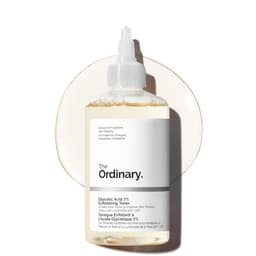
The Ordinary
Glycolic Acid 7% Exfoliating Toner
The glycolic side, and the one to buy for rough texture, dullness and congestion. A printed 7% at a published pH of 3.5-3.9 in 240 mL, which is the cheapest honest resurfacing in this registry — and the dose and the condition are both on the label.
See it ranked in fullPrice as of November 20, 2026. #ad How we’re funded
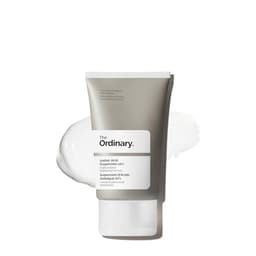
The Ordinary
Azelaic Acid Suspension 10%
The azelaic side, and the one to buy for redness, rosacea-type flushing and the flat brown marks spots leave behind. A stated 10% of the free acid, which is the right molecule at a strength no trial has tested — we say that on every page it appears on.
See it ranked in fullPrice as of November 20, 2026. #ad How we’re funded
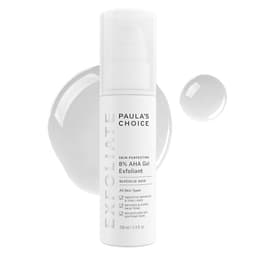
Paula's Choice
Skin Perfecting 8% AHA Gel Exfoliant
The glycolic step up, for skin that has got comfortable on a 7% and wants more: a printed 8% in a gel that stays where you put it. Note it sits at the top of the published consumer AHA band rather than beyond it.
See it ranked in fullPrice as of November 20, 2026. #ad How we’re funded
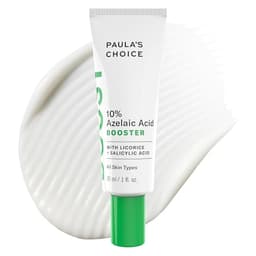
Paula's Choice
BOOST 10% Azelaic Acid Booster
The azelaic step up in comfort rather than strength — the same 10%, in a cream-gel that spreads without the grit of a silicone suspension. One label check worth doing first: it also contains salicylic acid, so you may not need a second BHA alongside it.
See it ranked in fullPrice as of November 20, 2026. #ad How we’re funded
Frequently asked questions
Is azelaic acid or glycolic acid better?
Neither, and they are not substitutes. Glycolic acid is an alpha hydroxy acid that loosens the bonds holding dead surface cells in place, so it works on rough texture, dullness and congestion. Azelaic acid is a dicarboxylic acid whose described actions are unclogging pores, acting on the bacteria involved in acne, reducing inflammation and interfering with pigment production. If your complaint is how your skin FEELS, glycolic. If it is how red or how blotchy it LOOKS, azelaic.
Which is better for hyperpigmentation and dark spots?
Azelaic acid, for the flat brown marks left behind by acne and for melasma, because it acts on pigment production rather than only on the pigmented cells already at the surface. Glycolic acid does help with surface discoloration by speeding turnover, and it is a reasonable second choice or a partner. On melasma specifically the AAD's position is worth knowing before buying either: moderate-to-severe cases usually need two or more therapies combined, results take three to twelve months, and daily sunscreen is the part that prevents its return.
Which is better for acne?
Azelaic acid, on mechanism and on the guidance — it has prescription strengths approved for inflammatory acne and it acts on the bacteria and the inflammation, while glycolic acid works on the surface. But read the ranking honestly: in the 2024 acne guidance azelaic acid is a conditional recommendation while benzoyl peroxide and topical retinoids carry strong ones. For blackheads and comedonal congestion specifically, salicylic acid is the better-matched active than either of these, because it is oil-soluble.
Which is better for redness or rosacea?
Azelaic acid, and it is not close. It has a prescription 15% gel approved for the inflammatory papules and pustules of rosacea, with two vehicle-controlled trials in 664 patients behind that approval. Glycolic acid on rosacea-prone skin is a risk rather than a treatment — an exfoliating acid on a skin barrier that flushes easily is the wrong direction.
Can you use azelaic acid and glycolic acid together?
Yes, with a gap. They are not chemically incompatible and they do different jobs, so many people run a glycolic product two or three nights a week and azelaic acid daily. What you should not do while building tolerance is apply both in the same session, because you are stacking two irritants and will not know which one caused a reaction. The Ordinary's own conflict list for its azelaic suspension names direct acids, which is more cautious than the evidence but is the brand's own instruction.
Which is better for dark underarms?
Glycolic acid, for the common version of that complaint, because most underarm darkening is a mix of friction, shaving irritation and a build-up of pigmented surface cells — and that is a resurfacing problem. Azelaic acid is the more sensible choice if the area is actively inflamed or if post-inflammatory pigmentation is the main component. Our glycolic acid for armpits guide covers the method, including the part most advice skips: stop whatever is causing the friction.
Which is gentler?
Azelaic acid, for most people, and that asymmetry is why it is the one dermatologists reach for in rosacea-prone skin. It is not painless — the prescription 15% gel's own label records burning, stinging or tingling as mild in 16% of patients, moderate in 9% and severe in 4% — but it does not drive the shedding-and-peeling cycle a glycolic acid does, and it does not make skin more sun-sensitive the way an AHA does.
Do I need sunscreen with both?
You need sunscreen either way, but the reason differs. Glycolic acid carries an explicit sun-sensitivity problem — US AHA products carry a sunburn alert, and the FDA's consumer AHA guidance pairs use with sun protection. Azelaic acid has no equivalent photosensitivity warning, but if you are using it for pigment then sunscreen is doing half the treatment, because sunlight drives more pigment production.
Sources
- A Comprehensive Review of Azelaic Acid: Pharmacological Properties, Clinical Applications and Topical Formulations (PMC) — Review of azelaic acid's action on pigmentation, inflammation and acne (accessed August 19, 2026)
- Evaluating the Efficacy and Safety of Alpha-Hydroxy Acids in Dermatological Practice: A Comprehensive Clinical and Legal Review (PMC) — Almeman, Clinical, Cosmetic and Investigational Dermatology 2024 — a narrative review that sets the consumer AHA limits side by side: the 2005 US FDA guidance of no more than 10% AHA at pH 3.5 or higher for over-the-counter use (with SPF formulated in or a label instruction to use one), against the EU SCCS's far more conservative 2000 recommendation of glycolic acid up to 4% at pH of at least 3.8, and Australia's exemption at 20% or less at pH 3.5 or higher (glycolic acid having been listed there as a Priority Existing Chemical after repeated skin-irritation reports). It describes three regulatory tiers — up to 10% for daily home use above pH 3.5, under 30% for trained professionals near pH 3, drug territory above that below pH 3 — notes glycolic acid's small molecular size as the reason it penetrates fastest of the AHAs and mandelic acid's larger molecule as the reason it stings less, and states plainly that "the optimal concentrations for therapeutic efficacy with minimal side effects are yet to be precisely defined." Every efficacy trial it reviews for glycolic acid is a professional peel at 20% to 70%, not a leave-on cosmetic strength (accessed October 3, 2026)
- U.S. FDA — Alpha Hydroxy Acids — FDA on AHAs and increased sun sensitivity (accessed July 17, 2026)
- DailyMed — FINACEA (azelaic acid) Gel, 15% prescribing information — The FDA-approved label for the 15% prescription gel: indicated for the inflammatory papules and pustules of mild to moderate rosacea, applied twice daily. Two identical 12-week vehicle-controlled trials in 664 patients reduced inflammatory lesions by 57.9% vs 39.9% and 50.0% vs 38.2%, with investigator-rated success (clear, minimal or mild) of 61% vs 40% and 61% vs 48%. Burning, stinging or tingling was reported by 16% mild / 9% moderate / 4% severe on the drug against 2% mild on vehicle (accessed September 26, 2026)
- DailyMed — AZELEX (azelaic acid) Cream, 20% prescribing information — The FDA-approved label for the 20% prescription cream: indicated for mild-to-moderate inflammatory acne vulgaris, each gram containing 0.2 g azelaic acid, applied twice daily, with improvement in the majority of patients with inflammatory lesions within four weeks. Pruritus, burning, stinging and tingling occur in roughly 1-5% of patients; the label states the exact mechanism of action is not known (accessed September 26, 2026)
- The Ordinary — Glycolic Acid 7% Exfoliating Toner (official product page) — The brand's own listing: the full 42-ingredient INCI list with glycolic acid SECOND, behind only water (Aqua, Glycolic Acid, Rosa Damascena Flower Water, Centaurea Cyanus Flower Water, Aloe Barbadensis Leaf Water, Propanediol, Glycerin, Triethanolamine, Aminomethyl Propanol, Panax Ginseng Root Extract, Tasmannia Lanceolata Fruit/Leaf Extract, then nineteen amino acids and sugars, Hexyl Nicotinate, Dextrin, Citric Acid, Polysorbate 20, Gellan Gum, Trisodium Ethylenediamine Disuccinate, Sodium Chloride, Hexylene Glycol, Potassium Sorbate, Sodium Benzoate, 1,2-Hexanediol, Caprylyl Glycol); a stated pH of 3.5-3.9 described in the copy as "approximately 3.6"; the 100 mL and 240 mL sizes; once-daily evening face/neck directions AND a three-times-weekly dry-scalp direction; the alcohol-free, oil-free, silicone-free, vegan, gluten-free and cruelty-free claims (there is NO fragrance-free claim, though no fragrance appears in the list); the "do not use on sensitive, peeling, or compromised skin" instruction; the FDA-recommended AHA Sunburn Alert; the note that the Tasmanian Pepperberry extract may cause seasonal color variation in the formula; and the conflict list (copper peptides, direct vitamin C, EUK, niacinamide powder, peptides, retinoids, direct acids) (accessed October 3, 2026)
- The Ordinary — Azelaic Acid Suspension 10% (official product page) — The brand's own listing: the full eighteen-ingredient list (Aqua, Isodecyl Neopentanoate, Dimethicone, Azelaic Acid, Dimethicone/Bis-Isobutyl PPG-20 Crosspolymer, Dimethyl Isosorbide, Hydroxyethyl Acrylate/Sodium Acryloyldimethyl Taurate Copolymer, Polysilicone-11, Isohexadecane, Tocopherol, Trisodium Ethylenediamine Disuccinate, Isoceteth-20, Polysorbate 60, Triethanolamine, Ethoxydiglycol, Phenoxyethanol, Chlorphenesin), a stated pH of 4.00-5.00, the 30 mL and 100 mL sizes, twice-daily directions with sun protection, the non-comedogenic and alcohol-free claims, the fact that the brand does NOT claim it is silicone-free, and the conflict list (copper peptides, direct acids, direct vitamin C, EUK, niacinamide powder, peptides, retinoids) (accessed September 26, 2026)
- American Academy of Dermatology — Melasma: Diagnosis and treatment — The AAD's patient guidance: topical skin-lightening agents are first-line for mild melasma while moderate-to-severe cases usually need two or more therapies combined; the topicals it names are hydroquinone, tretinoin with a mild corticosteroid, the triple-combination cream, azelaic acid, kojic acid and vitamin C, with azelaic acid named as a gentler option; it recommends sunscreen containing zinc oxide, titanium dioxide or iron oxide at SPF 30 or higher, reapplied through the day, because "sunlight causes the skin to make more pigment, which can darken existing melasma and cause new patches"; it states results usually take 3 to 12 months; and it notes melasma triggered by pregnancy or a medication may fade once that ends, while otherwise it can last years or a lifetime, with sun protection the thing that helps prevent its return (accessed October 5, 2026)
Keep reading
Is azelaic acid an exfoliant?
The mechanism question behind this comparison, answered directly — and what to buy if exfoliation is what you actually wanted.
Read the guideBest glycolic acid
The glycolic side ranked in full, on published percentage, published pH and cost per milliliter.
See the picksBest azelaic acid
The azelaic side ranked in full — free acid against derivative, and which one the trials actually used.
See the picksAzelaic acid vs salicylic acid
The same matchup against the oil-soluble BHA, where the pore-versus-inflammation split is sharper still.
See the comparisonGlycolic acid for armpits
The dark-underarm question in full, including the friction problem no acid will fix for you.
Read the guide