What you are actually replacing
“Alternative” only becomes a useful word once you decide which property you are substituting, and there are four candidates here. They lead to different purchases, and one of them leads away from this page entirely.
The molecule.Tretinoin is retinoic acid — the active form, with no conversion step. Nothing sold over the counter in the US is retinoic acid, so on this property there is no match, and any page that claims one is selling you something. What you can buy is either a different retinoid that acts on the same receptors, or a retinol your skin has to convert.
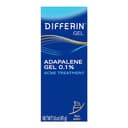
The drug-level paperwork.If what you valued was a stated strength on a regulated label, there is exactly one over-the-counter answer: adapalene. Adapalene 0.1% is sold with a Drug Facts panel and a labeled percentage, and the manufacturer’s own announcement of the FDA switch is how we know the regulatory story — the agency has since cleared an adapalene 0.1% plus benzoyl peroxide 2.5% combination for nonprescription sale as well. The honest limit: adapalene’s OTC label is an acne label. Its drug paperwork is about spots, not wrinkles.
The strength.If you were chasing potency for lines, the over-the-counter route is a published retinol percentage and a slow climb up it. Our registry tops out at a labeled 1%; a labeled 0.5% in a water-free base is the cheap, sensible rung below it. “Published” is doing real work in that sentence — most drugstore retinols print no figure at all, which makes a ladder impossible to climb deliberately.
The access.This is the one nobody selling you a serum will mention. Tretinoin is available by prescription, including through telehealth services, and generic tretinoin cream is not an expensive medicine. If the barrier was a doctor’s appointment rather than the drug itself, that is the better-evidenced and often cheaper route, and no part of this page is an argument against it.
How we ranked the over-the-counter ladder
1. Is it a retinoid, and does the label say how much? A labeled percentage on a regulated panel outranks a labeled percentage in cosmetic marketing, which outranks no figure at all. That single rule produces the order of the top three picks before anything subjective is considered.
2. What is the published evidence about?This is where the ranking refuses to flatten. Adapalene’s OTC record is an acne record. The retinol literature we cite is about photoaging — collagen and fine lines. They are both retinoids and they are not interchangeable answers to “what do I use instead of my tretinoin?”, because the answer depends on what your tretinoin was for.
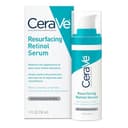
3. Can you actually stay on it? The thing that decides whether any retinoid works is months of use, so the base matters. Encapsulated retinol in a ceramide-and-niacinamide lotion is a different experience from bare retinol in oil at the same strength, and the gentler product you keep using beats the stronger one you abandon in week three.
4. Is a retinoid even the right class for you? Some people have already answered that question with their skin. The fifth pick is deliberately not a retinoid: azelaic acid, whose molecule holds prescription-strength approvals in its own right at 15% and 20%, with the standing caveat we repeat everywhere that every over-the-counter product sits at or below 10%.
Which one, by what your tretinoin was for
Acne. Adapalene, and it is not a close call. It is the only option here with a regulated acne label and a stated percentage, it is cheap, and it is fragrance-free. Treat it like the drug it is: expect a break-in period of several weeks, do not put it on the same night as an exfoliating acid, and wear sunscreen in the morning. There is a fuller walkthrough at the adapalene guide, and the head-to-head your search is probably circling is adapalene vs tretinoin.
Fine lines and photoaging. A published retinol percentage, climbed slowly. Start at the labeled 0.5% two nights a week; the labeled 1% is where you go after months of comfortable use, not where you start. The published work behind retinol for photoaging runs on that kind of timescale, and retinol vs tretinoin sets out what the gap between the two classes actually is.
Post-acne marks rather than active spots. The encapsulated CeraVe serum or the azelaic suspension, and honestly either is defensible. The retinoid works on texture and turnover; azelaic acid works on the mark. If your skin has flared from retinoids before, take the azelaic.
You tried tretinoin and your skin refused it. Then the rung you want is lower, not sideways: an encapsulated retinol in a barrier base, two nights a week, buffered with moisturizer. If that fails too, stop trying to reproduce a retinoid and read best retinol alternatives, which ranks five other ingredient families by the evidence behind each molecule.
The number you will not find on this page
Somewhere in your search results, someone will tell you that a particular retinol percentage “equals” 0.025% tretinoin. We do not publish that figure, because we hold no source that supports one. Retinol has to be converted by the skin into retinoic acid, and the efficiency of that conversion is not a published constant you can multiply through — it varies with the formula, the vehicle, how much of it survives on the shelf and whose skin it lands on. A stated 1% retinol is a real, strong dose; it is not 1% tretinoin and it is not 0.4% tretinoin either.
What you can do instead is judge the rungs by what they publish and climb them on how your skin behaves. That is slower than a conversion table and it is the only version of the advice that is true.
What we did not rank, and why
Anything sold as “pharmacy-grade tretinoin without a prescription.” In the US, tretinoin is prescription only. We will not route readers to grey-market or overseas sellers of a prescription drug, at any commission.
Tretinoin alternatives “for pregnancy.” This is a live search and we are refusing it on purpose, exactly as we refuse it on our retinol alternatives page. Whether a given active is appropriate during pregnancy or breastfeeding is a clinical question about one person, and the correct answer comes from the clinician who told you to stop the tretinoin — not from a product ranking. For what it is worth, the brand of our own top-value retinol tells buyers to avoid retinoids when pregnant or breastfeeding, which should tell you how little a roundup has to add here.
Retinaldehyde.A legitimate rung between retinol and retinoic acid, and we are not pretending otherwise — we simply do not currently stock a retinaldehyde product in the registry, and this site does not rank products it has not verified as live and purchasable. If that changes, this page is where it belongs.
The eye area. A dose calibrated for cheeks is not a dose for eyelid skin, which the published mapping of facial skin thickness puts at the thinnest point on the face. That is a separate purchase with its own ranking at best eye cream under $25, where the useful finding is that the only jar publishing a retinol figure is also one of the cheapest.
Bakuchiol and other “natural retinol” claims. Declined on the same grounds as on our retinol alternatives page: the products we checked publish no percentage, so there is nothing to rank them on. The comparison itself is at retinol vs bakuchiol.
Prescription routes themselves. Named in the section above because they are the honest answer for some readers, and deliberately not ranked: we are not a telehealth referral and we take no money from one.