Paula's Choice 2% BHA Liquid Exfoliant Review
The most-recommended chemical exfoliant in the world is an eight-ingredient formula in which the salicylic acid is fourth on the list. What the other seven are doing, why that makes this 2% behave unlike other 2% products, the number the brand does not publish, and who should buy the cheap one instead.
How this is funded: we earn a commission if you buy through our links, at no extra cost to you. It never changes which product we recommend, and we’ll tell you when we’d skip one. Full disclosure.
This is the product that made chemical exfoliation mainstream, and it is recommended so universally that almost nobody looks at the label. We did, and the label is more interesting than the reputation. It is reviewed the way every product on this site is — from what the brand publishes, never from hands-on use, because we own no units and run no trials. The method is set out in how we pick.
One sourcing note, in the open. Paula’s Choice renders its own product pages in the browser and serves no ingredient text to a plain fetch, so the label below was read from an authorized Paula’s Choice retailer listing on the date in the Sources block. Everything quoted here comes from that listing.
The verdict in one paragraph
For oily, combination or congested skin, this remains the leave-on BHA we would point most people at, and the single most revealing thing about it is how little is in it. Eight ingredients: water, two solvents, the salicylic acid, a solubilizer, green tea leaf extract, a pH adjuster and a chelator. The acid is fourth on that list, behind methylpropanediol and butylene glycol, and those two are the reason this 2% does not behave like other 2% products — with a poorly water-soluble acid, the vehicle has a real say in how much of it reaches the inside of a pore. The caveats are specific rather than damning. The brand publishes no pH, which is the one number that decides how much of the acid is in its active form. Nothing in the formula is soothing, so the mildness people describe is texture, not cushioning. The directions permit twice-daily use, which is more than most skin wants. And the listed indications — everything from blackheads to wrinkles to rosacea — are broader than an eight-ingredient 2% BHA can honestly claim.
At a glance
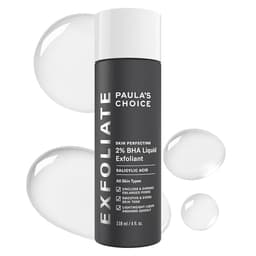
Paula's Choice Skin Perfecting 2% BHA Liquid Exfoliant
Stated active: 2% salicylic acid, sold as a cosmetic exfoliant rather than an over-the-counter drug. Ingredients: eight in total, no fragrance among them. Published pH: none stated.
Size: 118 mL, which is the size our buy button links to. The brand also sells smaller bottles of the same formula.
Price as of October 10, 2026. #ad How we’re funded
Product image supplied by Amazon.
What is on the label
The full list, as published: Water (Aqua), Methylpropanediol, Butylene Glycol, Salicylic Acid, Polysorbate 20, Camellia Oleifera (Green Tea) Leaf Extract, Sodium Hydroxide, Tetrasodium EDTA. Eight entries. For comparison, the hero serum in most brands’ ranges runs to thirty or forty.
Taking them in turn tells you what the product is. Methylpropanediol and butylene glycol are solvents and humectant-solvents; their job is to dissolve the salicylic acid and help carry it, and methylpropanediol in particular is used precisely because it improves the delivery of ingredients that do not dissolve well in water. Polysorbate 20 is a solubilizer doing more of the same. Sodium hydroxide is a pH adjuster — the formula has been deliberately buffered into an acidic range. Tetrasodium EDTA is a chelator that stops trace metals destabilizing the formula. Green tea leaf extract is the only thing in the bottle that is not water, acid or formulation machinery.
What is not there is as informative. No fragrance. No oil, no silicone, no alcohol. No glycerin. No ceramide, no panthenol, no allantoin, no anti-irritant of any kind. There is also no preservative in the conventional sense, which an acidic, solvent-heavy, water-based formula can get away with in a way a cream cannot.
Why the acid sitting fourth matters, and why it does not
Ingredient lists are ordered by quantity, so fourth place means there is more methylpropanediol and more butylene glycol in the bottle than salicylic acid. That is not a red flag: the declared 2% is the figure that counts, and you need a lot of solvent to hold 2% of a poorly soluble acid in a watery base at all. It is the opposite of the situation on The Ordinary’s glycolic toner, where the acid sits second behind only water because glycolic acid is small and water-soluble.
Where it does matter is in explaining something people notice and then misattribute. Two products can both say 2% salicylic acid and behave differently, and the usual explanation offered is pH. Vehicle is the other half of it. A solvent system chosen to improve delivery will push more acid into a sebum-filled pore than a plain water base at the same percentage. That is a point in this product’s favor as an exfoliant — and a reason to start at two nights a week rather than the once or twice daily the directions permit.
The number that is missing
Salicylic acid only does its job in the free-acid form, and how much of it is in that form depends on pH: too alkaline and the acid is neutralized into a salt that penetrates poorly. That is why pH is the figure serious buyers ask about, and why the sodium hydroxide in the list is worth noticing — it is there to set a pH the brand has chosen deliberately and does not disclose.
We will not invent a figure. What we will say is that the gap is conspicuous next to the competition: The Ordinary publishes 3.20 to 4.00 for its own 2% solution, which is a wide band but is at least a band. A brand built on ingredient transparency, and whose founder made her name explaining exactly this point about BHA pH, is an odd place to find the number absent. Our how to use salicylic acid guide covers what the pH range means in practice.
How it compares with the obvious rival
Almost everyone shopping for a leave-on BHA ends up choosing between this and The Ordinary’s. Both state 2% salicylic acid. Here is what the two labels actually say.
| On the label | Paula’s Choice 2% BHA Liquid | The Ordinary Salicylic Acid 2% Solution |
|---|---|---|
| Regulatory status | Cosmetic exfoliant | US over-the-counter acne drug, with a Drug Facts panel |
| Stated strength | 2% salicylic acid | 2% salicylic acid |
| Published pH | None published | 3.20 to 4.00 |
| Ingredient count | Eight, acid fourth | Twelve — one declared active plus eleven inactives, listed alphabetically |
| Size | 118 mL | 30 mL |
| Directions | Once or twice daily after cleansing; do not rinse; finish daytime use with SPF 30+ | Thin layer over the affected area one to three times daily, starting at once |
| Anything soothing? | No — green tea extract is the only non-functional ingredient | No — glycerin is the only humectant |
The practical reading is a size argument as much as a formula argument. A 118 mL bottle holds roughly four times what a 30 mL dropper bottle does, so compare these per milliliter rather than per bottle before you decide which one is “the expensive one”. Both buy buttons on this page show the current price as we last checked it, which is the only honest way to do that arithmetic.
The claim we would push back on
The listing names this product for acne-prone, combination, dry, mature, normal, oily and sensitive skin, and for blackheads, whiteheads, fine lines, wrinkles, acne, large pores, redness and rosacea. That is very nearly every skin type and concern there is, and no eight-ingredient 2% BHA is the right answer to all of them.
Two of those claims deserve a flag. On sensitive skin and rosacea, there is nothing in this formula to buffer the acid, and “gentle” here means watery and quick to absorb rather than cushioned. Redness-prone skin is usually better served by a large-molecule AHA, which is the argument made in best chemical exfoliants for sensitive skin, and by azelaic acid, covered in azelaic acid for rosacea. On fine lines and wrinkles, the published evidence for acids improving wrinkles is overwhelmingly peel data at far higher strengths, not leave-on 2% BHA data; the honest version of that claim is smoother surface texture, which does make lines look softer. For actual wrinkle evidence the molecule is a retinoid, and that comparison is in AHA vs BHA and on our retinol roundup.
The brand’s results claims — clinically proven to visibly reduce pores and control oil, and to visibly reduce blackheads and whiteheads within one week — are the brand’s own. We have not seen the study protocols, so we report them as claims rather than repeating them as findings.
Who should buy it
Buy it if your skin is oily or combination; your complaint is blackheads, visible pores, congestion or rough texture rather than redness; you want a leave-on BHA you will stay on rather than abandon over dryness; and you are willing to start at two or three nights a week instead of the daily use the directions allow. In that situation it is still the default recommendation for good reasons, and the eight-item list means you can verify what you are buying in seconds.
Buy something else if your skin is dry, reactive or rosacea-prone — a large-molecule AHA is the better starting point. Buy The Ordinary’s 2% solution instead if you have never used a leave-on BHA and want to find out cheaply whether it suits you, accepting a drier feel and a much smaller bottle. And if your acne is inflamed and painful rather than congested, salicylic acid is not the strongest tool available: benzoyl peroxide and adapalene have the better evidence, and best OTC acne treatments ranks them.
How to use it
Cleanse, pat dry, apply a small amount with fingertips or a cotton pad, leave it on, then follow with a serum or moisturizer. Two or three nights a week to start, building only if your skin stays comfortable, and not on the same night as a retinoid or a second acid while you are finding your tolerance. Pause it entirely for about a week after any in-clinic resurfacing or needling treatment — hyaluronic acid after microneedling covers what to use in that window instead. Sunscreen in the morning is not optional on any exfoliating acid, and the listing’s own directions say to finish daytime use with SPF 30 or higher. If you get tightness, flaking or stinging that outlasts the hour, you have gone too fast — signs of over-exfoliation lists the rest of the tells, and how often to exfoliate sets a sane schedule.
Bottom line
A deservedly famous product whose reputation is built on something slightly different from what people think. It is not the most transparent 2% BHA on the shelf — the pH is missing, and a cheaper rival publishes it. It is not a gentle formula in the sense of containing anything calming. What it is is a well-built delivery system for a declared 2% salicylic acid, in a bottle big enough to use properly, with a list short enough to audit yourself. For congested, oily skin that is still the right first purchase. For reactive skin, the kinder acids are a page away.
General guidance, not medical advice. Actives & Acids is written by a skincare enthusiast, not a dermatologist. For a diagnosis, a reaction, or a prescription active like tretinoin, see a qualified professional. Introduce any new active slowly and patch-test first.
What we'd actually buy
Chosen from the same registry as our roundups, on published formulation facts rather than hands-on testing — here is exactly what we do instead.
Paula's Choice
Skin Perfecting 2% BHA Liquid Exfoliant
The bottle this page is about. Buy it if you want a leave-on 2% BHA that is comfortable enough to stay on, in a 118 mL bottle — and do the per-milliliter arithmetic before you call it expensive, because it holds roughly four times what a 30 mL dropper bottle does.
See it ranked against its rivalsPrice as of October 10, 2026. #ad How we’re funded
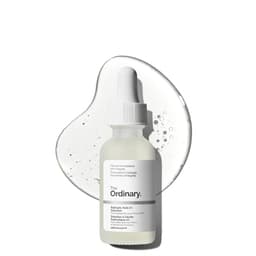
The Ordinary
Salicylic Acid 2% Solution
The same stated 2% salicylic acid for a far smaller sticker price, in a 30 mL bottle, and declared as an over-the-counter acne drug with a published pH band this one does not publish. The cheapest way to find out whether a leave-on BHA suits you at all — drier on the skin, and sold in a quarter of the volume.
Read our review of itPrice as of October 10, 2026. #ad How we’re funded
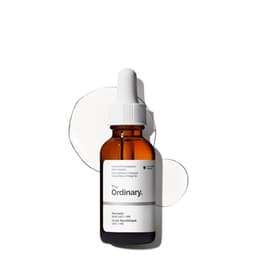
The Ordinary
Mandelic Acid 10% + HA
The alternative if a BHA is simply too much for your skin. Mandelic acid is a large-molecule AHA that penetrates more slowly, which is the whole reason to choose it — a gentler route to the same smoothing job for reactive or redness-prone faces that find salicylic acid stinging.
See the gentle options rankedPrice as of October 10, 2026. #ad How we’re funded
Frequently asked questions
Is Paula's Choice 2% BHA worth it?
For oily, combination or congested skin, yes — it is a labeled 2% salicylic acid in a formula built to be comfortable enough that people actually keep using it, which is most of what decides whether a chemical exfoliant works. The two caveats are worth knowing. The formula is eight ingredients and none of them is soothing, so 'gentle' here means watery and fast-absorbing rather than cushioned. And the brand does not publish a pH figure, which is the one number that determines how much of a salicylic acid is in its active free-acid form.
Why is salicylic acid only fourth in the ingredient list?
Because the two ingredients above it, methylpropanediol and butylene glycol, are solvents — they are there to dissolve the acid and carry it, and salicylic acid is poorly soluble in water on its own. Ingredient order reflects quantity, not importance, and the declared 2% is the figure that matters. What the solvent-forward vehicle does explain is why this 2% does not feel or behave like every other 2%: with a BHA, the vehicle has a real say in how much acid reaches the inside of a pore.
What pH is Paula's Choice 2% BHA?
The brand does not publish a figure on the listing we read, so we do not state one. What you can read off the label is that sodium hydroxide is in the formula as a pH adjuster, so it is deliberately buffered into an acidic range — you simply are not told which. For comparison, The Ordinary publishes 3.20 to 4.00 for its own 2% solution. Salicylic acid needs an acidic environment to stay in the free-acid form that does the work, which is why this is the one missing number we would most like to see.
How often should I use it?
The listing's own directions say once or twice daily, which is more than we would start with. Two or three nights a week is the sane way in, climbing only if your skin stays comfortable — most people buying this already use something else active. Do not rinse it off, follow with a serum or moisturizer, and use sunscreen in the morning: the directions say to finish daytime use with SPF 30 or higher, and that is not optional on any exfoliating acid.
Paula's Choice 2% BHA vs The Ordinary Salicylic Acid 2%: which should I buy?
Both state 2% salicylic acid, and the differences are real. The Ordinary's is declared as a US over-the-counter acne drug with a published pH band of 3.20 to 4.00, is almost aggressively minimal, and comes in a 30 mL dropper bottle. The Paula's Choice is a cosmetic exfoliant with no published pH, a solvent-forward vehicle, and a 118 mL bottle — about four times the volume. Compare them per milliliter rather than per bottle, because the sticker prices are misleading at those sizes. Buy The Ordinary to find out cheaply whether a leave-on BHA suits you; buy this one if you have already decided it does and dryness is what made you stop.
Does it contain fragrance?
No fragrance or parfum appears in the eight-item ingredient list, which also contains no oil, no silicone, no alcohol and no botanical beyond green tea leaf extract. That is a short enough list to check yourself in a few seconds, which is one of the genuine merits of the product.
Is it suitable for sensitive or rosacea-prone skin?
The retailer listing names it for sensitive skin and for redness and rosacea, and we would treat that breadth carefully. Nothing in the formula is soothing — there is no glycerin, no oil, no silicone and no anti-irritant, so what makes it feel mild is the watery texture rather than anything buffering the acid. Reactive and redness-prone skin is usually better served by a large-molecule AHA, and those are ranked on our best chemical exfoliants for sensitive skin page. If you have diagnosed rosacea, that is a conversation with a dermatologist before a purchase.
Can I use it with retinol or vitamin C?
Not on the same night while you are building tolerance — not because of a chemical reaction but because of cumulative irritation. Alternate nights is the straightforward answer, and the sequence is in our how to layer actives guide. Once your skin is settled, plenty of people use a BHA and a retinoid on alternating evenings without trouble. A low-pH vitamin C and a leave-on acid in the same routine is the pairing most likely to sting.
Sources
- Paula's Choice Skin Perfecting 2% BHA Liquid Exfoliant — authorized retailer listing (Dermstore) — Read from an authorized Paula's Choice retailer because the brand's own product page is rendered client-side and serves no ingredient text to a plain fetch. The listing gives the 118 ml size and the complete eight-item ingredient list: "Water (Aqua), Methylpropanediol, Butylene Glycol, Salicylic Acid, Polysorbate 20, Camellia Oleifera (Green Tea) Leaf Extract, Sodium Hydroxide, Tetrasodium EDTA." Directions: "Apply once or twice daily after cleansing and toning. Gently shake 1-2x onto hands or a cotton pad. Apply to face and neck (avoid contact with your lash line and eyelids). Do not rinse. Follow with serum and/or moisturizer. For daytime wear, always finish with SPF 30+." The listing names it for acne-prone, combination, dry, mature, normal, oily AND sensitive skin, and for blackheads, whiteheads, fine lines, wrinkles, acne, large pores, redness and rosacea, with the claims "clinically proven to visibly reduce pores & control oil", "visibly reduce blackheads & whiteheads" within one week and "improve skin barrier". No pH figure appears on the listing (accessed October 10, 2026)
- U.S. FDA — Beta Hydroxy Acids in Cosmetics — FDA on salicylic acid as a beta hydroxy acid (accessed July 17, 2026)
- American Academy of Dermatology — Acne: Diagnosis and treatment — AAD overview of benzoyl peroxide, retinoids, salicylic and azelaic acid for acne (accessed July 17, 2026)
- American Academy of Dermatology — Updated guidelines for the management of acne — AAD 2024 acne management guideline summary (accessed July 17, 2026)
- Chemical Peels for Skin Resurfacing — StatPearls (NCBI Bookshelf) — Reference overview of AHA/BHA exfoliation mechanisms (accessed July 17, 2026)
- American Academy of Dermatology — Should I apply my skin care products in a certain order? — AAD on the order to apply cleanser, treatment, moisturizer and sunscreen (accessed July 17, 2026)
Keep reading
Best salicylic acid products
This liquid ranked against the cheap solution, the medicated cleanser and the weekly peel, on stated strength, format and cost per mL.
See the rankingThe Ordinary Salicylic Acid 2% Solution review
The other 2% BHA most people are choosing between, reviewed the same way — and the one with a published pH.
Read the reviewHow to use salicylic acid
The method this review assumes: patch test, build frequency slowly, nothing else strong on the same night.
Read the guideBest chemical exfoliants for sensitive skin
Where to go if a 2% BHA stings: the large-molecule acids ranked for reactive skin.
See the picksHow to get rid of blackheads
What a BHA does and does not do for blackheads, and the squeezing mistake that makes them worse.
Read the guideSigns of over-exfoliation
The tells that you have gone too fast, and what to stop doing first.
Read the guide