Actives & Acids

Best Skincare for Rosacea

A five-product routine for skin that flushes: the one active with a real evidence base, the cleanser that will not set it off, and the sunscreen filter that matters.

By Stephen V.Last updated How we pick

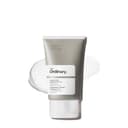
The one product on this page with a real evidence base behind it is The Ordinary Azelaic Acid Suspension 10%— azelaic acid is the only ingredient here that appears in dermatology guidance for rosacea as a treatment rather than as support, and this is the cheapest way to buy a printed 10%. The budget pick, and the gentlest thing you can add if that one is too much, is The Ordinary Niacinamide 10% + Zinc 1%. And the product most likely to reduce how often you flush, which is not an active at all, is La Roche-Posay Anthelios Mineral SPF 50.

Here is the thing a rosacea shopping list has to say out loud: on this skin, what you stop using matters more than what you start. The AAD’s own rosacea guidance leads with trigger avoidance and gentle skin care, and the single most common reason a rosacea routine fails is a foaming cleanser, an alcohol toner or a scrub that was fine on someone else’s face. So this page ranks five products and spends as much time on what is not here. Prices are live from our price layer with the date they were read, we own no units, and our method is here. Nothing below is medical advice: persistent papules, pustules or eye symptoms are a dermatologist’s job, and prescription azelaic acid at 15% exists for exactly that reason.

How this is funded: we earn a commission if you buy through our links, at no extra cost to you. It never changes which product we recommend, and we’ll tell you when we’d skip one. Full disclosure.

Quick picks

Ranked on formulation, stated concentration and buyer fit. Select a row to jump to the full write-up. We have not tested these products — here is exactly what we do instead.

#ProductBest forPrice
1
The Ordinary Azelaic Acid Suspension 10%

The Ordinary Azelaic Acid Suspension 10%

A multitasker with real evidence behind it for redness, bumps and post-acne marks — and one of the rare actives usually safe for rosacea-prone skin. A labeled 10%, for a handful of dollars.

Best overall, and the only active here with rosacea guidance behind it
$12.20 · View on Amazon

Price as of November 22, 2026. #ad How we’re funded

2
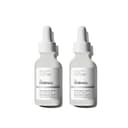
The Ordinary Niacinamide 10% + Zinc 1%

The Ordinary Niacinamide 10% + Zinc 1%

The go-to niacinamide serum, and not by accident — a labeled 10% with zinc for a couple of bucks. Just know that 10% sits above the 4-5% most research uses, so sensitive skin might do better with less.

Budget pick, and the gentlest active to start on
$12.00 · View on Amazon

Price as of November 22, 2026. #ad How we’re funded

3
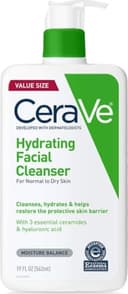
CeraVe Hydrating Facial Cleanser

CeraVe Hydrating Facial Cleanser

A non-foaming, lotion-type cleanser for dry and sensitive skin — it cleans without surfactant stripping and leaves ceramides behind. It's the flip side of the foaming version for the opposite end of the spectrum.

Best cleanser
$16.97 · View on Amazon

Price as of November 22, 2026. #ad How we’re funded

4
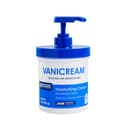
Vanicream Moisturizing Skin Cream

Vanicream Moisturizing Skin Cream

The minimalist's pick — no fragrance, dyes, lanolin, parabens or formaldehyde releasers, dispensed from a sanitary pump tub. When the aim is 'nothing that might set skin off', this belongs on the shortlist.

Best moisturizer for reactive skin
$13.56 · View on Amazon

$14.496% off

Price as of November 22, 2026. #ad How we’re funded

5
La Roche-Posay Anthelios Mineral SPF 50 Gentle Lotion

La Roche-Posay Anthelios Mineral SPF 50 Gentle Lotion

A fully mineral SPF 50 with antioxidants for skin that can't handle chemical filters. A slight cast is the fair price of a pure-mineral, fragrance-free formula.

Best sunscreen
$25.97 · View on Amazon

Price as of November 22, 2026. #ad How we’re funded

6
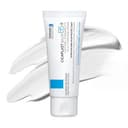
La Roche-Posay Cicaplast Balm B5

La Roche-Posay Cicaplast Balm B5

A calming repair balm worth keeping around for the flaky, over-exfoliated, retinol-burned patch. Panthenol and madecassoside soothe and shield while a battered barrier heals.

Best thing to own for a flare
$13.69 · View on Amazon

$18.9928% off

Price as of November 22, 2026. #ad How we’re funded

The picks in full

#1Best overall, and the only active here with rosacea guidance behind it

The Ordinary Azelaic Acid Suspension 10%

A multitasker with real evidence behind it for redness, bumps and post-acne marks — and one of the rare actives usually safe for rosacea-prone skin. A labeled 10%, for a handful of dollars.

Strengths

  • A disclosed 10% azelaic acid with solid evidence for redness and pigmentation
  • Usually well-tolerated by rosacea-prone skin
  • Layers comfortably with most other actives

Trade-offs

  • The silicone suspension has a distinctive, faintly grainy feel
  • Overapply it and it can pill beneath some sunscreens
Key activeAzelaic acid
Stated concentration10%
FormatSilicone cream-gel
Fragrance-freeYes
Best forRosacea-prone, Blemish-prone, Sensitive

Formulation note. 10% azelaic acid. The evidence backs it for rosacea redness, mild acne and pigmentation, and it's mild enough for reactive skin — an unusually versatile, well-tolerated active.

Ingredients and claims read from the product listing, on July 18, 2026. “Not published” means the brand does not state that figure.

#2Budget pick, and the gentlest active to start on

The Ordinary Niacinamide 10% + Zinc 1%

The go-to niacinamide serum, and not by accident — a labeled 10% with zinc for a couple of bucks. Just know that 10% sits above the 4-5% most research uses, so sensitive skin might do better with less.

Strengths

  • A disclosed 10% niacinamide plus 1% zinc to rein in oil
  • One of the cheapest actives you can buy in skincare
  • Fragrance-free with a water-thin feel

Trade-offs

  • 10% overshoots the 4-5% that's been studied and can pill or sting
  • The suspended zinc can drag a little on the skin
Key activeNiacinamide
Stated concentration10%
FormatWater-light serum
Fragrance-freeYes
Best forOily, Combination, Blemish-prone

Formulation note. 10% niacinamide with 1% zinc PCA. The bulk of published benefit for redness and the barrier lands around 4-5%, so 10% isn't a case of stronger being better and can irritate — a fair caveat on an otherwise handy, cheap serum.

Ingredients and claims read from the product listing, on July 18, 2026. “Not published” means the brand does not state that figure.

#3Best cleanser

CeraVe Hydrating Facial Cleanser

A non-foaming, lotion-type cleanser for dry and sensitive skin — it cleans without surfactant stripping and leaves ceramides behind. It's the flip side of the foaming version for the opposite end of the spectrum.

Strengths

  • Non-foaming and never stripping
  • Deposits ceramides and hyaluronic acid on the skin
  • Fragrance-free and mild enough for twice a day

Trade-offs

  • It may seem to leave heavy makeup behind after a single pass
  • Too soft for very oily skin looking for a deep clean
Key activeNon-stripping surfactants + ceramides
Stated concentrationNot published
FormatLotion (non-foaming)
Fragrance-freeYes
Best forDry, Sensitive, Normal

Formulation note. A barely-foaming cream cleanser with three ceramides, hyaluronic acid and niacinamide. It cleans by dissolving grime rather than stripping it away, which is exactly what dry skin wants.

Ingredients and claims read from the product listing, on July 18, 2026. “Not published” means the brand does not state that figure.

#4Best moisturizer for reactive skin

Vanicream Moisturizing Skin Cream

The minimalist's pick — no fragrance, dyes, lanolin, parabens or formaldehyde releasers, dispensed from a sanitary pump tub. When the aim is 'nothing that might set skin off', this belongs on the shortlist.

Strengths

  • Leaves out the most common contact irritants and allergens
  • The pump tub stays cleaner than a jar
  • Strong value in the big size

Trade-offs

  • Very basic, with no ceramide or niacinamide bonuses
  • A sealing finish that some feel is heavy
Key activeBarrier emollients (minimal formula)
Stated concentrationNot published
FormatRich cream
Fragrance-freeYes
Best forSensitive, Allergy-prone, Dry

Formulation note. Made without fragrance, dyes, lanolin, parabens or formaldehyde releasers — picked for what it leaves out rather than any actives it adds. It's the elimination-routine default dermatologists tend to fall back on.

Ingredients and claims read from the product listing, on July 18, 2026. “Not published” means the brand does not state that figure.

#5Best sunscreen

La Roche-Posay Anthelios Mineral SPF 50 Gentle Lotion

A fully mineral SPF 50 with antioxidants for skin that can't handle chemical filters. A slight cast is the fair price of a pure-mineral, fragrance-free formula.

Strengths

  • Entirely mineral — titanium dioxide and zinc — at SPF 50
  • Bolstered with an antioxidant complex
  • Free of fragrance

Trade-offs

  • A slight white cast, as every true mineral filter leaves
  • Heavier in texture than a chemical sunscreen
Key activeTitanium dioxide + zinc oxide (SPF 50)
Stated concentrationSPF 50
FormatFluid lotion
Fragrance-freeYes
Best forSensitive, Reactive, Rosacea-prone

Formulation note. Fully mineral filters at SPF 50 with antioxidants. Going pure-mineral means accepting some cast — a fair trade for anyone chemical filters irritate.

Ingredients and claims read from the product listing, on July 18, 2026. “Not published” means the brand does not state that figure.

#6Best thing to own for a flare

La Roche-Posay Cicaplast Balm B5

A calming repair balm worth keeping around for the flaky, over-exfoliated, retinol-burned patch. Panthenol and madecassoside soothe and shield while a battered barrier heals.

Strengths

  • Panthenol (B5), madecassoside and shea to soothe and shield
  • A solid rescue after overdoing retinol or acids
  • Doubles up on lips, hands and dry patches as well

Trade-offs

  • As a sealing balm it's too heavy to use all over on oily skin
  • It's a rescue product rather than a daily active
Key activePanthenol (B5) + madecassoside
Stated concentrationNot published
FormatRich balm
Fragrance-freeYes
Best forIrritated, Compromised barrier, All

Formulation note. Panthenol, madecassoside and shea butter in a sealing balm. Made to protect and calm irritated skin — the one to grab when an active has pushed the barrier past its limit.

Ingredients and claims read from the product listing, on July 18, 2026. “Not published” means the brand does not state that figure.

Why azelaic acid is first and everything else is second

Rosacea is the one place in this site’s whole ingredient map where the ranking is not a close call. The published review work on azelaic acid covers its anti-inflammatory and antimicrobial activity and its use in both acne and rosacea, and the prescription product label for the 15% gel is written for inflammatory papules and pustules of rosacea specifically. That is an unusual amount of documentation for something you can buy over the counter at 10% for the price of a sandwich.

Two honest caveats come with ranking it first. The over-the-counter 10% suspension is not the 15% prescription gel, and nobody has published a head-to-head that lets us tell you how much of the difference matters. And azelaic acid stings on about a third of the faces that try it — a warm, prickly ten minutes that usually fades after the first week and sometimes does not. If it does not fade, stop; that is the signal, not a tolerance ramp to push through. The full timeline is at how long azelaic acid takes to work, and the ingredient comparison that matters most on this skin is azelaic acid vs niacinamide.

Niacinamide is the fallback, and it is a good one. The published review on topical niacinamide covers barrier and anti-inflammatory effects, which is the right mechanism for skin whose problem is a leaky, reactive barrier rather than a clogged pore. It almost never stings. It is the cheapest product on this page. If azelaic acid is a bridge too far in week one, buy this instead and try the acid in a month.

The three products that are not actives at all

The cleanser is a real decision, not a formality.A non-foaming, fragrance-free, lukewarm-water cleanser once or twice a day is the position the AAD’s gentle-skin-care guidance points at, and our pick is a hydrating lotion cleanser with ceramides that rinses without stripping. What we have deliberately not ranked is any foaming or salicylic wash, because a sulfate-forward foam is the single most reliable way to turn a calm week into a flushed one. If you want the reasoning across skin types rather than just this one, best gentle cleanser for sensitive skin argues it out.

The moisturizer should be boring on purpose. The StatPearls review describes the job as occlusion plus humectancy, and on rosacea-prone skin the ingredient list is a subtraction exercise: no fragrance, no essential oils, no menthol or camphor, no witch hazel, nothing that tingles. Our pick is the shortest, blandest ingredient list in our registry and is sold in a pump tub, which also removes the fingers-in-a-jar problem. It is not glamorous. That is the point.

The sunscreen is where most rosacea routines quietly fail.Sun is one of the most commonly reported triggers, so the sunscreen is not a nice-to-have on this skin — it is closer to a treatment. We rank a mineral filter rather than a chemical one here for a specific reason: zinc and titanium sit on the surface and are the least likely to sting on skin that is already reactive, and they avoid the warm feeling some people get from organic filters. The FDA’s labeling rules define what the SPF number and “broad spectrum” mean, which is what we rank on. The trade is cosmetic: mineral filters leave more of a cast, and on redness that can read as a feature rather than a bug. Mineral vs chemical sunscreen is the full argument.

And something for the bad week.A panthenol balm is not treating rosacea and we are not claiming it does. It is there so that when you have overdone it — too much acid, a hot shower, a week of wind — you have something to put on your face instead of giving up on the routine entirely.

What this routine deliberately leaves out

Retinoids. Not banned, but not here. A retinoid on rosacea-prone skin is a slow, careful project supervised by how your skin reacts, and putting one on a five-product starter list is how people end up worse than when they started. Revisit it after three calm months, at the lowest strength, twice a week, buffered over moisturizer.

Scrubs, brushes and strong acids. Glycolic acid at the strengths on this site is a reasonable product for a lot of people and a bad idea on this skin. If you want a gentle exfoliating step eventually, the two to consider are mandelic and lactic acid, which are covered at best chemical exfoliants for sensitive skin.

Vitamin C at low pH.A water-based L-ascorbic acid serum needs an acidic pH to work, and acidic plus reactive is a bad combination. If you want a tone step, a derivative at a near-neutral pH is the version of this that does not sting — the argument is at L-ascorbic acid vs vitamin C derivatives.

Anything with fragrance, menthol, camphor or alcohol.This is the one blanket rule on the page. It excludes a large fraction of what is sold as “soothing”, including most toners and nearly every product marketed on a cooling sensation, because that sensation is an irritant doing its job.

How to start without triggering a flare

Week one: cleanser, moisturizer, mineral sunscreen. Nothing active. Let the baseline settle so you know what your skin looks like when nothing is being done to it, because otherwise you cannot tell what the active did.

Week two or three:add the azelaic acid, at night, three nights a week, a pea-sized amount for the whole face, over moisturizer if it stings. Patch test first on the jawline for three nights — how to patch test is five minutes of reading that saves a bad fortnight.

Week six: if the azelaic acid is comfortable, move to nightly. If it is not, swap it for the niacinamide and stop there. Half the value of a rosacea routine is knowing when to stop adding things.

Keep a trigger note, not just a product list. Heat, alcohol, spiced food, sun and stress show up repeatedly in rosacea guidance as triggers, and none of them is addressable by anything on this page. If your flushing tracks your Friday nights more closely than your skincare, the cheapest intervention on this page is free.
Frequently asked questions

What is the best skincare routine for rosacea?

Four steps: a non-foaming fragrance-free cleanser, azelaic acid at night as the active, a bland occlusive moisturizer, and a mineral sunscreen every morning. Add the active only after a week or two of just the other three, so you can tell what caused what. Azelaic acid is the one item here that appears in dermatology rosacea guidance as a treatment; the other three are there to stop you triggering a flare.

Is azelaic acid good for rosacea?

It is the best-documented over-the-counter option. The published review work covers azelaic acid's anti-inflammatory and antimicrobial activity in both acne and rosacea, and the prescription 15% gel is labeled for inflammatory papules and pustules of rosacea specifically. The 10% you can buy without a prescription is not the same product as the 15% gel and no head-to-head lets us quantify the gap, but it is the same molecule at a real printed concentration.

What ingredients should I avoid with rosacea?

Fragrance, essential oils, denatured alcohol, witch hazel, menthol, camphor and any physical scrub. Anything that produces a cooling or tingling sensation is producing it by irritating skin that is already reactive. Foaming sulfate cleansers are the single most common avoidable trigger we see in this category, which is why the cleanser on this page is a non-foaming lotion.

Mineral or chemical sunscreen for rosacea?

Mineral, as a starting point. Zinc oxide and titanium dioxide sit on the surface rather than absorbing into it, which makes them the least likely to sting on reactive skin, and they avoid the warm feeling some people report from organic filters. The trade is a visible cast. If a mineral formula is cosmetically unusable for you, a well-tolerated chemical sunscreen you actually wear every day beats a mineral one you skip.

Can I use retinol if I have rosacea?

Cautiously, and not at the start. Retinoids are not forbidden on rosacea-prone skin, but they are an irritant by mechanism, and adding one to a routine that is not yet stable is how a manageable flush becomes a bad month. Get three calm months on the routine here first, then introduce the lowest strength twice a week, buffered over moisturizer, and stop at the first sign of sustained stinging.

Does niacinamide help rosacea redness?

It is a reasonable supporting ingredient rather than a treatment. The published review on topical niacinamide covers barrier and anti-inflammatory effects, which is the right mechanism for skin with a reactive, leaky barrier, and it almost never stings. We rank it as the budget pick and the fallback for anyone who cannot tolerate azelaic acid — not as an equivalent to it.

When should I see a dermatologist instead?

If you have persistent papules and pustules, visible broken capillaries you want treated, thickening skin around the nose, or any eye involvement — dryness, grittiness, inflamed lids. Those are not addressable by anything on this page. Prescription options including 15% azelaic acid, topical ivermectin and oral treatments exist, and a routine like this one is the thing you run alongside them rather than instead of them.

Sources

Keep reading