Mineral vs Chemical Sunscreen: Which Should You Buy?
Two filter systems, one job. The honest summary: both are regulated sunscreen drugs, both can be broad spectrum, and the type that protects you best is the one you will put on properly every morning. Here is what actually separates them, and what we are not going to pretend to settle.
How this is funded: we earn a commission if you buy through our links, at no extra cost to you. It never changes which product we recommend, and we’ll tell you when we’d skip one. Full disclosure.
The verdict: buy the Neutrogena Invisible Daily Defense SPF 60— a chemical filter — if you want one bottle that disappears on the skin and is cheap enough to use properly, and buy the La Roche-Posay Anthelios Mineral SPF 50 if your skin is reactive, rosacea-prone or mid-way through a retinoid adjustment phase. Both are in the picks below with live prices. Those are the two ends of this question, and almost everyone lands at one of them.
What follows is the reasoning, including the part of the debate we are not going to pretend to resolve.
What actually separates them
One thing: the active ingredients. A mineral sunscreen filters with titanium dioxide, zinc oxide, or both. A chemical sunscreen uses organic filters, listed by name in the Active Ingredients panel that US sunscreen labels carry. That panel is the only reliable way to tell what you have bought, because the marketing words on the front — “physical”, “natural”, “invisible” — are not regulated categories.
Everything else people attribute to the two types follows from how those filters behave in a formula, not from a difference in what sunscreen is for. Both are regulated over-the-counter drugs. Both can carry the broad spectrum claim, which is the part of the label that speaks to UVA as well as UVB — and which the AAD tells consumers to look for alongside the SPF number rather than instead of it.
Side by side
| Mineral | Chemical | |
|---|---|---|
| The filters | Titanium dioxide and/or zinc oxide | Organic filters, named in the Active Ingredients panel |
| Regulatory status | OTC sunscreen drug, same labeling rules | OTC sunscreen drug, same labeling rules |
| Highest SPF in our registry | SPF 50 (Anthelios Mineral) | SPF 60 (Neutrogena Invisible, Anthelios Melt-in Milk) |
| Cast | Yes — both our mineral picks record one, more visible on deeper tones | No — the reason the no-cast picks on this site are all chemical |
| Texture | Heavier; sits on the surface | Lighter; absorbs |
| Reactive or rosacea-prone skin | The usual first suggestion, zinc oxide especially | Often fine, particularly fragrance-free versions |
| Body coverage | Awkward — cast and volume both work against you | Easy — 150 mL with no cast is a body product |
| Cheapest option here | CeraVe Hydrating Mineral SPF 30 | Neutrogena Invisible Daily Defense SPF 60 |
| Reapplication rule | Identical: at least every two hours, and after water or sweat | Identical: at least every two hours, and after water or sweat |
The thing that matters more than the filter: how much you use
The FDA’s consumer guidance on sunscreen spends its time on application — apply generously, reapply at least every two hours, reapply after swimming or sweating, and treat water resistance as a timed claim of 40 or 80 minutes rather than a promise. SPF is measured at a standard application density that is thicker than most people apply in real life. That gap is the biggest variable in this entire question, and it is bigger than the gap between filter types.
It is also why one of our chemical picks is a drugstore SPF 60 rather than something smarter. A sunscreen you are willing to use by the half-teaspoon on your face and neck, every morning, and again after lunch, outperforms a more elegant bottle you are rationing. Price is a protection feature.
The “which is safer” question, answered honestly
This is what most people are really asking, so it deserves a straight answer rather than a side-step: we cannot settle it, and we are not going to imply we can.Both filter types are regulated as over-the-counter drugs and both are legally sold. There is genuine scientific and regulatory discussion about systemic absorption of some organic filters — absorption is not the same thing as harm, and we have no clinical outcome to report in either direction.
What is not contested is the risk of unprotected sun exposure, which is why the AAD’s basic guidance puts daily sun protection alongside cleansing and moisturizing rather than as an optional extra. If the online argument about filters is making you wear less sunscreen, it has already cost you more than either answer could.
If the debate bothers you, the useful move is not paralysis: buy a mineral formula, which uses the two filters nobody argues about, and get on with your morning.
Which to buy, by situation
Reactive, rosacea-prone, or on a retinoid.Mineral, fragrance-free, SPF 50. The AAD’s rosacea guidance points at gentle fragrance-free products generally, and zinc oxide is the filter most often suggested for skin that stings easily. Our retinol-user roundup carries the same logic for the peeling phase.
Medium-to-deep skin tones. Cast is not a cosmetic quibble here; it is the reason people stop wearing sunscreen. A chemical or tinted formula is usually the right call, and we rank a no-cast option specifically for deeper tones in both sunscreen roundups.
Oily or breakout-prone. Choose on finish rather than filter. Both types make light textures; what you are avoiding is anything that feels like a layer by midday, because that is the bottle you abandon. Best sunscreen for acne-prone skin ranks on exactly that.
Face and body in one product. Chemical, at volume. A 150 mL no-cast SPF 60 covers arms, shoulders and chest in a way a 50 mL mineral lotion never will, and running out is its own failure mode.
Children, or anyone with eczema-prone skin. Mineral is the conventional first suggestion, and this is one of the places where a pediatrician or dermatologist is a better source than a skincare site.
Two myths worth dropping
“Mineral reflects, chemical absorbs.”It is the tidy version taught everywhere, and it is too tidy — the mechanism is more complicated than the slogan, and it does not help you choose a bottle. Nothing about your purchase changes if you drop it.
“Mineral needs no reapplication.” False, and the most consequential myth on this page. Every sunscreen comes off with sweat, water, towels and the backs of your hands. The reapplication rule is the same for both: at least every two hours outdoors, and immediately after swimming or heavy sweating.
Bottom line
Mineral or chemical is the least important decision you will make in front of the sunscreen shelf. The filter type changes the cast, the texture and how willingly you will apply it at the proper amount — and that last one is where the real protection is won or lost. Pick the type that suits your skin and your skin tone, buy enough of it to be generous, and reapply. If you are reactive, start mineral. If you want it to vanish, start chemical. Either way, wear it.
General guidance, not medical advice. Actives & Acids is written by a skincare enthusiast, not a dermatologist. For a diagnosis, a reaction, or a prescription active like tretinoin, see a qualified professional. Introduce any new active slowly and patch-test first.
What we'd actually buy
Chosen from the same registry as our roundups, on published formulation facts rather than hands-on testing — here is exactly what we do instead.
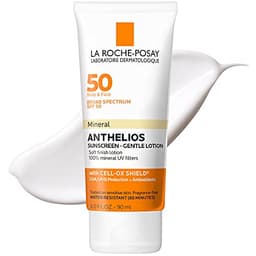
La Roche-Posay
Anthelios Mineral SPF 50 Gentle Lotion
The mineral pick if your skin reacts to things. Titanium dioxide and zinc oxide at SPF 50, fragrance-free, with an antioxidant complex — and a slight cast, which is the standing tax on a pure-mineral filter rather than a formulation failure.
See it ranked in fullPrice as of October 18, 2026. #ad How we’re funded
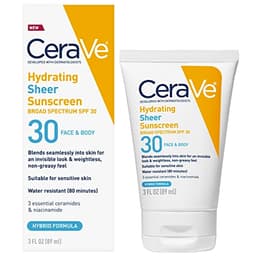
CeraVe
Hydrating Mineral Sunscreen SPF 30
The cheap way to find out whether mineral suits you. Mineral filters with three ceramides and hyaluronic acid, fragrance-free, at a drugstore price. The compromise is in the number: SPF 30, not 50.
See it ranked in full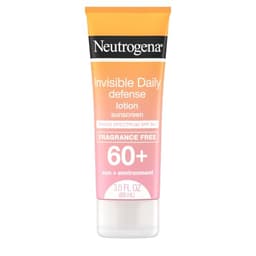
Neutrogena
Invisible Daily Defense SPF 60
The chemical pick we would buy, and the best answer on this page to the under-application problem: fragrance-free SPF 60 with antioxidants, cheap enough to apply by the half-teaspoon and reapply without flinching.
See it ranked in full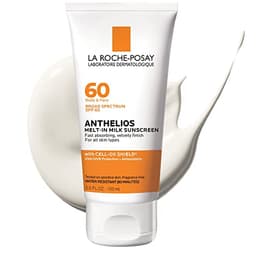
La Roche-Posay
Anthelios Melt-in Milk SPF 60
The chemical option for face and body at once — SPF 60, 150 mL, no cast, which is exactly what a mineral filter cannot offer you on arms and shoulders. It is fragranced, so it is not the pick for reactive skin.
See it ranked in fullFrequently asked questions
Is mineral or chemical sunscreen better?
Neither is better as a category. Both are regulated over-the-counter sunscreen drugs, both are sold as broad spectrum, and both work at the SPF on the bottle when applied at the tested amount. The real differences are practical: mineral filters leave a cast and sit on the skin, chemical filters disappear and are easier to apply generously. The best sunscreen is the one you will actually wear every day and reapply.
What is the difference between mineral and chemical sunscreen?
The filters. Mineral sunscreens use titanium dioxide, zinc oxide, or both. Chemical sunscreens use organic filters such as avobenzone and its relatives, which the label lists as active ingredients. You can tell which you are holding in about five seconds — turn the bottle over and read the Active Ingredients panel, which US sunscreen labels are required to carry.
Which is safer, mineral or chemical sunscreen?
This is the question behind most searches on this topic, and we are not going to settle it from a product label. Both filter types are regulated as over-the-counter drugs and both are permitted for sale in the United States. There is active scientific and regulatory discussion about systemic absorption of some organic filters, which is not the same thing as demonstrated harm, and we have no clinical finding to offer you either way. What is not in dispute is that unprotected sun exposure carries established risk — so if the debate is making you skip sunscreen, the debate is costing you more than either filter is.
Which sunscreen is better for sensitive or rosacea-prone skin?
Mineral, as a starting point. The AAD's rosacea guidance pushes toward gentle, fragrance-free products, and the two mineral picks here are both fragrance-free. Zinc oxide in particular is the filter most often recommended for reactive skin. That said, plenty of people with sensitive skin wear a fragrance-free chemical sunscreen with no trouble at all, and a patch test settles it faster than any general rule.
Which is better for acne-prone skin?
Finish matters more than filter type here. Oily and breakout-prone skin usually prefers a light, non-greasy texture that does not sit heavily on the skin, and both categories make those. The thing to avoid is the product you abandon in week two, since the sunscreen you do not wear protects nothing. Our acne-prone sunscreen roundup ranks six options on exactly that criterion.
Do mineral sunscreens leave a white cast?
Yes, to some degree, and it is more visible on medium-to-deep skin tones. It is a direct consequence of how the filters work and how much of them a high-SPF mineral formula needs. Tinted versions reduce it; a chemical or hybrid formula avoids it. This is the single most common reason people switch away from mineral, and it is a legitimate reason — a sunscreen you dislike wearing is a sunscreen you under-apply.
Does mineral sunscreen work immediately?
Both types start working as soon as they are spread into an even film, and the practical advice is identical: apply generously before you go out, and reapply at least every two hours, or after swimming, towelling or heavy sweating. Water resistance claims on a US label are limited to 40 or 80 minutes, which is a tested claim rather than a vague one — so read it and time it.
Can I use a mineral sunscreen over a retinoid or an acid?
Yes, and it is a sensible pairing. Retinoids and the exfoliating acids both make your skin less forgiving of sun exposure, and a fragrance-free mineral SPF is the least likely thing to sting on skin that is already in an adjustment phase. Apply it last in the morning, after your moisturizer.
Are hybrid sunscreens a thing?
Yes — plenty of formulas combine a mineral filter with organic ones, which is why the mineral-versus-chemical framing is cleaner in a headline than it is on a shelf. The Active Ingredients panel is the only reliable way to know what you have bought. If you want a pure mineral product, look for a panel that lists only titanium dioxide and zinc oxide.
Sources
- U.S. FDA — Sunscreen: How to Help Protect Your Skin from the Sun — FDA on SPF numbers, broad-spectrum and application amount (accessed July 17, 2026)
- American Academy of Dermatology — How to decode a sunscreen label — AAD on SPF, broad spectrum and water resistance claims (accessed July 17, 2026)
- American Academy of Dermatology — Skin care basics — AAD consumer guidance on cleansing, moisturizing and sun protection (accessed July 17, 2026)
- American Academy of Dermatology — Rosacea: Diagnosis and treatment — AAD on azelaic acid, metronidazole and ivermectin for rosacea (accessed August 19, 2026)
Keep reading
Best sunscreen for retinol users
Six sunscreens ranked for skin in a retinoid adjustment phase, mineral and chemical both.
See the picksBest sunscreen for acne-prone skin
The same six ranked on finish and comedogenicity instead — a different winner, for a reason.
See the picksIngredient comparisons
Every head-to-head on the site, from retinol vs tretinoin to AHA vs BHA.
Browse the comparisonsSkincare routine order
Why sunscreen is the last morning step whichever filter type you choose.
Read the guideBest actives for redness and rosacea
Where a fragrance-free mineral SPF fits in a routine built for reactive skin.
See the picksBest skincare for men
The six-product version, with sunscreen as the first purchase rather than the fifth.
See the picks