Actives & Acids

Best Skincare for Dark Spots

A five-step routine for hyperpigmentation, ranked - and the reason the top pick is a sunscreen rather than a brightening serum.

By Stephen V.Last updated How we pick

The best product for dark spots is a sunscreen, and specifically La Roche-Posay Anthelios Tinted Mineral SPF 50— because the tint means iron oxides, and iron oxides are the only thing on this page that addresses visible light rather than just UV. If you want the cheapest product that actually targets the pigment itself, the budget pick is The Ordinary Alpha Arbutin 2% + HA. And the one active here with the broadest documentation across both red marks and melasma is The Ordinary Azelaic Acid Suspension 10%.

Leading a pigment page with sunscreen looks like a dodge. It is not. Every brightening ingredient in this routine is working against whatever new pigment your morning produced, and published work on visible light shows that pigment-prone skin responds to wavelengths a clear sunscreen does not filter at all. A brightener without daily photoprotection is a bucket with a hole in it, which is why the AAD’s own melasma guidance puts sun protection first. The other four products are worth buying. They are worth roughly nothing without the first. Prices render live from our price layer with the date they were read, we own no units, and here is our method.

How this is funded: we earn a commission if you buy through our links, at no extra cost to you. It never changes which product we recommend, and we’ll tell you when we’d skip one. Full disclosure.

Quick picks

Ranked on formulation, stated concentration and buyer fit. Select a row to jump to the full write-up. We have not tested these products — here is exactly what we do instead.

#ProductBest forPrice
1
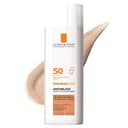
La Roche-Posay Anthelios Tinted Mineral Sunscreen SPF 50

La Roche-Posay Anthelios Tinted Mineral Sunscreen SPF 50

The tinted mineral we would buy first for pigment: SPF 50, a sensitive-skin brand already in this registry three times over, and five shades, which is the part that decides whether anyone actually wears a tinted sunscreen. The oddity worth knowing is that its filter panel is not the same in every shade.

Best overall, and the only pick that filters visible light
$39.97 · View on Amazon

Price as of November 22, 2026. #ad How we’re funded

2
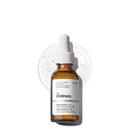
The Ordinary Alpha Arbutin 2% + HA

The Ordinary Alpha Arbutin 2% + HA

The registry's first alpha arbutin serum, at a printed 2% in a water-based formula the brand says it pH-matched specifically to keep the arbutin from degrading. Arbutin is chemically a glucoside of hydroquinone, which is why it keeps coming up in this conversation — but the published mechanism work is cell-culture work on the beta isomer, and this is the alpha. Gentle, cheap, printed, and thinly evidenced.

Budget pick, and best targeted brightener
$11.50 · View on Amazon

Price as of November 22, 2026. #ad How we’re funded

3
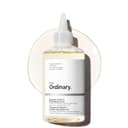
The Ordinary Azelaic Acid Suspension 10%

The Ordinary Azelaic Acid Suspension 10%

A multitasker with real evidence behind it for redness, bumps and post-acne marks — and one of the rare actives usually safe for rosacea-prone skin. A labeled 10%, for a handful of dollars.

Best for red marks and melasma
$12.20 · View on Amazon

Price as of November 22, 2026. #ad How we’re funded

4
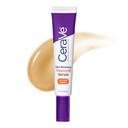
CeraVe Vitamin C Serum with 10% Pure Vitamin C

CeraVe Vitamin C Serum with 10% Pure Vitamin C

A labeled 10% pure vitamin C rounded out with ceramides and hyaluronic acid — the easiest on-ramp to L-ascorbic acid, since the barrier support rides along in the same bottle. No fragrance.

Best morning antioxidant step
$21.74 · View on Amazon

$28.9925% off

Price as of November 22, 2026. #ad How we’re funded

5
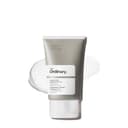
The Ordinary Glycolic Acid 7% Exfoliating Toner

The Ordinary Glycolic Acid 7% Exfoliating Toner

A cult-favorite budget AHA toner — a labeled 7% glycolic for surface smoothing and glow. It's strong for something called a toner; this is a genuine exfoliant, so treat it as one and skip nightly use at the start.

Best exfoliating step
$13.50 · View on Amazon

Price as of November 22, 2026. #ad How we’re funded

The picks in full

#1Best overall, and the only pick that filters visible light

La Roche-Posay Anthelios Tinted Mineral Sunscreen SPF 50

The tinted mineral we would buy first for pigment: SPF 50, a sensitive-skin brand already in this registry three times over, and five shades, which is the part that decides whether anyone actually wears a tinted sunscreen. The oddity worth knowing is that its filter panel is not the same in every shade.

Strengths

  • SPF 50 with mineral filters only, and iron oxides for the tint — the combination the AAD names for melasma
  • Five shades, against the one or three most tinted mineral sunscreens offer
  • Oil-free and oxybenzone-free, from the brand behind three of our other sunscreen picks

Trade-offs

  • The actives differ by SHADE: the standard listing reads titanium dioxide 11% alone, while a Medium-Deep listing reads titanium dioxide 17% plus zinc oxide 8%
  • No iron oxide percentage is published, so the visible-light protection cannot be compared with any rival
  • Prestige pricing for 1.7 oz, which works against applying the amount the FDA tests at
Key activeTitanium dioxide (and zinc oxide in some shades) + iron oxides (SPF 50)
Stated concentrationSPF 50
FormatTinted fluid
Fragrance-freeNot published
Best forSensitive, Pigment-prone, Normal

Formulation note. A mineral SPF 50 tinted with iron oxides. The filter panel is shade-dependent, which is unusual enough to state plainly: the standard shade's published panel is titanium dioxide 11% as the only active, while a Medium-Deep shade's panel reads titanium dioxide 17% with zinc oxide 8%. Iron oxides sit in the inactive list as the colorant, so the visible-light-relevant ingredient carries no published figure — true of every tinted sunscreen we checked, not a fault specific to this one.

Ingredients and claims read from the product listing, on October 31, 2026. “Not published” means the brand does not state that figure.

#2Budget pick, and best targeted brightener

The Ordinary Alpha Arbutin 2% + HA

The registry's first alpha arbutin serum, at a printed 2% in a water-based formula the brand says it pH-matched specifically to keep the arbutin from degrading. Arbutin is chemically a glucoside of hydroquinone, which is why it keeps coming up in this conversation — but the published mechanism work is cell-culture work on the beta isomer, and this is the alpha. Gentle, cheap, printed, and thinly evidenced.

Strengths

  • A published 2% figure, in the product name on the brand's own page
  • Water-based at a stated pH of 4.50-5.50, chosen by the brand to limit alpha arbutin breakdown in water
  • No acid, no retinoid and no exfoliation, so it layers into almost any routine without a tolerance build-up

Trade-offs

  • The published literature we hold is a 1996 cell-culture study on the BETA isomer, run in a cosmetics manufacturer's own laboratory — not a clinical trial on the alpha arbutin you are buying
  • Sharing a parent molecule with hydroquinone does not make it equivalent to hydroquinone, and we publish no equivalence figure because we hold no source for one
  • Not oil-free and no fragrance-free claim per the brand's own page, though no fragrance appears in the list
Key activeAlpha arbutin
Stated concentration2%
FormatLightweight water-based serum
Fragrance-freeNot published
Best forSensitive, All, Acid-intolerant

Formulation note. Read from the brand's own US product page: Aqua, Alpha-Arbutin, Propanediol, Polyacrylate Crosspolymer-6, Hydrolyzed Sodium Hyaluronate, Ergothioneine, Polysorbate 20, Citric Acid, Sodium Citrate, Sodium Hydroxide, Sodium Metabisulfite, Trisodium Ethylenediamine Disuccinate, Ethoxydiglycol, Phenoxyethanol, Chlorphenesin — so the arbutin is SECOND, ahead of everything but water. Stated pH 4.50-5.50; 30 mL and 60 mL sizes; alcohol-free, silicone-free, vegan (water-free: No, oil-free: No). The brand's page describes the product as targeting uneven tone and dark spots and does not describe a mechanism, so we do not print one. It does not mention hydroquinone anywhere.

Ingredients and claims read from the product listing, on November 21, 2026. “Not published” means the brand does not state that figure.

#3Best for red marks and melasma

The Ordinary Azelaic Acid Suspension 10%

A multitasker with real evidence behind it for redness, bumps and post-acne marks — and one of the rare actives usually safe for rosacea-prone skin. A labeled 10%, for a handful of dollars.

Strengths

  • A disclosed 10% azelaic acid with solid evidence for redness and pigmentation
  • Usually well-tolerated by rosacea-prone skin
  • Layers comfortably with most other actives

Trade-offs

  • The silicone suspension has a distinctive, faintly grainy feel
  • Overapply it and it can pill beneath some sunscreens
Key activeAzelaic acid
Stated concentration10%
FormatSilicone cream-gel
Fragrance-freeYes
Best forRosacea-prone, Blemish-prone, Sensitive

Formulation note. 10% azelaic acid. The evidence backs it for rosacea redness, mild acne and pigmentation, and it's mild enough for reactive skin — an unusually versatile, well-tolerated active.

Ingredients and claims read from the product listing, on July 18, 2026. “Not published” means the brand does not state that figure.

#4Best morning antioxidant step

CeraVe Vitamin C Serum with 10% Pure Vitamin C

A labeled 10% pure vitamin C rounded out with ceramides and hyaluronic acid — the easiest on-ramp to L-ascorbic acid, since the barrier support rides along in the same bottle. No fragrance.

Strengths

  • Names a 10% pure vitamin C dose — a disclosed, level-headed place to start
  • Ceramides and hyaluronic acid counter the dryness L-ascorbic acid can bring on
  • Fragrance-free and easy to find on shelves

Trade-offs

  • The opaque tube aids stability, yet it also hides any oxidation from view
  • 10% does the job but isn't the strongest option out there
Key activeL-ascorbic acid (vitamin C)
Stated concentration10%
FormatLight lotion-serum
Fragrance-freeYes
Best forSensitive, Dry, Normal

Formulation note. 10% pure vitamin C with hyaluronic acid and three essential ceramides. Those ceramides are the reason it works as a gentle entry point.

Ingredients and claims read from the product listing, on July 18, 2026. “Not published” means the brand does not state that figure.

#5Best exfoliating step

The Ordinary Glycolic Acid 7% Exfoliating Toner

A cult-favorite budget AHA toner — a labeled 7% glycolic for surface smoothing and glow. It's strong for something called a toner; this is a genuine exfoliant, so treat it as one and skip nightly use at the start.

Strengths

  • A disclosed 7% glycolic acid for just a few dollars
  • Visible smoothing and radiance
  • Carries soothing aloe and ginseng

Trade-offs

  • Too potent for sensitive skin or for daily use right away
  • In the early going, never pair it with other strong acids or retinol on the same night
Key activeGlycolic acid (AHA)
Stated concentration7%
FormatWatery toner
Fragrance-freeYes
Best forNormal, Oily, Resilient

Formulation note. 7% glycolic acid with aloe, ginseng and Tasmanian pepperberry to temper irritation. As a water-soluble AHA it works on the surface — great for glow, and a different job from the pore-clearing BHAs do.

Ingredients and claims read from the product listing, on July 18, 2026. “Not published” means the brand does not state that figure.

Why the sunscreen outranks every brightener

Pigment is a response, not a stain. Melanocytes produce melanin when they are provoked, and the two provocations that matter here are light and inflammation. That has one immediate consequence for a shopping list: a product that interrupts melanin synthesis is working on this morning’s output as well as last summer’s, and if this morning keeps producing more, the arithmetic never gets ahead.

The second consequence is the one most sunscreen marketing ignores. Published work on visible light and pigmentation reports that visible wavelengths — not just UVA and UVB — induce pigmentation in darker skin types, and that iron oxides are what attenuate them. An SPF number says nothing about visible light. A tint does, because the pigments that make a sunscreen tinted are the same iron oxides. That is the entire reason the top pick here is tinted, and it is also the reason we cannot give you a figure for it: no brand publishes its iron oxide load, because a colorant is not an active. We rank on the presence of the right mechanism and say plainly that the dose is undocumented. The sunscreen-only version of this argument is at best sunscreen for dark spots.

Reapplication is part of the product. A tinted mineral fluid reapplies over makeup better than a white mineral cream, which matters because the dose on the label assumes an application density almost nobody achieves once, let alone twice.

The three routes to interrupting pigment, ranked

Alpha arbutin, for targeted spots.The published mechanism work describes arbutin as a tyrosinase inhibitor — it interferes with the enzyme that makes melanin — which puts it in the same mechanistic family as the ingredient Americans actually went looking for, hydroquinone, without hydroquinone’s regulatory problem. The FDA’s own position is that over-the-counter hydroquinone is not legally marketed in the US, which is why half the advice on the internet points at a product you cannot legitimately buy; the full argument is at hydroquinone alternatives. Our pick prints 2% in the product name, which is unusual honesty for this category, and it is the cheapest real brightener we carry. What it is not is fast: tyrosinase inhibition is a months-long project.

Azelaic acid, for marks and for melasma.The review literature covers azelaic acid’s anti-inflammatory and antimicrobial activity and its effect on pigmentation, and dermatology melasma guidance names it among the topical options. That double action makes it the single most useful active on this page for the most common real-world case: brown marks left behind by spots. It prints 10%, it costs about twelve dollars, and it stings on a minority of faces. See azelaic acid for hyperpigmentation for the detail.

Vitamin C, as the morning antioxidant.The dermatology review we cite covers vitamin C’s antioxidant, photoprotective and collagen roles, and vitamin C appears in melasma guidance as an adjunct. We rank it fourth rather than second on purpose: it is support under sunscreen rather than the thing that moves a stubborn patch. Our pick is a 10% L-ascorbic acid with ceramides, chosen because it is the one in our registry least likely to sting on skin already running an acid. The fuller ranking is at best vitamin C serum for dark spots.

And an acid, to clear what is already at the surface. A glycolic toner does not stop melanin production; it speeds up the turnover of the cells already carrying pigment. That makes it a genuine accelerator and a genuine risk, because over-exfoliating pigment-prone skin produces inflammation, and inflammation produces more pigment. Twice a week, at night, and never on the same night as the azelaic acid while you are starting out.

How we ranked them

1. Does it address the cause or the symptom? Photoprotection and tyrosinase inhibition address production. Exfoliation addresses what has already been produced. The first group ranks above the second, which is why the acid is last rather than first despite being the one that shows a change soonest.

2. Does the label publish a figure? Three of these five print an exact concentration: 2% alpha arbutin, 10% azelaic acid, 10% vitamin C. The sunscreen publishes its filters and its SPF but not its iron oxide load, and we say so rather than implying a dose.

3. Is it in the guidance? Sun protection, azelaic acid and vitamin C all appear in the dermatology melasma guidance we cite. Alpha arbutin has published mechanism work rather than guideline status, and is ranked on that basis.

4. Will it make pigment worse if you overdo it? Only one product here can, and it is the acid. That asymmetry is why the order below is also a safety order.

Which spots you actually have, because it changes the answer

Post-inflammatory marks from acne. Flat brown or red marks where a spot used to be. These fade on their own and the whole job is not making them worse: sunscreen daily, azelaic acid at night, and no picking. This is the case with the best prognosis on the page and the one that most often gets over-treated.

Sun spots and age spots. Discrete, sharply bounded brown patches on the face, hands and chest from cumulative exposure. The full routine applies here, and so does patience measured in seasons rather than weeks.

Melasma. Symmetric, blotchy patches across the cheeks, forehead or upper lip, often hormonal and often provoked by heat and visible light as much as by UV. This is the case where the tinted sunscreen stops being an upgrade and becomes the treatment, and it is also the case most likely to need a dermatologist. Our azelaic acid for melasma page covers what is realistic.

An indented or raised scar. Nothing on this page touches these. Texture is not pigment, and no topical reflows collagen. If that is what you are looking at, the honest answer is a procedure conversation, not a serum.

What this page refuses to tell you

That anything here works in two weeks. Every mechanism on this page is slow. Tyrosinase inhibition, cell turnover and photoprotection all compound over months, and the published melasma guidance frames treatment in those terms. Take a photo now in daylight and compare at twelve weeks.

That you should buy hydroquinone online.The FDA’s position is that over-the-counter hydroquinone is not legally marketed in the US. The things sold as it on the open internet are unregulated, and that is a bad risk to take on your face.

That we tested any of this.We own no units and publish no scores. Every figure below is read from a label or a published INCI, and where there is no figure — as with the iron oxides in the top pick — we print the absence instead of a guess.

That stacking all five is better than running two. On pigment-prone skin, irritation is counterproductive by mechanism. Sunscreen plus one brightener, used every day for three months, beats five products used erratically for three weeks.
Frequently asked questions

What is the best skincare routine for dark spots?

Sunscreen every morning — ideally a tinted mineral one, because the iron oxides that make it tinted are what attenuate visible light — plus one brightening active at night. Alpha arbutin for discrete spots, azelaic acid if the marks came from acne. Add a morning vitamin C and a twice-weekly acid later if you want to accelerate things. Running five products badly is worse than running two consistently.

Why does a dark spot routine start with sunscreen?

Because every brightening ingredient works on new pigment as well as old, so unprotected daily exposure means the arithmetic never gets ahead. Dermatology melasma guidance puts sun protection first for exactly that reason. The extra detail most sunscreen marketing leaves out is visible light: published work reports that visible wavelengths induce pigmentation in darker skin types and that iron oxides are what reduce them — and an SPF number tells you nothing about that.

What can I use instead of hydroquinone?

Alpha arbutin is the closest mechanistic substitute available over the counter: published work describes it as a tyrosinase inhibitor, which is the same enzyme hydroquinone acts on. Azelaic acid is the better choice when the pigment came from acne, because it addresses the inflammation as well as the pigment and appears in melasma guidance. The FDA's position is that over-the-counter hydroquinone is not legally marketed in the US, so this is not a preference — it is the only legitimate route.

Does vitamin C fade dark spots?

It helps and it is not the main event. The dermatology review we cite covers vitamin C's antioxidant and photoprotective roles and its part in collagen synthesis, and it appears in melasma guidance as an adjunct rather than a primary treatment. Think of it as morning support that makes the sunscreen's job easier, and expect the visible change to come from the sunscreen plus a dedicated brightener.

How long do dark spots take to fade?

Months. Post-inflammatory marks from acne often fade substantially in three to six months with nothing but sunscreen and no picking. Sun spots are slower. Melasma is slowest, recurs with heat and light, and is the case most likely to need a dermatologist. Photograph the area in daylight now and compare at twelve weeks rather than looking in the mirror daily.

Can exfoliating make hyperpigmentation worse?

Yes, and it is the most common self-inflicted setback on this page. Exfoliation clears cells already carrying pigment, which genuinely accelerates fading — but over-exfoliation produces inflammation, and inflammation is one of the two things that provoke melanin production in the first place. Twice a week at most, never on the same night as another active while you are starting, and stop entirely if skin turns pink and stays pink.

Will any of this help an indented acne scar?

No. Everything on this page addresses pigment, which is color. An indented or raised scar is lost or excess collagen, which is texture, and no topical product reflows it. If what bothers you is the dent rather than the color, the useful conversation is a procedural one with a dermatologist — and the routine here is still worth running, because the color and the texture often sit in the same place.

Sources

  • American Academy of Dermatology — Melasma: Diagnosis and treatment — The AAD's patient guidance: topical skin-lightening agents are first-line for mild melasma while moderate-to-severe cases usually need two or more therapies combined; the topicals it names are hydroquinone, tretinoin with a mild corticosteroid, the triple-combination cream, azelaic acid, kojic acid and vitamin C, with azelaic acid named as a gentler option; it recommends sunscreen containing zinc oxide, titanium dioxide or iron oxide at SPF 30 or higher, reapplied through the day, because "sunlight causes the skin to make more pigment, which can darken existing melasma and cause new patches"; it states results usually take 3 to 12 months; and it notes melasma triggered by pregnancy or a medication may fade once that ends, while otherwise it can last years or a lifetime, with sun protection the thing that helps prevent its return (accessed October 5, 2026)
  • U.S. FDA — FDA works to protect consumers from potentially harmful OTC skin lightening products — The FDA's own drug safety communication, dated 4/19/2022 on the page and marked "Content current as of" 05/01/2026 when we read it. It is the legal fact behind our hydroquinone alternatives page, and it is the reason that page exists at all. On status: these products are "unapproved drugs" and "not generally recognized as safe and effective (not GRASE)", and "FDA is alerting consumers there are no FDA-approved or otherwise legally marketed OTC skin lightening products." On the statute: "OTC skin lightening products containing hydroquinone are deemed to be new drugs and are misbranded," and "All OTC skin lightening products require an FDA approved new drug application before they can be legally marketed," a change the page attributes to the CARES Act and dates "effective September 23, 2020". On the one approved product: "Currently, Tri-Luma is the only FDA-approved drug containing hydroquinone," which "is a prescription product approved for the short-term treatment of dark spots associated with moderate-to-severe melasma of the face" and "should only be used under the supervision of a licensed health care professional." On harm: reports of "serious side effects including skin rashes, facial swelling, and ochronosis (discoloration of skin)", with "ochronosis which may be permanent". And the advice we repeat verbatim on the page: "FDA advises consumers not to use these products due to the potential harm they may cause" and "Consumers should talk to their health care professional about treatment options for certain skin conditions" "including aged or dark spots." The page names no substitute ingredient or product, so nothing on our page is presented as an FDA recommendation (accessed November 21, 2026)
  • Arbutin: mechanism of its depigmenting action in human melanocyte culture (PubMed) — Maeda and Fukuda, Journal of Pharmacology and Experimental Therapeutics 1996 Feb;276(2):765-9, PMID 8632348 — the abstract was fetched in full through the NCBI E-utilities efetch API on this date, the same route used for every other PubMed record in this file. It is the only arbutin mechanism source this site holds, and we present its THREE limitations as prominently as its findings. The opening line is what we cite for the chemistry: "Arbutin, a naturally occurring beta-D-glucopyranoside of hydroquinone, is effective in the topical treatment of various cutaneous hyperpigmentations characterized by hyperactive melanocyte function." On mechanism: arbutin "inhibited the tyrosinase activity of cultured human melanocytes at noncytotoxic concentrations", "did not affect the expression of tyrosinase mRNA", and the kinetics "confirms the reversibility of arbutin as a competitive inhibitor of this enzyme", with the conclusion that the mechanism "involves inhibition of melanosomal tyrosinase activity, rather than suppression of the expression and synthesis of tyrosinase." LIMITATION ONE: this is human melanocyte CELL CULTURE, not a clinical trial on skin — no participant, no spot, no photograph. LIMITATION TWO: the authors' affiliation is the Shiseido Research Center, i.e. a cosmetics manufacturer's own laboratory, which we disclose rather than bury. LIMITATION THREE, and the one that matters most to a shopper: the compound studied is the BETA glucopyranoside, while the serums on sale are ALPHA arbutin, a different isomer — so this paper supports the family's mechanism and the hydroquinone relationship, and it does not establish a clinical result for the product in anyone's cart. That is precisely why alpha arbutin is NOT our top pick on the hydroquinone alternatives page (accessed November 21, 2026)
  • The Ordinary — Alpha Arbutin 2% + HA (official product page) — The brand's own US listing, headed "Alpha Arbutin 2% + HA Brightening Serum for Uneven Skin": the 2% is in the product name, the format is given as a water-based serum, the stated pH is 4.50-5.50, sizes are 30 mL and 60 mL, and the highlights read alcohol-free Yes, silicone-free Yes, vegan Yes, water-free No, oil-free No, with no fragrance-free claim. The ingredient list places the active second behind water: Aqua, Alpha-Arbutin, Propanediol, Polyacrylate Crosspolymer-6, Hydrolyzed Sodium Hyaluronate, Ergothioneine, Polysorbate 20, Citric Acid, Sodium Citrate, Sodium Hydroxide, Sodium Metabisulfite, Trisodium Ethylenediamine Disuccinate, Ethoxydiglycol, Phenoxyethanol, Chlorphenesin. The page describes the product as targeting uneven skin tone and dark spots, says the pH was selected to limit alpha arbutin's degradation in water, and describes NO mechanism of action — so this site prints none from it. It does not mention hydroquinone anywhere, which is why our page sources the hydroquinone relationship to the peer-reviewed literature instead of to the brand (accessed November 21, 2026)
  • A Comprehensive Review of Azelaic Acid: Pharmacological Properties, Clinical Applications and Topical Formulations (PMC) — Review of azelaic acid's action on pigmentation, inflammation and acne (accessed August 19, 2026)
  • Beyond UV: Visible Light and Pigmentation (PubMed) — Ip, Passeron and Rodrigues, Photodermatology, Photoimmunology & Photomedicine 2026 Sep;42(5):e70125, PMID 42802407 — a narrative review of visible light's role in melasma and post-inflammatory hyperpigmentation, and the source behind every quantified claim on our dark-spots sunscreen page. Mechanism: "HEV (400-450 nm) activates opsin-3 on melanocytes, triggering calcium-dependent signaling that increases melanogenesis in a wavelength-specific manner. Clinical studies confirm that blue-violet light induces dose-dependent hyperpigmentation whereas red light produces none," and the pigmentation it induces "can be substantial and persist over time." The iron oxide figures: "melasma patients using iron oxide-containing sunscreen achieved 15% greater Melasma Area and Severity Index (MASI) improvement, 28% greater lightening on colorimetry and 4% greater histologic reduction in melanin than patients using an otherwise similar UV-only sunscreen." On PIH: a suction blister model in which "light-blocked sites healed without hyperpigmentation by Day 29, unlike ambient light-exposed sites that showed colorimetric and histologic darkening." On adherence, which is why we rank price and shade range as hard criteria rather than niceties: "Fewer than two-thirds of patients with hyperpigmentation use sunscreen and fewer than 10% reapply appropriately, with worse habits observed in skin of color, the population at greatest risk," and "Shade incompatibility of tinted formulations represents a key additional barrier to the use of VL-specific photoprotection." Its conclusion — "Standardising VL photoprotection metrics and integrating these into sunscreen development is essential" — is also our authority for saying there is no published figure a buyer can compare one tinted sunscreen against another with. A narrative review, not a trial: it synthesises other people's data and we present it as such (accessed October 31, 2026)
  • Vitamin C in dermatology (PMC) — Telang — review of topical vitamin C forms, stability and photoprotection (accessed July 17, 2026)

Keep reading