Why dark spots are a visible-light problem, not only a UV one
Every sunscreen on the US market is tested and labeled against ultraviolet radiation: SPF measures protection against the UVB that burns, and “broad spectrum” means it also covers UVA. That is the right design for preventing sunburn and photoaging. It is an incomplete design for pigment.
The 2026 review states the mechanism precisely: high-energy visible light at 400–450 nm activates opsin-3 on melanocytes, triggering calcium-dependent signaling that increases melanin production in a wavelength-specific way. Its summary of the clinical work is blunt — “blue-violet light induces dose-dependent hyperpigmentation whereas red light produces none” — and it notes that the pigmentation visible light induces “can be substantial and persist over time.”
So a sunscreen that handles UV perfectly and passes visible light straight through leaves part of the cause untouched. That is not a theoretical gap. The same review reports that melasma patients using an iron oxide-containing sunscreen achieved 15% greater MASI improvement, 28% greater lightening on colorimetry and 4% greater histologic reduction in melanin than patients using an otherwise similar UV-only sunscreen. For post-inflammatory hyperpigmentation — the marks acne leaves behind — it describes a suction blister model in which light-blocked sites healed without hyperpigmentation by day 29 while sites exposed to ambient light darkened measurably.
The AAD’s own melasma guidance points the same way: it recommends sunscreen containing zinc oxide, titanium dioxide or iron oxide at SPF 30 or higher, reapplied through the day, because sunlight makes skin produce more pigment. Iron oxide is in that list for a reason.
The figure nobody publishes
Here is where buying one of these gets frustrating, and where we would rather tell you than paper over it.
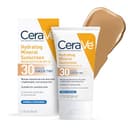
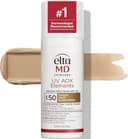
Iron oxides are not a sunscreen active. They are a colorant, so they appear in the inactive ingredient list with no percentage next to them — and that is true of all three tinted products below. A Drug Facts panel will tell you a product is titanium dioxide 11% or zinc oxide 13.5%; nothing on the bottle, the box or the brand’s website tells you whether its tint carries enough iron oxide to matter. The 2026 review ends by calling for exactly this to change: “Standardising VL photoprotection metrics and integrating these into sunscreen development is essential.” Until that happens, nobody — including us — can rank tinted sunscreens by visible-light protection, because the number does not exist in public.
What you can do is use the proxies that are published, and that is what the ranking below does.
How we ranked
1. Is it tinted at all? This is the first filter, and it is the reason three products that already rank well elsewhere on this site are not at the top of this page. An untinted sunscreen, however good its UV numbers, is not addressing the visible-light half of a pigment problem.
2. What the Drug Facts panel actually says. Published mineral filter percentages, and how they split between zinc oxide and titanium dioxide. Zinc oxide covers more of the UVA range, and UVA-plus-visible is the end of the spectrum implicated in pigment, so a zinc-forward panel earns credit over a titanium-only one.
3. Shade range.Not a cosmetic nicety — a clinical one, and the review says so: “Shade incompatibility of tinted formulations represents a key additional barrier to the use of VL-specific photoprotection.” A tint that does not match you is a sunscreen you stop wearing, and the population most affected by pigment is the one these products serve worst. Five shades beats one.
4. Price, as an adherence criterion. The same review reports that fewer than two-thirds of patients with hyperpigmentation use sunscreen at all and fewer than 10% reapply appropriately, with worse habits in skin of color. A sunscreen you ration is a sunscreen applied below the amount it was tested at, so cost per application is part of how well a product works rather than a separate question.
The two untinted picks, and why they are here
Picks four and five are not tinted, and we have put them below the tinted ones deliberately. They are here because the first criterion cuts both ways: a tinted mineral sunscreen that leaves a grey cast on deep skin, or that you avoid because the shade is wrong, protects you less than an untinted one you wear every day.
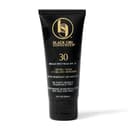
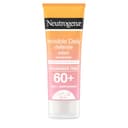
Black Girl Sunscreen exists precisely because mineral sunscreens cast on deeper skin tones, and it is the pick if that has been your experience with every mineral formula you have tried. Neutrogena Invisible Daily Defense SPF 60 is the one to buy if your honest problem is reapplication — it is cheap enough to use by the half-teaspoon twice a day, and the FDA’s own guidance is that how much you apply and how often you reapply are what decide the protection you get. Neither addresses visible light. Both beat a tinted sunscreen sitting unused.
Sunscreen is the floor, not the treatment
One honest limit on this whole page: sunscreen prevents pigment from getting worse. It is not what fades what is already there, and no sunscreen on this page will clear a dark spot on its own. The actives with evidence for fading discoloration are a different purchase entirely — azelaic acid has prescription-strength products behind the molecule, vitamin C has the longest-standing topical evidence for brightening, and we rank both at best serums for dark spots and hyperpigmentation.
The sequencing matters more than people expect. On melasma, the AAD’s position is that moderate-to-severe cases usually need two or more therapies combined, that results take three to twelve months, and that sun protection is the part that keeps it from returning. Use the treatment to fade, and the sunscreen so the fading is not undone every afternoon. If you are doing both, pair this page with azelaic acid for melasma.
What we did not rank, and why
We left out tinted sunscreens from brands with no published filter percentages, which rules out several cheap tinted mineral products: a page whose whole argument is about what gets disclosed cannot rank a product that discloses nothing. We left out makeup with SPF, because the amount of foundation anyone wears is far below the amount a label is tested at — a tint in a sunscreen is useful, a sunscreen claim on a tint is not. And we left out products sold on an anti-aging or DNA-repair claim we cannot verify against a published outcome; where a product we do rank carries antioxidants, we have said in its entry that we treat them as an adjunct rather than a filter.
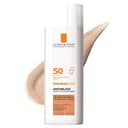
We also did not rank the site’s existing mineral picks — the untinted EltaMD UV Clear and La Roche-Posay Anthelios Mineral lotions — on this page. They are good sunscreens and they are ranked elsewhere on this site, but on the one criterion this page exists for they have nothing to offer, and re-listing them here would have made this a re-sort of a page we already have.