Which property are you replacing?
“Alternative” is only a useful word once you name the property. UV Clear has four worth replacing and they lead to four different purchases — which is why a flat list of “dupes” is the wrong shape for this question.
The mineral filter and the gentleness.If you bought it because zinc oxide suits reactive, rosacea-prone or breakout-prone skin, you want another fragrance-free mineral SPF from a brand with the same positioning. Two of the picks below are exactly that, one at SPF 50 and one at a third of the price, and both publish more about their filters than the original does: the cheaper of the two prints its actual percentages on the Drug Facts panel — titanium dioxide 6% and zinc oxide 5%.
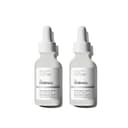
The 5% niacinamide. This is the one you cannot replace, and it is the finding of this page. Of the nine sunscreens in our registry, not one other publishes a niacinamide figure. Not the pharmacy minerals, not the prestige tints, not the drugstore chemicals. So if the niacinamide is why the original worked for your redness or your oil, no other sunscreen on this list is a substitute at any price — and the honest answer is to buy a cheap sunscreen and a niacinamide serum, which together still cost less than the tube you are replacing. The serum we rank here publishes 10% niacinamide plus 1% zinc, which is twice the figure the original states.
The finish.The reason people repurchase UV Clear is usually how it wears: light, under makeup, all day. We will not pretend to rank that for you. We own no units and do not test products on our own faces, so a finish is the one property this site cannot verify from a published document — and it is the property most likely to send you back to the original. If the finish was the whole point, treat the picks below as experiments rather than as matches.
The price, in the only unit that matters.Compare per milliliter rather than per tube and the gap gets wider, not narrower: the original is a 48 mL tube, while the picks below run 50 mL, 75 mL, 88 mL and 90 mL. That matters more than it sounds, because the published problem with sunscreen is not which one you bought — it is that people use too little of it and reapply too rarely. A bottle you are willing to lay on thickly outperforms a better bottle you ration.
How we ranked them
1. Filter type first, because that is what you came for. The original is built on zinc oxide, so the mineral options rank above the chemical ones for anyone replacing it on gentleness grounds. The FDA’s sunscreen framework treats both filter classes as sunscreen actives; the reason to prefer mineral here is tolerance, not safety, and we are not going to imply otherwise — that argument is set out in mineral vs chemical sunscreen.
2. What the label publishes.Broad spectrum, an SPF number and, where the panel gives them, the filter percentages. Per the AAD’s own label guidance, “broad spectrum” and the SPF figure are the two claims that mean something specific; the rest of the front of the bottle usually does not.
3. Fragrance. The original is fragrance-free and that is part of why it suits reactive skin. Three of the four sunscreens below are fragrance-free per their own listings; the one that is not is flagged in its write-up, and it earns its slot on a different property entirely.
4. Cast, honestly.Every true mineral filter leaves some. The original’s own listing concedes a faint cast on the deepest skin tones, and both mineral picks here concede more. This is not a cosmetic nitpick: the published review on visible light and pigmentation reports that fewer than two-thirds of people with hyperpigmentation use sunscreen at all and fewer than one in ten reapply appropriately, with worse habits in skin of color, and names shade incompatibility as a key barrier. A sunscreen you dislike the look of is a sunscreen you skip.
Which one, by why you are switching
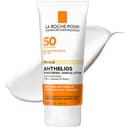
“I want the same kind of product, cheaper.” The La Roche-Posay mineral lotion. Fully mineral at SPF 50, fragrance-free, from the brand pharmacists reach for on reactive skin, in a 50 mL bottle like the original’s. It casts more and it is heavier, and it does not carry niacinamide.
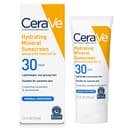
“I want to spend as little as possible and still buy a real mineral sunscreen.” The CeraVe mineral SPF 30, which is also our Best overall on best mineral sunscreen. It publishes both filter percentages, it has ceramides in the base, and it is a 75 mL bottle. You step down from SPF 46 to SPF 30, which is a real step and is fine if you reapply.
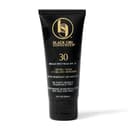
“It left a cast on my skin.” Black Girl Sunscreen SPF 30, built specifically to disappear on deeper tones. It is a chemical filter rather than a mineral one, which is the trade: no cast, but not the filter class you may have chosen the original for. It is not fragrance-free, and it is the cheapest pick here by some margin.
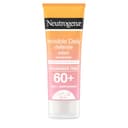
“I want a higher number for less money.” The Neutrogena SPF 60. Chemical filters, fragrance-free, antioxidants in the base, and an 88 mL bottle — cheap enough to apply properly, which is the point. Note that the jump from SPF 46 to SPF 60 is a much smaller real-world difference than the jump from applying a thin layer to applying a proper one.
“The niacinamide is why I bought it.” Then buy any of the sunscreens above plus the niacinamide serum, and apply the serum first. The published review literature on niacinamide covers barrier function, sebum and pigmentation — it is the best-evidenced supporting active in the original, and it is available separately for very little. Our full ranking is at best niacinamide serums, and the layering order is in how to use a niacinamide serum.
What this page refuses to tell you
That any of these is a “dupe.”A dupe implies matched formulas, and none of these matches the original — different filters, different percentages, different supporting actives, different finishes. What they match is the job: broad-spectrum protection you will actually wear.
That mineral is the safe option. It is the better-tolerated option for a lot of reactive skin, which is a different claim. The filter comparison is here, and it does not conclude what sunscreen marketing wants it to.
That you should skip reapplication because the SPF is higher.The AAD’s label guidance treats the SPF number and water resistance as claims about a tested application amount, not about how long you can leave it on. Every number on every bottle here assumes a quantity most people never apply.
Anything about EltaMD’s tinted version. It is a different product with a different filter load and we rank it separately on best mineral sunscreen. It is also more expensive than the product you are trying to replace, which makes it an odd answer to this question.