The disclosure surprise in this category
Sunscreen is the best-documented shelf in skincare, because in the US a sunscreen is an over-the-counter drug and its active ingredients and percentages go on a Drug Facts panel by law. That makes this the one category where you can usually compare doses directly — and it makes the exceptions conspicuous.
Here is the surprise. The two cheapest picks on this page publish their filter percentages, and the premium tinted one does not publish its split in a form we could read. On a site that has spent a hundred pages observing that higher prices tend to come with better disclosure, that is the reverse of the usual pattern. It does not make the premium product bad — it is a well-liked formula with an excellent finish, which is what its award says. It does mean that if your criterion is how much filter am I getting, the budget products answer you and the expensive one does not.
Worth one caveat in the other direction: a higher total percentage is not a higher SPF, and SPF is tested on the finished formula rather than calculated from the actives. A printed 11% total at SPF 30 and a printed 17.9% total at SPF 50 are two facts, and the SPF is the one the label is certifying.
How we ranked
1. Are the filter percentages published? The first filter, as everywhere on this site. Three of four here print them.
2. Will you actually wear it?This is the criterion that decides sunscreen rankings, because the AAD’s guidance depends on applying enough and reapplying — and an uncomfortable sunscreen is one you under-apply. A fragrance-free lotion that disappears is worth more in practice than a better formula you resent.
3. Tint or no tint.Not a quality axis, a fit axis. A tint cancels the gray-white cast that zinc and titanium leave on medium and deeper skin, and it adds iron oxides, which are the part of a sunscreen that does anything about visible light — relevant if you are treating melasma or stubborn marks. It also means matching a shade, which is a commitment a plain sunscreen does not ask for.
4. SPF and volume.SPF 30 is the AAD’s floor for daily use and SPF 50 is the better number if you are outdoors for long stretches. Volume matters more than people think on a product you are supposed to use generously: at 75 mL, the biggest bottle here is half again the size of the other three.
Which one, by who you are
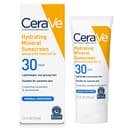
You want a mineral sunscreen and nothing complicated. The untinted CeraVe SPF 30. Printed percentages, fragrance-free, ceramides in the base, no shade to match, the biggest bottle, the lowest price. It will leave some cast on deeper skin tones — that is physics, not a formulation failure — which is the one reason to read on.
You are treating pigment, melasma or dark marks. Go tinted, and the published work on visible light and pigmentation is why: ultraviolet is not the only part of daylight that drives melanin, and iron oxides are the ingredient that addresses the rest. Our full ranking on that criterion, with the tinted products ordered for pigment rather than for the mineral question, is best sunscreen for dark spots — note that its order is deliberately different from this page’s, because it is answering a different question.
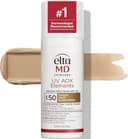
You want the most filter on your face. The EltaMD, at a printed 17.9% total with SPF 50 and an antioxidant complex in the base. The most expensive pick here, and the one whose label tells you the most.
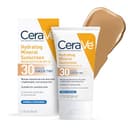
You want a tint on a budget. The tinted CeraVe SPF 30, which prints zinc oxide 10% with titanium dioxide 5.5% and costs about what the untinted one does. It is the cheapest way into tinted mineral sunscreen that we can verify.
You are using retinol or acids. Any of them, and this is the strongest single argument for the category: freshly exfoliated or retinoid-treated skin is more reactive, and a mineral filter is the least likely to sting. The pairing rules are on best sunscreen for retinol users.
When a mineral sunscreen is the wrong buy
Three situations, and a category page that will not name them is selling rather than advising.
You want a high SPF that vanishes on deeper skin. Untinted mineral filters sit on the surface and scatter light, which is the mechanism and the cast. Modern chemical and hybrid filters get to SPF 50 or 60 with no cast at all, and mineral vs chemical sunscreen makes that case properly.
You will under-apply it because of how it feels. A thick mineral lotion used at half the tested quantity protects less than a comfortable chemical one used generously. Sunscreen is the category where adherence beats formulation by the widest margin.
You believe mineral is the “clean” option. That framing is marketing rather than regulation. The honest summary is that zinc and titanium are the two filters with the most settled regulatory status in the US, several modern filters are widely used elsewhere with long records, and the sunscreen that protects you is the one you put on properly.
What we did not rank, and why
One mineral SPF 50 we usually include. A fragrance-free untinted mineral lotion in our registry had no live offer price on the date this page was written, and we do not feature a product we cannot show a current price for. It is named on mineral vs chemical sunscreen if you want to look it up.
Body and kids’ mineral sunscreens. Different purchases at different volumes; this page is about the face.
Hybrid sunscreens.Formulas combining zinc with a chemical filter are common and are not mineral sunscreens, whatever the front of the bottle implies. If you want to know what you own, turn it over and read the Active Ingredients panel — that check is the whole point of this category.
Moisturizers and makeup with SPF. Applied at a fraction of the quantity a sunscreen label is tested at, which undermines the one morning step that matters most.