How to Use Niacinamide Serum
Niacinamide is the easiest active on this site to use and the one people most often use wrong — too much of it, in the wrong slot, stacked with everything. Morning or night, before or after moisturizer, how many drops, and the fixes for pilling and flushing.
How this is funded: we earn a commission if you buy through our links, at no extra cost to you. It never changes which product we recommend, and we’ll tell you when we’d skip one. Full disclosure.
Niacinamide is the easiest active on this site to use. It has no ramp-up schedule, no sun-sensitivity warning, no rest days, and it conflicts with almost nothing — the published reviews describe a single ingredient with evidence across barrier function, redness, oil, pore appearance and pigmentation, and a safety record that lets it sit in a routine morning and night. Which makes it slightly strange that “how to use niacinamide serum” is one of the most-searched questions in the category. The answer is that the ingredient is easy and the products are not: most of the serums on the shelf are 10% or 12%, well above the 4–5% most of the research used, and people use too much of them, in the wrong slot, stacked with everything else on the same night. Then the face flushes or the serum pills, and the ingredient gets the blame.
So this is a guide to the routine, not the ingredient — what niacinamide does is covered in niacinamide benefits. Here: morning or night, where it goes, how much, what it pairs with, and the fixes for the two things that go wrong.
Morning or night?
Both work, and the choice is about your routine rather than the ingredient. Niacinamide is stable in daylight, has no photosensitivity issue, and layers under sunscreen without incident, so morning is entirely fine — and for oily skin it is often the better slot, because the oil-regulating effect is what you want under makeup at midday. Night is the natural slot if your evening routine has a retinoid in it, because niacinamide is one of the best-tolerated buffers for one; the pairing has its own page in niacinamide and retinol. Twice a day is fine at a percentage your skin tolerates. If you only want one slot and have no strong reason either way, morning: it is the one step in a morning routine that needs no waiting time and no thought.
Where it goes in the routine
The order is the one the American Academy of Dermatology describes for every routine: cleanser, then treatments from thinnest to thickest, then moisturizer, then sunscreen in the morning. Niacinamide serums are water-based and thin, so they go early — after cleansing, before anything creamy.
- Morning: cleanse, niacinamide, (vitamin C either before or after — see below), moisturizer, sunscreen.
- Night, no other actives: cleanse, niacinamide, moisturizer.
- Night with an acid: cleanse, acid on dry skin, wait a few minutes, niacinamide, moisturizer. Acid first because it works best on bare skin; the niacinamide is the calming layer. Niacinamide and glycolic acid walks through the timing options.
- Night with retinol: cleanse, niacinamide, retinol, moisturizer — or niacinamide mixed into the moisturizer over the retinol. Either way, it is the buffer.
Before moisturizer, always. Applying a niacinamide serum over a cream means it has to work through the cream for no benefit. The one real exception is a moisturizer that already contains niacinamide — several on this site do — in which case a separate serum may be a step you do not need. The full sequence with every other active slotted in is in skincare routine order.
How much to use
Two to three drops, spread thin, for the whole face. This is the single most common thing people get wrong. A niacinamide serum is not a moisturizer and does not need to be applied like one; the published effects were seen at modest concentrations applied normally, and a thick layer of a 10% serum does not deliver more benefit, it delivers a sticky film that balls up under the next product. If your serum feels tacky, cut the dose before you blame the formula. Neck and chest are fair game if you want to use it there — but that is extra drops, not a thicker face layer.
What it pairs with
Nearly everything, which is niacinamide’s real superpower in a routine. Three pairings come up constantly and all three are fine:
- Vitamin C. The old warning about the two “cancelling out” is based on decades-old conditions that do not apply to modern serums; they can go in the same morning routine, vitamin C first if it is a low-pH L-ascorbic acid, then niacinamide. Vitamin C and niacinamide has the detail.
- Exfoliating acids. Fine together; acid first. Niacinamide supports the barrier an acid stresses, which makes it a sensible follow-up rather than a conflict. The sister page for BHA users is niacinamide and salicylic acid.
- Retinoids. The pairing with the best case for it: niacinamide reduces the dryness and redness of a retinoid without reducing what the retinoid does.
The one thing to avoid is not a pairing but a habit: adding niacinamide on the same day you add anything else new. Introduce it alone for two weeks. If your face flushes, you want to know it was the niacinamide — and specifically its percentage — rather than guessing among three suspects. The conflict matrix in how to layer actives covers every combination.
The two things that go wrong
Pilling
Little balls of product rolling up under your moisturizer or sunscreen. Causes, in order of likelihood: too much serum, not enough wait before the next layer, or a formula thickener that disagrees with your sunscreen. Fix them in that order — two drops, a full minute, then rub the next layer in rather than patting. If it still pills, the base is the problem, and the silkier, pricier niacinamide formulas exist for exactly this reason; our best niacinamide serums ranking says which ones. If the bottle in your hand is The Ordinary’s, its two gums and suspended zinc are the usual suspects — explained in our Niacinamide 10% + Zinc 1% review.
Flushing, stinging or redness
Usually the percentage. Most of the research on niacinamide sits around 4–5%; the shelf is dominated by 10% and 12%, and for a meaningful minority of people that higher number produces a warm, flushed feeling on its own. The fix is not to push through it. Drop to a lower-percentage serum, or get your niacinamide from a moisturizer that carries it at a gentler level, and the benefit is the same without the reaction. If the flush appeared the week you also added an acid or a retinoid, separate the products and re-test each alone — the niacinamide is often the innocent party that happened to go on last.
How long it takes
Eight to twelve weeks. Oil and redness tend to change first, sometimes within a few weeks; pore appearance and pigmentation take longer because they depend on turnover. Judge it at three months of daily use. If nothing at all has changed by then, the honest conclusion is that your skin is not one it does much for — niacinamide is well-evidenced across a population, not guaranteed on an individual, and the cost of finding that out is a few dollars and a season.
General guidance, not medical advice. Actives & Acids is written by a skincare enthusiast, not a dermatologist. For a diagnosis, a reaction, or a prescription active like tretinoin, see a qualified professional. Introduce any new active slowly and patch-test first.
What we'd actually buy
Chosen from the same registry as our roundups, on published formulation facts rather than hands-on testing — here is exactly what we do instead.
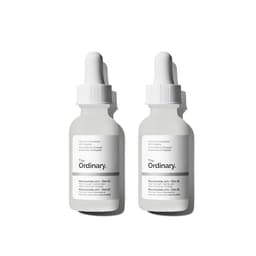
The Ordinary
Niacinamide 10% + Zinc 1%
The default first bottle: a stated 10% with 1% zinc for a couple of dollars. The one thing to know before you buy is that 10% is above the 4-5% most of the research used — if it stings or flushes, that number is why, not the routine.
See it ranked in full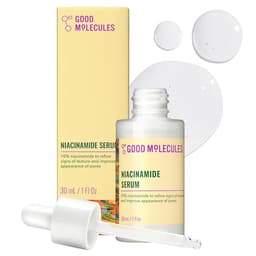
Good Molecules
Niacinamide Serum (10%)
About the cheapest stated 10% you can buy, in a plain, fragrance-free base with nothing extra. The bottle to learn the routine with when you are not yet sure niacinamide is for you.
See it ranked in full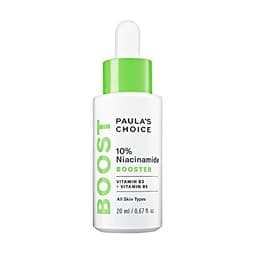
Paula's Choice
BOOST 10% Niacinamide Booster
The same 10% in a silkier base built to melt into a layered routine without balling up. Costs several times more — worth it only if pilling is the specific problem you are trying to solve.
See it ranked in fullPrice as of September 19, 2026. #ad How we’re funded
Frequently asked questions
Should I use niacinamide serum in the morning or at night?
Either, or both. Niacinamide has no sun-sensitivity issue, does not degrade in daylight and conflicts with almost nothing, so the choice is about your routine rather than the ingredient. Morning suits people who want its oil-regulating effect under sunscreen and makeup; night suits people whose evening routine has room for it as the calming layer under a retinoid. Twice a day is fine at normal percentages.
Do I apply niacinamide before or after moisturizer?
Before. Niacinamide serums are water-based and thin, and the standard order — the one the American Academy of Dermatology describes — runs thinnest to thickest, so the serum goes on clean skin and the moisturizer seals it. Applying it over a cream means it has to work through the cream for no benefit. The one exception is a moisturizer that already contains niacinamide, in which case you may not need the separate serum at all.
How many drops of niacinamide serum should I use?
Two to three for the whole face, spread thinly. More does not do more — the published effects were seen at modest percentages applied normally — and overapplying is the main reason niacinamide serums pill under moisturizer or sunscreen. If you are using a 10% and it feels sticky, you are almost certainly using too much.
Why does my niacinamide serum pill or ball up?
Three usual causes: too much product, not enough time before the next layer, or a formula that does not play well with your sunscreen. Fixes in order — cut to two drops, wait a full minute before moisturizer, and rub rather than pat the next layer in. If it still pills, switch to a serum with a silkier base; that is the specific thing the pricier niacinamide formulas are selling.
Why does niacinamide make my face red or flushed?
Most often the percentage. The bulk of the research on niacinamide used around 4-5%, and the 10% and 12% serums that dominate the shelf sit well above that; for some skin, the higher number alone causes a warm, flushed feeling. The fix is a lower-percentage serum or a moisturizer that carries niacinamide at a gentler level, not pushing through it. If you introduced niacinamide alongside a new acid or retinoid, separate them and re-test each alone.
Can I use niacinamide every day?
Yes. It is one of the few actives with no need for a ramp-up schedule or rest days, which is exactly why it is the one you keep constant while you ration the acids and retinoids around it. Daily use, morning and night if you like, at a percentage your skin tolerates.
How long does niacinamide take to work?
Give it eight to twelve weeks. Oil and redness changes are the first things people notice; pore appearance and pigmentation take longer because they depend on skin turnover. Judge it at three months of consistent use, and if nothing at all has changed by then, the honest conclusion is that your skin is not one it does much for.
Sources
- Mechanistic Basis and Clinical Evidence for Nicotinamide (Niacinamide) in Skin (PMC) — Review of niacinamide's barrier, ceramide and pigmentation effects (accessed July 17, 2026)
- Niacinamide: A B vitamin that improves aging facial skin appearance (PubMed) — Bissett et al. — 5% niacinamide improves wrinkles, spots and texture (accessed July 17, 2026)
- American Academy of Dermatology — Should I apply my skin care products in a certain order? — AAD on the order to apply cleanser, treatment, moisturizer and sunscreen (accessed July 17, 2026)
- American Academy of Dermatology — Skin care basics — AAD consumer guidance on cleansing, moisturizing and sun protection (accessed July 17, 2026)
Keep reading
Best niacinamide serums
The serums ranked, with the label table showing which ones publish a percentage and what else is in the bottle.
See the picksNiacinamide benefits
What the ingredient is genuinely shown to do — barrier, oil, redness, tone — and what it is not.
Read the guideNiacinamide and retinol
The pairing most people build next, and why niacinamide is the buffer that makes retinol livable.
Read the guideNiacinamide and glycolic acid
Order, timing and the pH myth, for anyone adding an AHA to the routine above.
Read the guideVitamin C and niacinamide
The morning pairing, and why the old warning about mixing them is out of date.
Read the guideSkincare routine order
Every step in sequence, morning and night — where niacinamide slots in among everything else.
Read the guideThe Ordinary Niacinamide 10% + Zinc 1% review
The serum most people are holding when they search this question, read off its label: why its gum-thickened base pills when over-applied, and what the 10% really means.
Read the review