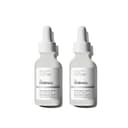
What each label actually states
Every serum on this page publishes its niacinamide percentage, which is the first filter and eliminates a surprising number of “pore-refining” bottles that never say what is in them. Here is what the four we picked put on the label, read from the listings on the dates recorded in each product card. The number that matters most in this table is not the percentage — it is the bottle size, because that is what decides cost-per-mL once you divide by the shelf price.
The four niacinamide serums compared on stated concentration, supporting actives, bottle size and texture| Serum | Stated niacinamide | Supporting actives | Size | What the formulation buys you |
|---|
| The Ordinary Niacinamide 10% + Zinc 1% | 10% | 1% zinc PCA | 30 ml | Water-thin and fragrance-free. The zinc is the reason this suits oily, blemish-prone skin — and the reason it can drag or pill if you apply too much. |
| Paula’s Choice BOOST 10% Niacinamide | 10% | Vitamin C and other antioxidants | 20 ml | Identical headline percentage in a silky base that layers without balling up. Note the bottle is a third smaller than the others, which hits cost-per-mL harder than the shelf price suggests. |
| Naturium Niacinamide 12% + Zinc 2% | 12% | 2% zinc | 30 ml | The strongest here and the furthest past the studied range. Double the zinc of The Ordinary, aimed at shine and pores — not the one for dry or sensitive skin. |
| Good Molecules Niacinamide Serum | 10% | None to speak of | 30 ml | A deliberately stripped-down base. Nothing wrong with it, nothing remarkable in it — the appeal is purely how little it costs to find out whether niacinamide suits you. |
Two honest observations fall out of that table. First, three of the four are the same stated strength, so the price gap between them is buying texture, packaging and supporting ingredients — not more active. Second, not one of these is at the concentration the research actually used. The bottle most people start with gets an ingredient-by-ingredient read of its own in our The Ordinary Niacinamide 10% + Zinc 1% review.
How to choose a niacinamide serum
Start with what your skin is asking for rather than the biggest number on the box. If you are oily or fighting clogged pores, look for niacinamide paired with zinc, which nudges oil production down and suits blemish-prone skin. If your goal is a calmer, less reactive barrier, a plainer formula with hyaluronic acid or B5 for slip is all you need. A stated 10% is the sweet spot for most people; 12% earns its place mainly if your skin is very oily and tolerates actives easily, while anyone with a fragile barrier can drop to 5% and lose almost nothing.
More percent is not more result
This is the one place buyers overpay attention rather than money. The evidence behind niacinamide clusters at modest concentrations, and pushing past 10% mostly raises the odds of a warm, flushed feeling — not the odds of a better outcome. If a formula stings or turns you pink, that is a signal to go lower, not proof it is “working.”
To be specific about it: the widely cited Bissett work that put niacinamide on the map used a 5% concentration and reported measurable improvement in spots, texture and fine lines over twelve weeks. The review literature since has largely stayed in that neighbourhood. Meanwhile the shelf runs 10% and 12%, because a bigger number sells a bottle. So when you buy a 10%, understand what you are actually buying: roughly double the studied dose, with no published evidence that the extra does anything, and a slightly higher chance of the flush. That is not a reason to avoid it — 10% is well tolerated by most people and it is what the market sells — but it is a reason to stop treating 12% as an upgrade and to feel entirely comfortable dropping to 5% if your skin objects.
What “fragrance-free” and the supporting cast really change
Once the headline percentage stops being a differentiator, the formulation details are what separate these bottles. Zinc PCA(1% in The Ordinary, 2% in the Naturium) is a genuine oil-control addition and the reason both suit shiny, congested skin — but it is also the suspended solid that makes a niacinamide serum feel slightly draggy and pill under sunscreen if you over-apply. Antioxidants in the Paula’s Choice booster are a real formulation difference rather than marketing, though they are a bonus on top of the niacinamide rather than the thing you are buying. And all four are fragrance-free, which matters more than any of the above if your skin is reactive: fragrance is one of the most common causes of a “this active broke me out” reaction that had nothing to do with the active.
One thing none of them publish is a pH, and for niacinamide that is fine — unlike an exfoliating acid, it is not pH-dependent in a way that changes what you get. Where a brand does stay quiet on something that matters, we print “Not published” in the spec table rather than fill the gap with an estimate.
Cost-per-mL is where niacinamide wins
Do the math the brands hope you skip: divide the shelf price by the milliliters in the bottle, then remember you only need a few drops a day. On that measure niacinamide is one of the best-value actives in the category — the budget picks here cost a small fraction of a prestige serum per milliliter and deliver the same molecule at the same stated strength. You are really paying for texture, packaging and the supporting ingredients, so buy the one you will reach for daily. Apply it to clean skin morning or night, wait a moment, then follow with a ceramide moisturizer (the dose, the order and the fixes for pilling are in how to use niacinamide serum). It layers happily with almost everything; if you also use vitamin C, our vitamin C vs niacinamide guide covers using both without fuss, and azelaic acid vs niacinamide covers the matchup people ask about when marks and redness are the real problem. Every other “which one?” question lives in our ingredient comparison hub.