Why the strength rule flips on your back
On a face, the published comparison of benzoyl peroxide strengths points one way: lower concentrations perform about as well as higher ones with less irritation, so there is rarely a reason to buy 10%. That finding has not changed.
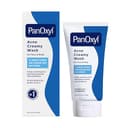
What changes on the body is the costof the irritation rather than the benefit of the strength. Skin on the back, chest and shoulders is thicker and more robust than facial skin, and a wash is rinsed off rather than left on. So the dryness that makes 10% unattractive for a face is much more manageable on a back — which is why a 10% wash is a legitimate pick here and gets a clearly labelled award, rather than the top slot.
Read that award for what it says. The 10% is the maximum-strengthoption, for resilient, oily skin that has already tried 4% without enough effect. It is not the better product. If you are starting out, start at 4% — or at 2% salicylic acid if benzoyl peroxide and you have a history.
The two things that decide whether a wash works
Contact time.A benzoyl peroxide wash has to touch the skin for long enough to do something, and the default shower behavior — lather, rinse, next — gives it a few seconds. Lather it on, then leave it while you do everything else in the shower, and rinse it off last. A minute or two is the difference between a wash that works and a wash that cleans. This is the single biggest free upgrade available on this page.
Reach.The middle of your own back is the part that breaks out and the part you cannot cover. A long-handled brush or a back applicator costs very little and turns an unused wash into a working one. Do not substitute scrubbing for reach: the AAD’s back-acne guidance is explicit that scrubbing irritates acne-prone skin rather than clearing it, so the handle is for coverage, not pressure.
Two smaller habits from the same guidance are worth the effort. Shower soon after you sweat rather than sitting in damp clothing, and wear loose-fitting clothes while a flare settles — friction and occlusion are part of why this kind of acne lands where it lands. And rinse your hair conditioner off your back before you wash it, rather than after.
How we ranked
1. Is the active and its strength published? Four of the five print a figure on a Drug Facts panel, because benzoyl peroxide and salicylic acid at these strengths are OTC drug actives in the US. The fifth publishes its acids but not their percentages, and its award reflects what it is for rather than a strength claim.
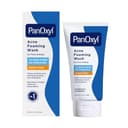
2. Is the base survivable daily? This is the criterion that puts a 4% creamy wash above a 10% foaming one. A wash you use every day at 4% beats a wash you abandon after a week at 10%, and the creamy bases are meaningfully less stripping than the foaming ones.
3. Volume. Washing a back, chest and shoulders daily gets through product far faster than washing a face. The biggest bottle here is 500 mL and the smallest is 150 mL, and on a daily body product that gap matters more than a couple of dollars of unit price.
4. Fragrance. Counts against on inflamed skin under clothing. Two picks here are fragrance-free and the write-ups say which.
Which wash, by what is happening
Inflamed red spots on your back and shoulders.A benzoyl peroxide wash, starting at 4%. It is antibacterial and it is on the AAD’s list of first-line over-the-counter acne treatments. Give it six to eight weeks before judging it.
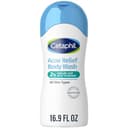
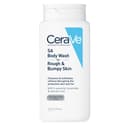
Benzoyl peroxide has dried or bleached everything. A salicylic acid wash. The 2% Cetaphil in the big fragrance-free bottle is the cheapest route; the CeraVe SA wash pairs salicylic acid with a PHA in a ceramide base and is the gentler option again, which is what makes it the pick for skin that reacts to everything.
Mostly rough, bumpy skin rather than spots. Then you are on the wrong page, honestly. Bumps on the upper arms and thighs that are not inflamed are usually not acne, and the ranking for that complaint is best exfoliating body wash and best lotion for keratosis pilaris.
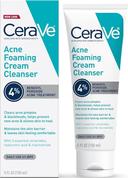
Face and chest at once, one bottle. The CeraVe 4% benzoyl peroxide cream cleanser, which is fragrance-free and formulated for facial use, so it can do both without the stripping you would get from taking a body wash to your face.
Nothing is working after two months. Body acne can be stubborn and some of what looks like body acne is not acne at all. Two months of consistent use with no change is the point to see a clinician rather than to buy a sixth bottle.
What a wash cannot do, and what to add
A rinse-off product is maintenance. If the breakouts are persistent and the wash alone is not enough, the addition that does the most is a leave-ontreatment on the affected area after showering — a 2.5% benzoyl peroxide gel in a bottle big enough for a back, which is a different product from a spot treatment and is covered on benzoyl peroxide for body acne. For one or two individual spots, a targeted dab is on best acne spot treatment. And for the marks left behind once the spots have gone, neither a wash nor a spot treatment will help — that is best serum for acne scars.
What we did not rank, and why
Bar soaps and “acne” bars. Shared bars on body acne are a hygiene question we would rather not get into, and the ones we could verify publish an active without a percentage.
Scrubs, loofahs and exfoliating mitts.Excluded on the AAD’s own advice not to scrub acne-prone skin. A long-handled brush for coverage is a good idea; the same brush used for abrasion is not.
Tea tree and sulfur body washes. Used for this, and the products we examined do not publish a concentration.
Glycolic acid body washes.Good products for rough and dull skin and not an acne ranking — they are on best exfoliating body wash, where exfoliation is the criterion rather than inflammation.