First, work out what the spot is
This is the whole page in one section, because the single biggest reason spot treatments disappoint is that people use the same tube on three different things.
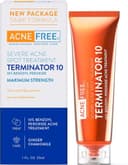
Red, raised, sore — an inflamed spot.There is bacterial involvement and inflammation. Benzoyl peroxide is the tool: it is antibacterial, it is available over the counter, and it is on the AAD’s list of first-line acne topicals. Expect useful change over a couple of days, not overnight.
Hard, closed, skin-colored or dark-topped — a clogged pore. Nothing is inflamed, so there is nothing for an antibacterial to do. You want salicylic acid, which is oil-soluble and therefore gets inside the pore lining where a water-soluble acid cannot. This is slower and it is the right answer.
Flat, brown or pink, left over from a spot that has already healed.Not acne any more — a post-inflammatory mark. Neither of the above does much for it. Azelaic acid has the strongest published record of anything on this shelf for marks of this kind, and the timescale is months.
Deep, painful, nodular, under the surface.A spot treatment is not going to resolve this and squeezing it will make it worse and longer-lasting. The AAD’s acne guidance puts nodular and cystic acne in the territory of prescription treatment. This is the one case on the page where the answer is a clinician rather than a tube.
How we ranked
1. Does it match a specific kind of spot? The ranking is by fit rather than by a single crown, because the crown question is ill-posed: the best treatment for an inflamed spot is the wrong treatment for a closed one.
2. Is the active and its percentage published? Four of five below print a figure, which is normal here — benzoyl peroxide and salicylic acid are OTC drug actives in the US and arrive with a Drug Facts panel. The balm is the exception and it is not an acne active at all, which its award makes clear.
3. Is the format right for a spot?A small tube of cream you dab is a spot treatment. A 237 mL bottle of gel is a treatment for an area. Both are here, labelled for what they are, because “one spot” and “a cluster along the jaw” are different purchases.
4. What it costs to keep one in the cupboard. A spot treatment is bought for occasional use and then lives in a drawer for a year. That makes the cheap option genuinely the right option far more often than it is in other categories.
How to use a spot treatment so it works
Thin, and only on the spot. A dot that covers the lesion, not a smear over the area around it. More product does not speed it up; it dries and irritates the healthy skin at the edges, which can leave you with a flaky patch that looks worse than the spot did.
At night, over clean dry skin, under nothing. Moisturise the rest of your face and leave the dot bare.
Benzoyl peroxide bleaches fabric. Towels, pillowcases, the collar of a dark shirt. This is not a formulation flaw, it is what the molecule does, and a white pillowcase on benzoyl peroxide nights is the entire solution.
Do not stack it with your retinoid on the same spot.Two actives on one small patch of already-inflamed skin is how a spot becomes a sore. Alternate nights if you use both — benzoyl peroxide and retinol covers the detail.
Do not pick.The thing that turns a one-week spot into a three-month mark is almost always mechanical. If you have already picked it, stop treating and start protecting — which is what the balm on this page is for.
What a spot treatment cannot do
It cannot prevent the next spot. That is not a criticism, it is the definition: a spot treatment acts on a lesion that already exists, so by the time you are using it the preventive window has closed. The AAD’s guidance for acne is built on consistent topical therapy across the areas that break out, not on treating individual lesions as they appear.
So the honest advice from a page selling spot treatments is to own one and need it rarely. If you are dabbing most nights, the spot treatment is doing a job that belongs to a leave-on routine — an adapalene, a benzoyl peroxide wash, or a BHA used across the whole area. Start at best acne treatments and come back here for the occasional emergency.
What we did not rank, and why
Hydrocolloid patches. Genuinely useful, mostly as a physical barrier that stops you picking, and not in our registry: we rank actives with published concentrations and a patch has no active to publish. If one keeps your fingers off a spot, it has earned its place regardless of what we rank.
Sulfur and tea tree spot treatments. Both are used for this, and the products we could verify would not state a percentage. We do not rank an undisclosed dose above a printed one.
Overnight drying lotions. The best-known examples are proprietary blends that publish some actives and not the proportions. Same problem.
Anything for cystic or nodular acne. Deliberately absent, and the reason is in the section above. A deep painful nodule is not a spot-treatment problem, and a page that sold you a tube for it would be taking your money for the wrong thing.
Antibiotic creams. Prescription territory, and resistance makes them a decision for a clinician rather than a shelf.