Benzoyl Peroxide for Body Acne
Back, chest and shoulder breakouts respond to benzoyl peroxide better than the face does, because the skin is thicker and the strongest strengths are usable there. The strength, the leave-on time, the wash-versus-gel decision and the laundry rules, from the dermatology guidance.
How this is funded: we earn a commission if you buy through our links, at no extra cost to you. It never changes which product we recommend, and we’ll tell you when we’d skip one. Full disclosure.
Body acne is the one place where the advice on this site about benzoyl peroxide reverses. On the face, we rank 4% above 10% and steer people toward 2.5% leave-ons, because the published comparisons found the lower strengths clear inflammatory acne as well as the highest with less peeling. On the back, chest and shoulders, the skin is thicker, the oil glands are large, the breakouts are often deeper, and the American Academy of Dermatology’s own self-care guidance for back acne names a 10% benzoyl peroxide foaming wash as the strongest over-the-counter option to step up to. The strongest product on this site finally has a job it is the right size for.
It still has to be used properly, and body acne has three rules the face does not. The wash needs to be left on for minutes, not seconds. The mechanics — sweat, friction, clothing — matter as much as the product. And the fabric-bleaching problem is far worse, because a back touches a lot more cotton than a face does.
Why benzoyl peroxide, and not something else
Benzoyl peroxide kills the bacteria involved in acne and reduces inflammation, and it carries a strong recommendation in the 2024 AAD acne guideline. Unlike most acne actives, it works meaningfully in a rinse-off format — which is why the AAD’s back-acne page is built around a wash rather than a cream. That matters on the body for a practical reason: you cannot easily apply a leave-on to the middle of your own back, but you can lather a wash there. The AAD names one other over-the-counter treatment for the back, adapalene 0.1% gel applied daily, and the two are the standard combination: the wash in the shower, the retinoid at bedtime. Salicylic acid body washes exist and help mild congestion, but they are a conditional recommendation in the guideline where benzoyl peroxide is a strong one, and in a rinse-off they do less. For inflamed body breakouts, benzoyl peroxide is the first thing to buy.
Which strength: the wash and the leave-on are different answers
For a wash, 4–5% or 10%. The AAD guidance describes a 5.3% foaming wash as less likely to cause irritation, dryness or peeling, with 10% as the option if you need stronger treatment. A wash is rinsed off after a few minutes, which is what keeps 10% tolerable on thick back skin when a 10% leave-on would not be. Our own reading is to start at the 4% creamy wash if your skin dries easily or the breakouts are on the chest, where skin is thinner, and go to the 10% foaming wash for a stubborn back. If the 10% leaves you flaking, drop to the 4% — the published comparisons say you are not losing much.
For a leave-on, 2.5%. The comparison of 2.5%, 5% and 10% benzoyl peroxide found 2.5% matched the higher strengths for inflammatory acne with less dryness, peeling and stinging. A leave-on sits on the skin for hours, so the strength argument that favors 10% in a wash runs the other way here. The practical problem with leave-ons on the body is quantity: a face tube runs out in a week on a back, which is why the 8 oz 2.5% gel earns a place in our picks below. The full strength-by-format ranking is in best benzoyl peroxide products.
The two-to-five-minute rule
This is the single most useful thing on the page. The AAD notes that studies show benzoyl peroxide works best if left on the back for two to five minutes before rinsing, because back skin is thicker than facial skin and the active needs time to penetrate. Most people apply a benzoyl peroxide wash like a soap — on, off, ten seconds — and conclude it does nothing. The routine that works: lather the wash over the back, chest and shoulders at the start of the shower, do everything else, then rinse it last. Rinse thoroughly. Residue is what bleaches the towel.
The mechanics matter as much as the product
The AAD’s self-care list for back acne starts not with a product but with clothing and sweat, and it is worth taking in the order it is given: loose-fitting workout clothes in cotton or sweat-wicking fabric, washed after every use; a shower and a change of clothes as soon as possible after working out; and non-comedogenic, broad-spectrum, water-resistant SPF 30 on exposed skin. Friction and occlusion — a backpack strap, a sports bra, a damp shirt worn for an hour after the gym — drive body acne in a way that no wash fully offsets. Fix the trigger and the benzoyl peroxide has less to do.
The laundry rules
Benzoyl peroxide bleaches fabric, and on the body this is not a footnote. A thoroughly rinsed wash transfers little. A leave-on gel transfers a lot, for hours, into whatever you are wearing and lying on. The rules: white towels for drying after the wash; a white T-shirt to bed if you use a leave-on; white pillowcases and, ideally, white sheets. Colored fabric that touches benzoyl peroxide develops pale orange patches that do not come out, and a dark sports bra or a favorite shirt is a common casualty of the first week. The supplies module below exists because every page on this site about benzoyl peroxide ends up saying the same thing. How to use benzoyl peroxide has the full method for face and body.
Bumps that are not acne
Not every bump on the body is a breakout, and benzoyl peroxide only helps the ones that are. Uniform rough bumps on the backs of the upper arms are usually keratosis pilaris, a keratin problem that wants an acid rather than an antibacterial. Bumps on shaved skin — chest, neck, bikini line — that have a visible hair under them are ingrowns, covered in chemical exfoliants for ingrown hairs. Itchy, uniform small bumps across the chest and back after sweating can be a yeast-driven folliculitis that benzoyl peroxide does not treat and a doctor can. The tell for true acne is variety: blackheads, whiteheads and inflamed spots of different sizes in the same area.
When to stop self-treating
The AAD’s threshold is six to eight weeks: if a daily benzoyl peroxide routine has changed nothing by then, you may need a dermatologist’s help. Go sooner if the acne is painful, deep or cystic, or if it is leaving marks and scars — body acne scars readily and prescription treatments, including oral ones, exist for it. What does not help is buying a stronger wash. If a 10% wash left on for five minutes plus a leave-on has not touched it, the problem has outgrown the shelf, and the cross-ingredient shortlist in best actives for acne ends with the same advice.
General guidance, not medical advice. Actives & Acids is written by a skincare enthusiast, not a dermatologist. For a diagnosis, a reaction, or a prescription active like tretinoin, see a qualified professional. Introduce any new active slowly and patch-test first.
What we'd actually buy
Chosen from the same registry as our roundups, on published formulation facts rather than hands-on testing — here is exactly what we do instead.
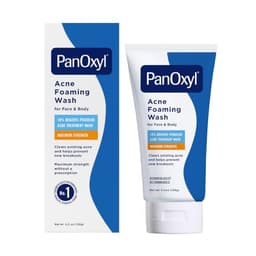
PanOxyl
Acne Foaming Wash (10% Benzoyl Peroxide)
The body-acne wash. A stated 10% benzoyl peroxide — the strongest over-the-counter option the AAD names — in a foaming wash whose short contact time keeps 10% tolerable on thick back skin in a way a leave-on 10% would not be.
See it ranked in fullPrice as of September 19, 2026. #ad How we’re funded
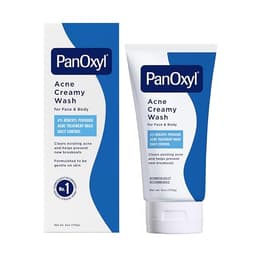
PanOxyl
Antimicrobial Acne Creamy Wash (4% Benzoyl Peroxide)
The lower-strength version for chest skin and for anyone whose back dries out on the 10%. The published comparisons found lower strengths matched 10% for clearing acne with less peeling, and the creamy base is noticeably kinder.
See it ranked in fullPrice as of September 19, 2026. #ad How we’re funded
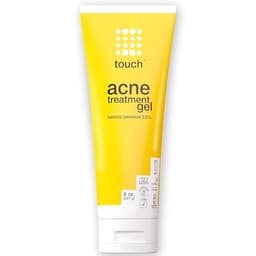
TOUCH
2.5% Benzoyl Peroxide Acne Gel
The leave-on for stubborn body acne: a stated 2.5% in an 8 oz tube big enough to cover shoulders, chest and back without rationing. Leave-on contact time does what a wash cannot — and it bleaches fabric far more readily, so it is a white-shirt-to-bed product.
See it ranked in fullSmall things that make this easier
Ordinary supplies, not treatments. Nothing here changes what an active does — these are just the things the steps above assume you already have.
Utopia Towels
White cotton washcloths (12-pack)
Benzoyl peroxide bleaches fabric — we say so on every page that mentions it, and it catches people out constantly. White towels turn that from a ruined set into a non-event.
Price as of September 19, 2026. #ad How we’re funded
Amazon Basics
White cotton pillowcases (set of 2)
The same reason as the towels, for the eight hours you are not watching. Benzoyl peroxide left on overnight can bleach a colored pillowcase; a white one has nothing to lose.
Frequently asked questions
What strength benzoyl peroxide is best for back acne?
For a wash, either 4-5% or 10% works on the back, and the choice is about tolerance. The AAD's back-acne guidance describes a 5.3% foaming wash as less likely to irritate and 10% as the strongest over-the-counter option to step up to. For a leave-on, 2.5% is the evidence-backed strength: the published comparison of 2.5%, 5% and 10% benzoyl peroxide found the lowest strength matched the highest for clearing inflammatory acne with less dryness and peeling.
How long should I leave benzoyl peroxide wash on my back?
Two to five minutes before rinsing. The AAD notes benzoyl peroxide works best if left on the back for that long, because back skin is thicker than facial skin and the active needs contact time to penetrate. Lather it on first, wash your hair or the rest of you, then rinse thoroughly — the rinse is what keeps it off your towels.
Wash or leave-on gel for body acne?
Start with the wash — it is the AAD's first recommendation, it is easy to keep up daily and it is far gentler on fabric. Add a leave-on 2.5% benzoyl peroxide gel or adapalene 0.1% gel after a few weeks if the wash alone plateaus, because leave-on contact time does more for stubborn acne. Many people run both: the wash in the shower, the gel at bedtime under a white T-shirt.
Does benzoyl peroxide bleach clothes and sheets?
Yes, and on the body it is a bigger problem than on the face because more skin is in contact with more fabric for longer. A wash rinsed off thoroughly transfers very little. A leave-on gel transfers a lot: wear a white T-shirt to bed, use white pillowcases and sheets, and dry with white towels. Colored fabric that touches benzoyl peroxide develops pale orange patches that do not wash out.
Why do I get acne on my back and chest but not my face?
Sweat, friction and occlusion. Tight workout clothes, backpacks, sports gear and sitting in a damp shirt after exercise all trap sweat and rub against skin that has larger oil glands than the arms and legs. The AAD's self-care list starts with the mechanics for exactly that reason: sweat-wicking or cotton clothing, washed after every wear, and a shower as soon as possible after sweating. Treatment works better once the trigger is reduced.
When should I see a dermatologist for body acne?
If six to eight weeks of consistent benzoyl peroxide use has changed nothing, which is the AAD's threshold, or sooner if the acne is painful, deep, cystic or leaving scars. Body acne scars readily and prescription options — oral treatments in particular — exist for it. A stronger wash is not the answer to acne that a 10% wash and a leave-on have not touched.
Sources
- American Academy of Dermatology — Back acne: How to see clearer skin — AAD self-care for back acne: a benzoyl peroxide foaming wash (5.3% is less irritating; up to 10% is the strongest OTC option) left on for two to five minutes, adapalene 0.1% gel daily, sweat-wicking clothes washed after every workout, non-comedogenic SPF 30 — and a dermatologist if nothing changes in six to eight weeks (accessed September 18, 2026)
- American Academy of Dermatology — Acne: Diagnosis and treatment — AAD overview of benzoyl peroxide, retinoids, salicylic and azelaic acid for acne (accessed July 17, 2026)
- American Academy of Dermatology — Updated guidelines for the management of acne — AAD 2024 acne management guideline summary (accessed July 17, 2026)
- Comparing 2.5%, 5%, and 10% benzoyl peroxide on inflammatory acne vulgaris (PubMed) — Mills et al. — 2.5% matched 5% and 10% for efficacy with less irritation (accessed August 19, 2026)
Keep reading
Best benzoyl peroxide products
Washes, gels and spot treatments from 2.5% to 10%, ranked on the strength the evidence supports.
See the picksHow to use benzoyl peroxide
The full method for the face and body, including the fabric-bleaching rules in detail.
Read the guideBest face wash for acne
The cleanser ranking for the face, where the strength logic runs the other way — 4% over 10%.
See the picksAdapalene (Differin) guide
The leave-on retinoid the AAD names for back acne, and how to survive the purge.
Read the guideChemical exfoliants for ingrown hairs
If the bumps on shaved skin are ingrowns rather than acne, benzoyl peroxide is the wrong tool — this is the right one.
Read the guideBest actives for acne
The cross-ingredient shortlist by breakout type, for the face as well as the body.
See the picks