The Ordinary Niacinamide 10% + Zinc 1% Review
The most-bought niacinamide serum there is, reviewed the way we review everything — off the label and the published trials, not off a testimonial. All eleven ingredients, what 10% and 1% actually mean, who it suits, who should buy something else, and the two-pack quirk on the Amazon listing.
How this is funded: we earn a commission if you buy through our links, at no extra cost to you. It never changes which product we recommend, and we’ll tell you when we’d skip one. Full disclosure.
If one product defines The Ordinary, it is this one: a dropper bottle of 10% niacinamide and 1% zinc PCA that costs less than a sandwich and turns up in more starter routines than any serum on this site. It is also the product people ask us about by name more than any other, which is why it gets a page of its own rather than a row in the niacinamide roundup, where it happens to be the top pick.
A word on what this review is. We have not used this serum, and we do not review by using things — no lab, no panel, no “I tried it for two weeks.” What we did instead is read the brand’s own ingredient list, pH and claims off its product page, read the Amazon listing our button links to, and then set both against the published trials on niacinamide and zinc. Every one of those is linked in the Sources block; the method is spelled out in how we pick. What you get is a review of what is actually in the bottle, what the evidence says that mixture can do, and who should buy it. What you do not get is a description of how it felt on our face.
The verdict in one paragraph
For oily, combination or breakout-prone skin that wants one cheap supporting active, this is still the right first bottle, and the reasons are on the label: a printed 10% niacinamide, a printed 1% zinc PCA, eleven ingredients in total, no fragrance, no alcohol, no oil, and a price that makes a failed experiment cost almost nothing. The honest caveats are also on the label. Ten percent is roughly double the concentration most of the research used, with no published evidence that the extra does more. The suspended zinc and the two gums in the base are why the texture can feel tacky and pill if you over-apply. And the brand’s instruction not to use it with vitamin C is more cautious than the evidence warrants. None of that changes the recommendation for the skin type it was built for; it changes who else should buy something different, which we get to below.
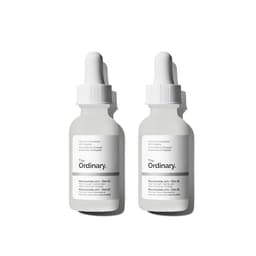
At a glance
The Ordinary Niacinamide 10% + Zinc 1%
Stated actives: 10% niacinamide, 1% zinc PCA. Ingredients: 11, no fragrance in the list. Brand-stated pH: 5.00–6.50.
Sizes: 30 mL and 60 mL on the brand’s site. The Amazon listing our button links to is a two-pack of the 30 mL.
Product image supplied by Amazon.
What is on the label
The Ordinary publishes its full ingredient list, which is the first thing that separates it from most of the shelf. Read from the brand’s product page on September 19, 2026, in the order printed, it is: Aqua (Water), Niacinamide, Pentylene Glycol, Zinc PCA, Dimethyl Isosorbide, Tamarindus Indica Seed Gum, Xanthan Gum, Isoceteth-20, Ethoxydiglycol, Phenoxyethanol, Chlorphenesin. Eleven ingredients, and here is what each one is doing there.
- Niacinamide at a stated 10% is the active, second on the list behind water, which is consistent with the percentage on the front. It is the form of vitamin B3 with the skin evidence: barrier lipids, oil, redness, the appearance of pores, and brown marks.
- Zinc PCA at a stated 1% is the co-star. It is the zinc salt of a molecule the skin makes itself as part of its natural moisturizing factor, and it is the ingredient the brand is pointing at when it says “excess oil” and “visible shine.” We deal with how much evidence sits behind that below, because it is thinner than the marketing implies.
- Pentylene glycol, dimethyl isosorbide and ethoxydiglycol are the solvents that keep a 10% niacinamide load dissolved in a water base and help it spread and absorb. None is an active; none is a fragrance.
- Tamarind seed gum and xanthan gum are the thickeners. They turn what would otherwise be water into a serum with slip and a slight film — and they are, with the zinc, the reason the finish can feel tacky when too much is applied.
- Isoceteth-20 is a solubilizer that keeps everything evenly mixed; phenoxyethanol and chlorphenesin are the preservatives.
Absent from the list: fragrance, essential oils, drying alcohol, silicones and plant oils. The brand states the formula is alcohol-free, oil-free, silicone-free and vegan, and gives a pH of 5.00 to 6.50 — a number almost no competitor prints, and one that matters less for niacinamide than for an acid, but is still good to see disclosed. This is the whole reason the serum works as a first active for so many people: there is very little in it to react to. Reactive skin that has been burned by “gentle” products with a fragrance buried on line nineteen will find nothing of the kind here. The one thing genuinely reactive skin still has to weigh is the percentage, not the list — which is why our sensitive-skin picks lead with the brand’s azelaic suspension rather than this bottle.
What 10% niacinamide actually means
The front of the bottle is the brand’s best marketing and its one honest weakness. The study that put niacinamide on the map — Bissett and colleagues, published in 2005 — used 5%: fifty women applied it to half the face and a placebo to the other half, twice a day for twelve weeks, and the niacinamide side showed measurable reductions in fine lines, brown spots, red blotchiness and sallowness, plus improved elasticity. The 2021 review in Antioxidants that gathers the evidence since then says it plainly: in cosmetics, niacinamide “is mainly formulated at a concentration of 4 to 5%.” At 4%, it reduced the appearance of pores and skin unevenness after eight weeks and wrinkles after twelve. At 4%, it performed within reach of 4% hydroquinone on melasma in a head-to-head trial. At 2%, a moisturizer improved the barrier in people with rosacea. And the sebum work — the effect this serum is bought for — was done at 2%.
So a 10% is not “twice as good as the studies.” It is twice the studied dose with no published evidence that the second half adds anything. That is not a reason to avoid it. The same review cites the Cosmetic Ingredient Review’s safety assessment, which found that when 10% niacinamide was applied, subjects did not report stinging or flushing, and a 21-day cumulative irritation test at 5% was clean — so the formal record says a 10% is well tolerated. It is a reason to stop treating 10% as the minimum worth buying and 12% as an upgrade. If you have ever felt warm or pink from a niacinamide serum, the anecdote is real but it is not something a trial has reproduced; drop to a lower percentage or a moisturizer that carries niacinamide, and you lose nothing the evidence can point to. The full breakdown of what the ingredient does at what dose is in niacinamide benefits.
What the zinc does — and what we could not find
Here is where the label is clearer than the evidence. Niacinamide on its own has sebum data: in the 2006 Draelos trials, a 2% niacinamide moisturizer lowered the sebum excretion rate in a hundred Japanese subjects at two and four weeks, and lowered casual sebum levels — though not the excretion rate — in thirty Caucasian subjects at six weeks. Mixed, modest, but real, and it means the “oil control” on the front of this bottle is carried mostly by the niacinamide.
Zinc PCA is a different story. We searched PubMed on September 19, 2026 for a clinical trial of zinc PCA on its own, at anything near 1%, for facial oil. We did not find one. The trials that include it are multi-ingredient products for seborrheic dermatitis, and one randomized, double-blind study from 2020 in which a cream of niacinamide plus zinc PCA plus an antibacterial adhesive agent, used alongside adapalene, reduced non-inflammatory acne lesions by the second week versus a placebo cream — with no difference in side effects. That is the closest thing to a trial of this ingredient pair we could find, and it comes with three caveats: it did not test this serum, it used a third ingredient, and the abstract does not state the percentages. Our read is that the zinc is a plausible supporting ingredient for shiny, congested skin, not the reason to buy the bottle. If you are choosing between this and a zinc-free 10% because of the zinc, the honest answer is that the difference is smaller than the label suggests.
The brand’s claims, checked against the page
The Ordinary describes this as “a universal serum for blemish-prone skin that smooths, brightens, and supports,” targeting congestion, dryness, dullness, textural irregularities and visible shine, and suited to all skin types. Most of that is defensible from the trials above — texture, tone and oil are the three things niacinamide has the best record on. Three specific claims deserve a closer look.
- “Non-comedogenic,” from a clinical study of 35 subjects using it twice a day for 8 weeks. A genuine, if small, safety study, and the right kind of claim: it says the serum did not clog pores, not that it treats acne. Read it as reassurance for breakout-prone skin, nothing more.
- “After 15 minutes of application, you will see significant improvement in plumpness, suppleness, and skin radiance. Within 1 week, you should notice smoother skin texture.” The page does not publish the study behind the fifteen-minute claim, and a fresh layer of any humectant serum makes skin look plumper for an hour. Treat this as marketing. The timelines the trials support are four, eight and twelve weeks, and that is when we would judge it.
- “Do not use with direct or indirect vitamin C.” This is the brand being conservative about its own vitamin C products, which include a strong 23% L-ascorbic acid suspension. The fear — that the two neutralize each other — traces to decades-old lab conditions that do not apply to modern serums on skin, and vitamin C and niacinamide walks through the evidence. Following the brand’s instruction costs you nothing, though: vitamin C in the morning, this at night, and the question never comes up.
Texture, packaging and the pilling problem
We will not describe the feel, because we have not felt it. What the ingredient list tells you is this: a water base with a 10% dissolved load, two gums and a suspended zinc salt makes a thin serum with a slight film-forming finish rather than a watery toner or a silky lotion. That finish is the source of the single most common complaint about this product — that it feels tacky or balls up under moisturizer or sunscreen — and in nearly every case the cause is the amount applied, not the formula. The brand’s directions say “a few drops”; two or three covers the face. Six drops of a gum-thickened serum will pill under anything. The fixes, in order, are fewer drops, a full minute before the next layer, and rubbing rather than patting the next product in; the routine detail is in how to use niacinamide serum. If it still pills at two drops, the base is the problem, and the silkier, far pricier Paula’s Choice booster in the roundup exists for exactly that person.
The packaging is the brand’s standard glass dropper bottle, sold in 30 mL and 60 mL on The Ordinary’s own site. Niacinamide is a stable molecule — it does not need the airless pump or opaque tube a vitamin C or a retinol does — so the dropper is fine here. Buy the 30 mL first. At two to three drops a day it lasts a long time, and if a 10% turns out not to suit you, you are not stuck with a large bottle.
Price, sizes and the two-pack on Amazon
This is one of the cheapest actives you can buy, and it would be the value pick even at twice the price: the same molecule at the same stated strength costs several times more per milliliter from the prestige-priced competitor in our roundup. On the brand’s own site the 30 mL sat at a single-digit dollar price when we read the page. On Amazon we found two live listings for the 30 mL on September 19, 2026 — a single bottle and a two-pack — and one thing you should know about our buy button: it goes to the two-pack listing. On the day we checked, the two-pack cost exactly the same per bottle as buying one, so it is a fair way to stock up once you know you like it, but it is not what we would buy first. If you want a single bottle, search the product name on Amazon or buy direct from the brand; the price shown on our button is Amazon’s live price for the pair, refreshed daily and stamped with the date. We have no incentive to steer you to one listing over the other.
Who it is for
Buy it if your skin is oily, combination or breakout-prone and you want one supporting active that does several modest things at once — less shine, calmer redness, a stronger barrier, pores that look a little less obvious — at a price where it does not matter if it takes three months to judge. It is the best first active for someone who has never used one, because there is no ramp-up schedule, no sun-sensitivity warning and almost nothing it conflicts with; niacinamide is the buffer that makes a retinoid livable, per niacinamide and retinol, and this bottle is one of the picks that sits beside a BHA in niacinamide and salicylic acid.
Buy something else in four cases. If your skin is dry or reactive and oil is not your complaint, the zinc is an ingredient you do not need; Good Molecules sells the same stated 10% without it at about the same cost, and a ceramide moisturizer that carries niacinamide at a gentler level may serve you better still — see best ceramide moisturizers. If redness and post-breakout marks are the main problem, the brand’s own Azelaic Acid Suspension 10% has the more direct evidence, and azelaic acid vs niacinamide decides between them. If you have inflamed acne, no niacinamide serum is the treatment: adapalene or benzoyl peroxide is, and this becomes the supporting layer — start at the adapalene guide. And if your one complaint is that every niacinamide serum pills on you, this gum-thickened formula is not the one that fixes it.
How to use it
Two to three drops on clean, dry skin, morning or night or both, before moisturizer and after any exfoliating acid — the thinnest-to-thickest order the American Academy of Dermatology describes for every routine. Introduce it on its own for two weeks before adding anything else new, so that if your skin flushes you know what caused it, and patch test first, as the brand’s own page also asks. Sunscreen in the morning as always, though niacinamide adds no sun sensitivity of its own. Then leave it alone for eight to twelve weeks before deciding whether it did anything; the trials measured at four, eight and twelve, and oil and redness move before pores and marks do. Everything else — drops, timing, what it pairs with, why it pilled — is in how to use niacinamide serum.
Against the alternatives
Three serums compete with it directly, and all three are ranked in full in best niacinamide serums. Good Molecules Niacinamide Serum is the same stated 10% in a deliberately stripped-down base with no zinc, at about the same cost — the better buy for dry or reactive skin and the one to learn the routine with if you are not sure niacinamide is for you. Naturium Niacinamide 12% + Zinc 2% is more of everything: further past the studied range, double the zinc, aimed squarely at very oily skin that already tolerates this one. Paula’s Choice 10% Niacinamide Booster is the same headline percentage in a silkier base built to disappear into a layered routine, in a smaller bottle at a price several times higher — worth it only if pilling is the specific problem you are paying to solve. Where The Ordinary wins is the combination nobody else matches: a printed percentage, a fragrance-free list you can read in one breath, and a price that makes it the cheapest way in the category to find out whether niacinamide does anything for your skin. Where it loses is texture, and only texture.
Bottom line
The Ordinary Niacinamide 10% + Zinc 1% earns its reputation on the label, not on the marketing. It is honestly labeled, minimally formulated and priced so low that trying it is nearly free — which is precisely what a first active should be. Know that the 10% is above the studied dose and the zinc is lightly evidenced, apply two drops rather than six, ignore the fifteen-minute claim and judge it at twelve weeks. For oily, combination and breakout-prone skin it remains the bottle we would point most people at first; for everyone else, the alternatives above are a better fit, and we have said which. The rest of the brand’s range, sorted by what each bottle is actually for, is in The Ordinary, decoded.
General guidance, not medical advice. Actives & Acids is written by a skincare enthusiast, not a dermatologist. For a diagnosis, a reaction, or a prescription active like tretinoin, see a qualified professional. Introduce any new active slowly and patch-test first.
What we'd actually buy
Chosen from the same registry as our roundups, on published formulation facts rather than hands-on testing — here is exactly what we do instead.
The Ordinary
Niacinamide 10% + Zinc 1%
The bottle this page is about. Buy it if your skin is oily, combination or breakout-prone and you want one cheap supporting active with the percentages printed on the front. Two to three drops, not six — the tackiness people complain about is nearly always the dose.
See it ranked against its rivals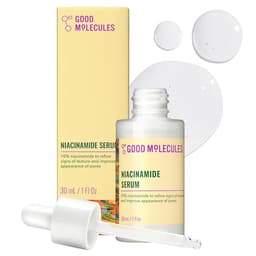
Good Molecules
Niacinamide Serum (10%)
The same stated 10% with no zinc and nothing else to speak of, at about the same cost. The alternative if your skin is dry or reactive and you want the barrier and redness benefits without the oil-control ingredient you do not need.
See it ranked in full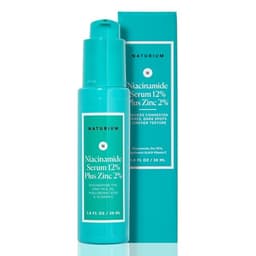
Naturium
Niacinamide Serum 12% + Zinc 2%
12% niacinamide with double the zinc, for very oily skin that already tolerates The Ordinary and wants more of the same. Further past the studied range, so not the one to start on.
See it ranked in fullFrequently asked questions
Is The Ordinary Niacinamide 10% + Zinc 1% good for acne?
It can help the oiliness and the congestion around acne, and the closest trial we found — a niacinamide plus zinc PCA cream used alongside adapalene — reduced non-inflammatory lesions (the clogged, bumpy kind) by the second week versus placebo. But it is not an acne treatment on its own: it does not kill acne bacteria and it does not unclog pores the way a retinoid or salicylic acid does. For inflamed acne, adapalene or benzoyl peroxide does the work and this serum is the supporting layer.
Does it shrink pores?
It can make them look smaller, which is not the same thing. Pores do not change size; what changes is how much oil and debris sits in them and how the skin around them reflects light. In the review literature, 4% niacinamide reduced the appearance of pores after eight weeks, and lower sebum output is part of why. Expect 'less noticeable', not 'gone', and give it two to three months.
Can I use it with vitamin C?
The Ordinary's own page says not to use it with direct or indirect vitamin C and to keep them in separate routines. That is the brand's conservative reading of a very old lab finding; the modern evidence does not support niacinamide and vitamin C cancelling each other out in real products. Our guide to the pairing explains why. If you would rather follow the brand's instruction, the easy compromise is vitamin C in the morning and this serum at night — nothing is lost either way.
Why does it feel tacky or pill under sunscreen?
Two reasons, and the first is almost always the dose. The formula carries two gums (tamarind seed gum and xanthan gum) plus suspended zinc PCA, which gives a slightly viscous, film-forming finish; apply six drops instead of two or three and that film balls up under the next layer. Cut the amount, wait a full minute before moisturizer, and rub rather than pat the next layer in. If it still pills at two drops, the base is the problem, and a silkier niacinamide serum is the fix.
Which size or listing should I buy: 30 mL, 60 mL or the two-pack?
Start with a single 30 mL. At two to three drops a day it lasts a long time, and if your skin objects to a 10% you have not committed to a large bottle. The Ordinary sells a 30 mL and a 60 mL on its own site; on Amazon the listings we found are a single 30 mL and a two-pack of 30 mL bottles. The buy button on this page goes to the two-pack listing, which on the day we checked cost the same per bottle as buying one — a fair deal if you already know you like it, but not the first purchase.
How long does it take to work?
Give it eight to twelve weeks. The brand's page promises visible radiance within fifteen minutes and smoother texture within a week; the trials behind niacinamide measured their results at four, eight and twelve weeks. Oil and redness tend to change first; pore appearance and dark marks take longer because they depend on skin turnover.
Is it fragrance-free and does it contain alcohol?
There is no fragrance in the eleven-ingredient list, and the brand states the formula is alcohol-free, oil-free and silicone-free. The two preservatives (phenoxyethanol and chlorphenesin) are standard cosmetic preservatives, not denatured alcohol.
Can it cause purging?
Not in the way a retinoid or an exfoliating acid can. Purging happens when something speeds up skin turnover and pushes clogged pores to the surface faster; niacinamide does not do that. If breakouts appear after starting it, the likelier explanations are the percentage not suiting you, applying too much so it sits in a film, or a new product added the same week. Stop, wait, and reintroduce it alone to find out.
Sources
- The Ordinary — Niacinamide 10% + Zinc 1% (official product page) — The brand's own listing: the full ingredient list (Aqua, Niacinamide, Pentylene Glycol, Zinc PCA, Dimethyl Isosorbide, Tamarindus Indica Seed Gum, Xanthan Gum, Isoceteth-20, Ethoxydiglycol, Phenoxyethanol, Chlorphenesin), a stated pH of 5.00-6.50, the 30 mL and 60 mL sizes, the 'do not use with direct or indirect vitamin C' note, and the non-comedogenic claim from a 35-subject, 8-week study (accessed September 19, 2026)
- Mechanistic Basis and Clinical Evidence for Nicotinamide (Niacinamide) in Skin (PMC) — Review of niacinamide's barrier, ceramide and pigmentation effects (accessed July 17, 2026)
- Niacinamide: A B vitamin that improves aging facial skin appearance (PubMed) — Bissett et al. — 5% niacinamide improves wrinkles, spots and texture (accessed July 17, 2026)
- The effect of 2% niacinamide on facial sebum production (PubMed) — Draelos et al., Journal of Cosmetic and Laser Therapy 2006 — a 2% niacinamide moisturizer lowered the sebum excretion rate in 100 Japanese subjects at 2 and 4 weeks (double-blind, placebo-controlled) and lowered casual sebum levels, but not the excretion rate, in 30 Caucasian subjects at 6 weeks (accessed September 19, 2026)
- Topical nicotinamide plus antibacterial adhesive agents and zinc-pyrrolidone carboxylic acid versus placebo as an adjuvant treatment for moderate acne vulgaris (PubMed) — Sitohang et al., Journal of Clinical and Aesthetic Dermatology 2020 — multicenter double-blind RCT, 140 patients: a nicotinamide + zinc PCA + antibacterial-adhesive cream used alongside adapalene reduced non-inflammatory lesions by week two versus placebo, with no difference in adverse effects; the abstract does not state the percentages used (accessed September 19, 2026)
- American Academy of Dermatology — Should I apply my skin care products in a certain order? — AAD on the order to apply cleanser, treatment, moisturizer and sunscreen (accessed July 17, 2026)
Keep reading
Best niacinamide serums
This serum ranked against Paula's Choice, Naturium and Good Molecules on stated strength, supporting actives and cost-per-mL.
See the rankingHow to use niacinamide serum
Morning or night, how many drops, where it goes, and the fixes for pilling and flushing — the routine half of this review.
Read the guideThe Ordinary, decoded
Which of the brand's dropper bottles does what, by concern — where this serum sits among the four most people actually need.
Read the guideNiacinamide benefits
What the ingredient is genuinely shown to do — barrier, oil, redness, tone — and what gets oversold.
Read the guideVitamin C and niacinamide together
The brand says keep them apart. The evidence says the old warning is out of date. How to read that disagreement.
Read the guideAzelaic acid vs niacinamide
If redness and post-acne marks are the real complaint, the brand's azelaic suspension may be the better first bottle.
Compare the two