How we ranked these
1. Which active, and does it work in a rinse-off
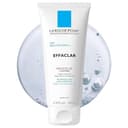
This is the criterion that decides the whole list. Benzoyl peroxide kills the bacteria involved in acne and reduces inflammation, and the AAD guideline gives it a strong recommendation. Crucially, it does meaningful work in a wash: the AAD’s back-acne guidance says benzoyl peroxide works best when the wash is left on for two to five minutes before rinsing, which tells you the format is real medicine, not marketing. Salicylic acid is a conditional recommendation in the same guideline, and in a cleanser it is on the skin too briefly to do what a leave-on 2% does — which is why Effaclar ranks third and our own listing for it calls it a gentle assist rather than a substitute. The full head-to-head is in benzoyl peroxide vs salicylic acid.
2. Strength: the evidence favors less than you think
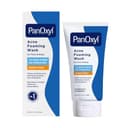
Benzoyl peroxide washes come in 4% and 10%, and the instinct is to buy the bigger number. The published comparison of 2.5%, 5% and 10% benzoyl peroxide found the lower strengths matched 10% for clearing inflammatory acne with less dryness and peeling. That is why the two 4% washes sit above the 10%, and why PanOxyl 10% is on the page with a body-first label: it is the strongest thing you can buy over the counter, it works, and for most faces it is more than the skin needs.
3. What buffers the active
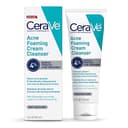
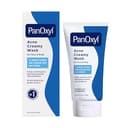
Benzoyl peroxide dries skin. The difference between a wash you can use daily and one you abandon in a week is what the formula does about that. CeraVe’s Acne Foaming Cream Cleanser wins the top spot because it pairs a stated 4% with ceramides and hyaluronic acid in a cream-to-foam base and is fragrance-free per the listing — the most complete answer on this page to “medicated but wearable.” PanOxyl 4% takes the creamy-base route to the same problem and comes in a tube big enough to cover face and body, which is why it edges ahead for anyone with chest or back breakouts too.
4. Whether it fights your leave-on treatment
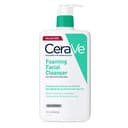
If you already use adapalene, tretinoin or a leave-on benzoyl peroxide, a medicated wash is often the wrong buy: you are stacking a second irritant onto skin the retinoid is already pushing. In that routine the best acne face wash is a plain one that cleans without stripping, and CeraVe Foaming Facial Cleanser earns its slot for exactly that reader — ceramides and niacinamide, fragrance-free, no active to conflict with the one doing the work.
The two-to-five-minute rule
The single most useful thing on this page is a technique, not a product. The AAD’s guidance for benzoyl peroxide washes on the back is to leave the lather on for two to five minutes before rinsing, because that is how the active gets time to penetrate. The same logic applies to the face, with one caution: facial skin is thinner, so start at the short end, and if you are using the wash daily on a 10% product, expect dryness. Wash, wait, rinse thoroughly — the rinse matters, because benzoyl peroxide left on a towel bleaches it. Our how to use benzoyl peroxide guide has the full method, including the white-towel rule.
Face wash by skin type
- Oily, inflamed breakouts: a 4% benzoyl peroxide wash once daily, working up to twice. Add a leave-on retinoid at night if the wash alone plateaus — the guideline treats the combination as standard, and best acne treatments ranks those.
- Blackheads and congestion, few inflamed spots: the salicylic acid wash, and more importantly a leave-on 2% BHA at night. The wash is the supporting act.
- Dry or sensitive skin that still breaks out: the creamy 4% no more than once a day, or a plain non-stripping wash with the active moved to a leave-on step. Over-cleansing is a common cause of the tight-then-oily cycle.
- Body and back: the 10% foaming wash, left on for the two to five minutes, and colored towels retired. Benzoyl peroxide for body acne is the full guide.
What a face wash cannot do
It cannot clear moderate or severe acne on its own; the AAD frames cleansing as one part of a plan whose heavy lifting is done by leave-on treatments, and its face-washing guidance is built around gentleness — lukewarm water, fingertips, no scrubbing, twice a day and after sweating. It cannot fade the dark marks acne leaves; that is a job for azelaic acid, retinoids and sunscreen, covered in best serums for acne scars. And it cannot substitute for a dermatologist if nothing has changed after six to eight weeks of consistent use — the AAD’s own threshold for getting help. Cystic, painful, scarring acne belongs in a clinic, not in a cleanser aisle.