How we ranked
Five criteria, applied in this order. They are deliberately not the same five we apply on best moisturizer for sensitive skin, which is why that page and this one disagree about the top pick.
1. Finish, as the first filter rather than a tiebreaker. A moisturizer that leaves an oily-skinned reader looking slick at midday is a moisturizer that gets abandoned in week two, and the treatment goes with it. Every pick here is a lotion, a gel or a gel-cream. The rich ceramide tubs we rank first elsewhere are excluded from the top of this page on finish alone, and we have said so rather than quietly leaving them out.
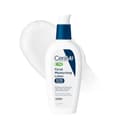
2. What rides alongside the humectant. Glycerin and hyaluronic acid pull water in; they do nothing to repair a barrier that a retinoid has thinned. Ceramides and niacinamide do more than that, and four of the five picks carry at least one of them. Where a product is humectant-only we say so in its write-up.
3. Fragrance. Acne-prone skin is frequently also treatment-irritated skin, and added fragrance on an already-stinging face is an avoidable argument. Four of the five picks are fragrance-free per the brand; the fifth is not, and its entry leads with that.
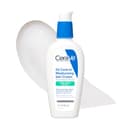
4. What the brand publishes. Every one of these formulas is on a brand-hosted page with a full ingredient list, which is the minimum bar for appearing here at all. Ingredient order is a real signal — it is why the gel-cream’s niacinamide placement earns it a pick — and we would rather rank a modest formula we can read than a glamorous one we cannot.
5. Cost per month, not sticker price. A face moisturizer used twice daily is a consumable. The bottle sizes here run from 47 mL to 453 mL, which is nearly a tenfold spread, and the comparison table above carries today’s live numbers.
“Non-comedogenic” is a claim, not a certification
Four of these five products carry the words somewhere on their page, and they are worth something — a brand that prints them has at least decided not to put heavy occlusive oils in a formula aimed at oily skin. But no agency defines the term, no standard test is mandated, and none of these brands publishes the panel behind its claim. We report it as what it is: the manufacturer’s own statement, useful as a signal of intent and not as proof that a product will not break you out.
The practical consequence is that the ingredient list is a better guide than the badge. On a breakout-prone face the things most worth scanning for are heavy plant butters and oils near the top of the list, and thick waxes in a product sold as a “gel”. None of the five picks has that problem; plenty of pricier moisturizers do.
Match the moisturizer to the treatment, not to your skin type
This is the part most “best moisturizer” lists skip, and it changes the answer more than oily-versus-dry does.
On benzoyl peroxide. Benzoyl peroxide is the driest thing most people will ever put on their face, and it is also an oxidizer. Keep the moisturizer simple and apply it after the wash or gel has absorbed. The sequencing is set out in how to use benzoyl peroxide, and if a wash is your route in, best face wash for acne ranks those separately.
On a retinoid. Dryness and flaking peak somewhere in the first six weeks and then settle. This is where the ceramide-and-niacinamide picks earn their place, and where a humectant-only gel will leave you flaking anyway. We rank the question on its own page at best moisturizer to use with retinol, and the adapalene specifics are in the adapalene guide.
On a leave-on acid. A salicylic acid serum or toner is less drying than benzoyl peroxide but more drying than nothing, and the failure mode is a slow slide into over-exfoliation that reads as “my moisturizer stopped working”. The tells are in signs of over-exfoliation.
On nothing at all. If you are not using an acne active yet, the moisturizer is the least important thing you will buy this month. Start at best acne treatments or the acne concern guide, pick the active, and come back for the moisturizer that will keep you on it.
The niacinamide question, answered honestly
Three of these five picks contain niacinamide and it is a genuine reason to prefer them — but not for the reason it is usually sold. The published work most relevant here is a study in which a 2% niacinamide moisturizer lowered the sebum excretion rate in a group of 100 Japanese subjects at two and four weeks. That is a real result and it is a small one: it tested 2%, not the 10% or 12% on the serum shelf, and the 30-subject Caucasian arm of the same work did not return identical numbers.
So the honest version is this. Niacinamide in a moisturizer is worth having for barrier support and is a reasonable bet for oil control at moisturizer-level doses. It is not an acne treatment, it will not replace the retinoid, and no brand on this page publishes how much of it is in the bottle — the closest thing to a dosing signal you get is ingredient order, which is exactly why the gel-cream’s second-place niacinamide is worth a mention. If you want the full picture, including what niacinamide does not do, we cover it at niacinamide benefits and niacinamide side effects.
How to apply it so it does not make things worse
Three rules, in order of how often they are broken.
Moisturize even when you are oily. The idea that skipping moisturizer dries up acne is the single most common self-inflicted injury in this category. Stripped skin over-produces oil and a compromised barrier stings under every active you own, which is how people end up cycling through treatments that would have worked. If you need the reasoning in full, how to repair your skin barrier covers it.
Use less than you think, twice a day. A pea for the whole face with a lotion or gel. These are not products where more is better; a thick layer of anything over a breakout-prone cheek is a bad trade.
Sunscreen is a separate purchase. None of these is an SPF product, and every acne active on the market comes with a sun-sensitivity consideration attached. The picks that work on breakout-prone skin are at best sunscreen for acne-prone skin.
What this page does not recommend
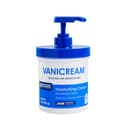
Rich ceramide tubs, as a first moisturizer here. CeraVe Moisturizing Cream and Cetaphil Moisturizing Cream are both in our registry and both are excellent; on an oily, breakout-prone face they are the wrong texture, and we rank them where they belong at best ceramide moisturizers. If your skin is dry and acne-prone, the Vanicream pick below is the bridge.
Moisturizers with an acne active built in. They exist and they are a reasonable idea in principle. The problem is that it welds your treatment dose to your moisturizer dose, and those two things need to move independently — the whole point of the first six weeks is turning the active down while keeping the moisturizer up.
Anything we could not read a full ingredient list for. Several popular acne-marketed moisturizers publish marketing copy and no formula. We will not rank what we cannot read.