Can You Use Niacinamide and Salicylic Acid Together?
Yes — and for oily, congested skin it is one of the most useful pairings there is. The pH warning you have read is a theoretical worry that does not survive contact with a real routine.
How this is funded: we earn a commission if you buy through our links, at no extra cost to you. It never changes which product we recommend, and we’ll tell you when we’d skip one. Full disclosure.
If your skin is oily, shiny by mid-afternoon, and permanently a little congested around the nose and chin, this is the pairing worth building a routine around. Salicylic acid gets into the pore and clears it; niacinamide works on the oil, the redness and the barrier those pores sit in. They address the same complaint from opposite directions, and there is no reason not to use both.
Which makes it unfortunate that the most-repeated advice about them is a warning.
The pH objection, and why it does not survive contact with reality
The argument goes like this. Salicylic acid needs a low pH — broadly the low-to-mid 3s — to exist in the form that penetrates skin and clears a pore. Niacinamide serums are formulated near neutral. Apply the niacinamide over the acid and you raise the pH of the layer, converting the acid into its less-active salt form and wasting it.
As chemistry, it is not nonsense. As a description of what happens on a face, it fails on three counts.
First, your skin is not a beaker. Applied products do not homogenize into a single solution of averaged pH; they sit in layers, absorb at different rates, and the acid has already begun working on contact. Second, skin restores its own acidic pH— the acid mantle exists precisely to do that, and it re-establishes itself within a reasonably short time after anything disturbs it. Third, and most tellingly, this predicted problem has never turned into an observed one. Formulators put niacinamide and salicylic acid in the same products deliberately, and people have been using them in the same routines for years without the acid mysteriously ceasing to work.
And if the theoretical version still bothers you, the fix costs you nothing: apply the acid, wait a minute or two, then the niacinamide. That is the same advice you would follow anyway.
What each one contributes
Salicylic acid is oil-soluble, which is the whole reason it is in this pairing. Water-soluble AHAs work on the surface; a BHA dissolves into the oil in the follicle and clears the plug of sebum and dead cells that becomes a blackhead or a closed comedone. It is also anti-inflammatory, so it calms the redness around an active spot rather than only unblocking it.
Niacinamideis the supporting all-rounder, and its record is unusually good for a cosmetic ingredient. Reviews credit it with supporting the skin barrier — helping skin hold water and stay resilient — along with helping regulate oil production, calming redness, and improving the appearance of enlarged pores. Clinical work has linked consistent use to improvements in blotchiness, texture and tone.
Put those side by side and the logic is obvious. The acid does the clearing, which is drying and mildly irritating by nature. The niacinamide does the repairing, which is what lets you keep using the acid long enough for it to matter. This is not two treatments competing for the same job — it is a treatment and its support system.
How to build the routine
Introduce one at a time.Start with niacinamide, because it is the gentler of the two and almost never causes trouble — two to four weeks of it alone, once or twice a day. Then add salicylic acid at two to three evenings a week. Doing it in that order means your barrier is already supported before the exfoliating starts, and it means that if something flares, you know exactly which product arrived most recently.
The layering orderis salicylic acid first, on clean dry skin — dry matters, because applying acid to damp skin increases absorption and sting. Wait a minute or two. Niacinamide next. Moisturizer over both. Sunscreen last if it is the morning.
The reverse order is a legitimate option. Applying niacinamide first and the acid over it buffers the acid slightly, reducing both intensity and irritation. If the standard order stings, flip it rather than abandoning the routine. You lose a little potency and gain a routine you will still be doing next month, which is the better trade.
Or split them across the day. Niacinamide in the morning, salicylic acid at night, is the simplest arrangement of all and sidesteps every question on this page. Many people end up here.
The mistake this pairing invites
Over-exfoliation, and specifically the version where you do not realize you are doing it. Salicylic acid is in cleansers, in toners, in serums and in spot treatments, and it is entirely possible to be applying it four times a day without ever consciously deciding to. Pick one salicylic acid product. If your cleanser has it, your leave-on should not, or vice versa.
The second version of the mistake is skipping moisturizer because your skin is oily. Dehydrated oily skin produces more oil, not less, and a barrier that is being exfoliated several times a week needs the support. A lightweight ceramide lotion is not going to make you greasy; it is what keeps this routine sustainable. Our ceramide moisturizer picks include the thin ones.
And do not add a retinoid to the same evening while you are settling in. Salicylic acid one night, retinoid the next, niacinamide every night if you like — it conflicts with nothing. The full map is in how to layer actives.
What to realistically expect
Oil control and a less shiny finish show up first, within a few weeks. Congestion and blackheads take longer — expect eight to twelve weeks of consistency, with a possible purge in the first month as the acid brings existing congestion to the surface faster. Pores will look smaller when they are empty and the skin around them is calmer; they will not actually be smaller, because pore size is largely structural and nothing on a shelf changes it. Anyone promising otherwise is selling you something.
If your skin gets tight, shiny in the waxy rather than oily sense, or reactive to products that never bothered it, that is over-exfoliation. Stop the acid, keep the niacinamide, use a plain moisturizer, and rebuild — signs of over-exfoliation covers the recovery. And if what you are treating is persistent inflammatory acne rather than congestion, this pairing is the supporting cast rather than the treatment; benzoyl peroxide or adapalene is the more direct answer, and a doctor is the right call for anything painful, deep or scarring.
General guidance, not medical advice. Actives & Acids is written by a skincare enthusiast, not a dermatologist. For a diagnosis, a reaction, or a prescription active like tretinoin, see a qualified professional. Introduce any new active slowly and patch-test first.
What we'd actually buy
Chosen from the same registry as our roundups, on published formulation facts rather than hands-on testing — here is exactly what we do instead.
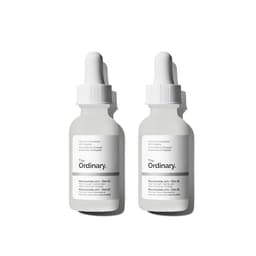
The Ordinary
Niacinamide 10% + Zinc 1%
The niacinamide half at its cheapest and most transparent — a printed 10% with zinc, and the serum most of these routines are built on.
See it ranked in full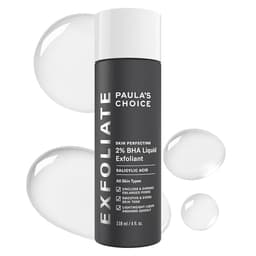
Paula's Choice
Skin Perfecting 2% BHA Liquid Exfoliant
The salicylic half: a printed 2% BHA formulated at a pH that lets the acid actually work, which most 2% products never disclose.
See it ranked in fullPrice as of October 14, 2026. #ad How we’re funded
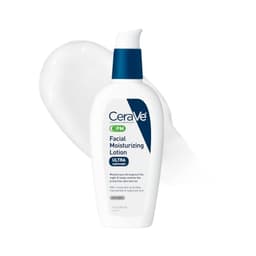
CeraVe
PM Facial Moisturizing Lotion
The lightweight ceramide lotion to finish on. Oily skin still needs the barrier step, and a thin one is the version people actually keep using.
See it ranked in fullFrequently asked questions
Can you use niacinamide and salicylic acid together?
Yes. They are a complementary pairing for oily, congested skin — salicylic acid clears the pore, niacinamide helps with oil, redness and barrier support. There is no reaction between them to manage. The only real constraint is total irritation load: introduce them one at a time and do not stack a third active on top while you are settling in.
Does niacinamide raise the pH and stop salicylic acid working?
This is the objection you will read most often, and it does not hold up in practice. The concern is that a near-neutral niacinamide serum could raise the pH of an acidic BHA, blunting it. But your skin restores its own acidic pH within a short time, applied products do not simply average out into one homogeneous layer, and the effect that theory predicts has never shown up as a real-world problem. Waiting a minute or two between layers removes even the theoretical objection.
Which goes first, niacinamide or salicylic acid?
Salicylic acid first, on clean dry skin, so the acid meets your skin without a layer in between. Wait a minute or two, then niacinamide, then moisturizer. If you find that combination drying or irritating, flip it — niacinamide first as a buffer, acid on top — which lowers the intensity slightly and is a sensible trade while you build tolerance.
Does niacinamide cause flushing with acids?
No. The flushing worry comes from confusing niacinamide with niacin (nicotinic acid), a different form of vitamin B3 that can cause a harmless flush when taken as an oral supplement. Topical niacinamide does not do this. Redness after using both is ordinary irritation from too much, too fast — not a chemical clash.
Can this combination help with large pores?
It is the most sensible over-the-counter approach, with honest limits. Pore size is largely genetic and nothing shrinks a pore permanently. What this pairing does is empty the pore — salicylic acid clears the plug that makes it look larger — and reduce oil and redness around it, which makes pores less noticeable. That is a real cosmetic improvement, not a structural change.
Sources
- Mechanistic Basis and Clinical Evidence for Nicotinamide (Niacinamide) in Skin (PMC) — Review of niacinamide's barrier, ceramide and pigmentation effects (accessed July 17, 2026)
- Niacinamide: A B vitamin that improves aging facial skin appearance (PubMed) — Bissett et al. — 5% niacinamide improves wrinkles, spots and texture (accessed July 17, 2026)
- U.S. FDA — Beta Hydroxy Acids in Cosmetics — FDA on salicylic acid as a beta hydroxy acid (accessed July 17, 2026)
- American Academy of Dermatology — Acne: Diagnosis and treatment — AAD overview of benzoyl peroxide, retinoids, salicylic and azelaic acid for acne (accessed July 17, 2026)
Keep reading
Best niacinamide serums
The 10% shortlist, and why a 12% is not meaningfully better than a 5% for most people.
See the picksHow to use salicylic acid
Format, frequency and pH — the technique half of this pairing, in full.
Read the guideBest actives for oily skin
The complete routine this pairing sits inside, from cleanser to sunscreen.
See the picksBest actives for large pores
What actually changes how pores look — and the claims worth ignoring.
See the picksHow to layer actives
The wider conflict map, including what genuinely should not share a routine.
Read the guideNiacinamide and glycolic acid
The same pairing with the water-soluble AHA — the version for texture and dullness rather than congestion.
Read the guideHow to use niacinamide serum
Morning or night, how many drops, before or after moisturizer — the niacinamide half in full.
Read the guide