Niacinamide and Glycolic Acid Together
Yes, they can share a routine, and for oily or uneven skin they make a sensible pair: the acid resurfaces, the niacinamide calms and supports the barrier the acid stresses. Here is what order, what timing, and why the old pH warning does not hold up.
How this is funded: we earn a commission if you buy through our links, at no extra cost to you. It never changes which product we recommend, and we’ll tell you when we’d skip one. Full disclosure.
The short answer is yes, you can use niacinamide and glycolic acid together, and for a lot of oily, congested or unevenly toned skin you probably should. The two do different jobs that happen to fit. Glycolic acid is an alpha hydroxy acid that loosens dead cells from the surface, which is what smooths texture and brightens dullness. Niacinamide is a form of vitamin B3 with a published record across barrier support, redness, oil regulation and pigmentation — the review literature on it is unusually broad for a single cosmetic ingredient. An acid stresses the barrier; niacinamide supports it. That is not a conflict, it is a division of labor.
The longer answer is about order, timing and one persistent piece of internet folklore, and it is worth getting right, because the way most people combine these two — everything at once, every night, at the highest percentage they could find — is also the way to end up with a red, flushed, stinging face and a conclusion that “they do not go together.”
The pH warning, and why it does not hold up
The claim goes like this: niacinamide in an acidic environment converts to niacin (nicotinic acid), niacin causes flushing, therefore never put niacinamide on the skin with an acid. The first link in that chain is real chemistry. The second is real physiology. The conclusion does not follow, because the conversion requires sustained heat and strongly acidic conditions over time — the kind of thing that happens in a badly formulated product sitting in a hot warehouse for months, not in two products meeting on your face for the few minutes before a moisturizer goes on top. Skin itself is mildly acidic, and niacinamide has been sitting on it happily in thousands of formulations for decades.
What people actually experience when they layer a 7% glycolic acid and a 10% niacinamide and feel their face go warm is, almost always, irritation. A 7% AHA is a real exfoliant, a 10% niacinamide is above the 4–5% the bulk of the published work used, and stacking both on skin that is new to either is a plain overload. The fix for that is not to separate the two ingredients forever; it is to introduce them properly.
What each one does for the other
Niacinamide makes the acid more livable. Glycolic acid thins the dead-cell layer, and a thinner surface loses water faster and reacts more. Niacinamide’s barrier-supporting effects — the published reviews describe improved barrier function and reduced water loss — are precisely the offset. It also calms redness, which is the thing an acid produces first.
The acid clears the way for niacinamide’s tone work. Niacinamide’s pigment effect is to slow the transfer of pigment into the upper skin cells; glycolic acid speeds the turnover of the cells that are already stained. On post-acne marks and general unevenness, the two together cover both the incoming and the existing pigment, which is why they turn up in the same routines on dark spots and oily skin alike.
And they overlap on pores. Niacinamide has evidence for reducing the appearance of pores and regulating oil; glycolic acid keeps the surface clear of the dead cells that make pores look larger. Neither reaches inside a congested pore the way a salicylic acid does, though — if blackheads are your main problem, the sister page, niacinamide and salicylic acid, is the pairing you want.
How to combine them: three routines
Routine 1 — split, for reactive skin or beginners
Niacinamide every morning: cleanse, niacinamide, moisturizer, sunscreen. Glycolic acid two nights a week: cleanse, acid on dry skin, wait, plain moisturizer. The two never meet on the skin at the same moment and each gets a clean read. Run this for a month before considering anything else. It is also simply a good routine — many people never need to change it.
Routine 2 — same evening, for tolerant skin
On acid nights: cleanse, glycolic acid on dry skin, wait two or three minutes, niacinamide, moisturizer. Acid first because it works best on bare skin; niacinamide second as the calming layer. On non-acid nights, niacinamide alone. Keep the acid at two or three nights a week — the niacinamide does not make it safe to use an AHA daily.
Routine 3 — niacinamide the morning after
Acid at night, niacinamide the next morning under sunscreen. This is the version for anyone who wants both benefits without ever stacking them, and it works because niacinamide’s barrier support is exactly what the skin wants the morning after an acid. Sunscreen is the non-negotiable step here: the FDA’s guidance on AHAs is that they increase sun sensitivity during use and for a week afterwards, and niacinamide does not change that.
Whichever routine you run, the order-of-application logic is the standard one the American Academy of Dermatology describes — thinnest to thickest, treatment before moisturizer, sunscreen last — and the full sequence with every other active slotted in is in skincare routine order.
The combination that genuinely stings
It is not niacinamide and glycolic acid. It is glycolic acid and another exfoliant, or glycolic acid and a retinoid, on the same night — with niacinamide on top being blamed because it was the last thing applied. If you use a salicylic acid, a retinol or a vitamin C, the glycolic acid goes on a different night from the retinoid, the salicylic acid gets retired or moved to a different night (two acids is one too many for most skin), and the vitamin C stays in the morning. Niacinamide, unusually, gets along with all of them — which is why it is the one ingredient in this pairing you can use every day and the acid is the one you ration. The conflict matrix in how to layer actives lays the whole thing out.
Products with both in one bottle
Cleansers, toners and body lotions that combine niacinamide and glycolic acid exist and are fine, with one honest limit: in a rinse-off, neither ingredient stays on the skin long enough to do much, and in a leave-on the percentages are usually low and rarely published. If you want to know what you are getting, two single-ingredient products with stated strengths tell you exactly that, cost very little combined, and let you adjust each one independently — which, for a pairing where the acid needs rationing and the niacinamide does not, is the entire point.
General guidance, not medical advice. Actives & Acids is written by a skincare enthusiast, not a dermatologist. For a diagnosis, a reaction, or a prescription active like tretinoin, see a qualified professional. Introduce any new active slowly and patch-test first.
What we'd actually buy
Chosen from the same registry as our roundups, on published formulation facts rather than hands-on testing — here is exactly what we do instead.
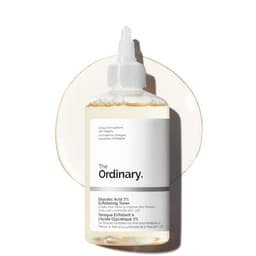
The Ordinary
Glycolic Acid 7% Exfoliating Toner
The glycolic half at a stated 7%, a few dollars, and a bottle big enough to last the months this pairing takes to show. The toner format is what makes the acid-first-then-niacinamide order easy.
See it ranked in fullPrice as of September 19, 2026. #ad How we’re funded
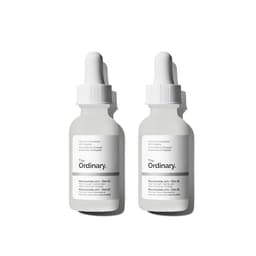
The Ordinary
Niacinamide 10% + Zinc 1%
The niacinamide half, a stated 10% with zinc, cheap enough that using it twice a day is no decision. The one caveat is our standing one: 10% is above the 4-5% the research mostly used, so if it stings after the acid, that is the number to blame.
See it ranked in full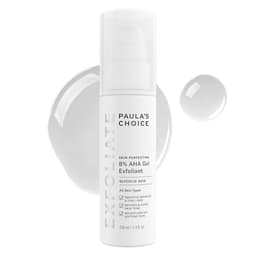
Paula's Choice
Skin Perfecting 8% AHA Gel Exfoliant
The fragrance-free leave-on glycolic at a stated 8% and a working pH, for anyone who wants the acid as a gel step rather than a toner. Layers cleanly under a niacinamide serum without pilling.
See it ranked in fullPrice as of September 19, 2026. #ad How we’re funded
Frequently asked questions
Can you use niacinamide and glycolic acid together?
Yes. They do not cancel each other out and they do not form anything harmful on the skin. Glycolic acid resurfaces; niacinamide supports the barrier, calms redness and helps with oil and tone — which is close to the ideal partner for an acid that stresses the barrier. The practical questions are order (acid first, niacinamide second), timing (same routine for tolerant skin, split AM/PM for reactive skin) and frequency (the acid stays at a few nights a week regardless).
Does niacinamide cancel out glycolic acid because of pH?
No, not in any way that matters. The worry comes from the fact that niacinamide can convert to niacin — which causes flushing — under acidic conditions. But that conversion needs sustained heat and strongly acidic conditions over time, not two products meeting on skin for a few minutes. The flushing some people report from layering the two is far more often plain irritation from stacking a 7% acid and a 10% niacinamide on skin that was not ready for either.
Which goes first, niacinamide or glycolic acid?
Glycolic acid first, on clean dry skin, then a few minutes' wait, then niacinamide, then moisturizer. Two reasons: the acid works best on bare skin at its own pH, and niacinamide over the top acts as the calming, barrier-supporting layer. Reversing the order is not dangerous, it just makes the acid work through a serum layer for no benefit.
Should I use them at the same time or split morning and night?
If your skin is tolerant and you already use both, same evening routine is fine: acid, wait, niacinamide. If your skin is reactive, or you are new to either product, split them — niacinamide in the morning under sunscreen, glycolic acid at night on the two or three nights you use it — and only move them into one routine once each is established on its own. When in doubt, split.
Can I use niacinamide the morning after glycolic acid?
Yes, and it is one of the best uses of the pairing. Niacinamide the morning after an acid night supports the barrier the acid just worked on, and it layers under sunscreen without incident. Just remember the sunscreen is not optional — the FDA's guidance on AHAs is explicit that they increase sun sensitivity during use and for a week afterwards.
My face flushes when I combine them. What is happening?
Most likely irritation, not a chemical reaction. Two things to try, one at a time: drop the glycolic acid to once a week and see if the flush stops, and if it does not, try a lower-percentage niacinamide — 10% and 12% serums sit above the 4-5% most of the research used, and that number alone makes some people flush. If it persists with both changes, the pairing is not for your skin right now; niacinamide and retinol is usually the more comfortable route to the same goals.
Sources
- Mechanistic Basis and Clinical Evidence for Nicotinamide (Niacinamide) in Skin (PMC) — Review of niacinamide's barrier, ceramide and pigmentation effects (accessed July 17, 2026)
- Niacinamide: A B vitamin that improves aging facial skin appearance (PubMed) — Bissett et al. — 5% niacinamide improves wrinkles, spots and texture (accessed July 17, 2026)
- U.S. FDA — Alpha Hydroxy Acids — FDA on AHAs and increased sun sensitivity (accessed July 17, 2026)
- American Academy of Dermatology — Should I apply my skin care products in a certain order? — AAD on the order to apply cleanser, treatment, moisturizer and sunscreen (accessed July 17, 2026)
- Chemical Peels for Skin Resurfacing — StatPearls (NCBI Bookshelf) — Reference overview of AHA/BHA exfoliation mechanisms (accessed July 17, 2026)
Keep reading
Niacinamide and salicylic acid
The same pairing with the oil-soluble acid — the version for congested, blackhead-prone skin.
Read the guideNiacinamide and retinol
The other pairing niacinamide buffers well, and why it is the better night partner than an acid for most people.
Read the guideHow to layer actives
The conflict matrix and the routine builder — where this pairing sits among everything else.
Read the guideHow to use niacinamide serum
Morning or night, how many drops, before or after moisturizer — the niacinamide half in full.
Read the guideHow to use glycolic acid
The acid half: frequency, application and the sunscreen rule.
Read the guideBest niacinamide serums
The niacinamide options ranked, including the ones formulated to layer without pilling.
See the picks