Niacinamide Serum: Morning or Night?
Either, and it barely matters — which is the honest answer and not a satisfying one. Here are the two situations where the timing does change something, the conflict people worry about that is not real, and the one that actually is.
How this is funded: we earn a commission if you buy through our links, at no extra cost to you. It never changes which product we recommend, and we’ll tell you when we’d skip one. Full disclosure.
The short answer is that it does not matter much, and anyone telling you otherwise with confidence is overselling. Niacinamide has no light sensitivity, no pH window to protect, no cumulative turnover effect and no adjustment phase. It is one of the few actives you can genuinely put wherever it fits.
But “either is fine” is unsatisfying, so here is the useful version: there are exactly two situations where the slot changes something, and one widely-repeated reason to split them that turns out not to be real.
The short answer
Morning if your reason for buying it is oil control, redness or skin that looks shiny or flushed by the afternoon. Apply after cleansing, before moisturizer and sunscreen.
Night if your routine has a retinoid or an exfoliating acid in it and you want the niacinamide doing barrier support in the same slot, or if your evenings are simply where you have the time and attention.
Both is fine and not necessary. If you are going to use it twice, the second application is a comfort decision rather than a potency one.
The case for the morning
One of niacinamide’s better-documented effects is on sebum, and it is the only argument on this page with a time-of-day consequence. The published study is a double-blind, placebo-controlled trial of a 2% niacinamide moisturizer: in 100 Japanese subjects the sebum excretion rate was significantly lowered at two and four weeks, and in a separate group of 30 Caucasian subjects casual sebum levels fell at six weeks although the excretion rate did not.
Two honest qualifications before you build a routine on that. The study tested 2%, not the 10% and 12% the shelf sells, and it was a moisturizer rather than a serum. And the two subject groups did not give identical results, which is the kind of detail that gets dropped when this study is cited. What it supports is that niacinamide does something real to oil — not that a 10% serum does more of it.
Still, if the shine you are fighting is afternoon shine, applying the ingredient in the morning is the obvious reading. The same logic covers redness: a calming active is more use during the hours people are looking at you. And the morning slot is practically less crowded than the evening one in most routines, where the retinoid or the acid is already competing for space.
There is no sun-sensitivity objection to a morning application. This is worth stating because people transfer the rule from retinoids and AHAs, where it genuinely applies, to niacinamide, where it does not.
The case for the night
The night-time argument is about pairing rather than about the ingredient. Niacinamide’s other well-reviewed effects are on barrier function — the reviews of nicotinamide in skin describe effects on barrier, ceramide production and pigmentation — and barrier damage is exactly what a retinoid or a leave-on acid is doing to you in the first weeks of use.
So if your evening routine already contains a retinoid, putting the niacinamide in front of it is a sensible arrangement: it is the active most directly aimed at the side effect of the active next to it. Niacinamide and retinol covers the pairing properly, and niacinamide and glycolic acid and niacinamide and salicylic acid handle the acid versions of the same question.
One caveat specific to combining things at night: niacinamide is not a magic buffer. It will not make a retinoid you cannot tolerate tolerable. If you are peeling, the fix is to use the retinoid less often, not to add a third product.
The vitamin C question, which is the real reason people ask
Almost everyone searching this query has heard that niacinamide and vitamin C cancel each other out, and is looking for permission to separate them.
The underlying chemistry is old laboratory work: niacinamide and ascorbic acid combined under heat in solution can convert in part to nicotinic acid, a known flushing agent. That is real chemistry and it is also a long way from two finished, buffered, stabilized cosmetic products applied a minute apart. The practical interaction in a routine is essentially nil, and vitamin C and niacinamide works through the evidence in full.
What complicates it is that The Ordinary still prints a “do not use with direct or indirect vitamin C” note on its own niacinamide product page, and that is the most widely-owned niacinamide serum in the world. If you would rather follow the brand’s instruction than our reading of the evidence, that is an entirely defensible choice — and the arrangement it implies is the easy one anyway: vitamin C in the morning, niacinamide at night. Nobody loses anything.
So: if you own both and want to stop thinking about it, split them across the day. If you are relaxed about it, layer them and expect nothing to happen.
Where it goes in the routine, either way
After cleansing, before moisturizer. In the morning, sunscreen last. The AAD’s own guidance on product order comes down to the same principle everyone repeats — thinnest to thickest, treatment before the things that seal it in — and niacinamide serums are water-light, so they go early.
If you are layering several serums, the order within that group matters less than people think; what matters is that nothing occlusive goes on before a treatment. The full sequences are in skincare routine order, and the method specific to this ingredient — how much, how often, on damp or dry skin — is in how to use niacinamide serum.
A simpler option worth naming: you do not have to add a serum slot at all. Several good moisturizers carry niacinamide alongside ceramides, which means the ingredient arrives in a step you were already doing. For people whose routine is already four products long, that is the better answer to “morning or night” — it is “whenever you moisturize.”
What the timing will not fix
If niacinamide is causing you trouble, moving it to the other end of the day is not the remedy. Flushing, stinging on application and small bumps are usually about dose or about something else in the formula, and the fixes are a lower percentage, less frequent use, or a different bottle. Niacinamide side effects sets out which is which.
And if nothing is happening at all, the timing is not the reason either. The classic trial of 5% niacinamide on aging facial skin ran twelve weeks before reporting improvements in wrinkles, spots and texture. Give any niacinamide serum a couple of months in a slot you will actually keep to before you judge it.
Bottom line
Morning if you are treating oil, shine or redness. Night if you are pairing it with a retinoid or an acid, or if that is where your routine has room. Both if you want to, with no particular benefit. Split it from your vitamin C if the brand’s warning bothers you, because the split costs nothing. And then leave it alone for eight weeks, because consistency is doing far more work here than the clock is.
General guidance, not medical advice. Actives & Acids is written by a skincare enthusiast, not a dermatologist. For a diagnosis, a reaction, or a prescription active like tretinoin, see a qualified professional. Introduce any new active slowly and patch-test first.
What we'd actually buy
Chosen from the same registry as our roundups, on published formulation facts rather than hands-on testing — here is exactly what we do instead.
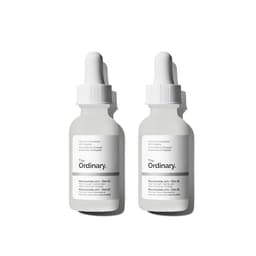
The Ordinary
Niacinamide 10% + Zinc 1%
The default either-slot serum, and the one whose label we can actually read: a stated 10% niacinamide with 1% zinc PCA, a published pH of 5.00 to 6.50, eleven ingredients and no fragrance. Buy it for the morning if oil control through the day is your reason.
See it ranked in full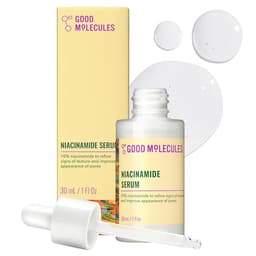
Good Molecules
Niacinamide Serum (10%)
The gentlest 10% in our registry and the better night-time pick if your routine already has a retinoid or an acid in it. Fragrance-free, minimal, and cheap enough to own alongside something else.
See it ranked in fullPrice as of October 10, 2026. #ad How we’re funded
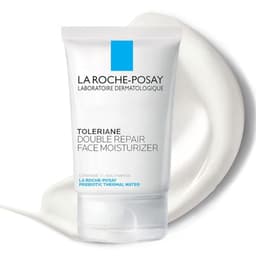
La Roche-Posay
Toleriane Double Repair Face Moisturizer
The answer for anyone who would rather not add a serum slot at all. A ceramide-and-niacinamide moisturizer handles the barrier case in the step you were already doing, morning or night, with no extra layer to time.
See it ranked in fullPrice as of October 10, 2026. #ad How we’re funded
Frequently asked questions
Should I use niacinamide in the morning or at night?
Either works, and consistency matters far more than the slot. If you want a single recommendation: morning, under sunscreen, because that is the half of the day where the oil-control and redness-calming effects are most useful and because a morning slot is less crowded than an evening one in most routines. Use it at night instead if your evening routine is where you have space, or if you want it to buffer a retinoid.
Can I use niacinamide twice a day?
Yes, and plenty of people do without trouble. There is no cumulative sun-sensitivity or turnover effect to limit the frequency the way there is with a retinoid or an acid. The caveat is practical rather than chemical: twice a day doubles your exposure to whatever else is in the bottle, so if you are getting little bumps or flushing, cutting back to once daily is the first thing to try.
Is it true you cannot use niacinamide with vitamin C?
Not in any way that matters for finished products. The myth comes from old laboratory work in which niacinamide and ascorbic acid, combined under heat in solution, converted partly to nicotinic acid — a flushing agent. Modern serums are formulated, buffered and stable, and the practical effect in a routine is essentially nil. Note that The Ordinary still prints a 'do not use with direct or indirect vitamin C' note on its own niacinamide page, so if you want to follow the brand's advice to the letter, vitamin C in the morning and niacinamide at night is the easy arrangement.
Is niacinamide better at night with retinol?
It is a genuinely good night-time pairing and one of the few with a clear rationale. Retinoids speed turnover faster than the barrier adapts, and niacinamide's documented effects on barrier function and ceramide production are aimed at exactly that problem. Apply the niacinamide first, then the retinoid, then a moisturizer — or use the niacinamide as a buffer layer if the retinoid stings.
Does it matter for oily skin?
This is the one case where the morning slot has a specific argument. The published work on niacinamide and sebum found a 2% niacinamide moisturizer lowered the sebum excretion rate in a double-blind placebo-controlled study of 100 Japanese subjects at two and four weeks, and lowered casual sebum levels in a separate group of 30 Caucasian subjects. If the shine you want to control is afternoon shine, applying it in the morning is the sensible reading.
Where does it go in my routine?
After cleansing, before moisturizer, and before sunscreen in the morning — thinnest to thickest, which is what the AAD's own guidance on product order amounts to. If you are using several serums, niacinamide is water-light and goes early. Our routine-order guide has the full AM and PM sequence.
Does niacinamide make me more sensitive to the sun?
No. Unlike retinoids and the exfoliating acids, niacinamide carries no sun-sensitivity consideration, which is one of the reasons it is a comfortable morning ingredient and the safest first active for most people. You still need sunscreen — everyone does — but not because of the niacinamide.
How long until I see a difference, and does the timing change that?
Weeks, and no. The classic trial of 5% niacinamide on aging facial skin ran for twelve weeks before reporting improvements in wrinkles, spots and texture; the sebum work saw changes at two to four weeks. Nothing in any of it suggests the time of day affects the outcome. Pick the slot you will actually keep to.
Sources
- Mechanistic Basis and Clinical Evidence for Nicotinamide (Niacinamide) in Skin (PMC) — Review of niacinamide's barrier, ceramide and pigmentation effects (accessed July 17, 2026)
- The effect of 2% niacinamide on facial sebum production (PubMed) — Draelos et al., Journal of Cosmetic and Laser Therapy 2006 — a 2% niacinamide moisturizer lowered the sebum excretion rate in 100 Japanese subjects at 2 and 4 weeks (double-blind, placebo-controlled) and lowered casual sebum levels, but not the excretion rate, in 30 Caucasian subjects at 6 weeks (accessed September 19, 2026)
- Niacinamide: A B vitamin that improves aging facial skin appearance (PubMed) — Bissett et al. — 5% niacinamide improves wrinkles, spots and texture (accessed July 17, 2026)
- The Ordinary — Niacinamide 10% + Zinc 1% (official product page) — The brand's own listing: the full ingredient list (Aqua, Niacinamide, Pentylene Glycol, Zinc PCA, Dimethyl Isosorbide, Tamarindus Indica Seed Gum, Xanthan Gum, Isoceteth-20, Ethoxydiglycol, Phenoxyethanol, Chlorphenesin), a stated pH of 5.00-6.50, the 30 mL and 60 mL sizes, the 'do not use with direct or indirect vitamin C' note, and the non-comedogenic claim from a 35-subject, 8-week study (accessed September 19, 2026)
- American Academy of Dermatology — Should I apply my skin care products in a certain order? — AAD on the order to apply cleanser, treatment, moisturizer and sunscreen (accessed July 17, 2026)
- American Academy of Dermatology — Skin care basics — AAD consumer guidance on cleansing, moisturizing and sun protection (accessed July 17, 2026)
Keep reading
How to use niacinamide serum
Amount, order, frequency and what to pair it with — the method rather than the timing.
Read the guideBest niacinamide serums
Every stated percentage compared, with the honest note on why 12% is not an upgrade.
See the picksVitamin C and niacinamide
The conflict myth dismantled, and the one arrangement that sidesteps it entirely.
Read the guideNiacinamide and retinol
Why this is the best night-time pairing in the category, and the order to apply them in.
Read the guideNiacinamide side effects
Flushing, stinging and little bumps — what actually goes wrong, and how to fix it.
Read the guideMorning vs night skincare routine
The whole-routine version of this question: which actives belong in which half of the day.
Read the guide